Owara Kaze no Bon is a traditional festival held every September in Toyama Prefecture, Japan. The central belief behind this event is that the community’s collective dance and music can calm the winds, protecting local residents and their harvests from natural disasters. This festival is a living tradition, deeply connected to the region’s history and the rhythms of the agricultural calendar.
Key Facts: Owara Kaze no Bon and the Wind-Calming Belief
The Owara Kaze no Bon Festival is officially recognized as a September event in Toyama Prefecture, according to the Japan National Tourism Organization. The festival is rooted in the idea of appeasing the winds to prevent natural disasters, especially those that could damage crops or threaten the safety of the community. This belief is not unique to Toyama, as many Japanese festivals are historically linked to nature and the desire to live in harmony with it.
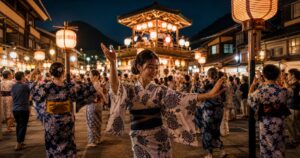
During the festival, participants perform elegant dances accompanied by traditional music. The event is characterized by its atmospheric night-time processions, where dancers move through the streets in coordinated, graceful patterns. The festival’s timing at the start of autumn reflects its agricultural significance, as this is a period when typhoons and strong winds are most likely to threaten the region’s rice fields and homes.
Cultural and Historical Background
Japanese festivals, or matsuri, often serve as a way for communities to express gratitude for nature’s gifts or to plead for relief from its dangers. In the case of Owara Kaze no Bon, the focus is on calming the winds. This tradition likely developed in response to the region’s vulnerability to strong seasonal winds, which could devastate crops and livelihoods. Over time, the festival has evolved into a major cultural event that draws visitors from across Japan and beyond.
The festival’s dances are performed by local residents dressed in distinctive costumes. The choreography is slow and deliberate, intended to evoke a sense of tranquility and control. The music, played on traditional instruments, sets a contemplative mood that aligns with the festival’s purpose of soothing the natural elements. While the festival is a lively community event, it is also marked by a sense of solemnity and respect for the forces of nature.
Documented Facts Versus Tradition
The belief that dance and music can influence the wind is a matter of tradition rather than scientific fact. There is no evidence that the festival’s rituals have a direct effect on weather patterns. However, the practice reflects a broader Japanese cultural approach that seeks to coexist with nature, acknowledging its power and unpredictability. The Owara Kaze no Bon Festival serves as a symbolic act of respect and hope, rather than a literal intervention in natural phenomena.
Official sources confirm that the festival’s origins are tied to the desire to prevent natural disasters, especially those caused by wind. This connection between ritual and environmental protection is common in Japanese folk culture, where festivals often mark the changing of the seasons or important moments in the agricultural year. The Owara Kaze no Bon Festival stands out for its specific focus on wind and its elegant, understated style.
Understanding the Unique Angle: Why Toyama Dances to Calm the Wind
The central question for many international readers is why a community would dance to calm the wind. In Toyama, this practice is both a form of collective prayer and a means of reinforcing social bonds. The act of dancing together, year after year, reaffirms the community’s connection to its environment and to each other. The festival is not just about warding off disaster; it is also an expression of shared identity and resilience.
While the festival’s rituals are rooted in folklore, they are observed with seriousness and care. The dances are not performed for entertainment alone but are seen as a way of maintaining harmony between people and the natural world. This approach reflects a broader Japanese worldview that values balance, respect, and continuity. Visitors who attend the festival are invited to witness this tradition, but the deeper meaning lies in the community’s ongoing commitment to its land and its future.
Respectful Practical Guidance for Visitors
Owara Kaze no Bon is open to visitors, but it is important to approach the festival with respect for local customs and traditions. The event takes place in public streets and is organized by the local community. Visitors are welcome to observe the dances and enjoy the music, but should avoid interfering with the performers or disrupting the processions. Photography is generally allowed, but always be mindful of personal space and the solemn atmosphere of certain moments.
As with many Japanese festivals, the best way to experience Owara Kaze no Bon is as a respectful observer. There are no tickets required for general viewing, but some areas may be reserved for local participants or require advance permission for close access. It is advisable to check official tourism sources for the latest information on dates, schedules, and any special visitor guidance. The festival typically takes place in early September, but details can change due to weather or local circumstances.
Participating in the festival as a guest means embracing the spirit of the event: a shared hope for safety, prosperity, and harmony with nature. By observing the customs and following local guidance, visitors can gain a deeper appreciation for the living traditions of Toyama and the enduring belief in the power of community action.