English Version
Yasuhiro Nakasone, who died in 2019 at the age of 101, is remembered as one of Japan’s most influential postwar politicians. He is also a figure surrounded by striking anecdotes, political controversy, and, in some circles, lingering rumors tied to one of Japan’s darkest aviation disasters.
From a Wealthy Home to the Navy
Nakasone was first elected to Japan’s House of Representatives in 1947. From there, he won election 20 consecutive times, and in 1982 he became Japan’s 71st prime minister.
He was born into a well-off family that ran a lumber business, but he did not originally set out to become a politician. According to accounts of his life, it was his experience in the Imperial Japanese Navy that pushed him toward politics.
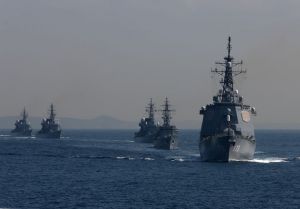
In 1941, Nakasone became a naval paymaster lieutenant and was assigned to the Aoba, the lead ship of the Aoba-class heavy cruisers. By that point, he was very much a military man. His navy days were reportedly so demanding that there were times when he barely had time to sleep.
During the war, a ship connected to Nakasone came under enemy attack. He is said to have witnessed a unit leader put the treatment of his men ahead of his own wounds, eventually dying as a result. After losing many comrades in that attack, Nakasone later described a feeling of “patriotism being born inside his body.” That experience became one of the reasons he chose the path of politics.
Sources often cited for this part of his life include Nakasone’s own memoir, published in 2004, and books on the wartime navy.
The Nickname “Young Officer”
After his naval service, Nakasone entered politics. For many years he was an opposition lawmaker, but he quickly became known as a bold, sometimes unpredictable conservative figure.
He pushed through budgets related to nuclear energy development, supported constitutional revision, and even wrote a song connected to the idea of amending Japan’s Constitution. Because of his forceful style, the media gave him the nickname “Young Officer.”
He harshly criticized the Soviet Union and, when it came to the Japan-Soviet Joint Declaration, reportedly said he supported it only “reluctantly.” Whether viewed as principled or provocative, he was never a quiet politician.
After becoming prime minister, he did not openly declare constitutional revision as a main slogan. Instead, he spoke of a “final settlement of postwar politics.” His agenda included revising the Basic Act on Education, making an official visit to Yasukuni Shrine, and removing the ceiling that kept Japan’s defense spending at around 1% of GDP.
These positions brought fierce criticism from left-leaning lawmakers, and some even called him a militarist. At one point, a 50-minute speech by Nakasone was reportedly removed in full after opposition from other Diet members. To supporters, he appeared to be trying to free Japan from what they saw as an overly self-critical postwar view of history. To critics, his politics were alarming.
Who Urged Nakasone to Retire?
Because of his statements and political style, Nakasone often clashed with the media and opposition lawmakers. There was even an election in which, despite being a sitting prime minister, he failed to win the top number of votes in his district.
Years later, the person who urged Nakasone to retire from politics was former Prime Minister Junichiro Koizumi. At the time, Shinzo Abe was serving as chief cabinet secretary. According to reports, Abe bowed his head and asked Nakasone to understand the decision.
Nakasone is said to have laughed and told Abe, “You drew the short straw, didn’t you?” He then encouraged him, saying in effect, “Abe, you are the secretary-general. Your job is to win elections. Do everything you can. I’ll support you too.”
For Abe, who later built his own political identity around conservative nationalism, Nakasone may have felt like a political predecessor with a similar sense of patriotism. Asking such a major figure to step aside must have been a painful role.
This episode was later reported in connection with a celebration of Nakasone’s 99th birthday.
The Mystery Talk Around the JAL Flight 123 Crash
Nakasone was a strongly patriotic conservative politician, but during his time in office, Japan also experienced a terrible and still heavily discussed disaster: the crash of Japan Airlines Flight 123 on Mount Osutaka.
The crash killed hundreds of passengers and crew and remains one of the deadliest single-aircraft accidents in history. Because of the scale of the tragedy, and because some details have been debated for decades, the accident has also attracted many rumors and conspiracy theories.
Among the points often raised in occult and conspiracy circles are questions such as whether jet fuel alone could have burned bodies so severely, the reported presence of developers connected to a domestic operating system project on board, and claims that the process of locating the crash site contained strange or unnatural elements.
These claims remain controversial and should be treated cautiously. The official explanation of the crash exists, while alternative theories continue to circulate in books, forums, and occult media.
At the same time, Nakasone was also the prime minister who worked hard to repair Japan-U.S. relations, which had been strained. He built a close relationship with U.S. President Ronald Reagan. Phrases such as “Japan and the United States are bound by a shared destiny” and the idea of turning the Japanese archipelago into an “unsinkable aircraft carrier” became associated with his security policy.
Some American media reportedly mocked him as “Yasu is Ron’s errand boy,” suggesting that he was too close to Reagan.
In connection with the JAL Flight 123 disaster, rumor circles often attribute to Nakasone a statement along the lines of, “I will take it to my grave.” What exactly that was supposed to mean, or whether it had anything to do with the passengers connected to domestic computer development, remains unknown. No one has a definitive answer.
For travelers interested in modern Japanese history, places connected to these events, including memorial areas related to Flight 123, should be approached with respect. They are not haunted attractions, and visitors should follow local rules, avoid restricted areas, and remember that real people died there.
A Politician Who Left a Long Shadow
Former Prime Minister Yasuhiro Nakasone, once nicknamed the “Young Officer,” remains one of Japan’s most important postwar political figures. His life moved from the navy to the Diet, from wartime memories to conservative reform, and finally into the realm of unresolved rumors surrounding a national tragedy.
May he rest in peace.
Japanese Language
2019年に101歳でこの世を去った「中曾根康弘」さんはいろいろな逸話がある人物としても知られています。どんな人でどんな逸話があるのでしょうか。中曾根康弘さんの経歴。中曾根康弘さんの初当選は1947年(昭和22年)のことです。そこから衆議院議員に連続20回当選し1982年(昭和57年) にとうとう第71代内閣総理大臣となりました。実家は木材商を営んでおり、とても裕福な家に育った中曾根康弘氏ですが、最初から政治家を志したのではなく、 海軍での経験を経て政治家を志した人物 です。
中曾根康弘氏は1941年(昭和16年)に海軍主計中尉となり青葉型重巡洋艦1番艦「青葉」に配属された経歴を持つバリバリの軍人 だったのです。海軍時代は寝るひまがないこともあったそう…政治家の「中曾根康弘」とはまた違う一面があるのですが、そして、大戦時に中曾根康弘氏が乗っていた艦船が敵の攻撃を受けます。その時に、班長が自分の治療より部下の治療を優先させて亡くなった光景を目の当たりにしたのです。この攻撃でたくさんの仲間を失ったことで 『身体の中に愛国心』 が生まれ、政治の道を志すことになったのです。
参考し資料:中曾根康弘『自省録-歴史法廷の被告として-』(新潮社 2004年6月) 。『若い世代へ伝えたい残したい 終りなき海軍』文化社 。ニックネームは「青年将校」。。画像:Pixabay 。海軍での経験を経て、政治家になった中曾根康弘氏は、長く野党議員でしたが、原子力開発予算を計上して通過させたり、改憲派として「憲法改正の歌」を作ったりとなかなか破天荒な政治家としてその名を轟かせました。そんな彼にマスコミがつけた ニックネームは「青年将校」 。
ソ連を痛烈に批判したり日ソ共同宣言に「渋々賛成」と言ったりしたなんとも面白い政治家 です。総理大臣になったからは、改憲は名言はしませんでしたが”戦後政治の総決算”として教育基本法の改正や靖国神社への公式参拝、そして、1%防衛費の撤廃を主張しました。左派の議員からは強い反発されとうとう「軍国主義者」とまで言われるまでに…。野党議員からの反発で50分もの演説がすべて削除されたこともありました。参考資料:第025回国会 本会議 第7号 。。戦後の日本の 自虐的な歴史から中曾根康弘氏は日本を解放しようとしていたよう にも思えます。
中曾根康弘さんに引退を勧告した人物とは?。このようないろいろな発言がマスコミや野党議員から批判されてこともあってか、 現役の総理大臣なのに、総選挙でトップ当選を逃したことも ありました。ちなみに、中曾根康弘氏に引退勧告をしたのは小泉純一郎元総理…そして、その時の官房長官が安倍晋三首相。この時、官房長官だった 安倍晋三さんは、頭を下げて「ご理解いただきたい」といった とか。そして、そんな安倍さんに中曾根康弘氏は 「君も貧乏クジをひいたな」と笑い、「安倍君、君は幹事長だろ。
幹事長の仕事は選挙に勝つことだ。全力を尽くせ。おれも応援するよ」 と励ましたそう。日本を取り戻そうとする安倍晋三首相の政治スタイルと愛国心に根ざした中曾根康弘氏は、どこか似たものがあったのかもしれませんね。偉大な政治家に引退を勧告するときの気持ちはどんなものだったのか…辛い役回りだったことでしょう。参考資料:中曽根康弘元首相「白寿」を祝う会 安倍晋三首相が救われた大勲位の一言とは…”. 産経ニュース (2017年5月15日) 。日航機墜落事故の真実は?
。。愛国心バリバリの保守議員だった中曾根康弘氏ですか、在任中に起った不可解な事故がありました。御巣鷹山に日航機が墜落した日航ジャンボ機墜落事故です。たくさんの乗員乗客の命を奪った事故として知られていますが、この飛行機事故には色々と不可解なことが多いと言われているんです。そもそも、ジェット燃料であんなに遺体が燃えるのか…国産OSの開発者が乗っていたこと、そして、事故機発見までのプロセスに不自然な点が多いこと…詳しくは 「オカルトオンライン」 で取り上げているので、割愛しますが、愛国心を持った中曾根康弘氏は、当時最悪だった日米関係を修復するために、奔走し当時のアメリカ合衆国大統領のロナルド・レーガンと親身な関係を築いた人物でもありました。
「日米は運命共同体」とか「日本列島不沈空母化」なんて言葉まで飛び出してとうとうアメリカのマスコミからは”ヤスはロンの使い走り”とまで言われたのです。そして、 日本航空123便墜落事故に関しては「墓場まで持っていく」 と。一体これが何を意味するのか、国産OSの開発者が搭乗していたことと関係があるのかは、誰にも解らないままです。いつか日航ジャンボ機墜落事故の真実が明るみに出る日が来ることを願ってやみません。まとめ。青年将校と言われた中曾根康弘元総理は、日本を代表する政治家のひとりです。
最後に、101歳で亡くなられた中曾根康弘元総理のご冥福をお祈りします