English Version
This article looks at Iwaki Sai no Kawara, a well-known haunted spot in Fukushima Prefecture. Sai no Kawara refers to a spiritual site connected with prayers for mizuko, children who died before their parents, including infants and unborn children. Because this site is a cave by the sea in Iwaki City, it is often called Iwaki Sai no Kawara.
Inside the cave, Jizo statues, stone Buddhas, and offerings were once placed throughout the space. Locally, it has long been known not only as a place of memorial prayer, but also as a place where ghost stories, strange experiences, and alleged spirit photographs have been reported.
A seaside cave filled with Jizo statues
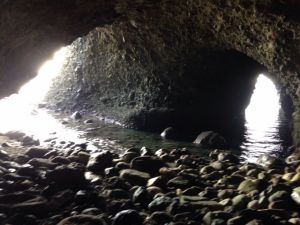
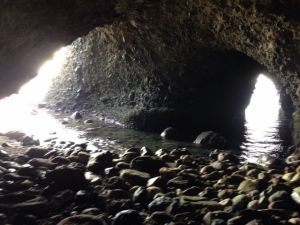
Iwaki Sai no Kawara was located inside a cave carved into a rocky coastal cliff. The cave contained many Jizo statues and stone Buddhist figures, with offerings placed here and there. Since the site was meant to console the spirits of mizuko, those offerings were likely dedicated to children who died young.
The place became famous enough in Fukushima to be featured on Japanese paranormal television. One story says that, during a program, a psychic fled because there were supposedly too many spirits present. As with many haunted-location stories, this should be treated as local rumor rather than confirmed fact.
Among the experiences reported in Iwaki are people becoming ill after visiting on a dare, strange photographs taken inside the cave, the sensation of being watched by many unseen eyes, and the discovery of tiny childlike footprints with no adult footprints nearby. Beyond the cave is the coast of Tairausuiso.
Because the cave connects with the sea, seawater flows through parts of it like a small river. Local stories also say that drowned bodies sometimes washed into the cave. With legends of mizuko, the sea, and the dead all overlapping in one place, it is easy to understand why the site came to be feared.
If you visit the area, treat it as a memorial site, not an attraction for dares. Coastal caves and cliffs can be dangerous, especially after storms or earthquakes, and visitors should never enter restricted or unstable areas.
Mizuko, drowned bodies, and the meaning of Sai no Kawara
Why did this particular place become associated with hauntings? One possible explanation lies in older customs and beliefs from the Tohoku region, especially ideas surrounding mizuko, drowned bodies, and Sai no Kawara.
In Japanese Buddhist folk belief, after death a person crosses the Sanzu River on the way to the afterlife. Sai no Kawara is the riverbank of that otherworldly river. Children who die before their parents are said to build towers of stones there. Unless they complete the towers, they cannot cross fully into the next world.
But just as the towers are about to be finished, demons appear and knock them down. The children must begin again, unable to reach paradise. This belief is often explained through the old idea that dying before one’s parents was considered the ultimate act of unfilial behavior.
For that reason, Jizo statues and stone Buddhas are enshrined at Sai no Kawara sites to console and protect the wandering spirits of children.
But there is a question: why was a mizuko memorial site built inside a cave by the sea? Most mizuko memorial places are found at temples or near temple grounds. A cave on the coast is unusual.
The key may be the cave’s connection to the ocean. Seawater runs into it, and drowned bodies were said to drift there. The author suggests that the cave may once have been imagined as a real-world version of Sai no Kawara, with the flowing seawater standing in for the Sanzu River.
Old customs and a darker interpretation
The article’s interpretation then turns to a darker part of rural history: child-killing and infanticide, sometimes called thinning out children, in poor villages of the past.
In earlier periods, many Japanese villages suffered from severe poverty. Wealth was concentrated among aristocrats, warriors, and later more prosperous townspeople, while rural commoners often struggled to survive. In such conditions, children who could not be raised were sometimes killed soon after birth. Methods of birth control and abortion were limited, and unwanted births were likely more common than today.
According to this folkloric reading, children who were killed in this way were sometimes abandoned in rivers or the sea. The article connects this to the word mizuko, interpreting it as a child sent into the water. Even today, the Japanese expression for abortion can be phrased as “letting it flow,” which originally carried the sense of “flowing away into water.”
Records such as temple and shrine birth registers have been used by researchers to estimate past populations. Some studies suggest that infanticide in the early modern period was not limited to famine years, but occurred more routinely in some areas. The article also notes that, compared with Europe in the same era, Japan may have had a particularly high number of such cases.
The reasons are debated. One explanation points to differences in sexual customs and religious morality. Rural Japan had practices such as night visits, and in some regions there were customs that do not match the later image of old Japan as strictly sexually conservative. That image, the article notes, is more closely tied to samurai society or to ideas that spread after Christian influence.
There was also a belief in parts of early modern Japan that a baby only fully became a “person” after certain milestones, such as the first shrine visit about one month after birth, or in some cases after reaching the age of seven. This is often explained by the high death rate among infants and young children, but some argue that it may also have helped reduce guilt around infanticide.
Japan was also strongly shaped by Confucian hierarchy, seniority, and patriarchal family structures. In that worldview, children were often treated as belonging to their parents. A child killing a parent was considered a terrible crime, but a parent killing a child did not always receive the same level of punishment.
In poor rural areas of Tohoku from the Edo period into the prewar era, the article argues, mizuko related to infanticide and abandonment were common enough to leave deep traces in folklore. One theory even says that the kappa, a famous water-dwelling yokai of Tohoku and other regions, may have been modeled in part on the drowned bodies of children abandoned in rivers.
From this perspective, the author speculates that in the villages and settlements around what is now Iwaki City, parents may once have sent the bodies of unwanted infants into the sea. Because of currents, some of those bodies may have washed into the seaside cave. Over time, the place may have come to be called Sai no Kawara, and eventually became a memorial site for mizuko.
This is a folkloric interpretation, not something that can be stated as proven history. Still, it shows how geography, local memory, Buddhist imagery, and fear of the sea can combine to create a haunted reputation.
After the 2011 earthquake
Iwaki Sai no Kawara was badly damaged by the 2011 Great East Japan Earthquake. Much of the cave interior collapsed. Afterward, local residents and volunteers helped carry the remaining stone Buddhas and Jizo statues out of the cave.
Today, the Jizo statues can be seen lined up near the cave entrance rather than deep inside. Anyone who goes there should remember that this is a place of mourning and prayer. Do not vandalize, move offerings, enter unsafe areas, or treat the site as a playground for ghost hunting.
If you wish to pay respects, a quiet visit with a respectful attitude is far more appropriate than testing the legends.
A similar seaside cave memorial site exists in Shimane Prefecture at Iwami Tatamigaura, which also has a Sai no Kawara associated with mizuko and stories of drowned bodies washing ashore. Iwaki City is also home to another rumored haunted location, the Yunotake Panorama Line.
Japanese Language
今回紹介するのは、福島県の心霊スポット 「いわき市賽の河原」 です。賽の河原(さいのかわら)とは、 水子 (親より先に亡くなった子ども)を供養するための 霊場 です 。いわき市の海沿いにある洞窟なので 「いわき賽の河原」 とも呼ばれるのですが、霊場というように、 お地蔵さん や 石仏 、 お供え物 がいくつか安置されています。実はいわき市内では有名な心霊スポットで、 心霊体験 や 心霊写真 がいくつも報告されています。しかもその裏には、水子と子殺しにまつわる 地方の怖い風習 が隠されていました…… 。
今回は福島県の心霊スポット「いわき市賽の河原」を紹介。なぜ心霊スポットになってしまったのか、東北地方の怖い風習をまじえて、民俗学の視点から考察していきます 。福島県の心霊スポット「いわき市賽の河原」。。いわき市賽の河原は、岩壁に開いた 洞窟内 にあります。洞窟内には 大量のお地蔵さんや石仏 が立ち並び、そこかしこに お供え物 が置いてあります。水子(親より先に亡くなった子ども)を供養するための霊場 なので、水子に向けられたものなのでしょう。
このいわき市賽の河原は 心霊番組 に取り上げられたこともあるほど、福島県では有名な心霊スポットなのですが、 番組では霊能者があまりの霊の多さに逃げ出してしまったという逸話が残っています 。。肝試しに行ったら体調不良になった 洞窟内で心霊写真が撮れた 大量の視線を感じた 小さい子どもの足跡があった(親のものはなく、幼子が1人でいるわけがない) いわき市内では、以上のような多くの心霊体験が報告されています。ちなみに洞窟を抜けると、平薄磯の 海岸 に出ます。
海とも繋がってるので、洞窟内には川のように海水が流れている箇所があります。。そのためか、このいわき市賽の河原の洞窟には、 水死体 がよく流れつくのだそうです。水子に加えて水死体の霊とくれば、恐れられるのも無理はありませんよね 。【地方の怖い風習】水子と子殺しと水死体【民俗学で読み解く心霊スポット】。。しかしこのいわき市賽の河原が心霊スポットになったのは、 東北地方の古い風習 が原因ではないかと思われるのです。鍵は、 水子 と 水死体 と 賽の河原 です。
そもそも賽の河原とはなんでしょうか?。人は死ぬと 「三途の川」 という川を渡って、あの世へ行くという言い伝えがありますよね。その三途の川の岸辺(河原)が、 賽の河原 です。親より先に死んだ子どもは、賽の河原で石の塔を積み上げるといいます。これを積み上げないと、いつまでもあの世に渡ることができません。。しかも塔が完成しそうになると、 鬼 が現れ、これを壊します。子どもはずっと天国に行けません 。これはかつて、 親より先に死ぬことは最大の親不孝であると考えられていた からです。
そんな迷える子どもの霊を成仏させるために、賽の河原の霊場には、 お地蔵さんや石仏 がまつられているのでしょう。 賽の河原の石塔 しかし、いわき市賽の河原= 水子供養の霊場がなぜこんな海辺の洞窟内に作られたのでしょうか?。水子供養の霊場は、普通は お寺やその近く にあります。亡くなった子どもを供養するのですから当然ですよね。
ここで鍵になるのが、 いわき市賽の河原の洞窟は海につながっている という点です。海水が流れ込んでいる箇所 があり、また 水死体 がしばしば流れつく と言われています。賽の河原の洞窟には、 水子の遺体 が多く流れついたのではないでしょうか?。さらに洞窟内には海水が 川 のように流れています。そのためにこの洞窟を、 賽の河原(三途の川) と見立てるようになったと考えれるのです。ではなぜ遺体の中でも水子のものが多かったといえるでしょうか?。それは 水子 が本来、 水辺に流される遺体 だったからです。
。。昔の日本の村は、どこも 貧困 に苦しんでいました。貴族 や 武家 が利益を独占し、平民の中でもせいぜいまともな暮らしができたのは町人くらいでした。そのため 育てられない子どもは、生まれてすぐに殺されました。子殺し( 間引き) の風習 です。。当時は堕胎や避妊の技術もぞんざいなものでしたから、望まれない子どもも今よりずっと多かったと思われます。子殺しにあった子どもは、今の倫理観では信じられないほど多くいました。間引かれた子どもは、川や海といった水辺に流されました。
幼くして死んだ子を 「水子」 と呼ぶのはこれが由来なのです。。やはり、身近な場所に埋めたくはなかったのでしょう。今でも堕胎することを 「流す」 といいますね。これは本来、 「水に流す」 という意味でした。東北(青森・岩手)の子殺しの風習については で詳しくまとめていますので、こちらも。。寺社の出生記録などから当時の人口統計が計算されているのですが、近世においては 子殺し( 間引き )は飢饉などとは関係なく 日常的に行われていた ことがわかっています 。
同時代のヨーロッパと比べても、 日本は子殺し(間引き)の数が 非常に 多かった のです。。これはキリスト教徒の貞操観念が強かったのに対し、 日本の農民は性的に奔放だったから といわれています。「夜這い」 などの性に関する風習は有名ですよね。※勘違いされがちですが、 「昔の日本女性は貞淑だった」 といわれるのは武家社会、もしくはキリスト教の布教後の女性の話です。地域によっては 女性上位の性的な風習 はいくつも発見されています。さらに近世の日本では、 「赤ん坊は生後1ヶ月の初宮参りや7歳を迎えて初めて『人間』になる」 という認識がありました。
この思想は一般に 乳幼児の志望率が高かったため といわれていますが、 間引きの罪悪感を減らすため だったという説もあります。また日本は年功序列や家父長制の強い 儒教国家 でした。つまり 「子は親の所有物」 という考えが根強くあったのです。。子が親を殺すことは大罪でしたが、 親が自分の子を殺しても大きな罪には問われませんでした。。江戸時代~戦前の東北の田舎 は貧しかったものですから、 水子(子殺し・間引き)は盛んに行われました 。たとえば 東北の妖怪として有名な 「河童(カッパ)」 も水子(間引きによって水に流された水死体)がモデルだという説 があります。
福島県いわき市があった近世・戦前の村や集落では、 間引いた我が子を海に流した のでしょう。その水死体が海流の関係によってか、海沿いの洞窟に流れついたのです 。ですからそこは 「賽の河原」 と呼ばれるようになり、やがて 水子供養の霊場 になったのではないか……筆者はそう考えています。なお、いわき市賽の河原は 2011年の東日本大震災 によって内部はほとんど崩壊してしまいました。その後、地元民やボランティアの協力によって残されていた洞窟内の石仏や地蔵が外に運び出され、今では 洞窟の入口に地蔵たちが並んでいる のを見ることができます。
洞窟外に運び出されたいわき賽の河原の地蔵 画像引用元: “日記のようで日記じゃないBlog”という名のBlog 。今回は 福島県の心霊スポット「いわき市賽の河原」 を紹介しました。またなぜ心霊スポットになってしまったのか、 地方の怖い風習 をまじえて、民俗学の視点から考察しました。賽の河原でイタズラなどをするのは、本当に危険ですのでやめましょう。
ですが慰霊の気持ちをもって、お菓子や花をこの場所にお供えをすれなら、霊たちも喜んでくれるかもしれません。。実は島根県にも同様の、海沿いの洞窟に作られた水子供養の霊場 「石見畳ケ浦・賽の河原」 があります。ここでもやはり 水死体 が流れつくといわれ、 心霊スポット になっています。石見畳ケ浦 については でくわしく紹介しています。また福島県いわき市には、賽の河原以外に 「湯ノ岳パノラマライン」 という心霊スポットもあります。いわき市湯ノ岳パノラマラインについては で紹介しています。
。人肉に子殺し!東北の飢饉の惨状「わらす河原」【地方の怖い風習】 。【高知県の心霊スポット】足摺岬は平安時代から自殺の名所【民俗学で読み解く】 。【島根県の心霊スポット】石見畳ケ浦と賽の河原【民俗学で読み解く】 。いわき市湯ノ岳パノラマライン