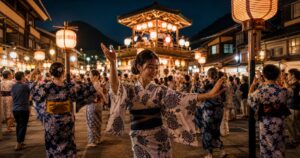
Each summer, the Chiran Neputa Festival transforms the historic streets of Minamikyushu City, Kagoshima Prefecture, into a vibrant celebration of illuminated warrior lanterns and mechanical artistry. Rooted in a unique cultural exchange with Aomori Prefecture, this night festival is now a cherished tradition in southern Japan, highlighted by the spectacle of five-meter-tall neputa floats and the rare automata performance at Toyotamahime Shrine.
Key Facts
- Festival Name: Chiran Neputa Festival
- Date: July 25, 2026 (Saturday), 19:00–21:00
- Location: Chiran-machi Shopping Street, Minamikyushu City, Kagoshima Prefecture
- Main Features: 5-meter-tall warrior lanterns (neputa), festival music, and Toyotamahime Shrine’s waterwheel-powered automata performance
- Cultural Roots: Originated from youth exchange with Hirakawa City (formerly Hiraka Town), Aomori Prefecture
- Special Event: Toyotamahime Shrine’s automata, performed specially on festival day
How the Chiran Neputa Festival Began
The Chiran Neputa Festival is a living example of how traditions can travel and take root in new soil. Its story begins in the early 1990s, when a youth exchange program between Hiraka Town (now part of Hirakawa City) in Aomori Prefecture and Chiran Town (now part of Minamikyushu City) in Kagoshima Prefecture sparked a cultural connection. During a home-stay, a high school student from Hiraka shared the excitement of his hometown’s neputa festival with his hosts in Chiran. Inspired by this exchange, he dreamed of bringing the neputa tradition to southern Japan. His enthusiasm moved both local governments, and in 1996, the first “Hiraka Town Neputa Festival in Chiran” was held, with craftspeople from Aomori guiding the creation of the inaugural float. Over the years, Chiran residents learned to build their own neputa, and the event became a cherished summer tradition unique to Kagoshima.
What is a Neputa? Explaining the Warrior Lanterns
“Neputa” refers to large, illuminated festival floats, typically fan-shaped and adorned with dramatic paintings of warriors or legendary scenes. Originating in Aomori Prefecture, neputa are paraded through the streets at night, their bold colors and backlit images creating a striking spectacle. In Chiran, the neputa stand about 5 meters tall and 4 meters wide, featuring dynamic warrior imagery. The parade is accompanied by flutes, drums, and the rhythmic chant “Ya-ya-do!” as the floats process through the historic shopping street. The term “neputa” is a regional variation of “nebuta,” both referring to these grand lantern floats.
Community Artistry: Building and Parading the Lanterns
The creation of a neputa is a community effort involving local volunteers, schools, and artisans. Each lantern is constructed from a wooden frame, covered with paper, and painted in vivid detail. The warrior motifs symbolize bravery and the spirit of the festival, while the act of building and parading the neputa fosters local pride and intergenerational cooperation. Over the years, Chiran’s neputa have evolved, with new designs and participants, including contributions from local schools and organizations. The parade is accompanied by traditional festival music and the energetic calls of participants, creating a lively and immersive atmosphere.
Toyotamahime Shrine Automata: Waterwheel-Powered Heritage
On the same day as the Chiran Neputa Festival, visitors can experience another rare tradition: the automata (karakuri ningyo) performance at Toyotamahime Shrine. “Karakuri” are mechanical puppets, and in this case, the movement is powered by a waterwheel—an ingenious use of natural energy. The automata enact scenes from Japanese folklore, with the 2026 performance featuring the tale of Ushiwakamaru and Benkei. This event is typically reserved for the shrine’s annual “Rokugatsudo” (June Lantern Festival), but a special showing is held to coincide with the neputa festivities. The automata are considered a valuable cultural asset, showcasing traditional engineering and storytelling. The performance is open to the public during the festival day, offering a rare glimpse into a form of entertainment that predates modern technology.
Documented Facts Versus Local Tradition
| Aspect | Documented Fact | Local Tradition |
|---|---|---|
| Festival Origin | Started in 1996 after youth exchange with Hiraka Town, Aomori | Celebrated as a symbol of friendship and cultural fusion |
| Neputa Lanterns | Fan-shaped, 5m tall, painted with warrior images, paraded at night | Believed to bring excitement and unity to the community |
| Karakuri Automata | Waterwheel-powered puppets at Toyotamahime Shrine, special performance on festival day | Regarded as a rare, living heritage unique to the area |
Interpreting Two Living Traditions
The Chiran Neputa Festival and the Toyotamahime Shrine automata are more than entertainment—they are living traditions that reflect the adaptability and creativity of local culture. The neputa lanterns, though inspired by Aomori’s famous festival, have been embraced by the people of Chiran as their own, evolving with each generation. The automata, meanwhile, connect visitors to a pre-modern era when mechanical ingenuity and storytelling were intertwined. Together, these events demonstrate how new customs can take root and flourish alongside older ones, enriching the cultural landscape of Kagoshima.
Respectful Visiting Guidance
- Arrive early to enjoy both the automata performance (from 13:00) and the neputa parade (from 19:00).
- Use designated parking at Chiran Peace Park and take the paid shuttle bus to the festival area, as local roads are closed and parking is limited.
- Follow all instructions from event staff and avoid entering restricted areas, especially during the parade.
- Do not touch the neputa floats or automata, as they are fragile and culturally significant.
- Photography is generally permitted, but always be mindful of other visitors and participants.
- Enjoy local food stalls and community activities, but dispose of trash properly and respect the environment.
FAQ
What makes the Chiran Neputa Festival different from Aomori’s Neputa festivals?
While inspired by Aomori’s tradition, the Chiran Neputa Festival began as a result of interregional youth exchange and is now a unique local event. The lanterns are built and paraded by Chiran residents, and the festival incorporates local culture and community participation.
What is special about the Toyotamahime Shrine automata?
The automata at Toyotamahime Shrine are powered by a waterwheel, a rare example of traditional mechanical puppetry. Special performances are held during the Chiran Neputa Festival, offering visitors a chance to see this living heritage in action.
How can visitors participate or view the festival safely?
Visitors should use the official shuttle bus from Chiran Peace Park, follow event staff instructions, and stay within designated viewing areas. Arriving early allows time to enjoy both the automata and the neputa parade without crowding.