English Version
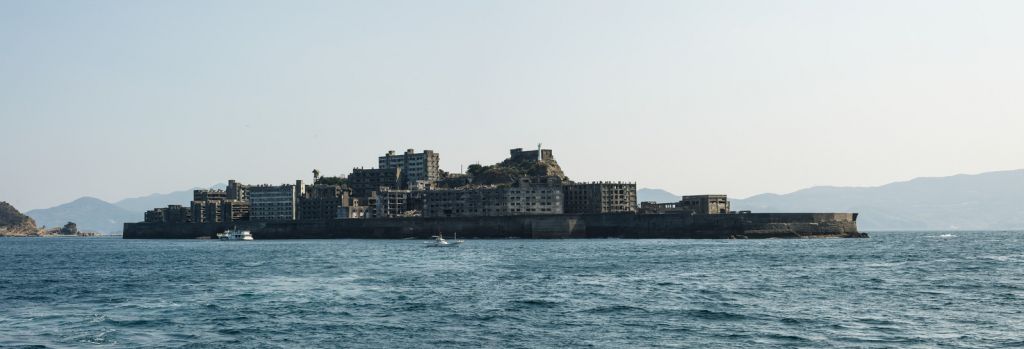
Floating off the coast of Nagasaki Prefecture, the uninhabited island known as Gunkanjima is famous as one of Japan’s largest and most dramatic ruins. Today, its overwhelming skyline of abandoned concrete buildings is part of a UNESCO World Heritage listing. Unauthorized entry is prohibited, but visitors can see the island through approved tours when weather and safety conditions allow.
At the same time, Gunkanjima is also known in Japan as a haunted place. Behind the rumors of ghost sightings and eerie photographs lies a harsh and complicated history. This article focuses on Gunkanjima as a haunted site and introduces 10 ghost stories and urban legends associated with the island.
What Is Gunkanjima?
Gunkanjima is a nickname. The island’s official name is Hashima.
According to the commonly told history, coal was discovered beneath the surrounding seabed in the 1800s, and the island was expanded through land reclamation for mining. Seen from the side, its shape was said to resemble the Japanese battleship Tosa, which is why people began calling it Gunkanjima, or “Battleship Island.”
As workers moved there and the coal industry boomed, Hashima transformed into an unusually wealthy, modern mining city. Schools, a hospital, markets, shrines, temples, entertainment facilities, red-light establishments, and barbershops could all be found on the island. At its peak in the 1960s, the population density is said to have reached about nine times that of Tokyo.
That is hard to imagine when you look at the empty ruins today.
As Japan’s main energy source shifted from coal to oil, the population declined. In 1974, the coal mine closed, the residents left, and Gunkanjima became an uninhabited island. Only the massive ruins remained.
In 2015, the island was included in a World Heritage listing. Even now, visitors are not allowed to enter freely. If you want to see Gunkanjima, use an official tour and follow all safety rules. The buildings are old, unstable, and dangerous, and trespassing is not permitted.
1. The Ghosts of Children
On Gunkanjima, people say they sometimes hear human voices coming from nowhere. Many of these are described as children’s voices.
There are also people who claim to have seen the spirit of a child. In local ghost stories, these apparitions are sometimes connected to the rumors of people who died from harsh labor, which will be discussed later.
Because the island is uninhabited and access is controlled, some say it is hard to dismiss the voices as homeless people or pranksters. That is part of what makes the story feel so unsettling.
2. Ghost Photos
Like many famous haunted places in Japan, Gunkanjima has a reputation for producing strange photographs.
People say that if you photograph the abandoned buildings, humanlike shadows may appear. If you take a close-up shot, a small child’s hand may show up in the frame. The hand is often linked, at least in rumor, to the stories of child spirits on the island.
Of course, odd shadows, camera artifacts, reflections, and pareidolia can explain many “ghost photos.” Still, the ruined concrete cityscape gives these images an especially eerie atmosphere.
3. The Person Who Disappeared
One old story says that a group once camped on the uninhabited island, and one person vanished.
It is a well-known tale that has been passed around for years. Gunkanjima is a small island, so the idea of someone simply disappearing there feels strange and disturbing.
Today, camping or sneaking onto the island is not allowed. The story likely comes from an earlier time when it may have been easier for people to slip in without permission. Whether anything like this actually happened is unclear.
4. The Street View Hand
Gunkanjima can be explored through Google Street View, making it possible to “visit” the deserted island from home.
In 2013, an image that looked like a human hand was found in Street View and became a topic online. The image is reportedly no longer visible in the same form, but at the time, some people treated it like a digital ghost photo.
A simple explanation is that the hand belonged to a member of the filming crew and was accidentally captured. Even so, because Gunkanjima already had a reputation for photos showing childlike hands, the image felt unnerving to many viewers.
5. Forced Labor Rumors
One reason Gunkanjima is said to have become a haunted place is the urban legend of forced labor.
According to this rumor, poor children and foreign workers were brought to the island and died under brutal working conditions. However, the article’s original source notes that clear evidence for these specific claims has not been found, and former island residents have said that such things did not happen. Records of children dying from overwork have also not been found.
Still, because the period is far in the past, the story continues to circulate in a shadowy space between rumor, memory, and history. The truth, as the saying goes, remains in the dark.
6. Suicides
Another story says that some workers, unable to endure the harsh labor, died by suicide.
People who tell this story say the spirits of those who died still wander the island. Unlike some of the more dramatic legends, this one can feel plausible to listeners because worker suicides are not unheard of even in modern society.
That said, the story is still usually told as rumor rather than confirmed fact.
7. Escape from the Island
There is also an urban legend that workers, unable to bear harsh conditions or forced labor, tried to escape from Gunkanjima.
Because the forced-labor stories themselves are disputed in the original article, the escape stories are also uncertain. Still, the idea has appeared in popular culture.
In 2017, the South Korean film The Battleship Island, directed by Ryoo Seung-wan, was released. The movie depicts the escape of 400 Koreans who were forced to work on Gunkanjima. It also became a controversial film, criticized not only by Japanese viewers but also by some Koreans with strong anti-Japanese views.
For those interested in how Gunkanjima has been portrayed in fiction, the film may be worth watching with that controversy in mind.
8. Torture and Massacre
Connected to the escape legend is another darker rumor: that some escapees were captured, brought back, and subjected to torture or massacre.
One version says they were beaten repeatedly with something like a rubber hose. As with the escape story, whether this actually happened is unclear.
If it were true, it would be easy to understand why people might imagine restless spirits lingering on the island, unable to find peace.
9. The Red-Light District
Gunkanjima was a workers’ island, and it is said that several red-light establishments once operated there.
After Japan’s Anti-Prostitution Law came into effect in 1957, such businesses gradually declined. Before that, the red-light area in the southern shopping district was reportedly so busy that lines formed every day. There was also said to have been an establishment for foreign workers.
As mentioned earlier, Gunkanjima was once a prosperous island, and its residents, including workers, had money to spend. Some people point to the existence of these entertainment districts as one reason to doubt the forced-labor rumors. In that view, foreign workers may have socialized with Japanese residents and enjoyed life on the island.
Of course, that interpretation does not settle every historical question. It is one part of the debate around the island’s past.
10. The Residents Who Vanished Overnight
As coal declined and oil became the dominant energy source, Gunkanjima’s population shrank until the island was eventually abandoned.
But the ruins still contained furniture, appliances, and traces of everyday life. If people were moving away normally, wouldn’t they clean out their rooms and take their belongings? This led to an urban legend that the residents of Gunkanjima disappeared overnight.
In this case, the mystery has an explanation.
Mitsubishi, the owner of the coal mine, reportedly arranged new homes and jobs for the island’s residents. Those new homes were already furnished with appliances and household items, so many people had no need to carry everything with them.
When you hear stories like that, it becomes easier to see why some people consider the forced-labor rumors to be urban legends rather than established fact.
Gunkanjima Today
Gunkanjima remains one of Japan’s most visually powerful abandoned places. Its massive concrete apartment blocks, empty streets, and weather-beaten seawalls have inspired films, novels, games, and countless horror discussions.
For travelers, the island is best understood as both a real historical site and a place surrounded by rumor. If you visit, do so only through an official tour, respect the restrictions, and remember that the ruins are not just a haunted backdrop—they are also the remains of a community where thousands of people once lived.
Japanese Language
長崎県の海上に浮かぶ無人島 「軍艦島」 は、 日本最大の廃墟 として有名です。現在は無人で、その圧倒的な廃墟郡は 世界遺産 にも登録されています。勝手な立ち入りは禁じられているものの、ツアーで観光に行くことは可能です。しかしこの軍艦島、 心霊スポット としても有名なんです。数々の心霊現象の裏には、軍艦島のすさまじい歴史が隠されていました…… 。今回は心霊スポットとしての軍艦島に注目し、 軍艦島に伝わる怖い話や都市伝説を厳選して 10個 紹介します 。
心霊体験や強制労働は真実だったのか?それともデマだったのでしょうか?。【歴史を簡単に紹介】軍艦島とは?。 横から見た軍艦島 そもそも軍艦島とは通称で、正しい名前は 「端島(はしま)」 といいます。また自然の島ではありません。1800年代に石炭が海底から発見され、その発掘のために埋め立てで作られた 人工島 です。
横から見たかたちが軍艦の「土佐」に似ていたため、軍艦島と呼ばれるようになりました。その後労働者が移住したのを皮切りに、炭鉱のバブルもあり、軍艦島は かなり裕福な先端都市 へと変貌します。学校から病院に市場、神社仏閣や娯楽施設、遊郭に理髪店まで、生活に必要なものはすべて島内にそろっていました 。最盛期の1960年代の人口密度は、なんと 東京の約9倍 にも達するほどのにぎわいでした。今の廃墟郡からは想像もできませんね。しかし石炭から 石油 へエネルギーが移行するにつれ、島民は減っていき、1974年についに 閉山 。
軍艦島は 無人島 となり、巨大な 廃墟 だけが取り残されることになりました。しかしその圧倒的な廃墟郡が2015年に世界遺産に登録 。現在も勝手な立ち入りは禁じられているものの、ツアーなどで観光に訪れることが可能です。【心霊スポット】軍艦島の怖い話10選【都市伝説】。。そんな軍艦島、日本最大の廃墟であると同時に、 日本最大の 心霊スポット としても有名なんです。ツアーでしか訪れることができないのに、不気味な 心霊体験 や 心霊写真 が後を絶ちません。
また裕福な島の裏にあったとされる、 恐ろしい都市伝説 がいくつか語られています。今回は心霊スポットとしての軍艦島に注目し、軍艦島に伝わる怖い話や都市伝説を厳選して 10個 紹介しましょう。。【心霊スポット】軍艦島の怖い話①子どもの幽霊。。軍艦島では、どこからともなく 人の声 が聞こえるといいます。しかも多いが、 子どもの声 です。子どもの霊 を見たという人もいます。これらは後で説明する、 強制労働によって死亡した 霊 だと語られています。
無人島ですから、他の心霊スポットのように、ホームレスやイタズラでは絶対にありません。だから怖いのです。【心霊スポット】軍艦島の怖い話②心霊写真。。他の心霊スポットと同様、軍艦島ではとにかく 心霊写真 が撮れるといいます。ビルを撮れば 人影 が写り、近景を撮れば 子どもの手 が写り込むとか。子どもというのは、先ほどの霊と同じなのかもしれません。【心霊スポット】軍艦島の怖い話③行方不明。。無人島の軍艦島でキャンプをしたら、1人が消えてしまったという話があります 。
昔から語られている有名な話です。この小さな島で どうやって人が消えるのでしょうか 。不思議は尽きませんね。もちろん現在は立ち入りが厳格に禁じられているので不可能でしょうが、昔はこっそり忍び込めたたのかもしれません。【心霊スポット】軍艦島の怖い話④ストリートビュー。Googleのストリートビューで軍艦島見てたら人の手発見(; ̄ェ ̄) pic.twitter.com/1gKd8Fmedg。— Cherukazu (@cherukazu) June 28, 2013 。
軍艦島はグーグルマップのストリートビューが充実しており、家にいながら無人島の心霊スポット探検をすることができます 。しかし2013年、 手 が写り込んだ心霊写真 のようなものが発見され、ネットを中心に騒がれました。現在は修正されているので見ることはできませんが……。もちろん撮影スタッフの手が写り込んだと解釈することもできますが、 もともと 子どもの手 が写るという心霊写真の多い軍艦島ですから、不気味なところがあります 。【都市伝説】軍艦島の怖い話⑤強制労働。
。なぜ軍艦島が 心霊スポット となってしまったのか、その原因として語られるのが、 「強制労働」 という軍艦島の都市伝説です。貧しい子ども や 外国人労働者 が連れてこられ、過酷な労働により死亡したというのです。ただしそのような証拠は今のところ見つかっておらず、元島民もそのような事実はなかったと話しています 。子どもの過労死などの記録も残されてはいませんが、なにしろ時代が古いですから。真相は闇の中…… 。【都市伝説】軍艦島の怖い話⑥自殺。
。過酷な労働に耐えれらず、 自殺 した者もいたといいます。その自殺者の霊が今もさまよっているというのですね。労働者の自殺は現代でも往々にしてあることですから、これはあったのかもしれません。【都市伝説】軍艦島の怖い話⑦逃亡。。過酷な仕事や強制労働に耐えかねた 労働者が島外へ脱出 したという都市伝説があります。上記の強制労働自体が事実かどうかわからないので、脱出も眉唾といえば眉唾なのですが、 2017年に韓国で公開された『軍艦島』という韓国映画(監督:リュ・スンワン)があります 。
軍艦島で強制労働させられた韓国人400人の脱出劇を描いた映画 となっています。ただし日本人はもちろん、 抗日思想を持つ韓国人からも叩かれた という奇妙な映画でもあります。興味のある方は1度見てみると面白いかもしれません。【都市伝説】軍艦島の怖い話⑧拷問と虐殺。。上記の脱出の話の続きで、一部は捕まって連れ戻され、 拷問 や 虐殺 に遭ったという都市伝説もあります。ゴムチューブのようなもので何度も打たれたとか。こちらも脱出同様、事実なのかはわかりませんが、本当なら、その魂が成仏できずにうらめしそうに漂っているのもうなずけますよね……。
【都市伝説】軍艦島の怖い話⑨遊郭。。軍艦島は労働者の島でしたから、 遊郭(性風俗店) もいくつかありました。1957年には売春防止法が施行され、次第に下火になってしまったのですが、南部商店街の遊郭には 毎日行列ができるほど栄えていた といいます。その中には、外国人専用の遊郭もありました 。最初に書いたように、そもそも軍艦島は裕福な島で、島民(労働者)もお金を持っていたのです。強制労働がなかったとされる根拠のひとつに、この遊郭があります。
外国人労働者も日本人と親しんで、人生を謳歌していたのではないか…… ということですね。【都市伝説】軍艦島の怖い話⑩一夜で消えた島民たち。軍艦島は主要エネルギーの移行により島民が減り、やがて無人島となってしまったのですが…… 廃墟には、家具や家電などの生活環境がすっかり丸々残されていました 。移住するのなら、部屋を片付けるなり、家財を持っていくはずですから、 軍艦島の島民は一夜にして消えてしまったのではないかという都市伝説 が語られました。
しかしこの謎は明かされています。炭鉱の所有者であった三菱は、島民全員に 新しい住居や仕事先 を斡旋しました。新居には家具や家電も丁寧に用意されていたので、家財を持っていく必要がなかったのですね。こういった太っ腹な話を聞く限りでも、やはり強制労働という噂は 単なる都市伝説 なのではないかと思えてしまいます 。今回は心霊スポットとしての軍艦島に注目し、軍艦島に伝わる怖い話や都市伝説を紹介しました。軍艦島はその圧倒的な廃墟郡のビジュアルから、映画や小説、ゲームといった さまざまな作品のモデルや舞台 になっています。
その中から、筆者が実際に視聴して面白かった作品を厳選して5つ紹介しますので、興味のある方はぜひチェックしてみてください 。長崎県の最恐心霊スポットランキングは→ 【閲覧注意】長崎県の最恐心霊スポットランキング!!