English Version
In Japan, many people have heard the word yaku-doshi, often translated as an unlucky year or a year of misfortune. But what does it actually mean? Is it different for women and men? And why is the so-called great calamity year treated as especially serious?
Even in Japan, not everyone understands the details. Many people simply think of it as a year when bad luck might happen. The belief, however, has a long history and is tied to older ideas about fate, age, and spiritual danger.
What Is Yaku-Doshi?
Yaku-doshi refers to certain ages when a person is believed to be more likely to suffer misfortune, illness, accidents, or other troubles. It is an old Japanese custom that is said to have existed at least by the Heian period, from 794 to 1185, and it continues today.
There are three stages of yaku-doshi:
- Mae-yaku: the year before the main unlucky year
- Hon-yaku: the main unlucky year
- Ato-yaku: the year after the main unlucky year
Traditionally, hon-yaku is considered the strongest of the three, followed by mae-yaku and then ato-yaku. Among these, one age is called taiyaku, or the great calamity year. This is treated as the most dangerous of all the unlucky years and is often taken more seriously than the others.
The ages are calculated using kazoedoshi, or the traditional counted-age system.
For men, the unlucky ages are generally:
- 24, 25, 26
- 41, 42, 43
- 60, 61, 62
For men, age 42 is considered the great calamity year.
For women, the unlucky ages are generally:
- 18, 19, 20
- 32, 33, 34
- 36, 37, 38
- 60, 61, 62
For women, age 33 is considered the great calamity year.
By this reckoning, men experience yaku-doshi about nine times in life, while women experience it about twelve times. These ages are fixed and do not change from year to year.
However, people sometimes say that the year before or after can feel worse than the main year itself. In other words, just because you are in ato-yaku does not mean you should completely relax, at least according to the belief.
Counted Age: Why the Numbers Can Be Confusing
Yaku-doshi is usually calculated by kazoedoshi, the old Japanese counted-age system. In this system, a person is considered one year old at birth, and everyone gains one year of age at the New Year.
That means a baby born on December 31 would be considered two years old on January 1, even though only one day has passed.
This can be confusing for travelers or anyone used to the modern birthday-based system. If you are checking whether a year is your yaku-doshi, the traditional counted age is usually the standard.
As a reference, the yaku-doshi birth years for 2020 were as follows.
For women:
- Mae-yaku: born in 2003, 1989, 1985, or 1961
- Hon-yaku: born in 2002, 1988, 1984, or 1960
- Ato-yaku: born in 2001, 1987, 1983, or 1959
For men:
- Mae-yaku: born in 1997, 1980, or 1961
- Hon-yaku: born in 1996, 1979, or 1960
- Ato-yaku: born in 1995, 1978, or 1959
Why Are the Ages Different for Women and Men?
At a glance, women have more yaku-doshi years than men. There are several theories about why.
One explanation is that yaku-doshi originally had a connection to major life roles or turning points. For example, age 19 for women was associated with childbirth, while age 25 for men was associated with becoming active and responsible in work.
From that perspective, women may have more unlucky years because traditional society assigned them more life-stage roles at certain ages.
The origin of yaku-doshi is uncertain, but one common theory connects it to Onmyodo, a system of divination and cosmology that was influential in the Heian period. If the belief truly comes from that era, some of the age-related assumptions, especially around childbirth, reflect a very different time from modern life.
There is also wordplay involved. In Japanese, the sound of 42 can be associated with death, while 33 can suggest something disastrous or miserable. These associations may have helped make those ages feel especially ominous.
Can Bad Luck Affect People Around You?
In yaku-doshi belief, misfortune is not always limited to the person whose unlucky year it is. Some say it can affect close family members, friends, or others nearby.
There are different ways people explain this. Someone might be pulled into another person’s bad luck, or they might even suffer in that person’s place. Others claim they did not notice anything happening to themselves, only to realize later that a series of troubles had struck the people around them.
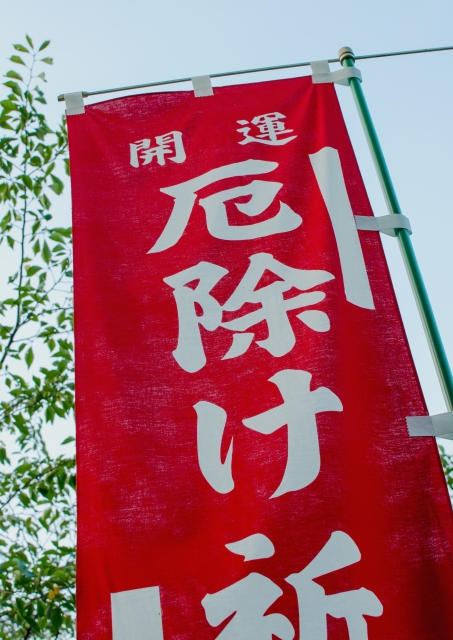
This may sound unreasonable to skeptics. Still, within the belief, misfortune is not something a person can simply remove on their own. That is one reason many people choose to receive yakuyoke, a ritual for warding off misfortune.
The Onmyodo Connection
The idea of yaku-doshi is said to have existed by the Heian period, though its exact origin is unclear. One theory says it comes from Onmyodo.
Onmyodo was influenced by ancient Chinese ideas, including yin-yang and the five elements. It used systems such as the ten heavenly stems and twelve earthly branches to judge good and bad fortune.
References related to these ideas appear as early as the Nihon Shoki, one of Japan’s oldest historical texts. Although few forms of Onmyodo survive in everyday life today, traces of it are often said to remain in customs like yaku-doshi, astrology, and directional taboos connected to building or movement.
In that sense, yaku-doshi can be understood as part of Japan’s long history of folk belief rather than as a proven rule of the universe.
There Is No Scientific Proof
Yaku-doshi remains deeply rooted in Japanese culture, but there is no clear scientific evidence that certain ages truly cause more misfortune.
If disasters happened to everyone every time their yaku-doshi arrived, life in Japan would be chaos. So it is better not to assume that an unlucky year automatically means something terrible will happen.
Worrying too much can become its own problem. If you spend a whole year thinking every small mistake or inconvenience is caused by yaku-doshi, it can easily become stressful. An unlucky year does not mean you are doomed.
Stories of Misfortune
So, have people actually experienced bad luck during yaku-doshi? According to some accounts, yes, though the severity varies widely.
A writer named Yuha Shimada, who published a book whose title can be translated as Yaku-Doshi Is Real!, reportedly experienced serious trouble during an unlucky year. According to the story, Shimada was forced to resign from a university after being accused of recruiting for Aum Shinrikyo, despite having no connection to yaku-doshi itself. Later, a book related to Aum Shinrikyo was also delayed again and again.
Ordinary people also report strange runs of bad luck during yaku-doshi, such as belongings suddenly breaking more often or stressful events increasing. Of course, not everything can be blamed on yaku-doshi. Still, there do seem to be people who feel they experienced repeated misfortune during those years.
Shrines and Temples for Yakuyoke
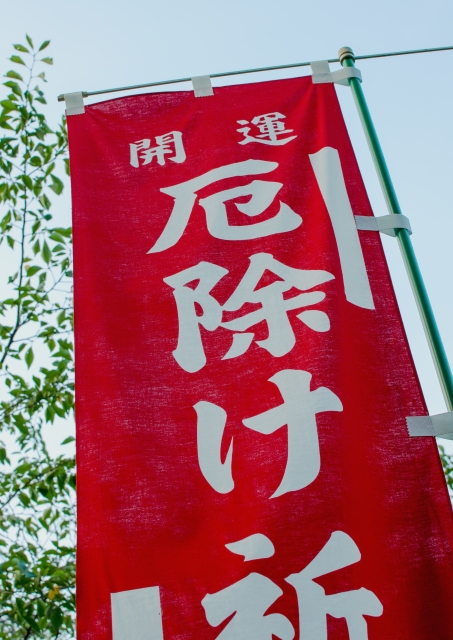
Many shrines and temples across Japan offer yakuyoke rituals to ward off misfortune.
Famous examples include Soshuji Temple in Sano, Tochigi Prefecture, widely known as Sano Yakuyoke Daishi, and Kitain Temple in Kawagoe, Saitama Prefecture, known as Kawagoe Daishi.
There are also many local shrines and temples that offer similar rites. In total, there may be hundreds across Japan. There is no strict rule that one place is always best, so it is common to visit a nearby shrine or temple that offers the ritual.
If you plan to go, check the shrine or temple’s official information in advance, especially dates, reception hours, fees, and visitor rules. Be respectful of worshippers and do not enter restricted areas.
Should You Get Yakuyoke?
Even without scientific proof, yakuyoke may help ease anxiety. Many yaku-doshi ages line up with major life stages, such as changes in work, family, health, or responsibility. Age 42 for men and 33 for women, for example, may coincide with raising children, career pressure, or other important roles.
For that reason, some people choose yakuyoke not because they are certain a curse exists, but because it gives them peace of mind.
The place does not have to be famous. If you are interested, look for a nearby shrine or temple that offers yakuyoke. For travelers, it can also be a meaningful way to experience a living part of Japanese folk belief, as long as you approach it respectfully.
Japanese Language
厄年ってなに?女性と男性で違うの?大厄は普通の厄年とは何が違うの?。などなど日本古来の文化でありながら「厄年」という言葉について理解している方は少ないと思われます。実際私も最近まではほとんど知らず「何となく不幸な年」くらいにしか理解していませんでした。では厄年という言葉にどのような意味が含まれているのでしょうか?。歴史や由来を交えながら紹介していきます。厄年とは。。まず厄年とは「厄災」が多く降りかかってしまう年齢のことを指し古くから信じられてきた日本独自の文化となります。
平安時代にはすでに登場していたとされ現代まで続いています。厄年には「前厄・本厄・後厄」の3つがあり。1本厄。2前厄。3後厄。の順番で運気が下がるとされております。また厄災が降りかかると言われており中でも「大厄」とよばれる年は全ての年の中でも最も厄災が降りかかる年ですので他の厄年よりも重要視される傾向にありますね。そして実際の厄年の年齢ですが「数え年」で考えると男性は。前厄。本厄。後厄。24 歳。25 歳。26 歳。41 歳。42 歳(大厄)。
43 歳。60 歳。61 歳。62 歳。となっており、女性は。前厄。本厄。後厄。18 歳。19 歳。20 歳。32 歳。33 歳(大厄)。34 歳。36 歳。37 歳。38 歳。60 歳。61 歳。62 歳。となっております。男性は人生でおよそ9回。女性は人生で 12 回経験することになりますね。そして厄年に普遍はしませんので通年で上記通りの年に「厄年」と言われております。また前厄や本厄などと分かれていますが人によっては前厄のほうがひどい、後厄のほうが散々な目にあってしまう可能性があるのも厄年の特徴の 1 つ。
後厄だから~といって油断してはいけないので注意しましょう。数え年。文中で「数え年」という言葉が出てきましたが数え年とは「生まれた年を 1 歳とし年が立つ毎に 1 つ歳をとる」という考え方です。つまり平成元年に生まれた方は数え年でいくと「誕生日関係なし」に 31 歳ということになり、たとえ大晦日の 12 月 31 日に生まれたとしても翌年の 1 月 1 日には 2 歳ということになります。ややこしいですが厄年は数え年で考えるのが基本となりますので間違えないように注意してください。
ちなみに 2020 年の厄年は。女性。前厄。本厄。後厄。平成 15 年生。平成 14 年生。平成 13 年生。平成元年生。昭和 63 年生。昭和 62 年生。昭和 60 年生。昭和 59 年生。昭和 58 年生。昭和 36 年生。昭和 35 年生。昭和 34 年生。男性。前厄。本厄。後厄。平成 9 年生。平成 8 年生。平成 7 年生。昭和 55 年生。昭和 54 年生。昭和 53 年生。昭和 36 年生。昭和 35 年生。昭和 34 年生。
となっていますのでご参考までに。女性と男性で違う理由・厄年の理由。さきほどの表を確認してパッと見でも「女性の方が多いな」と感じたと思います。ではなぜ女性の方が厄年となる年が多いの?と思った方もいらっしゃるでしょう。これには諸説がありますが実は厄年には「何らかの役割を持った年」が関係しており。・女性の厄年である 19 歳は出産。・男性の厄年である 25 歳に仕事で活躍する。などの役割を持った年だからと言われる説があります。つまり女性のほうが多いのは「役割が多いから」という見解になりますね。
厄年という概念が誕生したのはこれまた諸説ありとなりますが平安時代に人気があった「陰陽道」が由来と言われておりますので、現代と比べると出産などの時期がおかしいというのは確かにあります。しかし時代を超えても普遍というのはやはり何らかの理由があるからと言えるでしょう。ときに 42 歳は「死に」という言葉に変えることができたり、 33 歳は「散々」という言葉に変えることもできますので。身近な人にも降りかかることが。厄年の方は自分だけでなく家族や友人といった身近な人に降りかかってしまうことがあり、不幸に見舞われてしまうことがあります。
これはただ単に巻き込まれてしまった場合や身代わりとなってしまう場合などたくさんのケースがあり、自分は気づいていなかったけど実は周りで不幸が続いていたーということが。馬鹿げた話と思われるかもしれませんが厄は自分で払ことができないとされていますので、本記事の最後でも紹介しますが厄除けは行っておくようにしましょう。陰陽道。。厄年という考え方は「平安時代: 794 年~ 1185 年」にはすでに誕生しており、詳しい出所は不明となっていますが陰陽道が由来となっているのではないかと言われております。
。陰陽道は古来の文献である日本書紀にはすでに関係性が深い文が登場しており昔からある俗信となります。また陰陽道とは「陰陽 5 行説」という中国古来の世界観かた形成された俗信であり、十干十二干などを使用して吉凶を判断していたとされています。現在まで続いている陰陽道は少ないですが厄年など様々な事柄に結び付くことが多いので歴史的な俗信と言えるでしょう。現代ですと星占いや建築の「方忌」などが陰陽道の名残と言われておりますね。科学的根拠は全くない。
厄年という文化が日本に根強く残っているというのは否定できませんが、明確な化学的根拠があるわけではありませんので実際は「何かあるかもしれない」程度になってしまうのが現状です。たしかに厄年の度に厄災が降りかかっていたら日本国民はとんでもないことになってしまうので当然のことといえるでしょう。ですので厄年だからといって災難が多い…と考えてしまうのは精神的によくありません。考えすぎてしまうと 1 年間の間に些細なことでも厄年だから、という思いができてしまいます。
厄年で死ぬわけではありませんので思い込みは避けましょう。不幸にあった人達。では厄年になったからといって実際に不幸になった人達はいるの?という話ですが、程度の差はあれどとんでもない目にあった人たちはたくさんいらっしゃいます。「厄年」はある!という本を出版している島田裕巴という方は、厄年に全く関係のなかったオウム真理教の勧誘をしたとして大学を辞職させられる事態に陥ったことがあるそうです。その後のオウム真理教についてまとめた本でも出版が遅れに遅れてしまったなども。
また一般の人でも厄年になった瞬間モノが壊れやすくなった、ストレスがかかることが多くなったなどの事態に陥っている人は多くいらっしゃいます。すべて厄年のせいというわけではないと思いますが度重なる不運に見舞われた方一定数存在するようですね。厄払い神社・寺院。日本各地に厄払いをしてくれる神社・寺院は存在します。有名なとこですと栃木県佐野市にある「佐野厄除け大師」として有名な惣宗寺(そうしゅうじ)という寺院や、埼玉県川越市にある「川越大師」の喜多院などがあります。
また地方でも厄除けを行っている神社や寺院は複数ありますので全てを含めると数百ほどはあるでしょう。基本的に「どこがいい」という条件はありませんので近くにある神社・寺院で厄除けを行ってもらって大丈夫です。ですが事前に行っているかどうかという下調べはしておきたいところですね。根拠はなくとも厄除けをオススメします。科学的根拠はないと言いましたが精神的な影響を考えますと厄除けは行っておいたほうがいいと思われます。とくに厄年となる年齢は仕事やプライベートで区切りとなる場合が多いですので、心配毎を増やさないためにも行っておくことがオススメです。
( 42 歳や 33 歳は子供ができる、仕事で重要な役になりやすいため)。場所はどこでも構いません。近くの神社や寺院で厄除けを行っているところを探しましょう。また人生で数回しか出会わないイベントでもありますので人生経験の 1 つとして考えてもいいかもしれませんね