English Version
The conflict Japan called the Greater East Asia War is more commonly known in English as the Pacific War or part of World War II. It is often described as a war of Japanese aggression, but this article introduces a different and controversial view through one symbol: the national flag of Palau.
For travelers interested in dark history, war memory, and the lingering atmosphere of the Pacific battlefields, Palau is a place where beautiful scenery and painful history exist side by side.
Where Is Palau?
Palau is an island nation in the Pacific Ocean made up of around 300 islands of various sizes. Its population is about 20,000, and its capital is in the Melekeok/Ngerulmud area. The average yearly temperature is around 27°C, giving it a warm, tropical climate.
People have lived in Palau for roughly 4,000 years. Over its long history, the islands were under Spanish, German, and later Japanese administration.
Palau is also a popular travel destination, especially for visitors who want clear seas, diving, and quiet island scenery. But it is also often described as a country with friendly feelings toward Japan. Some people even say that Palau’s flag has a connection to Japan’s Hinomaru, the Japanese national flag.
The Meaning Said to Be Hidden in Palau’s Flag
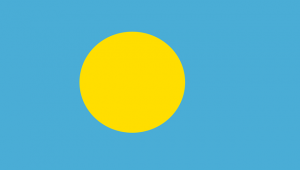
Palau’s flag has a blue field with a yellow disk. Officially, the disk represents Palau’s beautiful moon. Still, many people notice that the design resembles Japan’s Hinomaru.
According to one widely repeated story, the Palauan moon was inspired by the Japanese sun. Japan’s flag represents the sun, and Palau’s flag uses the moon as its counterpart. Another story says the moon is slightly off-center out of respect for the Hinomaru, and also so that the disk appears centered when the flag is raised and moving in the wind.
Of course, this interpretation is disputed. It is not stated as fact in official documents from the Palauan government. Still, the reason such stories continue to be whispered is because Japan and Palau have had deep historical ties.
The original Japanese article cites Futanoshin Nagoshi’s work on Japanese influence overseas, as well as an account of a dialogue with the designer of Palau’s flag.
What Happened in Palau Under Japanese Administration
Palau was once under German colonial rule. After Germany’s defeat in World War I, Japan administered Palau.
According to this account, Japan carried out various policies that helped Palau’s economic development. Schools and hospitals were built, infrastructure was improved, and the islands developed under Japanese rule. There are also said to be records of Japanese people and local Palauans becoming friendly and singing together.
Later, during World War II, Japan was defeated by the United States. As the war turned against Japan, Japanese forces in Palau fought while badly outmatched. In this telling, they also tried to protect Palauan civilians from being killed in the fighting.
One story says that when Palauan residents wanted to join the battle alongside the Japanese soldiers, the Japanese deliberately spoke harshly to them, saying something like, ‘We could never fight with people like you.’ The meaning, according to this version of the story, was not contempt. It was a painful attempt to keep Palauans away from the battlefield.
The article claims that, even while facing defeat, the Japanese military prevented Palauan civilian deaths. After the Japanese forces were defeated, Palauan people are said to have respectfully buried the Japanese soldiers who had died.
From this perspective, Japan’s administration of Palau is presented not as simple occupation, colonial rule, or an invasion, but as something more complicated. Palau had been colonized by Spain and Germany before Japan arrived. Because Palau did not have the military strength to resist powerful foreign nations, it had little choice but to accept outside rule. This article argues that Japan, unlike earlier colonial powers, contributed to Palau’s development.
Supporters of this view point to Palau’s continuing pro-Japanese sentiment. They argue that if Japan’s presence had been only a war of invasion, Palau would not remain so friendly toward Japan today, and Palauans would not have buried fallen Japanese soldiers with care. Some local people are also said to have remarked that the Japanese period was the best time in Palau’s modern history.
After the war, the United States administered Palau. According to the original article, the U.S. tried to erase traces of Japan by destroying things Japan had built and by promoting anti-Japanese education. Even so, Palau is still often seen as a pro-Japanese country. Until Palau became independent in 1994, the islands were important to the United States as a military base, but the article argues that the U.S. did not contribute to Palau’s development in the same way.
A Contested Memory of War
The article concludes that World War II, or the Greater East Asia War, is called a war of aggression because Japan lost. It also argues that Palau was not the only place where Japan invested money and technology, pointing to Korea after annexation as another example.
Palau was ruled by Spain and Germany, then administered by Japan, and later administered by the United States. Looking at that history, the article asks whether the Greater East Asia War was truly only about invasion.
This is a sensitive and disputed historical topic. Travelers visiting Palau’s war memorials, battlefield sites, or old military remains should go with respect, use legal access routes and local guides where appropriate, and never disturb graves, relics, caves, ruins, or unexploded ordnance. The beauty of Palau’s islands is real, but so is the weight of the history left behind there.
Japanese Language
大東亜戦争…太平洋戦争とか第二次世界大戦と呼ばれる大戦のことです。第二次世界大戦は、日本による侵略戦争だったかのように語られていますが、現実はそうではありません。大戦中に日本が統治していた国のひとつパラオの国旗の意味をあなたは知っていますか?。パラオってどこ?どんな国?。パラオは太平洋に浮かぶ島国で、大小300の島々で構成されています。人口は約2万人で首都はマルキョクといいます。年平均気温は27℃で温かく温暖な気候が特徴です。約4000年も前から人が生活していた歴史ある国でスペインやドイツ、そして、日本の統治下にあった時代もありました。
。あったかい島国…旅行先としても人気なんだよね 海で泳ぎたいなぁ パラオは実は親日国だって知ってた?そーなの?そう、パラオは親日国で国旗も日の丸と関係があるんじゃないかっていわれているんだよ。パラオの国旗でどんなの?。パラオの国旗の意味。パラオの国旗を見たことがありますか?。パラオの国旗はこちら…。。画像:Pixabay 。なんとなく…日の丸に似ていると思いませんか?。この国旗はパラオの美しい月をデザインしたものだそうですが、実は日の丸に由来しているとも言われているんです。
日本の日の丸は太陽を表していますので、月はその対のもの…そして、真ん中の月が少しずれているのは、日の丸への敬意と旗があげられたときに月が中央に来るようにという説があります。もちろん、この説を否定する人もいますし、パラオ政府の公式文書にもそのような事実は記載されていません。でも、こんなことがまことしやかにささやかれるのは日本とパラオの深い友好的なつながりがあったからなのです。参考資料: 名越二荒之助「世界に生きる日本の心」 。パラオ国旗の作者との対話 。
日本が統治していたパラオで起ったこと。。画像:Pixabay 。親日国として知られるパラオは、日本の統治下にあった国です。統治下にあったのに親日国・・・「あれ?日本は戦争で他の国にひどいことをしたんじゃないの?」って思った方もいらっしゃるのではないでしょうか。実は、それが大東亜戦争…第二次世界大戦が本当は日本の侵略戦争ではなかったこととも関係しているんです。パラオと日本の関係。。画像:Pixabay 。ドイツの植民地支配を受けていたパラオですが、ドイツが敗れた後は日本が統治しました。
日本はパラオに様々にな政策を行って、この政策はパラオの経済発展を助ける一因となったのです。学校や病院を建てて、インフラを整備しパラオを発展させました。。現地の人と仲良くなって、一緒に歌を歌ったりしていた…という記録もあるそうです。その後、第二次世界大戦では日本はアメリカに敗れたわけですが、戦争の時に圧倒的に劣勢だった日本軍はパラオを守るために奮戦します。そして、パラオの民間人を一人も死なせないようにするために尽力し、一緒に戦闘に加わろうとしたパラオの住民にあえて「お前たちなんかと一緒に戦えるか」とひどい言葉を投げたそう。
これは、 パラオの人を戦争で死なせないようにするための言葉 でした。実際に、劣勢の中でも日本軍は「パラオの民間人の死者を一人も出さなかった」のです。そして、日本軍は敗れるのですが、この時パラオの人たちは亡くなった日本軍の兵士を手厚く埋葬してくれたのです。日本は、パラオを統治していましたが、それは占領や植民地支配ではなく、ましてや侵略戦争などではなかったのです。4000年も前から人が住んでいた歴史ある国を、ドイツやスペインが植民地支配し、その後やってきたのが日本でした。
武力で劣るパラオは植民地支配を受け入れるほかなかったわけですが、その 国を発展させるために貢献したのは日本 なのです。侵略戦争だったら…今でもパラオが親日国なわけありませんし、パラオの人が日本軍の兵士を埋葬するわけもありません。今でも「日本の統治時代が一番よかった」という現地の方もいらっしゃるそうですよ。戦後、アメリカはパラオから日本の痕跡を消すために日本が作ったものを壊し、反日教育をしたそうですが、それでもパラオは今ても親日国です。1994年の独立するまで、アメリカにとってパラオは軍事拠点でしたが、発展にに寄与することはなかったのです。
参考資料: 美しきサンゴの国「パラオ」。その歴史に秘められた「親日」への想い。: 英考塾 。まとめ。第二次世界大戦…大東亜戦争は侵略戦争だった。そう言われるのは、日本が戦争に負けたからです。パラオだけに日本が優遇をしていたわけではなく、併合した韓国などにも同じように日本はお金と技術をつぎ込んだのです。パラオが長い間、ドイツとスペインに占領されていたこと…そして、その後、日本が統治したこと…。日本の統治後はアメリカがパラオを統治したことを考えると、そもそも大東亜戦争って侵略か目的だったの?
という疑問が湧いてきませんか?。そのあたりもいずれオカルトオンラインで取り上げていきます