English Version
Have you ever seriously thought about aliens?
Most people have encountered the idea somewhere—through television, manga, anime, movies, or news stories about UFO sightings. Hollywood hits like Alien and Men in Black revolve around extraterrestrials, and even if someone has never studied the subject, the famous image of the “Gray”—a being with a large head and oversized eyes—is easy to picture.
In general, occult news about UFO sightings or captured aliens feels like a fairly modern phenomenon. But the mysterious beings discussed here, the Anunnaki, are said to have been worshiped since ancient times. According to one theory, the Anunnaki were not merely gods or visitors from another world, but the creators of humanity itself.
Evolution, missing links, and an ancient alien theory
Some researchers argue that Darwin’s theory of evolution has been broadly supported by later developments in genetics and modern evolutionary science. Others, however, point to what are often called “missing links”—the apparent absence of traces showing intermediate stages in evolution.
One theory that grows out of this debate is the idea that the Anunnaki created humanity.
So what exactly was Darwin’s theory of evolution?
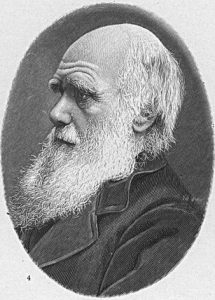
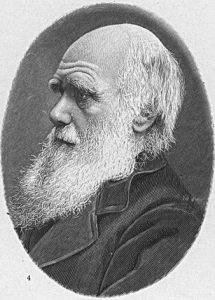
In 1859, the British naturalist Charles Darwin published On the Origin of Species, a work that described the process of evolution among plants and animals. At the time, it was heavily criticized because many people saw it as a rejection of Christian creationism. Since then, Darwin’s ideas have been expanded, revised, and studied through many different fields of research.
At first glance, the Anunnaki and the missing links of evolution seem completely unrelated. But when these two ideas are examined together, they lead to a much larger question.
What if there is a hypothesis—almost a “new creation-evolution theory”—that could overturn the accepted history of humanity? Where did our ancestors truly come from?
Darwin’s evolution and the missing link
In simple terms, evolutionary theory says that life does not suddenly leap from an ancestral “Generation A” to a descendant “Generation D.” Instead, change occurs gradually through intermediate stages—Generation B, Generation C, and so on—as organisms adapt to their environments and survive through natural selection.
A key part of Darwin’s theory is natural selection: individuals within a species vary, and those with advantageous traits are more likely to leave more offspring. Over long periods of time, these accumulated changes can lead to evolution.
However, critics of the theory point out that in some fossil discoveries, traces of Generation A and Generation D appear to exist, while the supposed intermediate Generations B and C have not been found. Because sudden evolutionary leaps are rejected by standard evolutionary theory, and because some intermediate traces appear to be missing, they argue that the expected evolutionary process may not exist in the way it is commonly imagined.
If Generation A and Generation D are assumed to be ancestor and descendant, but B and C cannot be found, another hypothesis becomes possible: perhaps A and D are not directly connected at all.
In that view, evolution may not follow a clean A-B-C-D path. Instead, later generations may have appeared from an entirely different source.
When this idea is applied to human beings, the question becomes even more complicated. One of the simplest claims made by those who reject evolution is that “monkeys do not become apes,” or more broadly, that monkeys are monkeys and humans are humans.
This overlaps with the beliefs of people who support creationism, which makes the issue even more complex. The major question is religious as well as historical: if “God created humans,” then what exactly is meant by “God”?
And one answer proposed by some ancient-astronaut theorists is the Anunnaki.
The Anunnaki as gods
The Anunnaki are said to have been worshiped as a group of gods in Mesopotamian civilization, one of the world’s four great ancient civilizations. References to them can be found in traditions connected to the Sumerians, including Sumerian mythology.
There are different interpretations: some describe the Anunnaki as a single entity, while others describe them as a group of gods. Their details will be explored further in later parts of this series.
In any case, one theory emerged after the interpretation of certain ancient clay tablets left by the Sumerians: the creators of humanity were the Anunnaki. In other words, “creator” equals “Anunnaki.”
But this theory of the Anunnaki as creators is said to hide a terrifying secret.
Japanese Language
皆さんは【宇宙人】という存在について考えたことはありますか?。誰もが一度はテレビや漫画、アニメ、色々な媒体を通じて宇宙人という存在は知っていると思います。例えば大ヒットした洋画「エイリアン」や「メン・イン・ブラック」などで扱われているテーマは宇宙人、あるいは異星人です。それ以外でもUFOの存在や目撃ニュース、有名な「グレイ」と言われる大きな目に大きな頭の宇宙人と言われれば、大抵の人は漠然とした姿を想像することが出来るでしょう。また、一般的にUFOの目撃や宇宙人が捕獲されているといったオカルトニュースは比較的新しいものです。
しかし、今回取り上げる「アヌンナキ」という謎の宇宙人はなんと古代からその存在を崇められており、一説では アヌンナキが人類の創造主 であるというものも存在します。人類の進化はダーウィンの唱えた「進化論」はその後の遺伝子工学研究や進化の定説によってほぼ証明されたという研究者がいる一方で、「ミッシングリンク」と呼ばれる「 進化の中間を指す痕跡 」がないことを指摘する研究者もいるのです。その中の1つが「アヌンナキ人類創造主説」となります。ダーウィンの進化論とは?
1859年にイギリスの自然科学者であったチャールズ・ダーウィンが出版した「種の起源」という著作に示された、動植物全てにおける進化の過程を定義したものであり、提唱した当時はキリスト教の創造論を否定する内容だとして大きく非難などを受けていました。現在はダーウィンの唱えた進化論からさらに発展し、多種多様な研究が現在も行われています。一見、全く関係性の見えない謎の宇宙人アヌンナキと進化論のミッシングリンク。この2つの説を掘り下げていくと大きな問題にぶつかります。
それは、現在考えられている人類そのものの歴史を根底からひっくり返すような「新・創造進化論」とも言える仮説が唱えられているからです。我々人類の祖先は果たしてどこから生まれてきたのでしょうか?。ダーウィンの進化論とミッシングリンク。。画像引用元: 。いわゆる進化論は、祖先にあたる「A」世代から「B」世代、「C」世代を経て子孫の「D」世代へと徐々に環境やへの適応や生きていくにあたっての必要な選択を行うと言われており、A世代からD世代への 跳躍的な進化については否定 されています。
また、ダーウィンの進化論の中の中核を担っているのはいわゆる自然淘汰説であり、同種間の個体差や有利な形質を持った個体ほど多くの子を残すなど、種の保存と蓄積の結果が「進化」に向かうとされています。しかし、現在発掘されて発見された化石などの中に、A世代とD世代の痕跡は発見されているにも関わらず、間のB世代やC世代が発見されていないケースが多いのです。進化論の前提として、 跳躍進化が否定されていること に加えて、祖先から子孫への 中間の世代の痕跡が発見されていない ということから 「進化の過程が存在していないのではないか?
」 という結論に至るのです。A世代とD世代はそれぞれ祖先と先祖であるという仮定があるにも関わらず、BやC世代が見つからないことによって、「A世代とD世代に直接的な関係はない」という新しい仮説が成り立ちます。これは、A.B.C.Dという進化の道筋ではなく、全く新しいところからB以降の世代が発生したという可能性を示すものです。これを人間に置き換えた場合には、もっと複雑な進化過程があると考えられている訳ですが、一番指摘されているポイントは 「猿は類人猿にはならない」 という、ごく単純な進化論の否定です。
猿は猿であり人ではないというのが、進化論を否定する人々の大まかな主張ですが、これは創造論を信じている人々にも関係してくるので少々複雑な問題があります。その主な問題とは「神が人を創った」という大前提に基づく宗教的な価値観や考えであると同時に、この神の定義の1つに登場するのが謎の宇宙人と言われている「アヌンナキ」であり、シュメールやアッカド神話に登場する神々の集団ではないのか?ということです。要するに、何をもって神と定義するか?といったところでしょうか?
。神であったとされるアヌンナキ。。アヌンナキは世界四大文明の1つメソポタミア文明において神々の集団として崇拝されていたとされる存在です。その中でもシュメール人を起源とする、シュメール神話などにその記述を確認することが出来ます。また、アヌンナキを単体とする説や神々の集団であったとする説などもありますが、アヌンナキの詳細については次回以降で紹介していこうと思います。いずれにせよ、シュメールに残されたとある粘土板文字を解読した結果「人類の創造主はアヌンナキである」という「創造主=アヌンナキ」という仮説が生まれました。
しかし、この 創造主アヌンナキ説には恐ろしい秘密 が隠されているのです