English Version
So far in this series, we have looked at myths and epics that seem to preserve memories of lost super-civilizations, or descriptions that some readers compare to nuclear weapons. Among those ancient records, the two texts most often said to describe warfare from a very distant past are the great Indian epics: the Mahabharata and the Ramayana.
One theory says the Mahabharata was completed as an epic around the 5th century, but its contents are said to preserve accounts of royal conflicts and wars that took place before the Common Era.
As with the Bible and other sacred texts, epics like these were originally passed down orally. They were preserved so that stories of the ancestors could be carried across generations. The Ramayana, another of India’s two great epics, is generally thought to have taken shape around the 3rd century, and it centers on the legendary Indian prince Rama.
One striking feature of both epics is the number of passages that sound, at least to modern readers, like descriptions of weapons. As mentioned earlier in this series, epics often use metaphor and symbolic language. Even so, some researchers and enthusiasts argue that these descriptions may have been inspired by things that once existed in some form.
For example, Noah’s Ark is said in tradition to have come to rest on Mount Ararat, and in modern times, objects claimed to be possible remains of the Ark have become subjects of ancient-history research. In Japan, the Three Sacred Treasures recorded in the Kojiki and Nihon Shoki are still regarded as hidden treasures passed down through the Imperial Family.
If such traditions can continue to be treated as meaningful records, then perhaps, some argue, the ancient weapons described in India’s two great epics should not be dismissed outright. This is where the Mahabharata becomes especially unsettling.
The terrifying weapon described in the Mahabharata
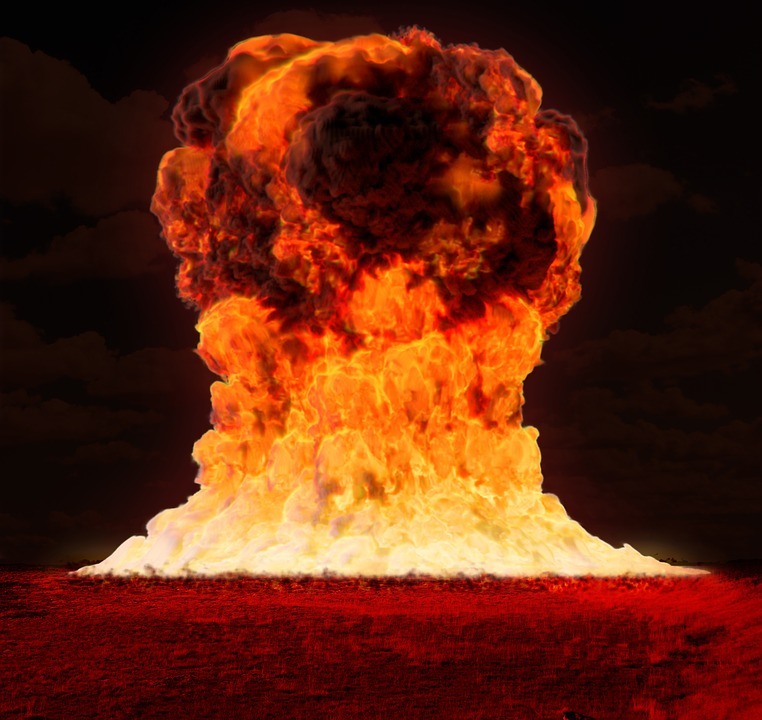
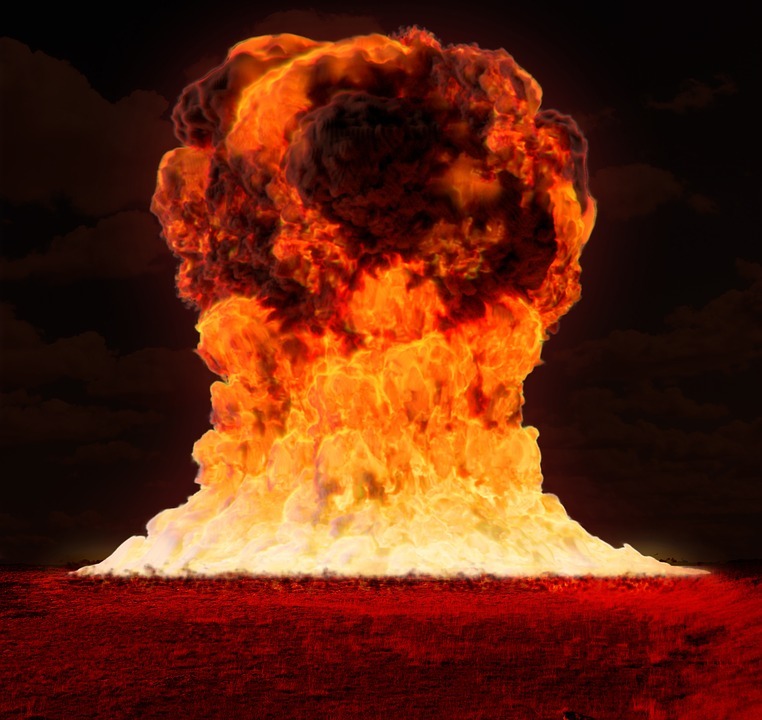
One famous passage describes an unknown weapon as a kind of iron thunderbolt that brought enormous death. It was said to shine as brightly as ten thousand suns, rising as a towering pillar of blazing fire and cloud.
The account continues with horrifying details: bodies were burned so badly they could not be recognized; hair and nails fell out; vessels broke without being struck; birds turned white; and within hours, all food had spoiled. The passage is often cited from Book 7, The Death of Drona.
For supporters of the ancient nuclear war theory, phrases like “bodies burned beyond recognition,” “hair and nails falling out,” and “a towering pillar of blazing fire and cloud” sound disturbingly similar to descriptions from Hiroshima and Nagasaki after the atomic bombings.
Strictly speaking, the atomic bomb dropped on Hiroshima and the one dropped on Nagasaki were not exactly the same type. But the devastation they caused is deeply familiar in Japan’s modern memory. The massive column of smoke known as a mushroom cloud is widely known, and the U.S. military photographed the cloud during the bombing operation.
In Hiroshima, it is said that many people rushed toward rivers in search of water after the blast, only for the riverbanks and water to become filled with bodies of victims who had suffered severe burns and shock. Many who managed to drink water also died, as their internal organs had been damaged by the intense heat.
It is also well known that many victims suffered severe skin burns from the heat ray. Even people who were not directly exposed to the blast later suffered aftereffects from radiation, including hair loss.
According to the Mahabharata passage, the scene appears to describe the immediate aftermath of an explosion. If the damage was caused by extreme heat, then the description of hair and nails being destroyed does not necessarily need to be interpreted only as a delayed aftereffect. Within the logic of the passage, it is disturbingly consistent.
Agneya, the weapon of the fire god
The person said to have used this terrifying weapon was Ashvatthama, a figure who stands on the opposing side of the Mahabharata’s central heroes. He is portrayed as a brave warrior, but from the perspective of the epic’s protagonists, he is an enemy.
The weapon is called Agneya. In modern terms, the name is often understood as meaning “the weapon of the fire god.”
That name is fascinating. In the Ramayana, Agni, the god of fire, does exist, but he does not play a major role. In the Mahabharata, however, the weapon is treated as something connected to the fire god.
If we look further back, Agni appears in the Rig Veda, one of the sacred texts said to have been completed around the 12th century BCE. In that text, Agni is revered second only to Indra.
To put the timeline simply: from around the time the Aryans are said to have arrived in India, beginning roughly in the 18th century BCE, until the formation of the Rig Veda around the 12th century BCE, Agni was treated as a high-ranking deity. Yet roughly a thousand years later, in the world of the Mahabharata, Agni is no longer given the same central role.
One speculative reading is this: in the ancient past, beings or people who could control fire may have been seen as powerful and worthy of worship. Over the course of a thousand years, that ability or technology may have been used not only as a sacred power, but also as a weapon in war.
Returning to Ashvatthama, his position in the story is important. He is an enemy from the viewpoint of the main heroes, even if he is also described as a courageous warrior. From this, one could form the hypothesis: Agni, Ashvatthama, and the people or race who used this weapon may have been linked in the memory preserved by the epic.
Going even further, while there is no absolute proof that settles the conventional theory of the Aryan arrival as described in relation to the Rig Veda, it is possible to imagine a different civilization entering India, bringing with it the ability to handle fire. That technology, brought from outside, may later have been used as a weapon in internal wars.
This remains speculation, not established archaeology. But as a legend, it is an eerie way to read the text.
A strange pattern in ancient weapon legends
The mystery deepens when we remember that weapon-like descriptions also appear in ancient Indian Buddhist texts. In other words, across Indian sacred writings and epics rooted in the Hindu world, “ancient weapons” appear again and again.
India is the land of the Indus Civilization, one of the world’s oldest known urban cultures. In that ancient historical landscape, multiple traditions seem to preserve descriptions that resemble weapons. Is this only coincidence?
And then there is the site often named in connection with the scars of this supposed ancient warfare: Mohenjo-daro.
Mohenjo-daro belongs to the Indus Civilization, one of the oldest civilizations in the world—the same ancient world that seems to echo behind these epic and sacred descriptions. For travelers interested in such places, it is important to treat real archaeological sites with respect, follow local rules, and avoid unsafe or restricted areas.
Japanese Language
ここまでいくつかの神話や叙事詩に残された古代の超文明や、核兵器を連想させるものについて紹介してきましたが、これら叙事詩や神話、伝承に残された記録の中でも最も古代の戦争を描いているとされるのが古代インドの叙事詩である「マハーバーラタ」と「ラーマーヤナ」と呼ばれる2種類の書物です。マハーバーラタが叙事詩として完成されたのは5世紀頃だという説がありますが、その内容は紀元前に起こった王族同士での争いや戦争についての記述が残されているものとされています。
聖書や他の経典などにも言えることですが、こういった叙事詩は基本的に口伝として伝わったものが、世代を超えて祖先へと伝わるようにと残されたものです。同じく、インドの2大叙事詩と呼ばれる「ラーマーヤナ」は形態の成立は紀元3世紀頃だと考えられていますが、「ラーマーヤナ」はインドの伝説の王子とされているラーマ王子の物語を中心に構成されています。これらの2つの叙事詩の大きな特徴は、戦いの中に兵器を思わせる記述がかなり多いことです。神話の章でも紹介しましたが、叙事詩は比喩などを用いてはいるものの、実在していたものを表現している可能性が極めて高いのです。
例によってアララト山に漂着したと言われているノアの方舟は現在になってその残骸らしきものが現代のアララト山にて発見されており、現代では古代史の研究の対象となっています。また「古事記」や「日本書紀」によって残されている三種の神器は、今もなお天皇家に伝わる秘宝とされています。これらの事実から、古代インドの叙事詩であるこの2つの物語に記述されている古代兵器も、実在している可能性は多いにあると考えても良いのではないでしょうか?。マハーバーラタ に記述された恐るべき兵器の威力。
。それは太陽を1万個集めたほど明るく、輝ける炎と雲のそそり立つ柱となって、巨大な死をもたらす鉄の稲妻と呼ばれる未知の兵器だった。……死体は見分けが付かないほど焼ただれ、髪の毛と爪は脱け落ちてしまった。器は外から力を加えないのに壊れてしまった。鳥は白くなっていた。数時間後、食物はすべて腐ってしまった。出典:第7巻「ドローナの死」 「死体が焼けただれ、髪の毛と爪は抜け落ちてしまった」 。。「輝ける炎と雲のそそり立つ柱」 。これは広島・長崎に原子爆弾が落とされた時の様相と酷似しているのです。
広島型原子爆弾と長崎に落とされた原子爆弾は厳密に言えば微妙に種類は違うのですが、その凶悪な被害の様子は日本人にとっては馴染み深いでしょう。原爆投下直後に出来たきのこ雲と呼ばれた大きな柱状の煙が多くの人の知るところであり、アメリカ軍は原爆投下作戦において、このきのこ雲そのものを撮影しています。広島で原子爆弾が落とされた時には、水場を求めて川に押し寄せたものの、重度の火傷によるショックなどで川には大量の遺体が埋め尽くすように折り重なっていたと言います。
また、水にありつけた人も内蔵が焼けた状態で急に水を飲んだことから多くの人が亡くなっています。また、強烈な熱線により被爆者の多くが皮膚が焼けただれたことも知られています。直接被爆しなかった関節被爆被害者の方々は、放射能による後遺症によって髪の毛が抜けたことも現在に伝わっていることです。マハーバーラタにある記述によれば、おそらく爆発直後に様子だとは思いますが、熱線による被害はいとも簡単に髪の毛や爪を溶かすものでしたから、後遺症と取らずとも辻褄としては合うのです。
この恐るべき兵器を使ったとされるのは、 アシュヴァッターマンと呼ばれるマハーバーラタの主人公的な存在のいわば敵側の人物でした。この兵器の名前はアグネーヤと呼ばれており、古代の言葉を現代風に言い換えると 「火神の武器」 とのことです。この兵器の名前にも非常に興味深い点があります。古代インドのラーマーヤナの中にはアグニという火の神は存在しているものの、活躍はほとんどしていません。しかし、このマハーバーラタでは火の神の武器として扱われています。
。少しアグニを掘り下げると、実はこのアグニという神は紀元前12世紀頃に完成したという聖典の一つである「リグ・ヴェーダ」という経典には、インドラに次いで崇められているのです。少し整理すると、、、。古代紀元前18世紀頃からのアーリア人がインドに来た頃から、リグ・ヴェーダ成立の紀元前12世紀くらいまでは「アグニ」は高位の神であったこと。その後、約十世紀が経った1000年後の叙事詩であるマハーバーラタでは、あまり扱われない存在となったこと。つまり、考え方を変えれば 紀元前に火を扱える存在は高位であり信仰などの対象となったが、1000年の間に、この火を扱える者がその技術を駆使して攻撃をした 。
とも読み取れます。少し話が戻りますが、アシュヴァッターマンの立ち位置は「敵」です。勇敢な戦士としては描かれていますが、 マハーバーラタの主人公から見れば敵対関係の存在 です。ここに アグニ=アシュヴァッターマン=兵器を使った種族 という仮説が成り立ちます。さらに言えば、リグ・ヴェーダで通説となっているアーリア人の到来を正しく証明するものはありませんが、インドという国に違う文明が入り、その文明人は火を扱っていたこと、そしてそれは海外から持ち込まれた技術であり、後の国内戦争において兵器として扱われた・・・。
という考え方も出来るのです。古代兵器の不可思議な共通点。。さらにさらに戻ると、兵器の記述は同じく古代インドの仏典にも登場していました。つまり、ヒンドゥー教を起源とするインドの聖典、叙事詩には「古代の兵器」が共通して描かれているのです。インドと言えば、インダス文明発祥の地であり、最古の歴史の残る地域でもあります。そんな歴史を残している古代インド史において、共通して兵器のような記述があること。これは果たして単なる偶然の一致なのでしょうか?。
そして…、これらの戦火の傷跡を残したと言われている遺跡の名はモヘンジョ・ダロ。叙事詩や聖典に残された記述と同じ世界的にも最古と言われているインダス文明の地域です