English Version
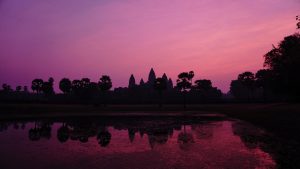
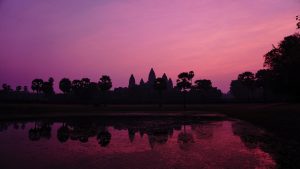
Angkor Wat is one of the world’s most recognizable UNESCO World Heritage sites. Even if you have never been to Cambodia, you have probably seen its towers in photos, documentaries, or travel programs. Today, it is a major tourist destination, and travelers can visit from Japan and many other countries on organized tours.
But Cambodia, the country where Angkor Wat stands, also endured one of the most horrifying tragedies of the 20th century: the mass killings carried out under Pol Pot and the communist movement known as the Khmer Rouge. And Angkor Wat was not untouched by that history.
Where Is Angkor Wat?
Angkor Wat is a temple complex in northwestern Cambodia, famous for its distinctive lotus-bud-like towers and vast stone architecture. The name itself gives a sense of its importance: in Khmer, Angkor means capital or city, and Wat means temple.
Together with the surrounding Angkor archaeological sites, Angkor Wat is listed as a UNESCO World Heritage site. Its carvings, layout, and religious significance make it one of Cambodia’s most important cultural treasures.
Pol Pot and the Khmer Rouge
Today, Cambodia can be visited by tourists, but during the period when Pol Pot and the Khmer Rouge held power, travel was unthinkable. For ordinary Cambodians, it was a time when many people likely wished they could escape their own country.
Pol Pot was a politician whose real name was Saloth Sar. He came from a relatively wealthy farming family, studied in France, and had family connections to the royal palace. He is also said to have visited China and North Korea.
Around the time Pol Pot returned to Cambodia, China was approaching the height of the Cultural Revolution. It is not certain how much that movement influenced him, but during this period he established a training school for the Communist Party of Kampuchea deep in the jungle. That organization later developed into the Khmer Rouge, an armed movement that fought against government forces.
After many twists and turns, the Khmer Rouge led by Pol Pot captured the capital, Phnom Penh, on April 17, 1975. On May 13 of the same year, Pol Pot became prime minister.
For the Cambodian people, this marked the beginning of hell.
Pol Pot changed the country into what was called Democratic Kampuchea and forced the population into an extreme form of self-sufficient primitive communism. Factories were closed. Cars were confiscated. Banks were shut down. Money was abolished.
An estimated 2.5 million people were forced out of the cities and sent to rural areas to work in agriculture.
Pol Pot’s goal was a communist society with almost no inequality. But anyone considered opposed to that system, or anyone judged to be an obstacle, could be sent to a prison camp and executed. Intellectuals were especially targeted.
One of the most infamous of these prisons was Tuol Sleng, also known as S-21.
S-21 Tuol Sleng
Tuol Sleng was a prison camp where educated people, politicians, civil servants, religious figures, and others were sent. People who complained about work, criticized the regime, or broke various rules could also end up there.
Conditions were horrific. Prisoners were tortured and then executed. According to accounts cited in the original article, only eight people survived S-21.
Some of the rules forced on the Cambodian people under the Khmer Rouge included bans on religion, private property, romantic relationships, and sex without permission. Children were separated from their parents and placed under military control. Marriage was not a matter of personal choice; people were forced to marry partners selected by the government.
Anyone who complained or resisted could be sent to a camp or killed on the spot. There are accounts of people being labeled intellectuals simply because they wore glasses.
Those sentenced to death were reportedly made to dig their own graves. To save ammunition, many victims were killed with farming tools such as hoes. Children and babies were also murdered, according to survivor testimony and historical accounts. Some people are said to have been used in human experiments while still alive. Many others died before execution from disease or malnutrition.
The number of Cambodians killed under Pol Pot is generally estimated at 1.5 million to 2 million, though the exact figure is still uncertain. If the number was 2 million, that would have been more than 20 percent of Cambodia’s population at the time.
Was Angkor Wat Also a Site of Tragedy?
Around Angkor Wat, there were many places known as Killing Fields, where people were executed under the Pol Pot regime. Accounts say that food was sometimes mixed with insecticide, that prisoners were made to eat rotten food, and that revolutionary songs were played loudly to drown out the voices of those being killed.
Angkor Wat itself, now a world-famous tourist destination, was also used as a stronghold by Pol Pot’s forces. Bullet marks still remain in parts of the site, reminders that this sacred and historic place was once caught in violent conflict.
There were also Japanese nationals killed while heading toward Angkor Wat during a period when Pol Pot’s forces still had strong influence in the area.
Visiting Today
Angkor Wat can now be visited relatively safely by travelers who have the time and budget to go. But its beauty exists alongside a very recent and painful history. Cambodia suffered mass killings under the Khmer Rouge, and Angkor Wat was one of the places connected to that era.
If you visit Angkor Wat or nearby memorial sites, go with respect. Stay on official routes, follow local guidance, use reputable guides when possible, and do not enter restricted or uncleared areas. The ruins are magnificent, but the land around them also carries memories of war, loss, and survival.
Japanese Language
世界遺産のアンコールワット、行ったことはなくても写真やテレビで見たことがあるという方が多いのではないでしょうか。アンコールワットは今では、有名な世界遺産で観光地になっています。日本からのツアーなどもありますし、行こうと思えば行ける場所です。そのアンコールワットがあるカンボジアでは、ポル・ポトが率いた 「クメールルージュ」 という共産主義政党による、とんでもない大虐殺が起こりました。当然、アンコールワットでもその悲劇が起こったのです。。公開日:2019年11月6日 更新日:2020年3月14日 。
アンコールワットはいつ作られた?どこにあるの?。。アンコールワットは、カンボジア北西部に16世紀に建設された寺院です。つくしの頭みたいな特徴のあるデザインはとても印象的ですよね。アンコールワットは、その周辺の遺跡群含めて 全てがユネスコの世界遺産に指定 されています。クメール語でアンコールは首都、ワットは寺院という意味…この名前からもアンコールワットはカンボジアにとってとても重要な寺院ということが解ります。美しい装飾が施されたアンコールワットは宗教的にも建築物としてもとても貴重なものです。
。ポル・ポトとクメールルージュとは?大虐殺の理由に迫る。アンコールワットがあるカンボジア…今では、観光で訪れることができますが、ポル・ポトが率いるクメールルージュが台頭していた時代にはそうは行きませんでした。ポル・ポトが政権を握っていた時代…観光はおろか、自国民ですら「カンボジアから逃げ出したかった」に違いありません。そのくらいのひどい虐殺を ポル・ポト率いるクメールルージュ がしたのです。。ポル・ポトは、 本名をサロット・サルという政治家 です。
。画像引用元: ポル・ポト 。比較的裕福な農家の出身でフランス留学も経験したエリートで王宮とも関係がある家でした。中国や北朝鮮を訪問したこともあると言われています。。ポル・ポトがカンボジアに帰国した頃、中国ではあの悪名高い文化大革命が本格化する少し前の時代でした。この文化大革命に影響を受けたかは定かではありませんが、ポル・ポトはこのころに ジャングルの中にカンボジア共産党の訓練学校 を作ります。そして、政府軍との戦闘を繰り広げるクメールルージュという戦闘組織に発展していきます。
紆余曲折を乗り越えて、 ポル・ポト率いるクメールルージュは1975年4月17日に首都のプノンペンを占拠し、同年5月13日にポル・ポトは首相に就任 することになります。ポル・ポトが首相に就任してから地獄の日々がカンボジア国民を襲った。。ポル・ポトは首都の名前をプノンペンから民主カンプチアに変更…そして、自国民に対してに原始共産主義に基づいた、 過剰な自給自足の生活を強要 します。工場を閉鎖し、自動車を取り上げ、銀行を閉鎖し、貨幣制度を廃止。
そして、 都市部から250万人もの人を強制的に農村に移住させて農業に従事 させました。。ポル・ポトが目指していたのは、 格差が極端にない共産主義社会 でした。そして、この共産主義に反対するものや、邪魔ものだと判断された知識階級の人間を強制収容所に送って処刑してしまいます。その強制収容所の中でも悪名高いのが 「トゥールスレン」 です。参考資料 B.Kiernan, The Pol Pot Regime(third edition), p.127 。
井川一久編著「新版カンボジア黙示録」田畑書店 。悪名高き「S21 トゥール・スレン」から生還したのはわずか8人。。ポル・ポトが作った強制収容所のトゥールスレンは、学歴がある知識人や、政治家、公務員、宗教家などが主に送られた場所です。他にも、仕事や政権に不満を言ったり、様々な規則を破った人も、トゥールスレンに送られました。トゥールスレンの環境は劣悪で、ひどい拷問を受けた後に処刑されました 。ちなみに当時クメールルージュが国民に強いていた規則の一部を紹介すると…。
宗教禁止 個人資産の保有禁止 子供を親元から引き離す 自由恋愛 許可のない性行為 というものです。子供はすべて親から引き離して軍隊に入れられ、恋愛も禁止 。結婚は政府が指定した人と強制的に させられました。。これに不満を言ったり反対したりすると強制収容所に送られるか、その場で処刑されるかのどちらかでした。中には 「眼鏡をかけている」というだけで、知識人だと言われ、強制収容所に送られたケースもあった そうです。そして、死刑を宣告された人は、自分で穴を掘らされます。
そして、 弾薬を節約する為に、クワなどで殺害 されたそう… 子供や赤ちゃんは地面や岩に叩きつけて殺された とか。生きたまま人体実験に使われた人もいたそうです。もちろん、処刑さる前に、栄養失調や病気で亡くなる人も多くいました。ポル・ポトが虐殺した自国民は150万人から200万人と言われていて、正確な数字は解っていません。仮に200万人だとすれば、 当時のカンボジアの人口の20%以上 となります。参考資料 “Year Zero: Reflections From Cambodia On Hatred, Blame, And U.S. Politics”. ハフポスト. (2016年11月28日) 。
アンコールワットも悲劇の地だった?。。世界遺産アンコールワットの周りにも、ポル・ポトが自国民を処刑するためにつくられた 「キリングフィールド」 という場所がたくさんありました。キリングフィールドでは、 食べ物に殺虫剤が混ぜられて、腐ったものを食べさせられました。そして、処刑される人の声をかき消すために、革命の歌が大音量で流されていた そうです。そして、今では観光地にになっているアンコールワットもポル・ポト派の要塞として活用されていました。
アンコールワットには弾痕もたくさん残されていて、アンコールワットが激しい戦闘の地だったことが解る場所も残されています。ちなみに…まだ、 ポル・ポト派の勢力が強かった時代にアンコールワットに向かった日本人も殺害 されています。参考資料 アンコール・ワットは「キセキのイセキ」(カンボジア) 。まとめ。。世界遺産のアンコールワット…今ではお金と時間さえあれば、比較的安全に観光ができる観光地になっています。ですが、ほんの少し前、アンコールワットがあるカンボジアではポル・ポト派による自国民の大虐殺が起こり、アンコールワットはポル・ポト派の拠点のひとつでした。
アンコールワットからも近い場所にも作られた処刑場のキリングフィールドには、虐殺の痕跡が今も生々しく残されています