English Version
Have you ever heard the word “Inugami”? Many people in Japan may think first of The Inugami Family, the famous mystery novel by Seishi Yokomizo and its film adaptations, especially the eerie image of Sukekiyo in a white mask. But that story is fiction. Although the films have an occult atmosphere, they are ultimately mystery entertainment.
The Inugami explored in this series is something different: a yokai and local spirit tradition often discussed alongside “kitsune-tsuki,” or fox possession. It is also tied to old beliefs about “Inugami bloodlines,” families said to have a connection to possessing spirits.
The Origins of the Inugami
There are several theories about where Inugami legends began. In Shikoku, where I am from, the belief still felt surprisingly close to everyday local memory. I have my own personal experience involving what I can only call a “real Inugami and an onmyoji,” but I will introduce that story another time. For now, let’s start with the Inugami as it is generally passed down in folklore.
The Inugami, also written as “Kugami,” was apparently recognized at least as far back as the Heian period. Some theories connect it to kodoku, a form of curse magic said to have come from China. It was considered so dangerous that bans were reportedly issued against it.
According to accounts of Heian-period Inugami sorcery, the ritual involved starving a dog to the limit, cutting off its head, and burying the head beneath a crossroads or busy intersection. The idea was that the dog’s resentment would be intensified and its spirit could then be used as a cursed object.
In simple terms, the belief was that humans could create a vengeful spirit by subjecting a dog to terrible suffering, then use that spirit to curse a specific person. These accounts are disturbing, and they should be understood as folklore and historical belief, not as anything to imitate.
Other versions describe similarly cruel methods: a starving dog tied so it could not move, food placed in front of it, and its head severed at the moment of desperate hunger. In one version, the remains were enshrined so the spirit could possess the practitioner. Another story connected to the origins of kodoku describes making ferocious dogs fight, feeding the survivor fish, then killing the dog while it ate and consuming the remaining fish. By modern ethical standards, these stories are unthinkable.
The ideas of curses and spirit possession were likely deeply connected to the worldview of the Heian period, when onmyoji and ritual specialists held an important place in the imagination of society. As someone who has dogs now and has lived with several dogs in the past, even thinking about these stories is horrifying and deeply unpleasant. But in the Heian period, such acts were apparently believed by some to be a method of curse magic. Even today, animal abuse is a serious social issue; back then, folk belief seems to have shaped what some people thought was effective.
What Does an Inugami Look Like?
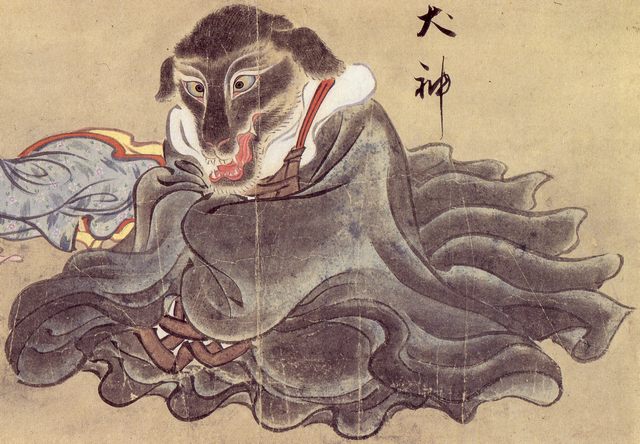
When you hear the word “Inugami,” you might imagine a large dog-like spirit. In many regional traditions, however, the Inugami is said to look more like a small creature, almost like a rat.
Even larger versions are described as only about one shaku and one sun long, roughly 35 centimeters, or around 14 inches. It is a very small being. Depending on the region, its features vary: some say its tail is split, while others say its mouth is torn open.
In Kochi Prefecture, the Inugami is said to be as tiny as a grain of rice. Its coloring also differs from story to story, with white, black, spotted, and other variations appearing in local accounts.
Inugami Bloodlines
Separate from the older concept of an Inugami as a curse, evil spirit, or possession born from Heian-period beliefs, western Japan has traditions about families known as “Inugami-suji” or “Inugami-tsuki.” The names vary slightly by region.
These were families said to have many possessing spirits attached to them. In some areas, there were even customs of checking whether a family had any connection to Inugami before arranging a marriage. There are many theories about these family legends, and each version belongs to the folklore of its own region.
Inugami Possession
Traditionally, the Inugami was said to be kept by families known as Inugami-tsuki or Inugami-mochi. It was believed to live in places inside the home, such as a storage room, beneath the floor, or inside a water jar.
When an Inugami possessed a person, the victim was said to show physical symptoms: pain, trembling, and even howling like a dog. In many accounts, the tiny Inugami entered the body through the ear or another opening and settled inside the internal organs.
The behavior of the possessed person differs depending on the region, but stories often mention mental or personality changes as well.
Inugami Legends and Discrimination
Families labeled as Inugami-mochi or Inugami-tsuki have existed as social categories in certain regions, but there is also a theory that these beliefs were connected to discrimination, including issues related to outcaste communities and village exclusion.
Another hypothesis is that people suffering from mental illness or symptoms that were not understood at the time may have been ostracized and treated as “possessed.” For that reason, Inugami folklore is difficult to discuss as “just a folk tale.” In this series, the subject is being approached from an occult and folklore-study perspective, with that complexity in mind.
Stories About the Birth of the Inugami
Several stories remain about how the Inugami first came into being. Among the main theories are:
- The Nue slain by Minamoto no Yorimasa in the Heian period split into four parts, which became Inugami.
- A drawing of a dog made by Kukai, also known as Kobo Daishi, to ward off wild boars came out of the picture and became an Inugami.
- After the monk Genno Shinsho split the Sessho-seki, or Killing Stone, to calm its curse, fragments flew to Shikoku and became Inugami.
The third story is from a much later period: Genno Shinsho lived during the Nanboku-cho period, well after the Heian background often associated with Inugami beliefs.
Because folk traditions change their form and origins little by little as they are passed down, it is possible that different theories appeared at different turning points in history.
Still, these theories alone do not answer the larger question: what exactly is the Inugami? Is it a yokai, a curse, a possessing spirit, a family legend, or something else?
From here, this series will examine the many theories and continue searching for the true identity of the Inugami.
Japanese Language
皆さんは「犬神」という言葉を聞いたことがあるでしょうか?。映画化された 横溝正史の長編推理小説を映像化した「 犬神家の一族」は顔面に白マスクをかぶったスケキヨで有名ですが、これはあくまでも推理小説でありフィクション作品。映画そのものもオカルティックですが推理要素の大きい娯楽作品です。今回、考察していきたい「犬神」とは「狐憑き」などに代表される、いわゆる「憑き物」として語られている妖怪、土着の伝承であったり、犬神筋と呼ばれるような家系についてです。
犬神の起源については諸説ありますが、私の出身である四国では特に周囲でも聞くほど信仰されているような存在でした。私自身が経験した「本当の犬神と陰陽師」の実体験もあるのですが、この詳細は後日紹介させて頂きます。まずは、一般的に伝わっている犬神という存在について紹介していきます。犬神(狗神)の起源について。。画像引用元: 。犬神の起源 は、遅くとも平安時代にはその存在が認識されていたそうです。その当時は中国から伝わった呪詛の1つである「蠱毒(こどく)」だとも言われており、非常に危険視されたことで禁止令までが発令されていました。
平安期に行われていた犬神の術は以下のような方法だったそうです。まず、犬に餌を与えずに極限の飢餓状態にした上で犬の首を切り落とし、この首を 辻道と呼ばれる現代でいうと人の多い交差点や、十字路の下に埋めて 犬の霊の怨念を高め、その霊を呪物として使役する というもの。。簡単に言えば、人間の手によって犬に怨念が高まるような苦しみを与えて悪霊にし、それをもって人を呪っていたということです。これは 特定の人物などを呪うために行われていた方法 なのだとか。
他にも、犬を飢餓状態にして動けないように支柱などに縛り、目の前に食べ物を見せた状態で同じく犬の首を落とすと、その首が餌を食べた後に死亡するので、この頭部を焼いて骨になったものを祀り、 自分自身へと憑依させるという方法 などもあったようです。そして蠱毒(こどく)の起源とされる方法では、獰猛化した犬を戦わせ、生き残りに魚を与えて、魚を食べている間にその首を落として残った魚を自分で食べるなど、現代の倫理観では絶対にあり得ないような方法であったそうです。
こういった呪いという概念や憑依させるという感覚については、おそらく時代背景が平安時代であったことから、 陰陽師などとの繋がりが深い ものだと考えられます。私自身は現在も犬を飼っていますし、過去にも数匹の犬を飼っていたので考えるだけでも恐ろしく不愉快になるのですが、実際に平安時代には「呪詛の方法」として行われていたのです。現代でも時として「動物虐待」の問題は取り上げられますが、当時の感覚では 俗信 によってその効果が信じられていたのですね。
犬神の見た目や姿。犬神と言う言葉を聞くと「なんとなく大きいもの」を想像しませんか?。実は各地に言い伝えられている犬神そのものの見た目や形は、どちらかと言えばネズミのような姿であるそうです。大きいと言われているものでも一尺一寸とされているので約35センチ程度です。非常に小さい存在であり、地域によって「尾が避けている」と言われたり「口が裂けている」と少しずつ特徴が違います。中でも高知県では小さな米粒ほどの大きさであると言われており、その色も白黒や斑といったような様々な姿で伝わっています。
犬神の家系とは。。悪霊や生霊、呪詛といった時代ならではの犬神という概念とは違い、西日本には 「犬神筋」「犬神憑き」 など(地域によって若干の呼び名が違います ) と呼ばれる家系などが存在します。これらの家系は俗にいう憑き物の多い家系であり、地域によっては結婚をする時に犬神に関係していないかどうかを確認するような習慣まであったそうです。こういった家系や家柄としての犬神伝承にも諸説あり、それぞれの土地の民間伝承になっています。犬神憑きと呼ばれる憑依現象。
元来、犬神は犬神憑きや犬神持ちの家系に飼われているとされ、家の納戸や床下、水瓶などの中にいるものだと考えられているようです。犬神が人に取り憑くと、取り憑かれた人間には身体的にその症状が出るとされ、身体の痛みや震えに加えて犬のような遠吠えなどをしたりすると言われており、人間に取り憑く時には前述した小さな犬神が耳などから侵入して内蔵に住み着くとされています。憑依された人間は土地によって若干の差があるものの、精神的、性格的な変化なども現れるそうです。
犬神による人種差別説。上記のような犬神持ちや犬神憑きと呼ばれる家系は、現実に存在していますが、その一方では同和問題、差別問題が発祥という説もあります。これらは、当時まだ理解のなかった精神的な病気や症状などに苦しんでいた人たちへの村八分だったという仮説もあります。こういった、諸説のある犬神は、一口に「単なる民間伝承」として考察するのには難しいところではありますが、オカルト視点での研究という立場であることをご了承頂ければと思います。犬神が誕生したとされる逸話。
犬神そのものが誕生したとときの逸話はいくつか残っており。平安時代の源頼政が斬った鵺が4つに分裂して犬神になった説 弘法大師こと空海が書いたイノシシ除けの絵が犬であり、それが外に出て犬神になった説 源翁心昭と呼ばれた僧侶が殺生石の祟りを鎮めるために割った後に破片が四国へ飛び犬神になった説 などが主に言われています。※3の源翁心昭とされる僧の時代は南北朝時代であり、平安時代の背景を考えるとかなり後期になってきます※。民間伝承は姿や起源を少しずつ変えて後世に伝わっていくことから、時代の節目によって様々な説が出たのではないか?
という予測は出来ますね。しかし、こういった諸説だけでは 犬神という存在が一体何に分類されるのか は分かりません。これから、様々な説を検証しつつ 「犬神の正体」 について考えていこうと思います