English Version
Anunnaki and the Missing Link, Part 2
The Mesopotamian civilization, where records said to describe the creator beings known as the Anunnaki are believed to have remained, developed around the Tigris and Euphrates rivers. In modern geography, this corresponds to parts of the Middle East such as Iraq and Syria.
Because the land was so fertile, Mesopotamia is often said to have begun agriculture earlier than ancient Egypt. One theory even calls it the oldest of the world’s four great ancient civilizations. Broadly speaking, civilization in Mesopotamia can be divided between north and south. In the north, several cultures had already begun to develop around 6000 BCE. In the south, civilization is thought to have formed a little later, from around 5000 to 3500 BCE.
Although the beginning may have been in the northern cultures and peoples, the early center of Mesopotamian civilization is usually associated with the people who appeared in the south: the Sumerians.
The ethnic origins of the ancient Sumerians remain unresolved, making them one of antiquity’s more mysterious peoples. According to one theory, during the so-called Neolithic Revolution, from around 10,000 to 7000 BCE, herding and farming had already begun in a culture known as the Natufian culture.
Over the following millennia, various cultures and settlements formed. Traces of villages, temples, social classes, and collective living have been found from the Ubaid period, but it is said that no evidence has been discovered that fully proves a civilization developed enough to be called a city-state.
The emergence of Mesopotamian civilization as cities and states is usually placed several centuries after the end of the Ubaid period. Around 4000 BCE, the early city-states of the Uruk period began to form. The ancient Sumerians are said to have inherited and developed that Uruk culture.
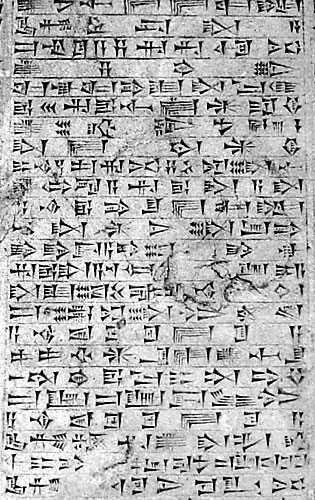
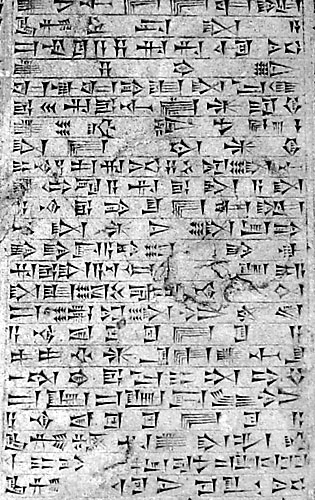
By around 3500 BCE, Sumerian culture was already functioning as a city-state society. The Sumerians used cuneiform, and many of those texts were written on clay tablets. They were discovered and studied in the modern era.
Zecharia Sitchin and the Anunnaki
As mentioned above, many mysteries still surround the ancient Sumerians. Their ancient cuneiform language has been studied and deciphered by many linguists and historians.
Among those researchers was Zecharia Sitchin, a linguist and archaeology writer born in Azerbaijan and raised in Palestine, in the modern Middle Eastern region connected to ancient Mesopotamia. From the cuneiform left by the Sumerians, Sitchin claimed to have read something shocking.
Sitchin studied a wide range of languages, including ancient Hebrew, Semitic languages, and European languages. He also studied the Old Testament and Near Eastern archaeology. After graduating from the London School of Economics, often described as one of Europe’s leading schools in economics, he returned to the Middle East, worked in Israel as a journalist and editor, and later moved to New York to write.
What did he claim to find?
According to Sitchin’s interpretation, about 440,000 years ago, aliens called the Anunnaki came down to Earth from space. Then, around 300,000 years ago, they created human beings as laborers for gold mining and the securing of other resources.
He described these ideas in detail in his 1976 book The 12th Planet. According to Sitchin, the Sumerian name Anunnaki meant those who came down from heaven, and it was a word used to describe gods.
From here, we will look at Sitchin’s claims about the Anunnaki creating humanity, along with related ideas drawn from later Babylonian mythology, where the Anunnaki also appear.
Gods Who Came Down From Space
Sitchin’s theory of the Anunnaki creating humanity is stranger, more advanced, and more grotesque than many people might expect.
In his version, the first thing the alien Anunnaki attempted was genetic manipulation of apes. However, the results did not develop the level of intelligence the Anunnaki expected from a usable labor force. In the end, they chose to combine ape-men with the Anunnaki themselves.
The method, according to the theory, was in vitro fertilization: an ape-woman’s egg was fertilized with alien sperm, and the new life was carried inside the bodies of the Anunnaki.
The beings born from these experiment-like acts were modern humans. The theory claims that white people were created first, and afterward, various races were produced around the world. It even extends to the Japanese, claiming that they too were created by the Anunnaki and adjusted to become a relatively gentle people in order to help maintain balance in the world. This is part of the theory’s internal story, not an established historical fact.
Sitchin’s interpretation also reaches into Sumerian cosmology. He claimed that the Anunnaki’s home was a hypothetical planet called Nibiru, with a 3,600-year orbit. In this view, the Anunnaki were highly advanced extraterrestrials who resembled humans.
Sitchin also claimed that a collision involving Nibiru and Tiamat, described as a moon of Nibiru located between Mars and Jupiter, eventually produced what are now Earth, the asteroid belt, and comets.
He further argued that the Sumerians who built Mesopotamian civilization were already under Anunnaki control. In this version, the Anunnaki granted kingship to selected humans, and city-states with social hierarchies developed so that rulers could act as intermediaries between the gods, meaning the Anunnaki, and ordinary humanity.
The Anunnaki as Gods in Later Babylonian Myth
The Sumerians did not leave only cuneiform clay tablets. The Anunnaki also appear in Sumerian myth.
As discussed in the story of the ancient Sumerians and the appearance of Mesopotamian civilization, the Sumerians became deeply involved in Mesopotamia during the early Uruk period. The guardian deity of the city of Uruk was said to be Anu, the great god of the sky and the leader of the Anunnaki. This appears in later Babylonian mythology, which took shape after the Sumerians had disappeared from history.
The name Anunnaki is said to come from a combination of Anunna, a term referring to fifty gods, and Igigi, a group of lesser gods. In the same Babylonian mythology, the Anunnaki are described as the children of Anu, the guardian god of Uruk, and Ki, his sister deity.
As in many polytheistic traditions, including Japan’s, gods are not limited to one child. They produce many gods. If we read this through later Babylonian mythology, the first extraterrestrial beings to descend to Earth would be the fifty gods called the Anunna, led by Anu.
Then, the many gods born between Anu and his sister Ki became the lesser gods known as the Igigi. From the human perspective, the whole divine group, or in Sitchin’s interpretation, the alien group, may have been called the Anunnaki.
The Anunnaki were not necessarily united. Anu’s position was later taken by another Anunnaki named Enlil. Then Enlil came into conflict with another god, Enki. In the end, Enlil is said to have won the position of leader.
In later Babylonian myth, the Igigi are said to have staged a protest on the Sabbath, a day later associated with Judaism. Because of this, Enki created humans, allowing the Igigi to stop working.
While Anu, the first leader, was the god of the sky, Enki was said to be the god of fresh water, wisdom, and magic. He was also described as an alchemist.
In any case, the important point shared by both later Babylonian mythology and Sitchin’s claims is the same: the Anunnaki created humanity.
The word Babylonian may remind some readers of Hammurabi, the king famous for the Code of Hammurabi. Hammurabi’s rule is generally placed around 1750 BCE, roughly the same era in which later Babylonian mythology is said to have taken shape.
Strictly speaking, the mythology called Sumerian myth had already been almost completed by the time of the Akkadians, who are said to have destroyed the Sumerians. Although it came to be called Akkadian myth, its contents did not change greatly from Sumerian myth. Those stories continued into later Babylonian mythology, preserving even many of the same gods and names.
The ancient Sumerians are said to have started Mesopotamian civilization around 4000 to 3500 BCE. Because the region was multiethnic, dynasties and rulers changed several times over the centuries. Even so, despite the passage of nearly 2,000 years, the mythology was handed down with surprisingly little change.
Why the Anunnaki Story May Have Survived Beyond Myth
One reason often given for this continuity is that changes in generation and community diversity existed from the earliest stages of Mesopotamian civilization. The Akkadians, for example, are said to have brought an end to the first Sumerians.
However, one scholarly view suggests that these changes were not simply conflicts between races. Instead, it may be more likely that different peoples with power at different times each took part in the long process that led to the founding of Babylonia.
In the modern world, people often define ethnic identity and separation through national consciousness and language: Japanese, Korean, Russian, Chinese, American, and so on. But the Sumerian and Akkadian cuneiform records seem to show a strong sense of belonging to individual cities, while showing little sign of a tribal or ethnic community identity.
By the Babylonian period, conflicts among tribes and peoples over kingship can already be confirmed. Even so, it is considered likely that before a shared identity as people living in Babylonia developed, a strong group consciousness based on ethnicity or language had not yet fully emerged.
Another piece of supporting evidence is the overlap of languages.
Sumerian, the spoken language of the Sumerians, is often described as one of the oldest languages. By Hammurabi’s time, it is believed to have disappeared as a spoken language, while Akkadian became the main spoken language of Babylonia.
Even so, Sumerian remained in use as a language of documents, scholarship, and prayer. Sumerian texts are said to have survived until the Seleucid dynasty, which began in 311 BCE.
That means the written tradition lasted at least about 3,200 years. As a comparison, 3,200 years is roughly 600 years longer than the span of Japan’s imperial calendar from the first emperor to the present day. And all of this took place before the Common Era.
In the end, the fact that this mythic structure remained so stable over such a long period may be one more sign of how deeply the idea of the Anunnaki influenced people from the Sumerian age through the era of later Babylonian mythology.
Japanese Language
創造主アヌンナキ の記述が残されていたとされるメソポタミア文明はチグリス川とユーフラテス川を中心として発展した複数の民族文明の総称です。現在の位置にするとイラクやシリアといった中東地域にあたります。このメソポタミア文明はこの地域が持つ土地の肥沃さから、古代エジプトよりも早くに農業などを始めていたと言われており、一説には世界四大文明の中で【最も古い文明】であったとされています。メソポタミア地域の文明は大まかに見ると南北に分かれており、北部では紀元前6000年頃には既に文明がいくつかは発展しはじめ、南部では紀元前5000年~紀元前3500年頃に北部に少し遅れて形成されてきたとされています。
始まりは北部にあったとされるいくつかの文明や人種でしたが、メソポタミア文明初期の中心を築いたとされているのは南部に起こった 「シュメール人」 と呼ばれる人々でした。古代シュメール人とメソポタミア文明の出現。実はこのシュメール人達も民族系統が未だに解明されていない謎の多い古代人なのですが、一説には新石器革命と言われる紀元前10000年前から紀元前7000年前には、すでに 牧畜と農耕が始まっていたとされており、この文化は「ナトゥーフ文化」と呼ばれています。
。その後、1000年ほどの単位でいくつかの文明や文化が形成されていき、ウバイド期と呼ばれる集落や神殿を始めとした階級社会や集団的な生活が始まった形跡が発見されていたものの都市国家と呼べるほどの文明発達を裏付けるようなものは発見されていないそうです。。都市や国家と呼ばれるメソポタミア文明の出現はウバイド期が終わって数百年後、紀元前4000年頃より ウルク期と呼ばれる初期の都市国家 が形成されていったと言われており、このウルク期の文明を引き継いで発展させていったと言われているのが 古代シュメール人 とされています。
この紀元前3500年頃から既に都市国家として機能していたとされるシュメール人達の文化は楔形文字(くさびがたもじ)を使用しており、それらの多くは粘土板などに記されていたものであり、近代になって発見、研究されています。創造主アヌンナキとシュメール人。前述の通り、古代シュメール人には多くの謎が残っており古代言語とされる楔形文字も多くの言語学者や歴史研究家などによって解読されてきました。そんな研究者の中にアゼルバイジャンに生まれ、メソポタミア文明の現代の位置に相当する中東パレスチナで育ったゼカリア・シッチンという言語学者、考古学者がシュメール人の残した粘土板の楔形文字から衝撃的な内容を解読します。
ゼカリア・シッチンは古代ヘブライ語やセム系、ヨーロッパ言語などを含んだ多種多様な言語学を研究しており、旧約聖書や近東を中心とした考古学者でもありました。ロンドン・スクール・オブ・エコノミクスという経済学においてはヨーロッパ第一位と呼ばれるカレッジを卒業し、中東へ戻りイスラエルでジャーナリストや編集者として活動しつつ、ニューヨークへと渡り執筆活動を行なった人物です。。画像引用元: 。その内容とは…。「約44万年前に宇宙からアヌンナキと呼ばれる宇宙人が地球に降り立ち、金採掘やその他資源確保の労働力として30万年前頃に人間を創った」 という解読結果でした。
1976年に自身の著書である「第12惑星」という本の中でこれらの詳細について語られています。ゼカリア・シッチン氏によると、シュメール人が残した「アヌンナキ」という呼び名には「 天から降り立った人々 」という意味がある主張しており、これらは神々を表現する言葉であったということです。以下でアヌンナキが人類を創造したとするゼカリア・シッチン氏の主張や、アヌンナキの存在が残された後期バビロニア神話などに照らし合わせた論説を一通り紹介していきます。
宇宙から降りて来た神々アヌンナキ。。ゼカリア・シッチン氏が主張する 「アヌンナキの人類創造」 は想像以上に高度な技術とある種のグロテスクさを持ち合わせており、かなり不気味なものです。まず、宇宙人アヌンナキが最初に試みたのは猿に対する遺伝子操作でした。しかしアヌンナキが予測していた労働力として使える人までの知能が発達しなかったことから、最終的には猿人とアヌンナキ達自身をかけ合わせることにしたのです。その方法は猿人の卵子に宇宙人の精子を体外受精させ、 アヌンナキ達の胎内で新しい生命を創る というものです。
これらの実験のような行為によって誕生したのが 現生人類 であり、最初は白人が作られた後に 世界中に様々な人種を誕生させた とのことです。ちなみにこの説では 日本人もアヌンナキによって創造 されており、世界的な均衡を考えて比較的温和な人種になるように”調整”されたと言われています。ゼカリア・シッチン氏の解釈はシュメールの宇宙論にも踏み込んでおり、アヌンナキの本拠地は惑星ニビルと呼ばれる3600年周期の仮説天体であり、 アヌンナキは人類に類似している非常に高度な文明を持った宇宙人 であることに加えて、ニビルの衝突(火星と木星の間にあったニビルの月であるティアマトと衝突したとシッチン氏は主張している)によってそれぞれが現在の「地球」「小惑星帯」「彗星」に分かれたとも語っています。
また、メソポタミア文明を築いたシュメール人は既にアヌンナキの支配下にあったことや、アヌンナキの指導によって王権を与えられ、神(アヌンナキ)と一般的な人類の間を取り持つ役目として階級制度のある都市国家が発展していったとも主張しています。アヌンナキが神とされた後期バビロニア神話。シュメール人が残したのは粘土板での楔形文字だけではなく、シュメール神話としてもアヌンナキを取り上げています。シュメール人がメソポタミア文明に関わり始めた経緯については「古代シュメール人とメソポタミア文明の出現」でも触れましたが、このシュメール人の初期にあたるウルク期の都市ウルクの守護神とされたのが、アヌンナキの長であり「アヌ」と呼ばれる 偉大なる空の神 であったということがシュメール人達が歴史から消えた後に成立した後期バビロニア神話に記述されています。
。アヌンナキの語源は「アヌンナ」という五十柱の神々を表す言葉と「イギギ」という小さな神々が合わさった言葉だと言われており、同バビロニア神話では「アヌンナキ」とはウルクの守護神のアヌと兄妹神であったキの子を指しているものだそうです。日本の多神教的な文化でも同じですが、神という存在(アヌンナキの場合は宇宙人ですが…)は子は1人ではなく沢山の神を生みだします。後期バビロニア神話を基に考えれば、最初に地球に 降りてきた宇宙人が「アヌンナ」と呼ばれた五十柱の神々であり、その長であったのが「アヌ」。
さらに妹神の「キ」との間に出来た数多くの神々が「イギギ」と呼ばれる小さな神々になり、人類から見た神の集団(宇宙人の集団)を「アヌンナキ」という言葉で呼んでいたと考えられます。。アヌンナキ達も一枚岩ではなく、アヌの地位はのちにエンリルという別のアヌンナキに取って代わり、さらにエンリルともう1人のアヌンナキであるエンキという神が対立し、最終的にはエンリルが指導者としての地位を勝ち取ったとも言われています。ちなみに、後期バビロニア神話の中ではユダヤ教による安息日にイギギ達がデモを行なったことが原因で、 エンキによって人間が作られ 、イギギ達は働かなくてもよくなったとのこと。
最初の長であるアヌは空の神であったのに対して、エンキは 淡水・知恵・魔術の神であり、錬金術師でもあったそうです。。いずれにせよ、後期バビロニア神話においても、ゼカリア・シッチン氏の主張においても共通するのは 「アヌンナキが人類を創った」 という 重要な点 です。そしてバビロニアと言われると中にはピンと来る方もいるかもしれませんが、ハンムラビ法典で有名なハンムラビ王が統治していたのが、この後期バビロニア神話が成立した年代とほぼ同じ紀元前1750年前後だと言われています。
また、シュメール神話と呼ばれる神話は、厳密にはシュメール人を滅亡させたと言われているアッカド人の時代には既にほぼ完成されており、名前をアッカド神話とされたものの、内容についてはシュメール神話から大きな変化がないまま後期バビロニア神話まで続き、内容や神々の名前までも引き継いでいます。古代シュメール人がメソポタミア文明を起こしたのが紀元前4000~3500年であり、多民族地域であったことからその後関わりあった王朝や統治者の変化は何度かあったものの、 およそ2000年近い時が流れたにも関わらず 、その神話はほとんど変わることなく伝わっていたのです。
アヌンナキが神話を超えて伝わった背景。この内容が変化しなかった神話の裏付けとしてよく挙げられるのは、最初のシュメール人を滅亡させたと言われるアッカド人であったといったように「世代変化や共同体の多様化」はメソポタミア文明初期からあったものの、これらの出来事は人種的間的な争いがあったのではなく、その時々で勢力を持った多民族がそれぞれの形でバビロニア建国までに関わっていた可能性の方が高いという学説です。現代であれば、日本人、韓国人、ロシア人、中国人、アメリカ人など、国家間の意識や使用言語によって民族アイデンティティの確立や住み分けをおこなっていますが、シュメールやアッカドの楔形文字に残されたものは、それぞれの都市への帰属意識がある一方で、「種族的な共同体」という感覚はほとんど見られないそうです。
バビロニアの時代になれば、すでに王権を巡って部族や人種間での争いがあったことは確認されているものの、少なくとも「バビロニアに住む者」という共通した自己認識を持つまでは民族的な感覚や言語による集団意識が発生していなかった可能性が高いということです。さらなる根拠としては「言語の重なり」が挙げられます。シュメール人が口語としていた「シュメール語」と呼ばれる言語は最も古い言語ですが、ハンムラビの時代には口語としては消えており、バビロニア時代の主な口語は「アッカド語」であったという説があります。
しかし、文書や学問に加えて「祈り」の言葉としてはシュメール語は残されており、それが紀元前311年に起こったセレウコス朝までシュメール語の文書が残されているそうです。その期間は少なく見積もってもざっと3200年以上になりますから驚きです。余談にはなりますが、約3200年という時間は、日本の皇暦(初代天皇から現代まで)の期間よりもさらに約600年も長い期間となります。しかもこれらは全て「紀元前」の話です。いずれにせよこれだけの長期間において、神話形態が変わっていないという事実は、シュメール人時代から少なくとも後期バビロニア神話における期間において、 アヌンナキという存在がどれだけの影響を与えていたのかを裏付ける1つの証拠 にはならないでしょうか?