English Version
Collective self-defense was a phrase that appeared constantly on Japanese TV and online not so long ago. Some critics described it as something that would lead to war, but supporters argued that the meaning is clear from the term itself: it is about self-defense, not about launching a war by choice.
Opposition parties and parts of the media strongly criticized the idea. But once you understand what the rule is supposed to do, the argument made here is that not having it could be the more dangerous option.
What is collective self-defense?
Collective self-defense means that when an allied country or a closely connected partner is attacked, a country that has not itself been attacked may cooperate in responding to that attack.
Put simply: if your partner is attacked, you go help.
For Japan today, the most obvious example would be cooperation with the United States, Japan’s ally, if the U.S. were attacked. The reverse is also an example of collective self-defense: if Japan were attacked and the United States responded against the attacking country.
A right recognized for UN member states
For some people, hearing the phrase “collective self-defense” immediately creates the image of war. But this article argues that this is a misunderstanding.
Collective self-defense is originally a right recognized for member states of the United Nations. It is set out in Article 51 of the United Nations Charter.
In summary, Article 51 states that nothing in the Charter impairs the inherent right of individual or collective self-defense if an armed attack occurs against a UN member state, until the Security Council has taken the measures necessary to maintain international peace and security. Measures taken by member states in exercising this right must be reported immediately to the Security Council, and they do not affect the Security Council’s authority and responsibility under the Charter.
Because Japan is a sovereign state and a member of the United Nations, the argument is that Japan possesses the right of collective self-defense under international law.
So why did the National Diet become so turbulent over whether Japan could exercise that right?
The relationship with Article 9 of the Constitution
Japan’s Constitution clearly renounces war. Because of that, some people believe the exercise of collective self-defense should also be prohibited.
But the article points out that this raises another issue: which takes priority, the UN Charter or Japan’s Constitution? This relates to Article 98 of the Constitution, but going deeply into that question would become a full legal paper, so the original discussion sets it aside.
The article’s position is that there is an important difference between starting a war of aggression or using war as a way to solve problems, and defending the country when a third country attacks Japan.
Those two things have very different meanings.
Japan’s conditions for exercising collective self-defense
During the debate over Japan’s security legislation, some groups chanted slogans such as “Don’t let anyone’s child be killed” and called the bills “war legislation.” At first hearing, those words may sound persuasive. But the article argues that there is a contradiction.
Japan’s use of collective self-defense is not something that can happen anytime, without limits. There are conditions.
According to the Cabinet Secretariat, the conditions include:
- An armed attack occurs against Japan, or an armed attack occurs against a foreign country that has a close relationship with Japan, and as a result there is a clear danger that Japan’s survival will be threatened and the people’s rights to life, liberty, and the pursuit of happiness will be fundamentally overturned.
- There is no other appropriate means to repel the attack, ensure Japan’s survival, and protect the people.
- The use of force must be limited to the minimum necessary extent.
The key point emphasized here is the phrase about a clear danger to the lives of the Japanese people caused by an armed attack.
A Pacific cruise scenario
To make the issue easier to imagine, the article gives an example.
Suppose you are enjoying a cruise across the Pacific on a ship registered in the United States. Then the ship comes under a terrorist attack. Bullets are fired into the vessel, and it is also being targeted by torpedoes.
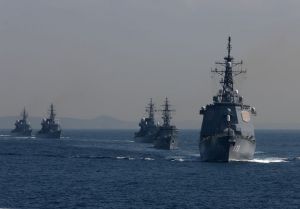
Now imagine that a Japan Maritime Self-Defense Force ship is sailing nearby.
Wouldn’t you want them to help?
But the article argues that without the ability to exercise collective self-defense, the Maritime Self-Defense Force would be unable to protect the ship you are on by responding to the attacking vessel in that situation.
If you are in the middle of the Pacific on a U.S.-flagged ship, and Japan is not allowed to exercise collective self-defense, then under this argument the Self-Defense Forces could not come to your aid in that way.
That is why the article says that, rather than opposing collective self-defense in the name of protecting children, it may be more realistic to say that collective self-defense is necessary if you want to protect them.
When the security legislation passed, opposition parties even brought flyers into the Diet as part of their protest. The article questions whether that performance truly served Japan’s interests, arguing instead that they were fiercely opposing legislation intended to protect the lives and freedoms of the Japanese people.
Calling a peace-protection rule “war legislation”
Some media outlets, opposition parties, and civic groups strongly opposed legislation that supporters described as being meant to protect Japan’s peace.
At the time, one phrase was often heard: “We should solve problems through dialogue.”
The article acknowledges that if the other side is actually willing to sit down at the negotiating table, dialogue is effective and should be pursued.
But what if missiles are suddenly launched?
How many lives might be lost while people are still insisting on talks?
There have been incidents in which terrorists killed Japanese citizens overseas. The article argues that, unfortunately, some situations cannot be solved through dialogue alone. If someone is already under attack, it questions whether it is realistic to say that sharing a drink together will make the attacker understand.
Japan’s conditions for exercising collective self-defense are limited to situations where the lives of Japanese citizens are in danger.
In other words, the article’s criticism is that opposition lawmakers, despite being politicians who represent the people, opposed a law meant to protect Japanese lives by labeling it “war legislation.”
Conclusion
The article’s conclusion is that collective self-defense should not be treated as a “war bill.” It is presented as a necessary framework for a country to protect its people.
The article also argues that because Japan is a UN member state, it can be understood internationally as already possessing the right of collective self-defense.
From this point of view, collective self-defense is about countries protecting one another so that war does not happen and so that aggression is not invited. It is a form of preparation and mutual defense.
The article ends by questioning whether the people who opposed collective self-defense so strongly were truly acting as pacifists.
Japanese Language
集団的自衛権…少し前にテレビやネットで話題になった言葉ですが覚えいらっしゃいますか?。集団的自衛権のことを「戦争だ」なんて批判する人もいますが、漢字を見れば解るとおり、集団的自衛権は自衛が目的ですから「自ら進んで戦争をしかける」ようなものではない事は一目瞭然です。野党やマスコミが批判していた集団的自衛権ですが、どんなルールなのかが解れば「ないほうがやばい!」ことがおわかりいただけるはずです。集団的自衛権とは。集団的自衛権は、同盟国などが攻撃されている場合に攻撃を受けていない国が協力して反撃することです。
簡単に言えば、仲間が攻撃されたら加勢しにいく!というもの。今の日本に当てはめるなら同盟国のアメリカが攻撃された時に日本が協力することです。逆に日本が攻撃されたときにアメリカが相手の国を攻撃することも集団的自衛権です。集団的自衛権は国連加盟国の権利。集団的自衛権と聞くとそれだけで「戦争だ!」とイメージする方ももしかするといらっしゃるかもしれません。でも、それは間違いです。もともと集団的自衛権とは、国連加盟国に与えられた権利のことで国際連合憲章51条に定められています。
日本は国連加盟国ですから、国際法的に集団的自衛権を持っている国家といえます。この憲章のいかなる規定も、国際連合加盟国に対して武力攻撃が発生した場合には、安全保障理事会が国際の平和及び安全の維持に必要な措置をとるまでの間、個別的又は集団的自衛の固有の権利を害するものではない。この自衛権の行使に当って加盟国がとった措置は、直ちに安全保障理事会に報告しなければならない。また、この措置は、安全保障理事会が国際の平和及び安全の維持または回復のために必要と認める行動をいつでもとるこの憲章に基く権能及び責任に対しては、いかなる影響も及ぼすものではない。
引用 国際連合憲章51条 。つまり、日本が主権国家として 国際連合に加盟している時点で集団的自衛権は行使できるもの なんです。ではなぜ、集団的自衛権の行使に関してあんなに国会があれたのでしょうか。憲法9条との関係。日本は憲法で戦争放棄を明確にしています。ですから、 集団的自衛権の行使もだめだろ!と考える人がいるわけです。ですが、先ほどご紹介した国連憲章と憲法…これはどちらが優先されるのかという問題もあるわけです。これは憲法98条との兼ね合あいなわけですが、そもそもなぜ自衛までダメだといえるのか…。
自分から侵略戦争や問題解決のための手段として戦争しないのはこれは当然のこと。ですが、 自衛というのは第三国が日本を攻撃したときに国を守ること です。この両者はかなり意味が違ってきます。。もちろん、憲法と国際法の国連憲章のどちらが優先されるのか…という問題もあるのですが、それを語り出すと論文になってしまうのでここでは割愛します。日本の集団的自衛権行使の要件。。画像: ぱくたそ 。安保法制に「誰の子供も殺させない」とか「戦争法案だ」なんてシュプレヒコールを上げていた団体がいました。
この言葉だけ聞くとなんとなく正しいような気がしますが、矛盾があるんです。まず、日本の集団的自衛権行使には要件があります。いつでも行使していいというわけではありません。。。それがこちら。我が国に対する武力攻撃が発生したこと、又は我が国と密接な関係にある他国に対する武力攻撃が発生し、これにより我が国の存立が脅かされ、国民の生命、自由及び幸福追求の権利が根底から覆される明白な危険があること これを排除し、我が国の存立を全うし、国民を守るために他に適当な手段がないこと 必要最小限度の実力行使にとどまるべきこと 引用 内閣官房 。
なんか小難しいようですが、注目はここ 「武力攻撃によって、国民の生命…に明白な危険」 。これを、もう少しわかりやすくイメージしてみましょう。。画像: Pixabay 。例えば、あなたがアメリカ船籍の船に乗って優雅な太平洋クルージングをしているとします。その船がテロ攻撃にあいます!船に銃弾が撃ち込まれ、さらに魚雷で狙われている…そんなときに海上自衛隊の艦船が付近を航行していたら…どう思いますか?。「ちょっと!助けてよ!」ってなりません?。
でも、 集団的自衛権がなければこの状況で海上自衛隊はあなたが乗っている船を守って攻撃している船を守ることができなく なります。ええっそうなのっ?やだーー。アメリカ船籍の船で太平洋の真ん中にいるとなると…集団的自衛権行使がダメなら自衛隊は助けられないね。それはやだー、助けて欲しいよ。誰の子供も殺させない!なんてなんだか日本語としてもおかしいんですが 「むしろ子供を護りたいなら集団的自衛権は必要」 と考えるほうが現実的です。安保法案可決の時に、野党は国会にビラまで持ち込んで反対パフォーマンスをしましたが、あれは本当に日本のためになっていたのか…。
むしろ国民の生命や自由を守るための法案可決にあんなに強烈に反対したとも言えるわけです。平和を守るためのルールに「戦争法案」と名付けた。。画像: Pixabay 。。一部のマスコミや野党、そして、市民団体は日本の平和を守るための法案に強硬に反対したわけですがその時によく聞かれたこんな言葉がありました。それが 「話し合いで解決すればいい」 というもの。。確かに相手が話し合いのテーブルに座っているならこれは有効。やるべきでしょう。でも、いきなりミサイル撃ち込んでこられたらどうします?
。話し合いなんて言ってる間に、どれだけ多くの命が犠牲になるのでしょうか。テロリストが外国で日本人を殺害した事件がありましたが、 話し合いで解決しないことがあるのも残念ながら事実 です。ましてや、攻撃されてるのに「酒を酌み交わせば解る」などと言っていられるのか甚だ疑問です。日本の 集団的自衛権行使の要件はあくまでも「日本国民の生命」に、「危険が迫っている」場合に限定 されます。つまり野党は、国民を代表する政治家でありながら「日本国民の生命」を守る法案可決を「戦争法案」だとして反対したということです。
まとめ。集団的自衛権は、決して戦争法案などではありません。国が国民を守るために必要な法案ですし、そもそも国連加盟国である時点で、国際的には日本は集団的自衛権を有していると考えられるのです。戦争をしないために、仕掛けられないためにみんなで守り合いましょうね。備えをしようね。という集団的自衛権にあれほど反対した人達は本当に平和主義者なのでしょうか