English Version
Have you heard of Takeshima, a small group of islands associated with Shimane Prefecture? Located in the Sea of Japan, Takeshima is widely known in Japan as a long-standing part of Japanese territory. Many people have heard the name on the news, but the reason such a tiny island appears so often in headlines is the territorial dispute surrounding it.
For travelers and readers interested in the darker side of history, Takeshima is not a sightseeing spot to approach casually. It is a politically sensitive and restricted area, and any travel near disputed waters should be avoided unless you are following official guidance and lawful routes.
Why Japan Claims Takeshima
The Japanese position is that Takeshima is not South Korea’s Dokdo, but Japanese territory. South Korea claims sovereignty over the islands and currently controls them. In Japanese discussions, this is often described not simply as “effective control,” but as an illegal occupation.
In international law, “effective control” generally refers to a situation in which a state administers a territory, people live or are stationed there, and official or economic activities are carried out. It is a technical legal term, not just a casual phrase.
So why does Japan claim Takeshima as its own? The argument is that Takeshima meets the standards for territory under international law. In very simple terms, when land belongs to no state, the first state to occupy it and exercise sovereignty over it may establish a territorial claim. Regarding Takeshima, Japan’s position is that maps and historical records identified it as Japanese territory long before South Korea began asserting its claim.
From this perspective, Japan argues that Takeshima’s status as Japanese territory was already established. The article also takes the view that Japan and Korea were not at war with each other in the previous world war, and that the annexation of Korea by Japan was carried out under agreement, so those issues are not relevant to the Takeshima territorial dispute.
South Korea’s Claims and Public Campaigns
Although Japan considers Takeshima Japanese territory under international law, South Korea insists that the islands are Dokdo and belong to Korea. The article describes South Korea’s methods of asserting this claim as forceful and aggressive.
Examples often mentioned in Japan include placards at sporting events reading “Dokdo is our territory,” pop idols active in Japan singing politically themed lyrics about Dokdo being Korean territory, and visitors from South Korea posing for commemorative photos at Japanese tourist spots with banners saying they came from Dokdo.
The article argues that repeating a political message, however loudly, does not change historical facts.
The International Court of Justice
There is one place, according to the article, where South Korea has not pressed its claim in the same way: the International Court of Justice, or ICJ.
The ICJ is a court that handles disputes between sovereign states. However, it generally cannot hear a case unless both parties agree to submit the dispute. This is because sovereign states cannot simply be forced into court without consent. Once both parties agree, they are expected to follow the court’s decision.
Japan has proposed taking the Takeshima dispute to the ICJ, but South Korea has not agreed to submit the issue to the court. The article argues that if South Korea were confident in its claim, it should allow the matter to be judged clearly. It then suggests that South Korea avoids this process because, under international law, it cannot firmly prove Takeshima as Korean territory.
The Syngman Rhee Line and the Fishermen
The article then turns to a darker and less frequently discussed part of the Takeshima issue: the capture of Japanese fishermen near the islands.
South Korea began calling Takeshima “Dokdo,” according to the article, on January 18, 1952. At that time, South Korean President Syngman Rhee unilaterally declared what became known as the Syngman Rhee Line. Japan stated on January 28 of the same month that it did not recognize the declaration, but South Korea did not accept Japan’s position.
In July of that year, the San Francisco Peace Treaty came into effect, and the Japan-U.S. Security Treaty was established. Japan and the United States also agreed that Takeshima would be provided as a training area for the U.S. military. The article presents this as evidence that Japan held sovereignty over Takeshima.
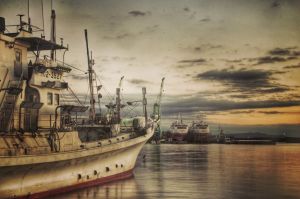
In 1953, South Korea seized fishing boats operating near Takeshima. In other words, from Japan’s perspective, Japanese fishermen were captured by South Korea while working in Japanese territorial waters.
One of the incidents mentioned is the First Daiho Maru Incident. In that case, the 34-year-old fishing master of the vessel was killed by gunfire from the South Korean navy. The article also states that the treatment of the crew during interrogation became a serious issue, with reports of beatings and violence. The boat was confiscated. The fishermen, the article emphasizes, had simply been working in the same fishing grounds as before.
A fisherman who was captured by South Korea and later returned to Japan reportedly left testimony about what happened. He said that while fishing, his boat was seized by a South Korean vessel and he was taken to South Korea. His younger brother had been aboard the same boat, but never returned. In South Korea, he said, they were treated like prisoners, or worse than livestock, and were subjected to violence.
He also said that the boat they had treasured, along with all of their fishing equipment, was confiscated, and that they were even ordered to pay fines. He reportedly stated that he was too ashamed to tell anyone exactly what had been done to him.
The article argues that the Syngman Rhee Line was declared unilaterally by South Korea, and that attacking and capturing civilians on that basis was unacceptable. It further argues that South Korea carried out these inhumane acts, occupied Takeshima illegally, and then called that occupation “effective control.”
Why This History Still Feels Unsettling
The Takeshima territorial dispute appears often in the news, but one fact the article says is not widely covered in the media is the capture of Japanese fishermen by South Korea.
The closing argument is stark: if people rely only on vague ideas about neighbors getting along, history may repeat itself. The article insists that Takeshima is Japanese territory. It also warns that the truly frightening part is not only what happened in the past, but the possibility that some people, without knowing that history, might casually say that because South Korea already controls the islands, Japan should simply give them up for the sake of friendly relations.
For horror fans, this is not a ghost story in the usual sense. It is the kind of real-world darkness that lingers around borders, memory, nationalism, and the sea: a small island surrounded by deep water, unresolved claims, and stories of fishermen who never came home.
Japanese Language
島根県の竹島という場所をご存知でしょうか。日本海にある島で古くから日本固有の領土でした。竹島という名前をニュースで聞いたことがある!という方も多いと思うのですが、小さな島がニュースで取り上げられる理由…それは、領土問題です。竹島が領土問題の対象になった理由を見てみましょう。竹島は韓国の独島ではなく「日本の領土」。竹島は韓国が領有権を主張して、実効支配…というか正確には不法占拠している島です。実効支配とは、その場所に人が住み行政が行われ、経済活動が行われるということで、これは国際法の専門用語です。
竹島を何故「日本の領土」だと言えるのか…それは国際法で定められた領土の基準を満たしている場所だからです。国際法では、領土として認められる条件があるのですが、誰のものでもない陸地がある場合は、これは早い者勝ちです。つまり簡単に言ってしまえば、先に占有して主権が及ぶ場所にすればOKというわけ。そして、竹島に関しては韓国が領有権を主張するよりずっと前から日本の領土として地図や歴史書に記載があります。もう、これだけで日本の領土確定です。ちなみに、先の大戦では韓国とは戦争していませんし、日韓併合は同意の元に行われた平和的なものでしたから、領土問題には関係ありません。
。竹島を独島だと韓国の主張の方法がもの凄い。国際法上、竹島は日本だと考えるのが妥当なわけですが、それでも韓国はどうしても竹島が欲しい!となると、強引に奪い取るしかありません。スポーツの試合で「独島我が領土」とかかれたプラカードを掲げたり、日本でも活動しているアイドルに独島は韓国の領土だという政治的な歌詞の歌を歌わせたり、韓国からわざわざ日本に観光にやってきて観光地で「独島から来ました」なんてかかれた横断幕を掲げて記念撮影をしたり…。とまぁなかなか攻撃的なわけですが、こうやって主張を繰り返したからといって歴史的な事実は何も変わりません。
。韓国は激しい方法で竹島を自分の領土だと主張するわけですが…世界で唯一韓国が竹島は自分のものだ!と主張しない場所があります。それがICJ「国際司法裁判所」です。国際司法裁判所は、主権を持つ国家間の紛争を解決するための裁判所なのですが、紛争当事国双方の合意がなれければこの裁判はできません。それは国家が主権を持っている以上、それは侵害されるべきではないからです。同意があって初めて紛争当事国は国際司法裁判所の決定に従うというわけ。そして、韓国は竹島の領土問題をICJの判断に委ねることを合意していません。
自信があるなら白黒はっきりさせればいいわけですが、やらない。それはなぜなのか。先ほどご紹介した「領土とはそもそも何か」を考えるとその答えが見えてきます。それは、国際法上韓国のものだと主張できないからです。主張できないどころか韓国は竹島を不法占拠するときにとんでもないことをしでかしているんです。韓国が竹島近海で漁師を拿捕し非人道的行為を働いた。。画像:Pixaboy 。韓国が竹島を「独島」だと言い出したのは1952年(昭和27年)1月18日のことです。
李承晩ラインなるものを急に宣言しました。日本は同じ月の28日にその宣言を認めないと主張 しましたが、韓国は聞く耳を持ちませんでした。。その年の7月にサンフランシスコ条約が発効し、日米安保条約が成立。そして、 アメリカと日本の間で竹島を米軍の訓練基地として提供することを約束 しました。これも、 日本に竹島の領有権があることに起因 したものです。そして、1953年には韓国は竹島周辺で操業している漁船を拿捕します。つまり、日本の漁師が日本の領海内で韓国に拿捕されたという事実があるんです。
第一大邦丸事件では、当時34才の漁船の漁撈長が韓国海軍からの銃撃で死亡しています。第一大邦丸事件でも取り調べの非人道性が問題 になりました。殴打や暴行を受けを船は没収 され…漁師たちはただ今までと同じ漁場で操業していただけでした。この時に、実際に韓国に拿捕されてその後日本に帰宅した漁師の方はこんな言葉を残しています。。漁をしていたら韓国船に拿捕されて、そのまま韓国に連行された。同じ船には自分の弟も乗船していたが弟は結局戻れなかった。韓国での扱いは囚人だったが、家畜以下の酷い扱いを受け暴力受け。
そして、大切にしてきた船も漁の為の道具もすべて没収された上で、更に罰金まで支払うよう要求された。あの時、自分が韓国人からどんな扱いを受けて何をされたのか、自分はとても恥ずかしくて誰にもいえない。李承晩ラインは韓国が一方的に宣言 したもので、それを理由に民間人を攻撃して拿捕するなど許させるものではありません。韓国はこうした非人道的な行為をした上で竹島を不法占拠し、その不法占拠を「実効支配」だと言っているのです。参考資料: 昭和27年7月26日官報号外(外務省告示第三十三号) 日本国政府 。
まとめ。ニュースでよく耳にする竹島の領土問題ですが、マスコミではあまり報道されない事実のひとつ…それは、韓国が日本人を拿捕したという事実です。隣国同士仲良くするべきという甘い考えを持っていたら、また同じような歴史が繰り返されるかもしれません。竹島は日本の領土です。何があったかを知らずに「もう実効支配されてるし、仲良くした方がいいんだし、竹島はあげちゃえばいいじゃん」という論調が僅かでもあることこそとっても怖いことです