English Version
One of the world’s most famous megalithic remains, sometimes discussed as an “out-of-place artifact,” is the group of Moai statues on Easter Island. Politically, Easter Island belongs to Chile in South America, but geographically it sits far away from the mainland, almost like a true island at the edge of the world.
Even the nearest uninhabited island is about 400 kilometers away, and the island lies roughly 3,700 kilometers west of Santiago, Chile’s capital. Despite this isolation, around 900 Moai statues have been discovered there. That alone has made the history of Easter Island feel unusually mysterious.
A Solitary Island in the South Pacific
At first glance, Easter Island and the Moai may not seem connected to ley lines at all. However, some theories place Easter Island on a larger ley line or “world grid.”
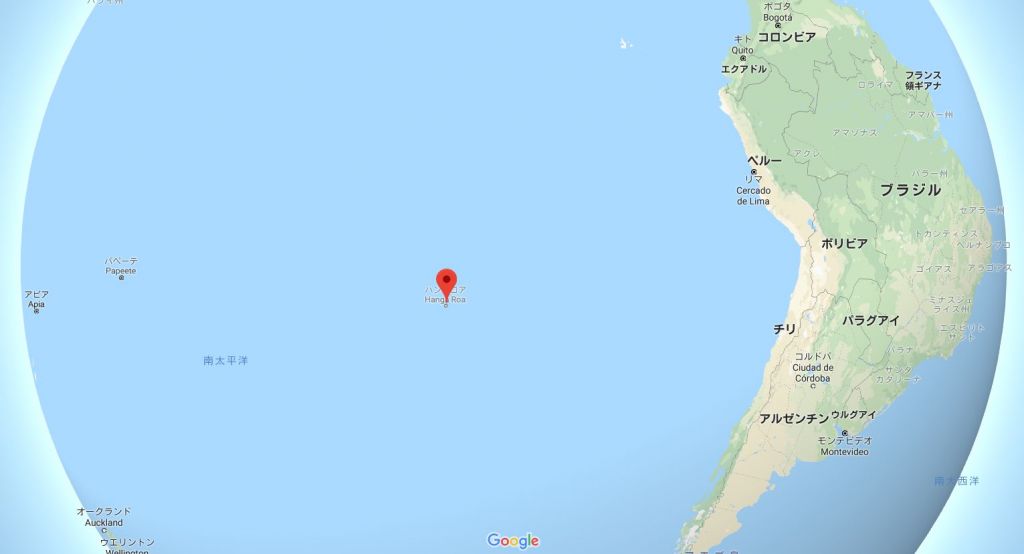
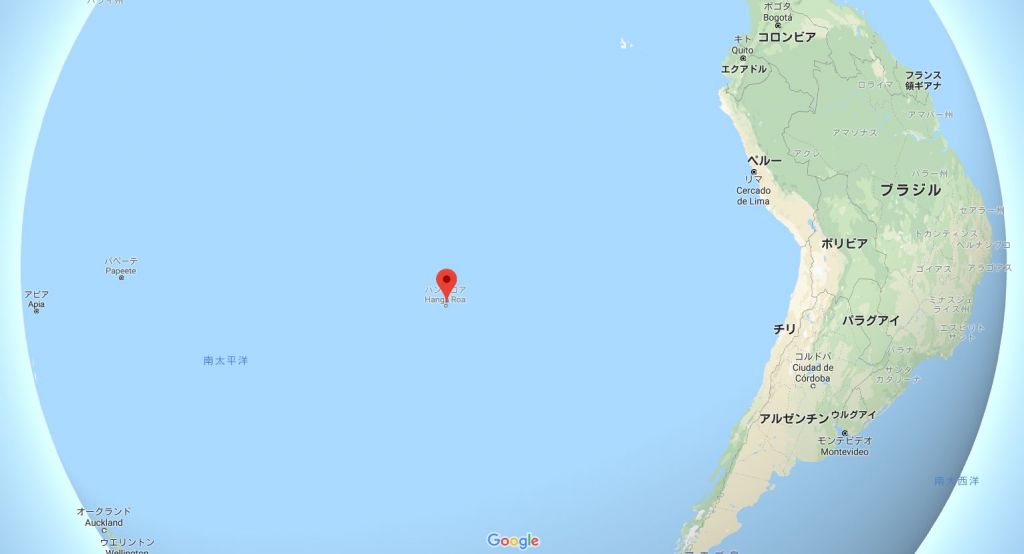
If you look at Easter Island on a map, it appears as a tiny point in the South Pacific, far to the west of the South American continent. You have to zoom out until the curve of the Earth becomes obvious before the mainland fully comes into view. The island is so isolated that it is difficult to imagine a complex culture developing there.
Travel to Easter Island has often used Tahiti, famous as a tourist destination, as an international connection point, yet Tahiti itself is about 4,000 kilometers away. For comparison, 4,000 kilometers is about 2.7 times the distance from the northern end to the southern end of Japan’s main island, Honshu.
The Unsettled History of Easter Island
The common explanation is that Easter Island was formed by undersea volcanic activity. At the same time, some researchers and fringe theorists have suggested that it may be connected to legends of lost continents such as Atlantis.
Today, more than 6,000 people live on Easter Island. One widely discussed theory says the island’s first settlers were Polynesians who migrated south, with some theories connecting their distant origins to ancient East Asia. The proposed dates for settlement vary widely: around 400–500 CE, around 800 CE, or around 1200 CE. These ideas remain under study, and no single date has been proven with certainty.
One of the deepest mysteries in Easter Island’s history is simple but difficult to answer: why did Polynesian people choose to settle on such a remote island in the first place?
Easter Island was reportedly “discovered” by outsiders in 1722 by the Dutch naval commander Jacob Roggeveen. At that time, he is said to have seen more than 1,000 Moai, the island’s Indigenous people, and scenes of prayer or worship.
Later, from the 18th into the 19th century, the once-isolated island suffered from outside exploitation, including what has been described as slave raiding by foreign powers and groups from places such as Ireland and France. At one point, the island’s population is said to have fallen to around 100 people.
Slavery and colonial exploitation were seen in other parts of the world at the time as well, and Easter Island became one of their victims. Because of this devastation, island traditions such as Rongorongo are said to have been completely broken or lost. Even today, the question of why Polynesians settled there remains unresolved, and the greatest mystery of all—the purpose of the Moai—has not been fully explained.
A Megalithic Culture with Echoes of Europe
The Moai lined up across Easter Island are among the most mysterious stone monuments in the world, often mentioned alongside Stonehenge and other megalithic sites in Europe.
These statues were carved into clearly humanlike forms. One theory says their construction began around the 8th century. Researchers have learned that the statues were made from volcanic rock found on the island, but the most important question—why they were created—remains uncertain.
When Easter Island was encountered by Europeans in 1722, many Moai had already been toppled, reportedly due to conflict between local groups. According to local oral tradition, all of the Moai had fallen by around 1840. After that, because the island was drawn into the slave trade and outside control by Europe and Chile, many details surrounding the Moai were lost or left unclear.
From the 20th century onward, local people and archaeologists gradually raised many of the fallen statues again, creating the landscape seen today.
Japan also played a role in this restoration work. A company from Takamatsu City in Kagawa Prefecture cooperated with the Chilean government and volunteered in the restoration and recovery of the Moai statues.
Easter Island as a Ley Line Site
Because of this complicated history, many mysteries still surround Easter Island. In the theory known as the world grid, Russian researchers have proposed that Easter Island falls on lines that also connect regions with major megalithic monuments, including the Great Pyramid of Giza, Stonehenge in England, and Machu Picchu in Peru.
No one knows for certain why Polynesian people began living on this isolated island. Still, for those drawn to ancient mysteries, the possibility that Easter Island may be linked in some symbolic way to the world’s great stone monuments remains deeply fascinating.
If you visit Easter Island, remember that the Moai and related sites are protected cultural heritage. Stay on marked paths, follow local rules, and do not touch, climb, or enter restricted areas.
Japanese Language
オーパーツとしても 世界的に有名な巨石遺構の1つがイースター島にあるモアイ像 です。。領土的には南米のチリの領内に位置しますが、イースター島の位置は本土から大きく離れていて、いわば 絶海の孤島状態 なのです。付近にある無人島までの最短距離でも約400キロメートル離れており、チリの首都であるサンディエゴからは西に3700キロメートルもの距離があります。この イースター島の歴史も謎 が多く、近くに大きな島がないにも関わらず、これまでに 約900体ものモアイ像 が発見されています。
一見すると、 イースター島やモアイ像はレイラインには関係ない と思われるかも知れませんが、いくつかの説では イースター島もレイライン上 にあるとされています。イースター島の位置 。。地図参照:グーグル・マップ。上記はグーグル・マップを使用してイースター島の位置にピンを指したものです。チリのある南米大陸からは大きく西に離れた南太平洋の上にポツンと浮かんだ島。これがイースター島です。地球が丸く見えるような位置まで引き伸ばして、ようやく南米大陸が入るほど イースター島は周囲から隔絶されており、とても文明があったとは思えないような位置 にあります。
現在、イースター島への渡航方法は主に観光地で有名なタヒチが国際中継地点となっており、そのタヒチからも4000キロメートル離れています。ちなみに、4000キロメートルという距離は、日本の本州を北から南の端まで含めた距離の約2.7倍です。イースター島の歴史の謎。イースター島は海底火山の爆発によって形成された島であるというのが通説になっていますが、一部の研究者の間では アトランティスなど失われた大陸に関する名残であるという考え方 もあります。
イースター島には現在でも約6000人以上の人々が暮らしていますが、最初にこの島に入植したのは、古代中国の漢民族の一部が南下してきたポリネシア人だという説が主流です。入植の時期については、およそ西暦400~500年頃、西暦800年頃、西暦1200年頃と諸説ありますが、これらの説は研究段階であり、ハッキリとした時期は確証されていません。この イースター島の歴史において、最も不可思議なのは何故、このような孤島にポリネシア人が入植をしたのか?ということです。
イースター島が外部の人間に発見されたのは比較的近年であり、1722年にオランダの海軍提督であるヤーコップ・ローフェーンという人物であったそうです。この時、ヤーコップは1000を超えるモアイと原住民、そして祈りを捧げている様子を確認したとされています。その後、18世紀から19世紀にかけて、それまで外部から隔絶されていたイースター島ではアイルランドやフランスなどによる、いわゆる”奴隷狩り”が始まってしまい、一時期には島民が100人程度まで減少してしまっていたそうです。
奴隷文化は当時他のヨーロッパ諸国でも見られたものですが、イースター島も同じようにその犠牲となったため、島の文化であった ロンゴロンゴ語などは完全に途絶えた とされています。現在になってもポリネシア人が何故この島に入植したのか?という問題に加えて、イースター島最大の謎であるモアイ像の目的などは全く解明されていません。。ヨーロッパと共通点を持つ巨石文明。。イースター島に整然と並ぶモアイ像は、ヨーロッパを始めとしたストーンヘンジや巨石遺構などと同じく、石を使った遺跡の中でも特に謎の多いものです。
完全に人型に加工されたこれらの像は、およそ8世紀から作り始められたという説がありますが、建造技術については島内の火山岩の一部であったことなどが判明しているものの、肝心の建造された理由については謎に包まれています。さらに、1722年のイースター島の発見時には、部族間抗争によって多くのモアイ像が倒されていたことや、現地の口承では1840年には一度全てのモアイ像が倒れてしまったそうです。その後、ヨーロッパやチリなどによる奴隷市場と化してしまったことから、これらモアイ像に関する謎も多く残ってしまいましたが、20世紀以降になってようやく現地の人々や考古学者によって倒された像が起こされて現在に至ります。
なお、このモアイ像修復事業には日本人も関わっており、香川県高松市の会社がチリ政府の協力を得てこれらのモアイ像修復、復旧をボランティアでおこなっています。。レイラインとしてのイースター島。イースター島の歴史はこのような経緯から謎が多く残っていますが、このイースター島もまたワールドグリッドという考え方の位置関係に当てはめると、 ギザの大ピラミッドやイギリスのストーンヘンジ、ペルーのマチュピチュなど巨石遺構が残る地域とその線が重なることがロシアの研究者によって提唱されています。
。ポリネシア人が何故この地に住み始めたのかは定かではないですが、もしかすると、世界中の巨石遺構と繋がっている大きな意味があるのかもしれません