English Version
Ancient Egyptian civilization, one of the world’s great early civilizations, developed around the Nile River and is famous for having advanced technology as early as around 3000 BCE. Its pharaoh-led social hierarchy, urban construction, and centralized rule are widely known, but its most iconic structures are the pyramids.
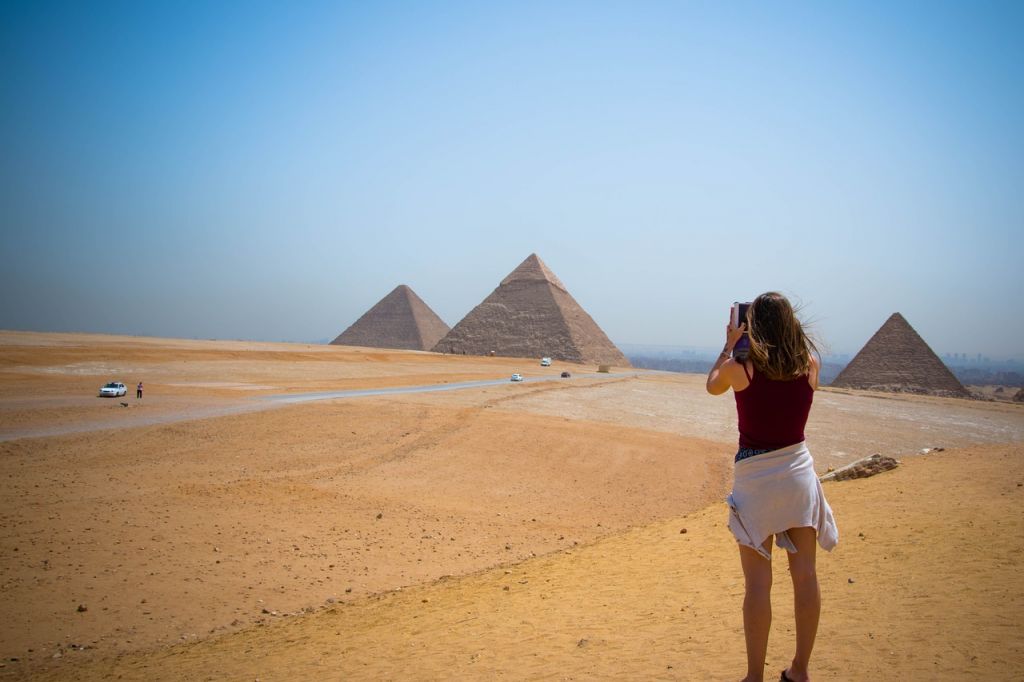
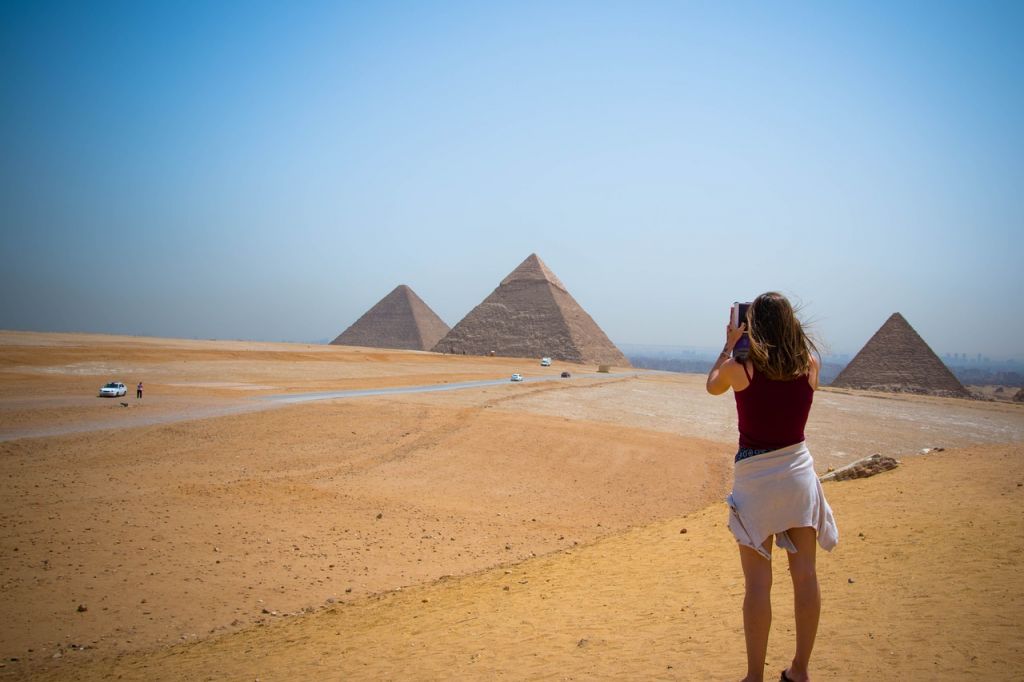
Many pyramids still stand in Egypt today. Among them, the three ancient pyramids known as the Great Pyramids of Giza have an especially strange presence.
These three pyramids were built with their triangular corners facing the same direction, at the same angle, and in the same orientation. Some people believe there was intention behind this arrangement. Because they were built in the same country, within the same civilization, and close to one another, this alignment can be interpreted as a kind of ley line, depending on how you look at it.
There are several theories about ley lines, but interpretations of the Great Pyramids of Giza often fall more into the New Age category. One reason is that the Egyptian pyramid ruins seem to preserve much of the ancient landscape imagined by Alfred Watkins, who originally proposed the idea of ley lines.
Archaeology continues to reveal more about ancient Egypt, but when it comes to the placement of the pyramids and the reasons they were built, there are still unresolved questions.
The Three Great Pyramids of Egypt
The three great pyramids of Egypt are said to have been built sometime between around 4500 BCE and 2000 BCE. The mainstream theory is that the largest pyramid was built by King Khufu.
The Great Pyramid of Giza, attributed to Khufu, is considered the peak of pyramid construction and is the largest in scale. Today it stands 138.74 meters high, compared with an original height of 146.59 meters. Its base measures 230.37 meters, its slope is 51 degrees, 50 minutes, 40 seconds, and its volume is about 2.352 million cubic meters. It is estimated to have been built from roughly 2.7 to 2.8 million limestone blocks, each weighing an average of 2.5 tons.
Even now, the pyramid remains more than 130 meters tall, with a base stretching about 230 meters. The three pyramids are commonly said to be the tombs of Khufu, Khafre, and Menkaure, though theories differ when it comes to Khufu.
The fact that such enormous structures were built in ancient Egypt before the Common Era is astonishing by itself. But their placement suggests an even stranger possible intention.
A Ley Line in the Angles of the Pyramids
First, there is the diagonal line that appears to connect the Pyramid of Khufu and the Pyramid of Khafre. These two tombs seem to have been arranged with clear intention, and their orientations and corner positions appear to form a pair.
Menkaure’s Pyramid, by contrast, is slightly offset if you extend a line from the peaks of the Khufu and Khafre pyramids. However, a straight road-like alignment can be seen from the valley temple to Menkaure’s Pyramid. South of Menkaure’s Pyramid, the smaller queen’s pyramids also appear to have been built in a row, as if lined up side by side.
The small pyramids east of Khufu’s Pyramid are also arranged in a straight positional relationship. Pyramids of many sizes were built across changing periods, but when looking at structures thought to belong to similar eras, it is possible to sense a ley-line-like regularity.
A Cluster of Small Ley Lines
Ley lines are often imagined as vast alignments crossing entire countries, or even linking places across national borders. But in areas where a single civilization once flourished, smaller-scale alignments like these can also be found.
Egypt is especially intriguing because the Sphinx, regarded as a guardian figure, was also built within the same area as the pyramids. Because of this, it is possible that the structures were arranged with some kind of spiritual awareness, though this remains an interpretation rather than a confirmed fact.
The area involved is only about 1.5 kilometers across. Even so, the fact that the pyramids were built here seems to suggest that the location held some meaning within ancient Egyptian civilization.
There are still many unresolved questions about why the pyramids were built, including theories involving slave labor and theories that see the projects as a form of public works. Perhaps the wisdom of the ancient Egyptians, who are said to have developed advanced astronomy, was poured into this space.
As a side note, the Old Testament records that after the pyramids had been built, Joseph, an ancestor of the Jewish people, rose to the position of prime minister in Egypt.
For travelers visiting Giza today, the pyramids are a real archaeological site as well as a place surrounded by mystery. Stay within legal visitor areas, follow local guidance, and prepare for heat, crowds, and desert conditions.
Japanese Language
古代エジプト文明はナイル川を中心に広がった世界四大文明の1つであり、 紀元前3000年頃にはすでに高度な技術を持っていた ことで有名です。ファラオによる階級制度のある社会形成や、都市建設を始めとした統治国家があったことは広く知られている事実ですが、その中でも 代表的な建造物としてピラミッド が挙げられます。エジプトには数多くのピラミッドが現存していますが、その中でも異様な存在感を持っているのが「ギザの大ピラミッド」と呼ばれる3つの古いピラミッドです。
この三大ピラミッドは 三角形の角が同じ方向、同じ角度、同じ方向を向いて造られており、この位置関係には意図がある とも言われています。同じ国、同じ文明で近い位置に造られたものではありますが、これも捉え方によればレイラインと考えれるでしょう。レイラインにはいくつかの説が言われていますが、ギザの大ピラミッドはいわゆるニューエイジに分類される解釈が強いです。というのも、 ワトキンスの提唱した古代の姿を大きく残しているのがエジプトのピラミッド遺跡 であるからです。
古代エジプトの姿は考古学的にも解明されつつありますが、その位置関係や建造理由においては分からない部分もあるのです。エジプト三大ピラミッドの概要。。エジプトの三大ピラミッドは紀元前4500年頃から紀元前2000年頃に造られたものであると言われており、一番大きいピラミッドはクフ王が作ったものだという説が主流です。クフ王が建設したギザの大ピラミッドは、ピラミッド建築の頂点とされ、最大規模を誇る。現在高さ138.74m(もとの高さ146.59m)、底辺230.37m、勾配51度50分40、容積約235.2万 m 3 で、平均2.5tの石灰岩を約270万-280万個積み上げたと計算される。
引用元: ギザの大ピラミッド 。上記の引用を見てもらえると、ピラミッドの大きさを想像出来るでしょうか?。現在でも130メートル以上の高さを保ち続けており、底辺の長さは230メートルに及びます。3つのピラミッドに埋葬されているのは、それぞれ、クフ王、カフラー王、メンカウラー王と言われていますが、クフ王に関しては諸説あります。こんな巨大な建造物が、古代エジプトで紀元前に造られていたこと自体が驚きの事実ですが、このピラミッドの位置関係にはもっと不思議な意図を感じられます。
ピラミッドの角度に見えるレイライン。。画像引用元: 三大ピラミッド 。まず、 クフ王のピラミッドとカフラー王のピラミッドを斜めに結ぶレイライン 。この 2つの墓は明らかに意識的に並べられており、ピラミッドの向きや角の位置関係が対になっている ことが分かります。また、メンカウラー王のピラミッドはクフ王のピラミッド、カフラー王のピラミッドの頂点から線を伸ばすと、ずれた位置に建造されていますが、 河岸神殿からメンカウラー王のピラミッドまではいわゆる道路の直線 が見られますし、メンカウラー王のピラミッドの南部にある 小さな王妃のピラミッドは横に一列に整列したかのように造られている のです。
さらに クフ王のピラミッドの東にある小さなピラミッドも位置関係が直線 に配置されています。ピラミッドは大小様々なものがありますが、これらは時代が変わりながら建造されたものですから、同時代だと考えられるものには レイラインの規則性を感じる ことが出来るのです。小さなレイラインの集合体。レイラインは国を大きく跨ぐようなものから、国を超えて繋がるものに加えて、一つの文明があった場所ではこういった小さな範囲でも見つけることが出来ます。。特に、エジプトはピラミッドだけではなく守護神とされるスフィンクスも同じ領域に造られていたことから、 スピリチュアルな意識を持って配置されている可能性は充分にある と言えるでしょう。
わずか、1.5キロメートルほどの範囲ですが、ピラミッドがここに造られたのには、古代エジプト文明の中に何かしらの意味を感じるのです。ピラミッドの建設理由も奴隷労働説や公共事業説など様々な未解明なポイントがあることと、天文学の発達していたと言われる古代エジプト人の叡智が、この空間に注ぎ込まれているのかもしれません。余談にはなりますが、ピラミッドが出来た後に、 ユダヤ人の祖先であるヨセフはこのエジプトにおいて首相の地位まで登っている ことが、旧約聖書には記されています