English Version
Tokyo’s Hachioji City has a quiet reputation among ghost-story fans as one of the capital’s major haunted areas. Places such as Kamiyugi Park, Hachioji Castle Ruins, and the Hachioji No. 1 Tunnel are often mentioned in local paranormal circles.
This article looks at another well-known site in Hachioji: the Doryodo Ruins, located along the historic Silk Road, or Kin no Michi. A small temple called Doryodo once stood here. Over time, however, the area became associated with grim stories: the bodies of unnamed silk mill workers said to have been abandoned nearby, two murder cases in 1963 and 1973, and a suspicious fire in 1983 that helped bring the temple’s history to an end.
Even after the temple disappeared, reports of strange experiences continued. The Jizo statue at the site became famous as the so-called Headless Jizo, and the location was later featured in a ghost story by well-known storyteller Junji Inagawa. Today, Doryodo Ruins remain one of Hachioji’s best-known haunted spots.
What Are the Doryodo Ruins?
The Doryodo Ruins are located at 411 Yarimizu, Hachioji, Tokyo, along the historic Silk Road route. In 1875, Doryodo was built as a hall enshrining a monk named Doryo, who is also connected with tengu legends. Its formal name was a branch temple of Eisenji, belonging to the Soto Zen tradition.
The temple later fell into decline after two murder cases and a fire. In 1990, the area was developed as Otsukayama Park. Today, only the moss-covered foundation remains as a historic site known as the Doryodo Ruins.
There are also two Jizo statues nearby. Although the temple itself is gone, the ruins are still known for ghost stories and reported paranormal experiences, making the site one of Tokyo’s more famous haunted locations.
Two Murder Cases Near Doryodo
Several murder cases have occurred around the Doryodo area.
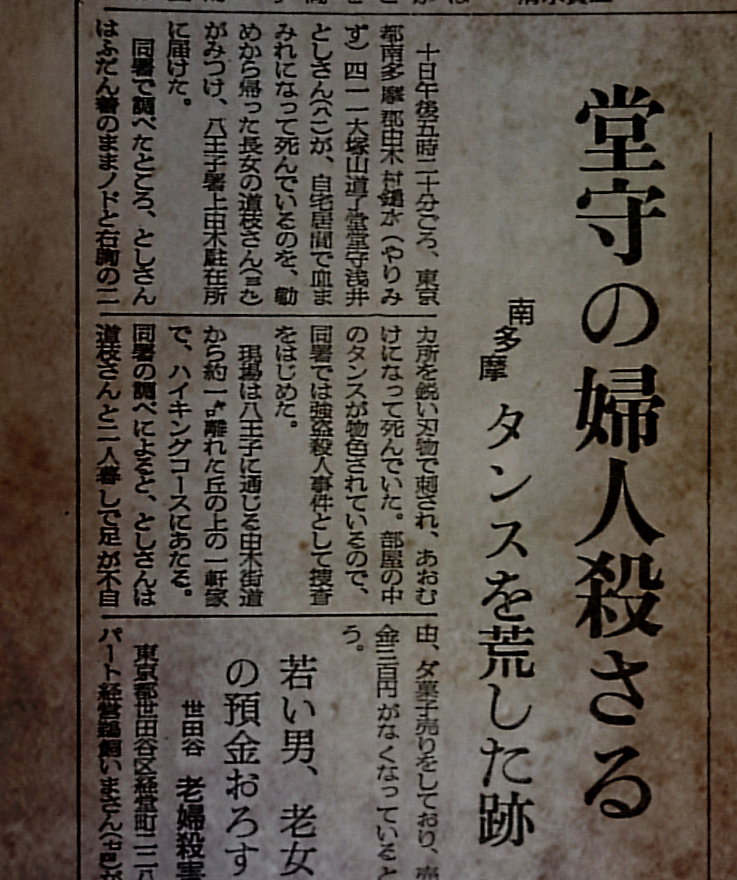
The first was the 1963 murder of an elderly woman who served as the temple caretaker. She had entered the temple in 1909 and was known as a deeply religious woman who performed daily prayers and rituals. She was killed during a robbery. The suspect was reportedly a laborer from Yamanashi Prefecture.
According to accounts of the time, the woman had given birth to three children outside of marriage, two of whom died soon after birth. Because of this, she was said to have faced harsh discrimination from local villagers. When her eldest daughter discovered the body, she reportedly shouted that the killer must be someone from the village, with such force that even the police were taken aback.
The second murder case occurred in 1973, ten years after the first. A man who had failed to end an extramarital affair killed the female university student he had been seeing. Her body was buried near the Doryodo area, in the precincts of Yarimizu Itagi.
The case drew major media attention because the perpetrator was an assistant professor at Rikkyo University, and because before the crime was discovered, he died in a family suicide along with his wife and child. The case became known as the Oba Incident and was later even adapted into a film.
Strictly speaking, the student’s body was not buried at Doryodo itself. Even so, reports of people seeing the spirit of a female university student at the Doryodo Ruins have continued. Perhaps this is because the site is nearby. Or perhaps, as local ghost stories suggest, something lingering around the ruins draws these stories in.
The Silk Road that passes Doryodo once prospered as a route for transporting raw silk between Hachioji and Yokohama. But a cruel story is also told about the area: when female workers at nearby silk mills became seriously ill, some were allegedly abandoned along the road.
In 1983, Doryodo was damaged by a suspicious fire. Even today, the Jizo statues are associated with damage and repairs, including the famous Headless Jizo. In folk belief, sacred statues and Buddhist images are not things to be treated carelessly. It is not hard to understand why people connect such disrespect with anger, resentment, or misfortune.
Reported Paranormal Experiences
Doryodo Ruins are part of a historic site and can be visited, but travelers should treat the area with respect. Go during safe hours, stay on public paths, follow posted rules, and do not disturb statues, ruins, or offerings.
Compared with haunted spots on private land or deep in the mountains, Doryodo is relatively accessible. But the site’s history is heavy, and many visitors have claimed to feel unwell or affected after going there. It is not a place to approach lightly just for a thrill.
Reported experiences include seeing a floating elderly woman, hearing or seeing a female university student, witnessing a hazy white will-o’-the-wisp-like light, and hearing a woman sobbing. These are rumors and personal accounts rather than confirmed phenomena, but they have helped build the site’s reputation.
Doryodo became nationally famous as a haunted location partly because it appeared in Junji Inagawa’s ghost story Headless Jizo. Today, the Jizo does have a head, but if you look closely, the texture of the stone on the head and body appears different, suggesting that a new head was attached later. The other Jizo, known as a child-protecting Jizo, also shows signs of damage.
Hachioji itself remains a major name among Tokyo ghost-spot fans. The Hachioji No. 1 Tunnel is said by some to produce strange photos, Kamiyugi Park is associated with past suicides and accidents, and Hachioji Castle Ruins is often called one of Tokyo’s most frightening historic sites. Among them, the Doryodo Ruins stand out for the way local history, crime, damaged statues, and ghost stories all overlap in one quiet place.
Japanese Language
東京都八王子市 といえば、知る人ぞ知る 心霊スポットの聖地 です。上柚木公園 や 八王子城址 、 八王子1トンネル など、都内でも有名な心霊スポットが盛りだくさん。今回はそんな八王子市の心霊スポット、 「道了堂跡(どうりょうどうあと)」 について紹介します。八王子市の文化道である「絹の道」の途上にはかつて、 「道了堂」 というお堂がありました。しかし 名もなき工女たちの死体が捨てられた 忌まわしい場所であり、1963年と1973年には 2度の 殺人事件 が発生。
さらに1983年の不審火によるボヤ騒ぎによってお堂はなくなり、今は「道了堂跡」という 跡地 が残るのみです。しかしお堂がなくなった後も 心霊現象 の報告が後を絶たず、跡地に立っていたお地蔵さんが 首なし地蔵 だと話題になったり、 稲川淳二 氏の怪談でも舞台になったりと、有名な心霊スポットになりました。今回は八王子市の心霊スポット、「道了堂跡」で過去に起こった殺人事件や首なし地蔵の現在について紹介します。【八王子の心霊スポット】道了堂跡とは?
場所や歴史を紹介。。八王子市の心霊スポット、 道了堂跡(どうりょうどうあと) の場所は 東京都八王子市鑓水411番地 。史跡でもある道 「絹の道」 の途上にあります。1875年に、天狗伝説で有名な 「道了」 という僧をまつったお堂である道了堂(正式名称は「永泉寺別院曹洞宗大塚山大岳寺」)が建立されました。しかし 2度にわたる殺人事件 や ボヤ騒ぎ でお堂は荒廃し、1990年に大塚山公園として整備され、現在は「道了堂跡」という史跡として、苔むした土台が残るのみとなっています。
周りには 2体の地蔵 があるのですが、 お堂がなくなった今でも心霊現象や階段が尽きない都内有数の心霊スポット になっています。【八王子の心霊スポット】道了堂跡で起こった2度の殺人事件。 道了堂跡で起こった殺人事件①(朝日新聞昭和38年9月) 画像引用元:イワレ – 心霊スポットのリアル- 。八王子市の心霊スポット、道了堂跡の周辺では、過去に 幾度かの殺人事件 が発生しています。
1つ目は 1963年の堂守である老婆の殺人事件 です。明治四十二年に入山し、毎日加持祈祷を行っていた心身深い女性でしたが、 強盗 に襲われて死亡しました。犯人は 山梨県の労務者 ということでしたが、3人の私生児を産み、うち2人がすぐに死亡してしまうという経歴から、 村人からは日々差別的な言葉を浴びせられていた ようです。そのため、遺体を発見した長女はまず 「村の中に犯人がいる!」 と、警察も戸惑うほどの剣幕で叫んだとか。 道了堂跡で起こった殺人事件②毎日新聞昭和49年2月 画像引用元:イワレ – 心霊スポットのリアル- 。
八王子市の心霊スポット、道了堂跡の 2つ目の殺人事件 は、1つ目の事件から 10年後の1973年 に起こりました。不倫の清算に失敗した男性が交際相手である女子大生を 殺害 、遺体を道了堂跡近くの鑓水板木の境内に埋めました 。加害者である男性が 立教大学の助教授 だったことや、事件発覚前に加害者が妻と子供とともに 一家心中 を遂げたことにより各誌で大きく取り上げられました。通称 「大場事件」 と呼ばれ、後に 映画化 もされたほどです。女子大生の遺体が埋められたのは正確には道了堂ではないのですが、 「道了堂跡で女子大生の霊を見た」 という報告が後を絶ちません。
やはり近いからでしょうか、それとも道了堂跡にうずまく怨嗟(えんさ)に引き込まれるのでしょうか……。ちなみに道了堂がある 「絹の道」 は、かつて八王子と横浜間で 生糸の輸送 によって栄えた道です。しかしその時、 付近の製糸場の工女たちが重い病気になると絹の道に捨てられた というむごい話も残されています。さらに1983年には 不審火 によってお堂が損傷、現在も 首なし地蔵と 呼ばれるように地蔵の破損が後を絶ちません。あ りがたいお地蔵さんや仏さまも、粗末に扱われれば怒り、怨嗟をまき散らし ても不思議ではないですよね。
【八王子の心霊スポット】道了堂跡の心霊現象を紹介。。八王子市の心霊スポット、道了堂跡は史跡ですので 誰でも自由に尋ねることができます 。私有地や山奥にあることが多い心霊スポットの中では、 アクセスに恵まれているので心霊スポット初心者にもオススメ だといえます。しかし利便性のわりには、 過去に起こった事件や積み重ねられた歴史は本物でハード 。霊障を受けた 、 気分が悪くなった という人も多いので、軽々しい気持ちで行くのはやめたほうがよいでしょう。
報告されている心霊現象としては、 浮いている老婆を見た、女子大生の姿や声を聞いた、もやもやした白い人魂を見た、女のすすり泣く声を聞いた…… などなど。道了堂跡が心霊スポットとして全国的な知名度を誇るようになったのは、 怪談師稲川淳二氏の「首なし地蔵」の舞台に取り上げられたから です。今では地蔵の首はついているのですが、よく見ると体と頭の石の質感が変わっていることから、 新しく頭がつけられた ことがわかります。またもう一つの子守り地蔵にも、 損傷の跡 が見られます。
東京都八王子市といえば、知る人ぞ知る心霊スポットの聖地です。ほぼ確実に心霊写真が撮れる「 八王子1トンネル 」や、自殺や事故があった「 上柚木公園 」、都内最恐といわれる「 八王子城址 」などなど、都内でも有名な心霊スポットが盛りだくさんです。オカルトオンラインではどれも詳しく紹介していますので、興味のある方は。東京都の最恐心霊スポットランキングは→ 【行ってはいけない】東京都のヤバい心霊スポットランキング!。※この記事は情報整理のため一部内容を更新しました