English Version
Volcanoes can give us hot springs, calderas, dramatic landscapes, and some of the most beautiful places on Earth. But when they erupt, human beings are almost powerless in the face of that scale. A direct hit from a pyroclastic flow or volcanic bomb can destroy people and buildings in an instant.
In Japan, disasters such as the pyroclastic flows of Mount Unzen-Fugendake, the eruption of Mount Ontake, and the eruption of Mount Moto-Shirane shocked the public. But if we look beyond Japan, there are volcanoes on a scale that is almost hard to imagine.
Fuji Is Not Japan’s Largest Volcanic Threat
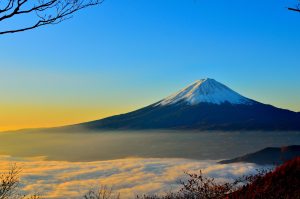
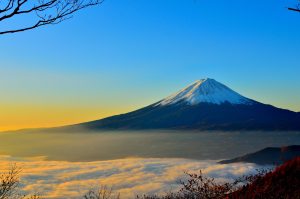
When people think of Japan’s most famous mountain, they think of Mount Fuji. It is the tallest mountain in Japan, a World Heritage site, and a beautifully shaped solitary peak. It is also, of course, a volcano.
Fuji’s present form was created through repeated eruptions, and in disaster-prevention discussions, people often hear that if Mount Fuji erupted, volcanic ash could fall over the Tokyo metropolitan area.
A Fuji eruption would certainly be a major disaster. However, Japan has other volcanoes that have produced eruptions on an even larger scale.
An old internet forum post once circulated a comparison of volcanic “full power,” using Mount Fuji’s largest past eruption as 1. This was a popular online comparison rather than an official scientific ranking, but it gives a sense of how people talk about volcanic scale:
- Mount Fuji: 1
- Sakurajima: 2
- Hokkaido Komagatake: 3
- Mount Usu: 3
- Mount Asama: 4
- Mount Kuju: 5
- Mount Hiuchi: 7
- Pinatubo: 11
- Mount Hakone: 14, with the post claiming pyroclastic flows reached as far as Yokohama
- Mount Daisetsu: 20
- Mount Ontake: 29, with the post claiming debris flows reached Aichi and a 30 cm pumice layer fell in Tokyo
- Lake Mashu: 36
- Lake Towada: 56, with the post claiming pyroclastic flows burned much of Aomori
- Mount Kirishima, Kakuto Caldera: 100
- Santorini: 100
- Lake Kussharo: 150
- Crater Lake: 150
- Mount Usu, Lake Toya system: 170
- Kurile Lake: 180
- Mount Paektu: 200, with the post claiming 5 cm of ash reached Aomori across the Sea of Japan
- Tambora: 210, known for the largest eruption in recorded history and the “year without a summer” in Europe
- Satsuma Iwojima, Kikai Caldera: 220, with the post claiming that even though it was a submarine eruption, it devastated Jomon culture in Kyushu
- Mount Tarumae, Lake Shikotsu system: 225, with the post claiming pyroclastic flows swallowed Sapporo and reached the Sea of Japan
- Ata Caldera: 320
- Sakurajima, Aira Caldera system: 450
- Mount Aso: 600, with the post claiming pyroclastic flows burned three-fourths of Kyushu and part of Yamaguchi
- Lake Taupo: 2,300
- La Garita Caldera: 2,400
- Yellowstone: 180,000
- Toba: 2,800, associated with the Toba catastrophe theory, which suggests the human population may once have fallen to around 10,000
- Superplume, Siberian Traps: more than 1,000,000, described in the post as one of the largest eruptions in Earth’s history and linked to the extinction of about 95 percent of life at the time
Looking at that comparison, Sakurajima, Mount Usu, and Mount Asama have all had eruptions described as larger than Fuji’s. Hakone and Lake Mashu also appear above Fuji when the discussion is limited to eruption scale.
Among Japanese volcanoes, the post places Aso in Kumamoto Prefecture at the top. Mount Aso is a tourist destination, but it is also one of the world’s great calderas, so its scale is not surprising.
And yet, far beyond Aso is Yellowstone in the United States.
Yellowstone is famous for its geysers and geothermal scenery. But if it were to produce a catastrophic eruption, the disaster would be on a scale that could affect the entire world.
What Is a Catastrophic Eruption?
Volcanic eruptions come in many types and sizes. Sakurajima in Kagoshima erupts often, but that does not mean it is releasing its full potential every time. The eruptions of Mount Ontake and Mount Moto-Shirane caused serious damage, but in terms of eruption scale alone, they were not among the largest.
The article describes the very worst kind of volcanic event as a superplume, where a mass of magma rises from deep within the Earth rather than a normal volcano simply erupting. Among volcanic eruptions themselves, the largest class is often described in Japanese as a “catastrophic eruption.”
These are the kinds of eruptions that formed places such as the Aso Caldera and the Aira Caldera. They can involve the collapse of the volcanic mountain itself. In simple terms, the mountain can be blown apart.
A caldera forms when magma erupts from a magma chamber and the now-hollow chamber collapses. Because catastrophic eruptions often create calderas, they are also called caldera-forming eruptions. In technical language, the article refers to them as ultra-Plinian eruptions. A truly enormous volcano capable of such an event is often called a supervolcano.
Yellowstone is one of Earth’s largest supervolcano systems.
What makes this even more unsettling is that since modern humans began observing volcanoes scientifically, humanity has not experienced a true catastrophic eruption of this class. Even if warning signs could be detected, prediction would still be difficult.
Yellowstone is volcanically active, and the chance of a catastrophic eruption is not zero. That does not mean an eruption is imminent, but the possibility is enough to make the subject frightening.
If Yellowstone produced a catastrophic eruption, huge amounts of volcanic ash could be thrown into the atmosphere. Reduced sunlight could lead to global cooling and a worldwide food crisis. The damage inside the United States would be enormous, and the global balance of power could shift rapidly.
A Magma Chamber Said to Be the Size of Shikoku
The article describes Yellowstone’s magma chamber as being roughly the size of Shikoku, one of Japan’s four main islands. In other words, an unimaginably large body of magma lies beneath the ground.
If Yellowstone erupted at full catastrophic scale, it is easy to imagine why people describe it as a threat to human civilization.
The danger would not only be the immediate eruption. Ash and smoke in the atmosphere could reduce sunlight, lower temperatures, and damage agriculture, leading to food shortages around the world.
The article also cites reports that, in the first decade of the 21st century, parts of Yellowstone National Park rose by more than 10 cm, some ponds dried up, and fumarole activity increased. It also mentions a report from the Denver Post that a U.S. Geological Survey scientist found a large uplift on the bottom of a lake inside Yellowstone National Park, said to be more than 30 meters high and more than 600 meters in diameter.
Yellowstone’s last major eruption is described as having occurred about 640,000 years ago. In popular disaster writing, that long silence is often treated as an ominous sign. If Yellowstone ever did erupt on a catastrophic scale, the effects would not stop at America’s borders. Japan, too, would likely feel the consequences through climate, food supply, and global disruption.
Nature May Be Scarier Than the Occult
Yellowstone is a supervolcano, and it is a volcano with the potential to erupt. If it produced a catastrophic eruption, humanity could face a severe crisis. The United States would suffer immense damage, and the world’s political and economic balance could be shaken.
This is the terrifying size of nature: something human beings cannot control. In that sense, nature may be scarier than any ghost story or urban legend.
For travelers visiting volcanic areas such as Yellowstone or Japan’s active volcanoes, always follow official alerts, obey closures, stay on marked paths and boardwalks, and never enter restricted zones for photos or curiosity. Volcanoes can be beautiful, but they are never just scenery.
Humanity cannot truly fight natural disasters. Typhoons, earthquakes, and volcanic activity all remind us how small we are. Pompeii is one famous example of a city devastated by a major eruption. If another large-scale eruption happens somewhere in the future, the question remains: how well could we survive it?
Preparing basic emergency supplies is never a bad idea, especially in countries like Japan where earthquakes, storms, and volcanic activity are part of life.
Japanese Language
火山は温泉やカルデラなど私たちを楽しませてくれることがあります。火山が作り出す自然はとても大きくて雄大・・・ですが、その反面、ひとたび噴火すれば人間はその大きさの前に為すすべもありません。火砕流や憤石が直撃すれば人間や人間が作った建物などは、ひとたまりもないのです。。雲仙普賢岳の火砕流や御嶽山の噴火、元白根山の噴火の現実は私たちに大きな衝撃を与えました。そんな噴火ですが、世界に目を向けたら、とんでもない規模の火山がたくさんあることをご存知でしょうか。
。公開日:2019年11月8日 更新日:2020年3月15日 。噴火の規模が日本で一番大きいのは富士山ではない。。日本で一番高い山…といえば、世界遺産でもある富士山ですよね。。富士山は、比高と標高がほぼ同じで、しかも単独峰ですから、麓から見るだけでも美しい山です。そして、多くの方がご存知であるとおり、富士山は火山です。何度も噴火をして今の富士山の形になったことは有名…。よく、防災関係の話で「 富士山が噴火 」すると都心に火山灰が降ると言われていますよね。
もちろん、富士山が噴火すれば大きな災害になることが予想されているのですが、富士山の噴火よりもっと規模が大きくなる可能性を秘めた山が日本にはあるのです。。掲示板に投稿されたこんな書き込みが話題になったことご存知でしょうか?。以下 引用 富士山のフルパワー(過去の最大規模噴火)を1とした場合の、各火山のフルパワー比較 。富士山 1 桜島 2 北海道駒ヶ岳 3 有珠山 3 浅間山 4 九重山 5 燧ヶ岳 7 ピナツボ 11 箱根山 14 ※横浜まで火砕流に飲み込まれた 大雪山 20 御嶽山 29 ※土石流が愛知にまで到達。
東京に30cmの軽石層 摩周湖 36 十和田湖 56 ※青森県の大半を火砕流が焼き尽くす 霧島山(加久藤カルデラ) 100 サントリーニ 100 屈斜路湖 150 クレーターレイク 150 有珠山(洞爺湖:有珠山の本体) 170 クリル湖 180 白頭山 200 ※朝鮮半島から日本海を超えて青森に降灰5cm タンボラ 210 ※有史以来最大の噴火でヨーロッパに夏の無い年 薩摩硫黄島(鬼界カルデラ) 220 ※海底噴火にも関わらず九州の縄文文化が滅亡 樽前山(支笏湖:樽前山の本体) 225 ※火砕流が札幌を飲み込んで日本海に到達 阿多 320 桜島(姶良カルデラ:桜島の本体) 450 阿蘇山 600 ※火砕流が九州の4分の3と山口県を焼き尽くす タウポ湖 2300 ラガリータカルデラ 2400 イエローストーン 180000 トバ 2800 ※当時の人類が1万人程度まで減少(トバ・カタストロフ理論) スーパープルーム(シベリアトラップ)1000000以上 ※地球史上最大といわれる噴火 当時の生物の約95%が絶滅 引用元: 。
これを見ると解る通り、富士山より、桜島や有珠山、浅間山のほうが大きな噴火をしたことがあるんです。そして箱根や摩周湖も実は噴火の規模だけをみれば富士山より大きいということがわかります。。そして、日本国内の火山でもっとも大きな噴火の形跡があるのは、この表で見ると熊本県の「阿蘇」です。阿蘇山は観光地になっていますが、実は世界有数のカルデラですから当然といえば当然です。。ですが、その阿蘇をはるかに凌駕する火山が、アメリカのイエローストーン…。間欠泉でもお馴染みのイエローストーンですが、これが破局噴火したら… 世界が終わるレベルの大災害となる ことでしょう。
破局噴火ってなに?イエローストーンが破局噴火しそう?!。。火山の噴火にはいろいろな種類と規模があります。鹿児島県の桜島などはよく噴火していますが、桜島が持っているフルパワーは当然出していません。御嶽山の噴火や元白根山の噴火も、被害はおおきなものでしたが、噴火の規模だけみれば、決して大きな物ではありませんでした。いろんな噴火がある中で「最悪の噴火」は以前ご紹介した 「スーパープルーム」 という噴火ですが、これは火山が噴火するのではなく、 地中からマグマの塊が上がってくる というちょっと次元が違うもの…火山の噴火で最も規模が大きいのが「 破局噴火 」といわれる噴火です。
破局噴火 とは、阿蘇のカルデラや姶良カルデラを作った噴火のことで、 山体崩壊を伴う大規模な噴火 を指しています。山体崩壊…つまり、 簡単に言えば噴火で山が吹っ飛ぶ!ということ。ちなみにカルデラは溶岩がマグマだまりから吹き出した後、空洞になったマグマだまりが陥没してできるものです。。破局噴火では、カルデラ形成されることが多いのでカルデラ噴火とも言われますし、専門用語ではウルトラプリニー式噴火といいます。そして、破局噴火をする超巨大火山のことを スーパーボルケーノ といいます。
イエローストーンは地球最大級のスーパーボルケーノなのです。そして恐ろしいことに、人類が火山の観測を初めてから、破局噴火を経験していません。つまり、 破局噴火の兆候を捉えることが出来ても予測は難しい というわけです。。イエローストーンの火山活動はとても活発 で、破局噴火の可能性は…0ではないとされています。もし、イエローストーンが破局噴火すれば、大量の火山灰が大気にまき散らされて、日照不足となり世界的な食糧危機がやってくることになるでしょう。
アメリカの被害はとんでもない規模となり、世界のパワーバランスは一気に崩れてしまいます。「武器は持たない」なんて平和ボケしたことは言っていられなくなるかもしれませんね…。。イエローストーンの規模がヤバ過ぎる!マグマだまりが四国位の大きさ!。。イエローストーンのマグマだまりの大きさは、 四国の面積の同じくらい… 。とんでもなく巨大なマグマだまりが地下に眠っているんです。イエローストーンが噴火すれば、人類の存続の危機になることは容易に想像 できます。
噴火の直接の影響だけでなく、噴火で舞い上がった噴煙で日照時間が減少して寒冷化し、食糧危機がくるといわれています。ワシントンポストによると 「21世紀初頭の10年間で公園全体が10cm以上隆起し、池が干上がったり、噴気が活発化するなど危険な兆候が観察され」 たとのこと。そして、アメリカ地方紙デンバーポスト(英語版)「 米国地質監査局のリーズ地質科学者が、イエローストーン公園内の湖の底で高さ30m以上、直径600m以上の巨大な隆起を発見した 」。
という報道もあります。イエローストーンの最後の噴火からすでに64万年 …噴火してもおかしくないんです。そしてその影響は、日本にも及ぶことになるでしょう。まとめ。超巨大火山のイエローストーンは、噴火が起こる可能性のある火山です。破局噴火すれば、人類は危機に陥ることが予想されています。また、アメリカに大きな被害を与え、世界のパワーバランスが崩れることも予想されます。人間の力ではどうすることもできない、自然の大きさ…どんなオカルトより実は 自然って怖い んです。
人類は自然災害には抗えない…。台風や地震に加えて、もっとも人間が対抗出来ないと言われている自然現象の1つが 『火山活動』 だと言われています。科学者や研究者の間でも、過小評価されていると言われており、実際に大噴火において過去はポンペイという都市が一夜にして壊滅したことも有名ですよね。今後、どこかの火山が大規模な噴火を起こしたら、私達は生きて行けるのでしょうか?。▼万が一の災害に備えて防災グッズは用意しておきましょう!▼