English Version
After liberating Orléans, Joan of Arc turned toward the goal she said had been given to her by the “voices” from the beginning: the coronation of Charles VII at Reims.
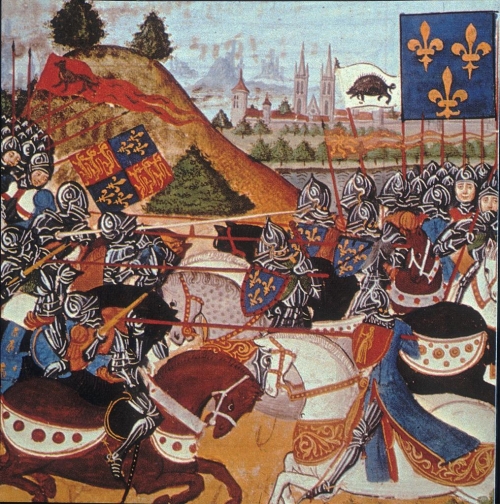
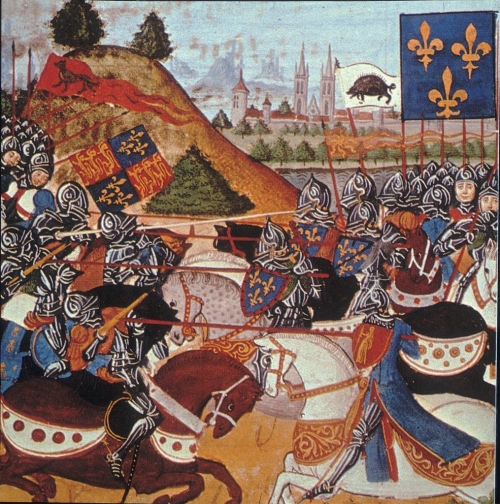
The English army, defeated at Orléans, had withdrawn into strongholds around the Loire River. The French advance did not stop there. One by one, French forces attacked those remaining positions and pressed the English back. The most decisive victory in this pursuit is often said to have been the Battle of Patay.
At Patay, Gilles de Rais achieved such major success that he was praised as a “hero who saved the nation,” and many of the figures later remembered as Joan’s comrades-in-arms also distinguished themselves.
About a month after the liberation of Orléans, the struggle around the Loire had turned decisively in France’s favor. Now the campaign toward the coronation at Reims could begin. But the road to Reims passed through territory tied to the hostile Duke of Burgundy, so the march was expected to be dangerous.
Joan of Arc’s Comrades-in-Arms
Several people are commonly described as Joan of Arc’s comrades-in-arms. Most were men who fought alongside her during the brief but intense period from the liberation of Orléans to the pursuit of English forces at Patay, and later during the siege of Paris.
La Hire was a French commander who had been defending Orléans from around October 1428. Although he had suffered defeats, including at the Battle of the Herrings, he is said to have followed Joan faithfully after she arrived with reinforcements.
Jean Poton de Xaintrailles was a French military commander who had fought for Charles VII’s faction from around 1421. From the same region as La Hire, he fought in many campaigns and became one of Joan’s comrades. He also took part in efforts connected to Joan’s rescue, and because he served Charles VII until late in life, he was later praised alongside La Hire as one of France’s bravest commanders.
Jean de Dunois, a nobleman and soldier, was a cousin of Charles VII and had been fighting the English as early as 1415. Though he was captured by the English more than once, he survived and served as commander-in-chief during the liberation of Orléans. He is said to have fought near Joan until the final period before her capture.
Gilles de Rais, a baron and Marshal of France, is often described as the person most deeply devoted to Joan after the liberation of Orléans. At the coronation in Reims, he was recognized as a Marshal of France and was even called a “hero who saved the nation.” He remained with Joan until the siege of Paris. After Joan was captured, however, he later became infamous for acts remembered as horrifying and deranged.
Jean II, Duke of Alençon, had already met Joan at Chinon. Because he had spent five years as an English prisoner from 1424 to 1429, he could not join the liberation of Orléans due to ransom issues. After resolving those financial matters, he fought with Joan and the others in pursuit operations such as the Battle of Patay. Among the supporters of the dauphin, he is said to have been one of Joan’s strongest backers.
André de Laval, a nobleman, soldier, and Marshal of France, was related to Gilles de Rais. He was one of the men who accompanied Joan from the siege of Orléans through the coronation at Reims. Even after Joan’s execution, he remained a loyal vassal of Charles VII, fighting on Charles’s side when the dauphin Louis rebelled in 1456. He is also remembered as one of the figures connected to the end of the Hundred Years’ War.
Why Joan Was Taken Seriously
When Joan was allowed to go to Orléans, many powerful figures from the dauphin’s side and the Armagnac faction came as reinforcements. Unlike Joan, most of them were established commanders, nobles, or men with rank in French society.
Joan herself had gained recognition through prophecies and actions, but she had no noble background. Because of that, some people looked on her with suspicion or resentment.
For example, La Trémoille, one of Charles VII’s closest men, instructed Gilles de Rais to keep watch on Joan. Yet Gilles de Rais, after seeing her fight up close, reportedly became captivated by her. Many other commanders who initially saw little meaning in Joan’s presence also changed their view after witnessing the liberation of Orléans.
With the support of many influential figures, Joan marched north to make possible the coronation of the dauphin Charles at Reims.
The Coronation of Charles VII
The two great missions Joan said she had heard from her “voices” were the liberation of Orléans and the coronation of Charles at Reims.
For Charles, who belonged to the Armagnac faction, being crowned at Reims carried deep traditional meaning in France. It was a crucial sign that he was the legitimate king.
The march to Reims was not as difficult as first expected. From Gien Castle to Reims, the French army was reportedly not seriously obstructed by English or Burgundian forces. One reason often given is that the English army, exhausted after battles such as Patay, had requested reinforcements from England but could not stop the French advance in time. As for the Duke of Burgundy, it is also said that he had begun moving toward reconciliation with Charles’s side.
In any case, no major obstacle prevented the ceremony. On July 17, Charles was crowned in the cathedral at Reims. Until then he had been the dauphin; from that coronation onward, Charles VII formally became King of France.
But Joan still had another mission left: the command from her voices to “save France.”
The Road to Capture
After the coronation at Reims, the opinions of Charles VII and Joan began to diverge.
Joan urged Charles, who was visiting cities in northern France after the coronation, to attack Paris. Charles, however, preferred to prioritize a formal reconciliation with the Duke of Burgundy.
The split between the Burgundian faction and Charles VII’s Armagnac faction was deep, and negotiations were expected to be difficult. Although peace talks were apparently attempted, Philip III, Duke of Burgundy, is said to have broken off the negotiations and sent troops to the English side to help defend Paris.
As a result, the French decided to advance on Paris. On September 8, only about two months after the July 17 coronation, the siege of Paris began.
Joan formed an army with comrades such as the Duke of Alençon and advanced as far as Saint-Denis, just outside Paris. But the city had been strongly fortified by Burgundian reinforcements and English troops, making a full assault impossible.
Charles VII ordered a temporary retreat, and the attempt to take Paris failed.
Afterward, Joan continued military action in central France. These actions are sometimes described as being driven increasingly by the voices and demands of the people, rather than by the formal strategy of the French army. At first, Joan had acted according to what she understood as the “voice of God,” but over time, it is said that her movements became more influenced by popular appeals.
Joan the Soldier Is Captured
During the siege of Paris on September 8, Joan remained on the battlefield and commanded until the very end, but she was wounded. On September 9, following a retreat order from Charles VII that reflected the wishes of La Trémoille, she withdrew from the front.
She returned to military action in October at the Siege of Mue. In November and December, she also took part in operations around the Loire, but those efforts failed as well.
On December 29, Joan and her family were raised to noble status. Soon after, however, a truce was concluded between France and England, leaving Joan to spend several months unable to act.
On March 23, 1430, Joan sent a letter to the Hussites, a movement the Catholic Church regarded as heretical:
“Give up your delusions and your foolish fanaticism. Either abandon heresy, or abandon your lives.”
Just before the truce ended, the Duke of Burgundy’s army began besieging Compiègne, a city that supported Charles VII. Naturally, Compiègne requested help, and Joan’s force was the first to answer.
At that time, however, Joan’s army was small. Alongside her lieutenant Jean d’Aulon, she had only about 200 soldiers who were not part of the regular French army.
After entering Compiègne, Joan’s force charged toward a Burgundian fort but was driven back. Joan fought as the rear guard, trying to protect the retreat.
The Burgundian army is said to have numbered more than 6,000 men, making the situation nearly hopeless. Joan sent the soldiers who had followed her back toward Compiègne first. Fighting in front of the city gate, she was finally pulled down from her horse and captured.
Joan of Arc, the French heroine who had always been devoted to God, became a shield for the people. On May 23, 1430, she was taken prisoner by the Duke of Burgundy.
Intrigue Around Joan’s Final Days
Once Joan became a captive, countless plots and trials awaited her.
The theology faculty of the University of Paris had already marked Joan as a heretic and sent letters requesting that the Duke of Burgundy hand her over. They wanted an inquisition against her.
At the same time, the English side, including the Duke of Bedford, sought political advantage from Joan’s capture. Using a cleric named Pierre Cauchon, they worked to have Joan delivered to the English king.
Cauchon is often said to have effectively determined Joan’s fate.
Originally aligned with the Burgundians, Pierre Cauchon also had deep connections with the University of Paris and the English. The Duke of Burgundy’s aim was to have Joan declared a heretic, thereby weakening the legitimacy of Charles VII’s kingship. Cauchon served as a link between the English king and the University of Paris, and through every possible means helped arrange Joan’s transfer into English hands.
He also participated as a judge in Joan’s heresy trial, where he is said to have worked against her.
Did Charles VII Abandon Joan?
There is a long-standing claim that Charles VII, who had effectively become king thanks to Joan’s achievements, did not move to save her after she was captured. Many researchers and historians have criticized Charles for failing to intervene.
More recent research, however, suggests that Charles VII and several nobles may have taken at least some action regarding her transfer.
Joan herself is said to have been imprisoned at Bouvreuil Castle, and she tried to escape more than once. After being moved several times, she was reportedly held at Arras in Burgundian territory. One famous story says that she jumped 21 meters from the Tower of Vermandois in an escape attempt.
Gilles de Rais and others also attacked Rouen in an attempt to recover Joan. But the efforts of the nobles failed, and Joan was eventually transferred to Rouen, where the inquisition would be held.
The Heresy Trial
The heresy trial conducted by the English and Burgundian factions was, in effect, almost predetermined. It is generally described as being led by figures such as Henry VI, who was King of England and also claimed the French throne, and Pierre Cauchon.
In simple terms, the process leading to the inquisition was created through highly irregular procedures. The trial is said to have begun without the physical evidence normally needed to sustain it and without a firm legal basis by the standards of the time.
About half a year after Joan was captured on May 23, 1430, the trial began on February 21, 1431, and continued for roughly three months.
At the time, inquisitions were carried out under the authority of the Church. A person placed on trial by the Church was supposed to be kept under Church protection and supervision. Joan, however, was held in a prison inside Bouvreuil Castle.
During the questioning, Joan had to answer numerous accusations alone. The decisive issue, in the end, became the fact that she wore men’s clothing in prison. At first, the trial focused on the “voices” Joan said she had heard, but finally she was cornered over her clothing.
On May 24, 1431, when the first judgment was delivered, Joan made a single abjuration, a statement admitting error and declaring a return to the Catholic Church. She also signed a document and was granted forgiveness.
But four days later, on May 28, she changed back from the women’s clothing required by the abjuration into men’s clothing.
When the judges asked her why, Joan answered that she had worn men’s clothing by her own will because she preferred it. She also said that the abjuration she had made four days earlier had been false, spoken out of fear of being burned.
Under the rules of the time, a person who had repented and then returned to heresy had no path to salvation.
On May 30, 1431, Joan of Arc, the Maid of Orléans who had saved France, was burned at the stake in Rouen’s Place du Vieux-Marché. Her life ended there.
The Mystery of Joan’s Return to “Heresy”
If Joan had kept the vow made on May 24, she would have been allowed to return to the Church and would not have lost her life. In reality, by May 28 she had followed her own will and was condemned to the fire.
The reason remains heavily debated, and no clear answer has been established.
Recent research points to testimony that, after her abjuration, Joan was returned to prison and placed in a situation where her women’s clothing had been taken, leaving her only men’s clothing to wear. There is also testimony that she complained of the danger of sexual assault by guards and Englishmen.
At the same time, some scholars note that, viewed through the religious ideas and political conditions of the era, the declaration of heresy was almost inevitable. In the Roman Catholic Church, a heretic was seen as someone in league with the Devil and therefore someone to be eliminated. In addition, the clerics who conducted an inquisition held authority comparable to representatives of the pope.
The Roman Catholic Church was then the central power of Christianity in Western Europe. Some clergy who understood the situation appear to have repeatedly urged Joan to choose repentance and obedience as the most realistic way to survive.
The truth remains uncertain. But in the later rehabilitation trial, Joan was recognized as a martyr. The judgment declared that Cauchon had placed guilt on an innocent woman, and on July 7, 1456, Joan was officially declared innocent.
Centuries after her death, on May 15, 1920, Pope Benedict XV canonized her. Today, Joan of Arc is honored as a Catholic saint.
Final Thoughts
Leaving aside the later rehabilitation trial and canonization, perhaps the real Joan of Arc was exactly what she seemed to be: a young girl who believed she heard the voice of God.
Even knowing she would be burned, she did not abandon the voices and visions she believed in, nor did she bend her faith. And in practical terms, it was Joan of Arc who made possible both the liberation of Orléans and the coronation of Charles VII.
Joan’s life ended when she was only 19 years old, but her achievements continue to be remembered and honored.
If you visit sites connected to Joan of Arc, such as Reims Cathedral or Rouen’s Place du Vieux-Marché, treat them as active historic and religious places. Follow posted rules, stay in public areas, and be respectful of local worshippers and residents.
Japanese Language
オルレアンを解放したジャンヌ・ダルクは、当初からの声の指示であった 「シャルル7世のランスでの戴冠式」 を目指します。オルレアン解放戦で敗北したイングランド軍はロワール川を中心とした各拠点に逃げ込んでいました。解放の勢いは止まらずにフランス軍はこれらの残党を次々と攻め落とし、イングランド軍を追い込んでいきます。そして、追撃戦の中でも最も戦果があったとされるパテーの戦いが始まります。このパテーの戦いでは、ジル・ドレは「救国の英雄」と呼ばれる大戦果を挙げ、ジャンヌ・ダルクの戦友と呼ばれた人物の多くも活躍しました。
。オルレアンの解放から約1ヶ月ほどの時間を経て、ロワール川周辺の勝敗は完全にフランス軍が勝利を納め、いよいよ ランスでの戴冠式に向けた作戦 が練られることになりました。しかし、ランスまでの道のりには敵対関係であったブルゴーニュ公の領地を通らなければならず、行軍には困難が予想されていたのです。ジャンヌ・ダルクの戦友と呼ばれた人物。。画像引用元: パテーの戦い 。ジャンヌ・ダルクには戦友として知られている人物が数名いますが、これらの多くはジャンヌ・ダルクが参戦した短い期間の戦い、オルレアン解放戦からイングランド軍への掃討戦となったパテーの戦いと後のパリ包囲戦において一緒に行動を共にした人物のことを指します。
代表的な人物は以下の通りです。ラ・イル(軍人) 。1428年10月頃からオルレアンの防衛をしていたフランスの将軍で、ニシンの戦いなどで敗北をするもジャンヌ・ダルクが援軍に参戦したあとは1番の忠実な部下と言われるほどジャンヌ・ダルクに従ったとされる。ジャン・ポトン・ド・ザントライユ(軍の指揮官) 。1421年頃からシャルル7世の陣営で戦ったフランス軍の指揮官であり、ラ・イルと同郷の人物。数々の戦争で活躍しジャンヌ・ダルクとも戦友になる。ジャンヌ・ダルクの奪還を試みた戦争でも活躍し、晩年までシャルル7世に尽くしたことから後にラ・イルと並んでフランスでもっとも勇敢な指揮官と評された。
ジャン・ド・デュノワ(貴族・軍人)。シャルル7世の従兄弟にあたる人物で1415年の時点でイングランド軍と戦っていた。何度かイングランド軍の捕虜になるも、難を逃れオルレアン解放戦では総司令官を務めていた。ジャンヌ・ダルクが捕まる最期まで側で戦っていたとされる。ジル・ドレ(男爵・フランス元帥)。オルレアン解放戦以降、もっともジャンヌ・ダルクに陶酔していたと言われる人物。ランスでの戴冠式でフランス元帥に認められ、さらに「救国の英雄」とまで呼ばれた。
パリ包囲戦までジャンヌと行動を共にする。しかし、ジャンヌ・ダルクが捕まった後は狂気じみた行為に走り悪名を残すことになる。ジャン2世(アランソン公)。シノンですでにジャンヌ・ダルクとの面識があったが、1424年から29年までの5年間をイングランドの捕虜として過ごしていたため、身代金の問題でオルレアン解放戦には不参加だった。その後、金銭問題を解決した後にジャンヌ・ダルク達と追撃戦になったパテーの戦いなどで活躍。王太子派の中では最もジャンヌ・ダルクを支持していたと言われている。
アンドレ・ド・ラヴァル(貴族・軍人・フランス元帥)。ジル・ドレの親戚にあたる人物で、オルレアン包囲戦からその後のランスの戴冠式までジャンヌ・ダルクと行動をともにした1人。ジャンヌ・ダルクが処刑された後もシャルル7世の忠実な臣下であり続け1456年に王太子ルイが反乱した際もシャルル7世側で戦っている。百年戦争を終結させた人物の1人でもある。ジャンヌ・ダルクが評価された経緯。ジャンヌ・ダルクがオルレアン行きを許可された事で、オルレアンには王太子側やアルマニャック派の有力な人物が援軍として駆けつけましたが、ジャンヌ以外の人物は当時のフランスにおける司令官や貴族がほとんどであり、元々の地位があった人物ばかりでした。
一方でジャンヌ・ダルクは予言や数々の行動によって認められた人物ではありましたが、生まれのバックボーンという物を持たなかった為、 ジャンヌ・ダルクという存在自体を疎んじた人々も存在した のです。例えば、シャルル7世の一番の部下であった ラ・トレモイユは、ジル・ドレに対してジャンヌ・ダルクを監視するように指示していましたが、ジル・ドレ自身は間近でジャンヌ・ダルクの戦いを見て陶酔していきます。。他にも、当初はジャンヌ・ダルクの実力や存在に意味を見出していなかった司令官や指揮官などの多くも、オルレアン解放を目の当たりにしていく内に、ジャンヌの見方が変わっていったとされています。
こうして多くの有力な人物にも支持されたジャンヌは王太子シャルルのランスでの戴冠式を行うために北上します。王太子シャルルの戴冠式。。画像引用元: シャルル7世(フランス王) 。ジャンヌ・ダルクが「声」として聞いていた「オルレアンの解放」、そしてもう1つの重要な儀式が王太子シャルルの 「ランスでの戴冠式」 でした。アルマニャック派である王太子シャルルを、ランスで正式に王として成立させることには、当時のフランスの伝統的な意味合いも持っており、正統な王の証を立てる重要なものだったのです。
ランスまでの移動は当初の予測ほど困難もなく、ジアン城からランスまではイングランド軍やブルゴーニュ公の軍勢にほとんど干渉されることもなかったそうです。大きな理由としては、パテーの戦いなどで疲弊していたイングランド軍は本国に援軍要請をしたものの、距離的な問題が発生しランスへの北上を阻止できなかったことが指摘されています。また、ブルゴーニュ公に関しては王太子シャルル陣営と和解の歩を進めていたとも言われています。いずれにしても大きな弊害は起きずにランスの大聖堂で7月17日に戴冠式が行われます。
これまではあくまでも王太子であった シャルル7世はこの戴冠式をもって正式なフランス国王に就任 します。しかし、ジャンヌ・ダルクにはまだ課題が残っていたのです。それは「声」の指示する「フランスを救え」という言葉でした。。ジャンヌ・ダルクが捕まった対ブルゴーニュ公軍戦。。画像引用元: ジャンヌ・ダルク 。ランスでの戴冠式が終わったシャルル7世とジャンヌ・ダルク。ここから少しずつ2人の意見が食い違ってきます。ジャンヌ・ダルクは戴冠式が終わってフランス北部の都市を訪れていたシャルル7世に対してパリへの攻撃を提言しましたが、シャルル7世はブルゴーニュ公との正式な和解を優先させることを望みます。
ブルゴーニュ派とアルマニャック派であったシャルル7世との間には深い亀裂が走っており、交渉は難航が予想されていました。この交渉においては、一旦は和平交渉に入ろうとしたもののブルゴーニュ公 フィリップ3世は和平交渉を反故にし、パリの守備のためにイングランド側へ兵を派遣したと言われています。。これによってフランス側はパリへの進軍を決定し、7月17日の戴冠式から僅か約2ヶ月後の9月8日にパリ包囲戦が始まります。こういった背景もあり、ジャンヌ・ダルクは戦友であったアランソン公などと軍を編成し、パリ目前のサン・ド二まで進軍をしますが、パリはブルゴーニュ公の援軍とイングランド軍によって強固な防衛体制が構築されており、総攻撃を仕掛けることは出来ませんでした。
シャルル7世は軍隊への一時退却を指示し、パリの攻略には失敗に終わります。その後、ジャンヌは中央フランスで軍事行動を進めていましたが、これら一連の行動は民衆の声を中心としたものであり、フランス軍の軍人的な行動に変化していったといいます。当初のジャンヌ・ダルクは「神の声」を目的として行動していましたが、 次第にジャンヌ行動は民衆の声に左右されるようになった とも言われています。。軍人ジャンヌ・ダルクの捕縛。9月8日のパリ包囲戦では、最後の最後まで戦場で指揮を取っていたジャンヌ・ダルクでしたが、戦闘中に負傷し、翌日の9月9日には ラ・トレモイユ(シャルル7世の部下であり、ジル・ドレにジャンヌ・ダルクの監視役を命じた人物)の意向を組んだシャルル7世の撤退命令を受けて戦線を離脱、 10月のムイエ包囲戦にて軍に復帰します。
その後11月、12月とロワール包囲戦に参戦するも、これも失敗に終わります。12月29日にはジャンヌ・ダルクとその家族は貴族の身分に引き上げられますが、フランスとイギリスの間には休戦協定が結ばれ、ジャンヌは数ヶ月に及び “何も出来ない期間” を無為に過ごしてしまいます。1430年3月23日にジャンヌは当時の異端とされていたカトリックのフス派へと書簡をあてています。。「あなたたちの妄執と馬鹿げた妄信はお止めなさい。異端を捨てるか生命を捨てるかのどちらかです」 。
引用元: ジャンヌ・ダルク 。ブルゴーニュ公の軍は、休戦期間が終わる直前にコンピエーニュというシャルル7世を支持していた都市の包囲に取り掛かります。当然コンピエーニュからは救援要請が求められ、これに真っ先に応じたのがジャンヌ・ダルクの軍でした。しかし、この当時のジャンヌ・ダルクの軍には副官ジャン・ドーロンに加えて、フランス正規軍ではない約200名の兵士という少人数でした。コンピエーニュに入城したジャンヌ・ダルクの軍は、ブルゴーニュ公軍の砦に向かって突撃するも敗走し、ジャンヌは自らを殿として戦い抜きました。
この時、ブルゴーニュ公軍の軍勢は6000人以上であったと言われており、戦況は絶望的でした。先に自分についてきた兵士をコンピエーニュへ避難させて、 市門前で奮闘していたジャンヌ・ダルクはついに馬から引きずり降ろされて、捕らわれの身になってしまいます。。常に神に対して献身的であったフランスの英雄ジャンヌ・ダルクは民衆の盾となり、1430年 5月23日、 ブルゴーニュ公 によって身柄を拘束されます。ジャンヌ・ダルクの最期と渦巻いた陰謀。。画像引用元: ジャンヌ・ダルク 。
捕虜の身になったジャンヌ・ダルクには数多の陰謀と試練が待ち受けていました。囚われたジャンヌ・ダルクは当時のパリ大学神学部から異端として目をつけられており、ブルゴーニュ公へ引き渡し要求の書簡を送っており、ジャンヌ・ダルクへの異端審問を狙っていました。また、同時期にジャンヌ・ダルク確保にイングランド側のベドフォード公なども政治的な介入を狙って、配下の聖職者であるピエール・コションという人物を用いて、ジャンヌをイングランド王に引き渡す工作をしています。
この ピエール・コションという人物が事実上、ジャンヌ・ダルクの運命を決めた とも言われています。ジャンヌ・ダルクをイングランド王に引き渡す役目を担ったピエール・コション。ピエール・コションという人物は元々ブルゴーニュ派であり、さらにパリ大学やイングランドとも深い関係にあった人物でした。ブルゴーニュ公の目論みはジャンヌ・ダルクを異端と認定させることで、シャルル7世の王位の正統性を乏しめることが狙いであったため、配下であったコションはイングランド王やパリ大学の間を繋ぐ役割を務め、あらゆる手段を用いてジャンヌ・ダルクをイングランドに引き渡すことに貢献したのです。
さらに、 ジャンヌ・ダルクの異端審問においても審問官として参加し、ジャンヌ・ダルクを貶めた と言われています。シャルル7世がジャンヌ・ダルクを助けなかった?。ジャンヌ・ダルクが捕虜の身になった時に、実質的にジャンヌの功績によってフランス王になったシャルル7世は救出に動かなかったという説があり、シャルル7世のジャンヌ・ダルク引き渡し介入に対して批判的な研究者や歴史家は数多くいますが、最近の研究では、シャルル7世や多くの貴族は少なくとも引き渡しに関しては動いていた形跡もあったそうです。
ジャンヌ・ダルク自身はブーヴルイユ城に幽閉されていたと言われており、自力でも何度か脱出を試みています。何度か移送された後に、ブルゴーニュ公領であるアラスに 監禁されていた時にはヴェルマンドワの塔から21メートル下まで飛び降りたという逸話も残っており、ジル・ドレなどはルーアンを攻撃してジャンヌ・ダルク奪還戦を行なっていました。。しかし、諸侯の努力は叶わず、異端審問が行われたルアンへと身柄を移送されます。ジャンヌ・ダルクに対する異端審問。ジャンヌ・ダルクに対するイングランドやブルゴーニュ派勢力の異端審問はほぼ出来レースであり、その裏にはイングランド王でありながらフランス王にもなったヘンリ6世やピエール・コションなどによって主導的に進められたとされています。
簡潔に言えば異例の手続きによって異端審問までの流れは作られたものであったという事です。※具体的には裁判を維持するための物的証拠確保や当時の法的根拠がないまま異端審問が開始されたとされています※ 。ジャンヌ・ダルクが捕虜の身となった1430年5月23日から約半年後、1431年2月21日からおよそ3ヶ月間にわたって異端審問が行われました。当時、異端審問は教会が主体で行うものであったため、教会の裁判にかけられる人物は教会の保護と監視の下に置かれていましたが、ジャンヌ・ダルクはブーヴルイユ城内の牢獄で過ごしています。
異端審問では、様々な尋問に対してジャンヌ・ダルク1人が答えを出さなければいけないものでしたが、決定的な審判となったのはジャンヌが獄中で男性の服を着ていたことでした。※当初はジャンヌ・ダルクが聞いた「声」について焦点が当てられてましたが、最終的には服装の問題で追い詰められます※ 。ジャンヌは最初の判決が下った1431年5月24日の判決中に一度だけ悔悛の誓い(自らの過ちを認めてカトリック教会に戻る表明)を話し、書状にも署名をして罪を赦されます。
しかし、 それから4日後の5月28日には悔悛の誓いで義務付けられていた女性用の服を再び男性用の服に戻してしまいます。。判事には自分の意思によって男性の服が好きで着たと答え、さらに4日前の悔悛の誓いは、火刑に処される恐怖心から出た偽りであったことも語りました。当時の異端審問では回心した人間が再び異端に戻ると救われる道はなく、 1431年5月30日、オルレアンの乙女としてフランスを救ったジャンヌ・ダルクはヴェー・マルシェ広場において火刑になり、その生涯を終えるのです。
。回心したジャンヌが再び異端となった謎。。画像引用元: ジャンヌ・ダルクの列聖 。5月24日の回心によって決められた誓いを守っていれば、ジャンヌ・ダルクは教会に戻ることを許され、命を落とすこともありませんでした。しかし、実際には5月28日には自らの本来の意思を通して火刑にされてしまいます。この理由については現在も数多くの議論になっており、ハッキリとした理由は判明していません。。しかし、近年の研究では回心した後、再び牢獄に入れられていたジャンヌは女性用の服を盗まれ、男性用の服しか着れない状態にされていた事や、牢番やイギリス人による性的暴行の危険があったことを訴えていたという証言などもあります。
さらにジャンヌ・ダルクの異端審問での態度に関しては言えば、当時の宗教観や情勢から見れば異端判定は当然になることも指摘されています。ローマ・カトリック教会においての異端者は悪魔との契約者であり、排除すべき存在とされていましたが、それに加えて異端審問を行う聖職者は教皇代理と同じ権限を持つ相手でもあったのです。そして、当時のローマ・カトリック教会はキリスト教における絶対的な権力の中心でもありました。また、この状況を理解していた聖職者達の一部はジャンヌ・ダルクに対して何度も “現実的に助かる方法” としての回心や忠誠を望んでいたという形跡もあります。
真相はやはり不明ですが、後に復権裁判では、ジャンヌ・ダルクは殉教者であったことが認められ、コーションが無実の女性に罪を被せたという判決によって 1456年7月7日にジャンヌに無罪とする判決 が出ています。。そして、死後数百年が経った1920年5月15日に、ローマ教皇ベネディクトゥス15世によって列聖され、現在ではカトリックの聖人として扱われることになります。さいごに。復権裁判での判断や、列聖に関して別として、真実のジャンヌ・ダルクは神の声を聞いた少女だったのではないでしょうか?
。火刑に処されることを分かっていながら自らの意思によって聞いた声と幻視を信じた上で信仰を曲げなかったことはもちろん、 現実的にオルレアン解放と王太子シャルルの戴冠式を実現したのは他でもないジャンヌ・ダルクの功績 でした。たった19歳でその生涯を閉じたジャンヌ・ダルクでしたが、ジャンヌの功績は今後も多くの人々によって讃えられるでしょう。参考図書