English Version
Ley lines have come up many times in occult discussions: mysterious straight lines said to connect ancient sacred sites, monuments, mountains, and places of power. They are discussed around the world, and Japan has its own share of alleged ley lines as well.
This time, the focus is Ise Jingu in Mie Prefecture, one of Japan’s most sacred Shinto sites, and its rumored connection to a ley line extending from Heitate Jingu in Kumamoto Prefecture.
Ise Jingu, the Shrine Above All Shrines
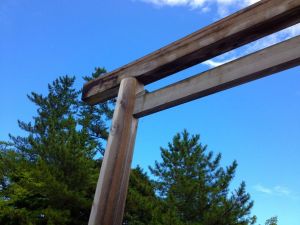
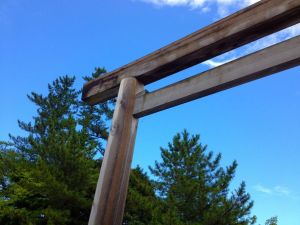
Ise Jingu is located in Ise City, Mie Prefecture, and is considered the central shrine of the Association of Shinto Shrines. Before World War II, Ise Jingu was treated as a shrine of such high status that it stood above the ordinary shrine ranking system.
Despite that formal prestige, it has long been beloved by ordinary people in Japan and is affectionately called “O-Ise-san.” Today, it is also one of the country’s most famous travel destinations.
The deities enshrined at Ise Jingu are Amaterasu Omikami and Toyouke Omikami. Amaterasu is the sun goddess, while Toyouke Omikami appears in the Kojiki as a deity connected with food, clothing, shelter, and the necessities of daily life.
The history of Ise Jingu is extremely old, said to reach back more than 2,000 years. Its rituals are numerous, including the famous Shikinen Sengu, the rebuilding and renewal ceremony held once every 20 years. According to information associated with the shrine, around 1,500 rituals and festivals are held there each year, drawing worshippers from across Japan.
If you visit, remember that Ise Jingu is an active religious site. Follow posted rules, stay out of restricted areas, and be respectful of worshippers and shrine staff.
Why Ise Jingu Has No Fortune Slips
Many visitors to Japanese shrines enjoy drawing omikuji, or fortune slips. They are a familiar part of shrine visits, offering predictions about luck, warnings, and advice.
But Ise Jingu does not have omikuji.
One reason often given is that, in the past, visiting Ise Jingu was a once-in-a-lifetime event for many people. A pilgrimage to Ise was so special that people did not necessarily feel the need to ask about personal fortune on that day. If a fortune slip happened to give bad luck, it could cast a shadow over a visit that might never happen again.
There was also the idea that, because Ise Jingu was regarded as standing above all other shrines, it was not the place to ask about private concerns or personal luck. In that sense, Ise Jingu has always been treated as something exceptional.
Ise Jingu on a Ley Line
According to one popular ley line theory, Ise Jingu lies on a straight line extending from Heitate Jingu in Kumamoto Prefecture and passing through Mount Tsurugi in Shikoku.
This line is said to run along the Median Tectonic Line, one of Japan’s major geological fault zones. Supporters of the theory claim that other important places, including Mount Fuji and the Imperial Palace in Tokyo, also fall along this same alignment.
There are said to be multiple ley lines beginning from Heitate Jingu: one stretching toward Suwa Taisha and Hakusan, and another crossing Shikoku before reaching Ise Jingu and Mount Fuji.
Another claimed alignment runs from the Kirishima area, between Kagoshima and Miyazaki, straight toward Ise Jingu. On that line, people say, Mount Fuji, the Imperial Palace, and Kashima Jingu also appear to line up. Kyoto, the ancient capital, is described as sitting within an area surrounded by these ley lines.
Ise Jingu, Heitate Jingu, Mount Fuji, and Kashima Jingu are all places often described as sacred, and they are also popular as so-called power spots. Even Tokyo Skytree is said to stand on one of these lines.
Whether this is meaningful, coincidental, or simply a matter of drawing lines across a map has not been proven. Still, for people interested in Japan’s occult geography, the idea remains deeply fascinating.
Ise Jingu and the Star of David
At first glance, Ise Jingu and the Star of David seem completely unrelated. Even so, some people point out that hexagram-like designs can be found around the Ise area.
One example often mentioned is Izawa-no-miya, a shrine near Ise Jingu, where a stone lantern was known for having a Star of David-like hexagram carved into it.
The name “Izawa” is also sometimes compared to the sound of “Isaiah,” the prophet of the Old Testament. Isaiah is traditionally described as an 8th-century BCE prophet who warned of the crisis of the Kingdom of Judah and the fall of Babylon. The Book of Isaiah remains an important prophetic text in the Old Testament.
One passage often brought into this discussion is Isaiah 24:15, which is commonly rendered in English along the lines of: “Therefore glorify the Lord in the east, the name of the Lord, the God of Israel, in the coastlands of the sea.”
Some have wondered, very speculatively, whether “the east” and “the coastlands of the sea” could be interpreted as pointing toward a place like Ise. Others imagine that believers who had read Isaiah may have crossed from the continent to Japan and left behind the hexagram symbol.
There are also people who suggest that Izawa-no-miya could somehow mean “the shrine of Isaiah.” This is not proven, and there is no solid evidence confirming such a connection. Still, theories linking Japan and ancient Jewish culture, sometimes called the Japanese-Jewish common ancestry theory, have circulated for a long time in occult and fringe-history circles. In that context, some people feel there may be “something” behind the resemblance.
Is Ise Jingu a Zero Magnetic Field Power Spot?
Heitate Jingu is often described in power spot circles as a “zero magnetic field” location. Because Ise Jingu is said to lie on the same ley line, some also describe it as a zero magnetic field power spot.
The idea is that Ise Jingu sits along the Median Tectonic Line, where enormous natural forces meet. According to this theory, opposing magnetic energies cancel each other out, creating a place where the magnetic field becomes “zero.”
This is part of power spot lore rather than something ordinary travelers should treat as established science. Still, the combination of geology, sacred history, and mystery is one reason Ise Jingu continues to attract spiritual attention.
Final Thoughts
Ise Jingu, located on a rumored ley line extending from Heitate Jingu, holds a special place in the Japanese imagination. It is a deeply revered shrine, a historic pilgrimage destination, and, for some, one of Japan’s strongest power spots.
The stories surrounding Ise Jingu connect it not only to Japanese sacred geography, but also to broader mysteries: ley lines, the Median Tectonic Line, the Star of David, possible links to Jewish legends, and the idea of a zero magnetic field.
On the alleged line running from Heitate Jingu through Mount Tsurugi and Ise Jingu toward the Kanto region, people also point to Tokyo Skytree and Kashima Jingu. Whether these alignments are coincidence or something more remains unclear.
For travelers, Ise Jingu is worth visiting first and foremost as one of Japan’s most important sacred sites. For horror fans and occult-minded visitors, its legends add another layer of atmosphere to an already powerful place.
Japanese Language
レイラインてについては、オカルトオンラインでも度々取り上げてきました。【レイラインとは?古代文明を繋ぐ歴史の痕跡】 で詳しくご紹介しています。レイライン…世界にも、そして日本にもレイラインは存在しています。ますます、考えれば考えるほど不思議なものですが、今回は、熊本県にある 幣立神宮 から伸びるレイライン上にある「伊勢神宮」についてのお話です。伊勢神宮はすべての神社の上の存在。。画像:pixaboy 。伊勢神宮は、三重県伊勢市にある神社で神社本庁の本宗です。
大東亜戦争り前までは、伊勢神宮はすべての神社より格が上の存在とされており、社格の対象から外されていたという歴史があります。格式高い神社ですが、日本国民からはとても親しまれている神社で「お伊勢さん」と呼ばれることもあります。観光地としても有名ですよね。伊勢神宮に祭られているのは、みなさんもご存知の「天照大御神」と「豊受大御神」です。天照大御神は、太陽を具現化した存在で、豊受大御神は衣食住の守り神として古事記に登場する神様です。伊勢神宮の歴史はとても古く、その歴史は 2000年以上前までさかのぼることができます。
20年に一度行われる式年遷宮などの祭りが年間1500回行われており、日本中から参拝者が訪れます。。参考資料:神社本庁 伊勢神宮 。伊勢神宮にはおみくじがない?!。。画像:pixaboy 。神社に参拝したときに、おみくじを引くという方もいらっしゃることでしょう。おみくじを引いて自分の運勢を知ろうとしたり、注意すべきことを学ぼうというするのも神社の楽しみのひとつですが、伊勢神宮にはおみくじはありません。というのも、今はそんなことはありませんが、昔の人にとって伊勢神宮に参ることは一生に一度の一大イベントだったのです。
そんなときに、わざわざおみくじをひくようなことはしない…。一生に一度の伊勢参りの日が、お日柄が悪い事も考えられるわけですから、おみくじを引くという習慣が定着しなかったようです。そもそも、伊勢神宮はすべての神社より格式が高いと言われていた時代もあるわけですから、個人的なことを占うのはふさわしくないという考え方もありました。伊勢神宮はそれだけ特別な場所ということです。参考資料 伊勢神宮ホームページ なぜ「おみくじ」はないのですか?。伊勢神宮もレイライン上にある。
熊本県の幣立神宮から四国の剣山を通るまっすぐな線の上に伊勢神宮があります。このラインは中央構造線沿いのレイラインで、このレイライン上に富士山や皇居もあります。熊本県の幣立神宮を起点として諏訪大社や白山に向かうレイラインと、幣立神宮から四国を通って伊勢神宮や富士山を通るレイラインがあります。また、鹿児島県と宮城県の間にある霧島からまっすぐ伊勢神宮に向かって直線を引いても、富士山や皇居、鹿島神宮などが一直線上にならぶんです。そして、古都京都はこのレイラインに囲まれたエリアになります。
伊勢神宮も幣立神宮もそして、富士山や鹿島神宮もすべてが聖域と呼ばれる場所で、パワースポットとしても人気です。ちなみに、このレイライン上にはあの東京スカイツリーもあります。これがただの偶然のなのか・・・それとも何かがあるのかは明確にされていません。伊勢神宮とダビデの星。。画像:pixaboy 。伊勢神宮とダビデの星・・・全く関係がないように思えますが、実は伊勢神宮の周辺にはダビデの星「六芒星」が多くみられるのです。伊勢神宮近くの伊雑宮という神社には、ダビデの星がほられた石灯籠があったことでも知られています。
ちなみにの「イザワ」という名前ですが、旧約聖書に登場する預言者の「イザヤ」に音が似ていますよね。イザヤは紀元前8世紀ごろの預言者で、ユダ王国の危機やバビロンの崩壊を預言した伝説の人です。旧約聖書にはイザヤの書と呼ばれる大予言の書があり、今でも信仰の対象になっています。ちなみに旧約聖書のイザヤの書には「それゆえ、東で主をあがめ、海沿いの国々でイスラエルの神、主の名をあがめよ。(イザヤ書24章15節)」という(引用: 聖書日本語 )という言葉があります。
東の国の海の島々で主をあがめる、これはもしかしたら、伊勢神宮のことだった・・と考えることもできるような気がします。もしかすると、イザヤの予言の書を呼んだ信者が大陸から日本へと渡り、ダビデの星を刻みこんだのかも・・・。伊雑宮はイザヤの宮なのではないかと考える人も多くいます。もちろん、どこにも確証はありませんが、日本人とユダヤ人が同阻ではないかという日ユ同阻論などがまことしやかにささやかれることを考えても”何か関係があるのかも”しれません。
参考資料: 日本とユダヤのハーモニー 。伊勢神宮も0地場のパワースポット?。幣立神宮は0地場のパワースポットとして有名ですが同じレイライン上にある伊勢神宮も0地場のパワースポットだと言われています。中央構造線の上に位置する伊勢神宮は、巨大なエネルギーが押し合う場所でもあります。この磁気エネルギーが相殺しあって0になる場所が伊勢神宮にもあるんです。参考資料:音響免疫療法学会 。まとめ。幣立神宮から伸びるレイライン上にある伊勢神宮は、日本人にとって特別な場所です。
ユダヤ人との関係があるのではないかと言われる世界との繋がりを感じさせる場所でもあり、0地場のパワースポットでもあります。幣立神宮から剣山、伊勢神宮を通って関東に向かうレイライン上には、あの東京スカイツリーや鹿島神宮もあります。伊勢神宮の都市伝説や怖い話10選まとめ 。【邪馬台国】天照大御神が卑弥呼である10の理由:第1回 。神風を起こしルーズベルトを呪殺した「大元帥法」とは【実話?】 。【日ユ同祖論】日本人とユダヤ人に共通する不思議な文化と風習 。
レイラインとは?古代文明を繋ぐ歴史の痕跡 。三重県の最恐心霊スポットランキングは→ 【知りたくなかった】三重県のヤバい心霊スポットランキング!