English Version
Occult Online has often covered mountains—but not the kind you visit for an easy picnic. This is a roundup of articles about some of the most extreme places on Earth: peaks challenged by world-class climbers, mountains known for high death rates, unclimbed summits, and walls so difficult they feel almost unreal.
From Everest and K2 to some of the world’s hardest and most mysterious peaks, these are mountain stories where beauty and fear stand side by side.
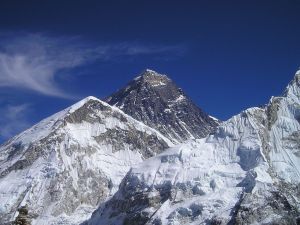
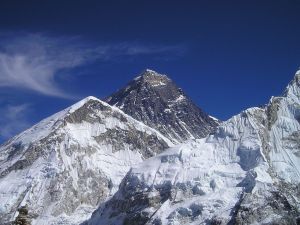
Are Bodies Really Used as Landmarks on Everest?
When people think of the tallest mountain in the world, they think of Mount Everest.
Among the world’s 8,000-meter peaks, Everest has the largest number of successful ascents. On the standard routes, the path is well established, so it is often described as relatively easier to climb compared with other giant peaks.
But “easier” does not mean safe. Once climbers go up, the basic rule is that they must come down under their own power. If someone is lost or stranded high on the mountain, rescue can be extremely difficult or impossible.
On Everest, there are bodies of climbers that remain where they fell. Because the altitude is so high and the temperature so low, some bodies do not decompose in the usual way and can remain preserved for years. Along certain routes, some are said to have become grim landmarks used by climbers to confirm the way.
Above 8,000 meters is the “death zone,” where the human body cannot properly adapt and gradually weakens. Everest’s frozen remains are one of the mountain’s most unsettling realities.
The Terrifying Death Rates of the Fourteen 8,000-Meter Peaks
There are 14 mountains on Earth that rise above 8,000 meters. Among these “eight-thousanders” are peaks with shockingly high fatality rates—places where, in some eras and statistics, the danger has been described as roughly one death for every four climbers.
One of the most infamous is Annapurna, the first 8,000-meter peak ever climbed by humans. According to the figures introduced in the original article, it had only 191 successful summits, the fewest among the 8,000-meter peaks, while 61 people had died there. That makes it one of the most dangerous mountains in the group.
There are other mountains with brutal reputations as well: Nanga Parbat, sometimes called the “man-eating mountain,” and K2, the world’s second-highest peak, known as a merciless mountain because of how difficult it is to climb.
These are not places to treat as tourist goals. They are extreme environments where even experienced climbers risk their lives.
The World’s Most Difficult Peaks, Seen from Earth
Even though they are on the same planet, some places feel almost impossible to reach.
Many of the world’s most technically difficult peaks are not widely known outside climbing circles, yet they have turned back some of the strongest climbers alive. Latok I, for example, is famous for having had no second ascent for many years after its first climb. The West Face of Makalu has been called one of the great problems of the Himalayas. Nanga Parbat’s Rupal Face is also known as one of the world’s greatest rock and ice walls, with a height difference of around 4,800 meters.
Viewed through tools like Google Earth, these peaks can look almost like pop-up book landscapes—sharp, vertical, and strangely unreal. But for climbers, those dramatic walls are not scenery. They are some of the harshest challenges on Earth.
Meili Snow Mountain: A Sacred Peak That Rejects Climbers
In the Tibetan region, there is a beautiful mountain range known as Meili Snow Mountain. Its highest peak is about 6,740 meters, and the mountains remain unclimbed to this day.
This is remarkable because climbing techniques, gear, and clothing have all improved dramatically over time. Even so, Meili Snow Mountain has continued to remain beyond human reach.
The article introduces the reasons behind this, including religious significance and the avalanche that struck a climbing party. It is a place where the beauty of a sacred mountain also has a terrifying side.
Travelers should respect local beliefs, restrictions, and safety rules around sacred mountains. Do not attempt access where climbing or entry is prohibited.
Unclimbed Peaks: Places Where Humans Have Never Stood
There are still places in the world where no human has ever set foot.
Among high mountains, some summits remain unclimbed for religious reasons, such as Mount Kailash and Gangkhar Puensum. Others, like Meili Snow Mountain, have repelled those who tried to reach the top.
For some climbers, the idea of standing on a summit no one has ever reached is powerfully attractive. But these mountains remain unclimbed for a reason—whether because of faith, law, danger, or terrain that defeats even elite mountaineers.
Summary
There are 14 mountains on Earth higher than 8,000 meters. Above that altitude lies the death zone, where the human body cannot adapt and steadily deteriorates.
In parts of that frozen world, bodies remain unrecovered, and some are said to mark the correct route. Annapurna has been feared for its high fatality rate. K2 is the world’s second-highest mountain and is known as a merciless peak. Nanga Parbat has the 4,800-meter Rupal Face, and Makalu’s West Face has been called one of the last great problems of the Himalayas.
High mountains can be beautiful, fascinating, and deeply frightening. Some are below 8,000 meters but remain unclimbed because they are technically difficult, sacred, or simply too dangerous.
For horror fans and travelers, these stories offer a glimpse into places where nature itself feels haunted. But they are not casual destinations. Extreme mountains require expert training, permits, proper support, and respect for local laws and beliefs.
Japanese Language
オカルトオンラインで度々紹介してきた”山” 。山と言っても、簡単にピクニック気分で行けるような山ではなく、世界屈指のクライマーが挑戦する地球上の極地と呼ぶにふさわしい山々にまつわる記事のまとめです。。山系の記事のまとめ。エベレストやK2、そして、世界屈指の難峰や未踏峰の記事のまとめをどうぞ!。エベレストでは遺体が目印になっている?8000メートル以上のデスゾーン。。画像 poxaboy 。世界で一番高い山として知られている場所といえば、エベレストですよね。
8000メートル峰の中でも最も登頂成功者が多く、一般的なルートならルートが確定しているため比較的登りやすいと言われている山です。。ですが、一度登ったら自分の足で下りるのが基本…もし遭難したら、救助が難しいケースも珍しくありません。実はエベレストにはいたるところに息絶えた人の遺体がそのまま放置されています。標高が高く気温が低い為、遺体は劣化せずにそのまま保存されたような状態になっています。。そして、エベレストのルート上には”遺体が目印”になっているポイントも…。
。8000メートル級14座の死亡率がやばすぎる。。画像 pixaboy。地球上には、標高が8000メートルを超える山が全部で14あります。14座と呼ばれるこの山々の中には、4人登れば1人は亡くなる…そんな高い死亡率の山があります。人類が最初に登頂した8000メートル峰の”アンナプルナ”です。登頂者数191人で、8000メートル峰の中で最も少なく、それに対して死亡者数は61人と死亡率が高い危険な山です。そして、他にも人喰い山とよばれるナンガ・パルバットや、極めて登頂が難しく非情の山と呼ばれるK2など、登るために命をかけなければばならない山々があります。
同じ地球上なのになかなか行けない場所…世界屈指の難峰。。画像引用 Muhammad Ashar – 投稿者自身による作品 , CC 表示-継承 3.0, リンク による 。同じ地球上にありながら、なかなかたどり着くことができない場所があります。。そんな、世界最強のクライマーを返り討ちにしてきた切り立った難は一般的にはあまり知られていません。最初の登頂以降、2登目が今だに果たされていない、ラトックⅠ峰や、まだだれも登り切ったことがなく”ヒマラヤの難題”と呼ばれるマカルー西壁、そして、世界屈指の大岩壁として知られ、標高差4800メートルを誇るナンガ・パルバットの南壁「ルパール壁」など…。
。グークルアースで見るとまるで飛び出す絵本みたいに見える世界屈指の難峰をのぞき見してみましょう。。登山者を退ける神聖なる山「梅里雪山」。。Charlie fong – 个人, パブリック・ドメイン, リンク による 。チベットに「梅里雪山」という美しい山々があります。標高は6740 メートルのこの山々は現在まですべて未踏峰のままです。登山の技術、そして、クライミングギアの性能の向上や、ウェアの性能はどんどん上がっているにも関わらずいまだに未踏峰のまま残されています。
。その理由と、登山隊を襲った雪崩・・・美しい神々の山の恐ろしい一面を紹介しています。。人類が一度も足を踏み入れたことがない場所 未踏峰。。画像 pixaboy。人類が今だに足を踏み入れたことがない場所か世界にはまだまだ残されています。。未踏峰と呼ばれる高山の中にも未踏峰のまま残されている山があります。カイラスやカンガー・プンスムなど、宗教的な理由で入山できない山から、梅里雪山のように登頂しようとするものを退けてきた山もあります。。同じ地球上でありながら、まだだれも踏んだことがない山頂を目指したいと考えるクライマーは少なくありません。
それでも登れない山をまとめました。。まとめ。8000メートル峰は地球上に全部で14座あります。標高8000メートルを超える場所はデスゾーンと呼ばれ、人はその環境に適応することなくどんどん衰弱していきます。そして、デスゾーンには、回収されないままの遺体がそのままにているところがあり、中には正しいルートの目印になっているところもあります。死亡率が高く4人登れば1人は亡くなるというアンナプルナや、世界第二位の高峰で非情の山と呼ばれるK2、そして、標高差4800メートルのルパール壁を持つナンガ・パルバットやヒマラヤ最後の難題と呼ばれるマカルー西壁など、高山には魅力的でゾッとするほど美しく怖い場所があります。
そして、8000メートルに満たないものの、技術的に難しく未だに未踏峰のまま残されている山も…