English Version
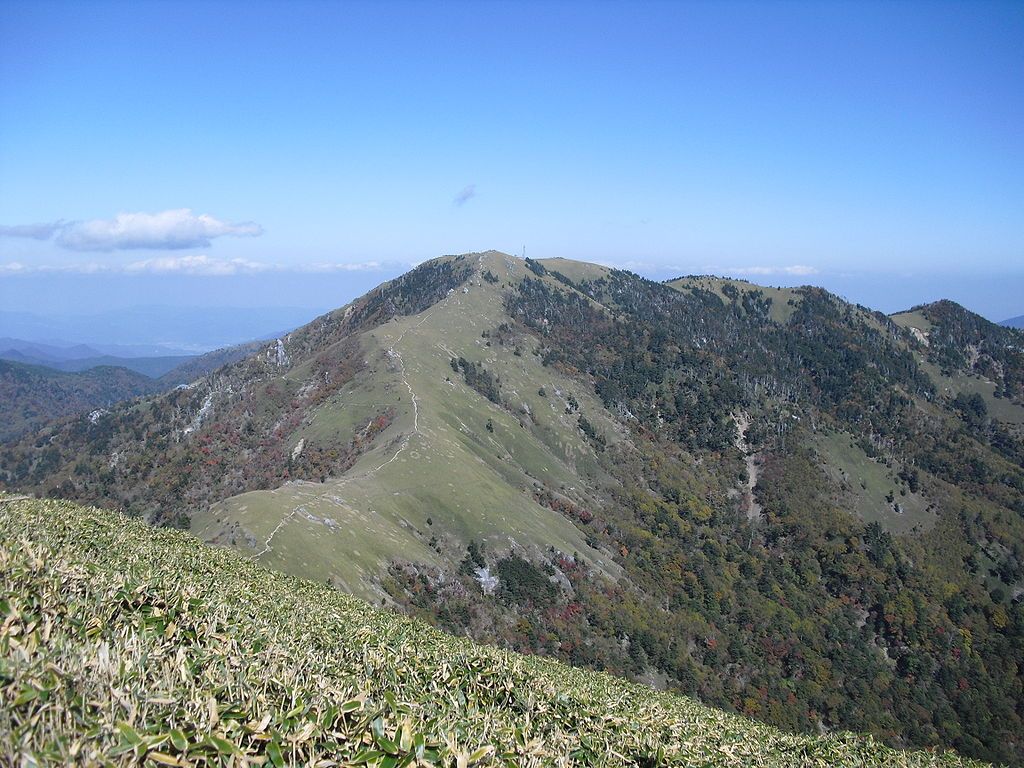
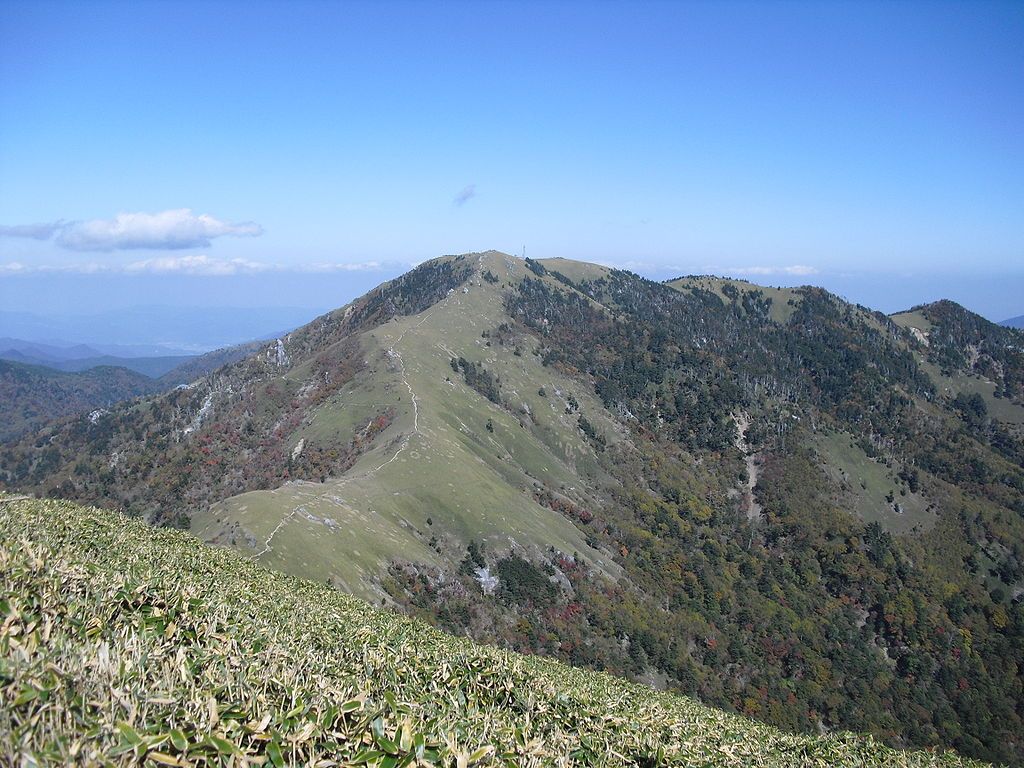
In Tokushima Prefecture on Shikoku, there is a mountain long known as one of Japan’s more mysterious sacred places: Mount Tsurugi, or Tsurugi-san. Among the mountains of Shikoku, it is especially associated with spiritual sites, treasure legends, and mountain asceticism. Practitioners of Shugendo, including yamabushi, have used the area for religious training, and caves near the summit are said to have served as ascetic paths.
Mount Tsurugi has also been revered as a sacred peak in mountain worship. Beyond that, it is tied to legends involving ancient Judaism and the so-called treasures of Solomon, making it one of Shikoku’s best-known mystery spots.
The writer of the original article lived in Tokushima for several years, so Mount Tsurugi felt relatively familiar. Even so, people in the area often treated it almost like a haunted or spiritual location. Below is a look at the many legends, theories, rumors, and mysteries connected to this mountain.
If you visit Mount Tsurugi, treat it as a real mountain and a religious site. Stay on official trails, check weather and access conditions, and never enter restricted areas.
A Mountain Surrounded by Legends
There are many mysteries and legends surrounding Mount Tsurugi. It is the kind of place where the word “mystical” feels appropriate. Because of these stories, major Japanese television programs have featured the mountain more than once. However, some areas are off-limits, and the truth behind these mysteries has never been confirmed.
Mount Tsurugi is associated with religious sites such as Tsurugi Shrine, Otsurugi Shrine, Ryukoji, and Enpukuji, showing that the mountain has long been an object of worship. One major reason is that the main shrines connected to Tsurugi Shrine and Otsurugi Shrine are located partway up the mountain, where a huge sacred rock is enshrined as the object of worship.
Megalith worship often appears in discussions of ley lines, and Mount Tsurugi is said by some researchers to lie on one of Japan’s ley lines. It is also said that an Israeli ambassador officially visited Mount Tsurugi twice.
When the original writer lived in Tokushima, they were still young and did not think much about these strange connections. Looking back later in life, however, the mountain seemed to reveal a different side.
The Legend of the Ark and Solomon’s Treasure
In theories sometimes called the “Japan-Jewish common ancestry theory,” there are claims that the Japanese and Jewish peoples may share ancient roots. Within that broader theory, one legend says that the Lost Ten Tribes brought the Ark of the Covenant and Japan’s Three Sacred Treasures to Mount Tsurugi.
The Ark, according to the Old Testament, was built to hold the stone tablets of the Ten Commandments that Moses received as proof of the covenant between God and the Israelites. It was also said to contain Aaron’s rod and a jar of manna.
If the Lost Ten Tribes had truly traveled to Japan, the story becomes even more dramatic. Some say that when the Assyrian Empire destroyed the northern Kingdom of Israel, the items it most desperately sought were these sacred treasures and the Ark that held them.
There is another curious overlap often mentioned in these theories. Noah’s Ark is said to have come to rest on Mount Ararat on July 17. On the same date, Mount Tsurugi holds the Tsurugi-san Hongu Festival, during which a mikoshi, or portable shrine, is carried up toward the summit.
So why, out of all the mountains in Japan, did Mount Tsurugi become the focus of such legends?
Iwasaka Shinmei Shrine and Its Alleged Jewish Parallels
Tokushima Prefecture is home to a shrine called Shirahito Shrine, and deeper within its sacred area is Iwasaka Shinmei Shrine. The site is said to have been discovered around 1740. Among researchers of the Japan-Jewish common ancestry theory, it is famous because some people believe its features resemble elements of ancient Jewish worship.
One interpretation is that the site is simply an example of ancient Shinto rock worship. Ancient Shinto refers to forms of worship before foreign cultural influences entered Japan.
Another interpretation goes further: it suggests that ancient Jewish people traveled east, crossed the sea, settled in Japan, and became part of what developed naturally as Japanese civilization. According to this view, the shrine ruins may preserve that older form.
An Israeli ambassador is also said to have visited this place and commented that they felt a strange similarity to ancient Jewish traditions.
Masanori Takane and the “Kotodama” Interpretation
A key figure in the Mount Tsurugi treasure legend was Masanori Takane. He reportedly interpreted the lyrics of the Japanese folk song “Kagome Kagome” through the lens of kotodama, the idea that words and sounds carry spiritual power.
According to this theory, the song refers to two rocks called Tsuru-iwa and Kame-iwa. “Kagome” is interpreted as “the eyes of a woven basket,” which some connect to the symbol of King David. The phrase often translated as “the evening of dawn” is interpreted as a reference to John.
Mount Tsurugi does in fact have rocks called Tsuru-iwa and Kame-iwa. It is also said that at one time, the mountain’s name was written in a way that included the characters for “crane” and “turtle,” while still being read as Tsurugi-san. In this interpretation, the mountain’s name and the folk song become something like a code.
The Shikoku 88 Pilgrimage as a Protective Barrier
Shikoku is famous for the 88-site pilgrimage associated with Kukai, the founder of Shingon esoteric Buddhism in Japan. For people who live on Shikoku, these pilgrimage sites can feel surprisingly familiar, since there are so many of them scattered across the island.
One theory claims that the 88 sites are not only pilgrimage destinations, but also a kind of spiritual barrier. According to this idea, they were arranged to protect the Ark and the Three Sacred Treasures hidden at Mount Tsurugi.
Kukai is well known for bringing esoteric Buddhism to Japan, and “esoteric” traditions naturally attract mystery-minded interpretations. That said, modern pilgrims are ordinary travelers and worshippers. There is no local stigma attached to walking the Shikoku pilgrimage. The original writer even walked part of a pilgrimage route on foot during junior high school as part of a school event, without thinking deeply about any hidden meaning at the time.
Did GHQ Investigate Mount Tsurugi After the War?
After Japan’s unconditional surrender in World War II, the country came under the control of the American-led GHQ. The famous photograph of General Douglas MacArthur standing beside Emperor Showa is widely known. Around this postwar period, one rumor takes shape.
Before the war, the emperor was regarded as a living deity, and ordinary people generally did not see him directly or hear his natural speaking voice. His famous radio broadcast announcing the end of the war did include his voice, but it was a recording.
When speaking of shrines connected to the Imperial Household, Ise Grand Shrine is especially important. The sacred mirror known as Yata no Kagami is enshrined there, and it is said that even the emperor does not view the original. A rumor claims that after the war, GHQ confirmed Hebrew writing on this mirror.
From there, another theory claims that GHQ learned of a deep connection between Japan and Judaism and began investigating Mount Tsurugi. According to this rumor, that is why some areas remain off-limits today, and why the Self-Defense Forces are said to be present in certain areas.
Why would Mount Tsurugi have been investigated? Supporters of the theory point to Japanese ley lines and to the Hata clan, an immigrant lineage sometimes linked in fringe theories to ancient Jewish ancestry.
Kurishido Shrine and the Hata Clan Theory
The Hata clan, who came to Japan from overseas in ancient times, are sometimes claimed to have been descendants of ancient Jews. Kurishido Shrine is one site connected to this idea. It is said to have no torii gate, which some interpret as a notable difference from typical Shinto shrines.
Some people claim the name “Kurishido” may be a corruption of “Christ.” From there, a theory developed that descendants of the Hata clan built the shrine as a protective barrier guarding Solomon’s treasure hidden in Mount Tsurugi.
There is even a more extreme legend that Christ survived, reached Japan, and hid in this area. Similar “Christ in Japan” legends exist in several regions, not only around Mount Tsurugi. Kurishido Shrine is one of the places where such stories continue to circulate.
The Ley Line from Ise to Koyasan to Mount Tsurugi
A ley line said to extend southwest from Ise Grand Shrine passes through Koyasan, the center of Kukai’s Shingon Buddhism, and continues toward Mount Tsurugi.
Some researchers connected to the Japan-Jewish common ancestry theory have suggested that after the war, Jewish people within GHQ were involved in shaping the new Japan. The theory itself existed before the war, so supporters argue it would not be strange if GHQ tried to confirm those claims.
Ley line theories also predate the war. In this interpretation, an investigation might have followed a line from Ise to Koyasan, and then onward to Mount Tsurugi.
Tokushima’s Inbe Clan and the Imperial Household
The Inbe clan of Tokushima, whose name is said to have changed to Miki in modern times, has long been connected to the Imperial Household. Since ancient times, they are said to have offered a hemp textile called aratae during the Daijosai, an important imperial enthronement ritual.
A newspaper report also stated that this textile was produced at Inbe Shrine, and an offering was apparently made in 2019 as well. In other words, the Inbe lineage and its shrine in Tokushima have played an important role in major imperial ceremonies since ancient times, and that relationship continues into the present.
Based on these facts, the original article suggests it is possible that GHQ, in the years soon after the war, may have been investigating something in Tokushima, especially around Mount Tsurugi. Of course, it is impossible to state what that “something” was. Supporters of the legend often point again to the treasures of Solomon, but this remains speculation.
Mount Tsurugi Today
Mount Tsurugi has long been treated as a sacred mountain, and that much is clear. At around 2,000 meters in elevation, it is also one of the highest mountains in Shikoku.
Around it are many mysteries: legends derived from the Japan-Jewish common ancestry theory, strange ley line claims connected to Ise Grand Shrine, sacred rocks, restricted areas, and stories that are visible in the landscape but difficult to explain.
Mount Tsurugi is also a real hiking destination. If you travel to Tokushima and want to see it for yourself, plan carefully, respect the mountain’s religious sites, and follow all official rules and closures. Whether or not anything is ever discovered there, Mount Tsurugi remains one of Shikoku’s most atmospheric mystery spots.
Japanese Language
四国地方の徳島県には 「剣山(つるぎさん)」 という昔から神秘的なスポットとして有名な山があるのをご存知でしょうか?。剣山は四国山脈の中でも、 特に霊的な場所や財宝伝説 などで知られており、山伏など多くの修験者が修験道として利用しており、山頂付近には行道としての洞窟なども存在しています。霊峰としても山岳信仰の対象にされてきた歴史があり、他にも ソロモンの秘宝といった古代ユダヤなどの言い伝え なども残っており、四国随一のミステリースポットとも言われていたりします。
筆者は過去に数年間、徳島県に住んでいた経験もあり、比較的身近な存在でしたが、周囲の人間の間では心霊スポットのような扱いをされていた事が多かったです。今回はそんな 「剣山」の神秘的な言い伝えについて、様々な説を紹介 していきます。剣山にまつわるミステリー。。画像引用元: 剣山 。剣山(つるぎさん)にまつわるミステリーや伝説は非常に数多くあり、まさに神秘的という言葉がピッタリの場所と言えます。その数多くの伝説から大手のテレビ番組なども何度か特集を組んだりしていますが、一部の場所が立入禁止となっており、未だにこれらの謎の真相が判明した訳ではありません。
剣山には「剣神社」や「大剣神社」、「龍光寺」「円福寺」といった神社があり、 古くから山岳信仰の対象 となっておることを物的に伺うことが出来ます。大きな理由として、剣神社と大剣神社の総本社は剣山の中腹にあるのですが、そこには 巨大な岩が御神体として鎮座している からです。巨石信仰と言えば、レイラインの考察でもその共通点をいくつか紹介しましたが、実は 剣山は日本の中のレイラインにあたる場所 でもあるのです。また、イスラエルの大使はこの剣山に公式に二度訪問も行なっています。
徳島県に住んでいた頃の筆者は、まだ若かった事もあり、こういった不思議さにはあまり気付きませんでしたが、現在の年齢になると見えてくるものも変わってきます。ソロモンの秘宝と呼ばれるアークが眠っている伝説。。当サイトでも紹介した「日ユ同祖論」の中でも触れましたが、日本人とユダヤ人の祖先が同じ可能性であるという状況証拠が多く残っており、失われた10支族によってアークや三種の神器がこの剣山に持ち込まれたという伝説が残っています。モーセがイスラエル民族と神との契約の証に受け取った十戒の石版、アロンの杖、マナの壺を収める為に造られたのがアークであり、これは旧約聖書にも残っている伝説です。
加えて、失われた10支族の行き先が仮に日本だったとしたら・・・。その昔、 アッシリア帝国が北イスラエル王国を滅ぼした時に、最も探していたと言われているのが、これらの三種の神器とそれを収めたアーク だとも言われています。その他にも、剣山と共通点を持つ部分としては、モーセよりもさらに昔、ノアの方舟がアララト山に漂着したのが7月17日だと言われていますが、これと同日に剣山では神輿を山頂に掲げる「剣山本宮祭り」が行われています。※アークと神輿の共通点については「日ユ同祖論」をご覧ください※ 。
では、 何故これだけ日本には数多くの山があるのに「剣山」がその場所であるという伝説が残っているのでしょうか?。磐鏡神明神社の遺跡がユダヤ式の神殿と似ている。徳島県には白人神社という神社があり、その奥宮に磐鏡神明神社( いわさかしんめいじんじゃ )があります。この遺跡は1740年頃に発見されたものとされていますが、その特徴がユダヤ人に不思議な共通点を感じさせることで、日ユ同祖論の研究者の間では非常に有名なスポットです。一説には、この遺跡は古神道の岩信仰だと言われています。
古神道とは、海外から入ってきた文明などに影響されていなかった頃の神道のことを言います。簡単に言えば、古代の日本へ東に進んだユダヤ人が海を渡って住んだことで、異文化ではなく自然な日本文明として溶け込み、その形がそのままの姿で残ったのがこの神社遺跡であると言う解釈です。この場所にはイスラエル大使の方も実際に訪れており、古代ユダヤ人との不思議な類似点を感じたと発言しているそうです。高根正教氏が語った「言霊学」による場所の特定 。剣山のソロモン秘宝伝説の先駆者は高根正教氏という方であり、同氏は日本の民謡である「かごめかごめ」の歌の歌詞を解釈したそうです。
かごめかごめの歌の中には鶴岩と亀岩を歌ったものであるとしており、かごめを籠の目=ダビデ王の紋章、そして夜明けの晩という言葉はヨハネを示している という説です。実際に、剣山には鶴岩と亀岩と呼ばれる岩があり、さらに「剣山」は「鶴亀山」と書いて「つるぎさん」と読んでいた時代があるそうです。ある種の暗号のような意味合いに近いですね。四国八十八ヶ所は聖域を守る結界である説。四国には空海が建てたと言われる、八十八ヶ所のお遍路で有名な神社があります。
四国に住んでいるとよく分かるのですが、八十八ヶ所もあるのでわりと近所にある場合もあります(笑)。この説は、八十八ヶ所の神社は実は結界の役割となっており、剣山に眠るアークと三種の神器を守る為に配置されたという説です。空海と言えば、日本に密教を持ち込んだ僧として有名ですが、この「密教」というのがまた曲者です。実際に、現代のお遍路さんは普通の人ですし、八十八ヶ所参りをしている人に地元民から偏見があるかと言えば全くありません。筆者は中学時代、とあるお遍路道を完全に徒歩だけで歩いた経験がありますが、学校行事でしたし、当時はあまり深く考えようとも思いませんでした。
戦後のGHQが剣山を調査していた?。。第二次世界大戦で無条件降伏をした日本は戦後まもなくアメリカのGHQによって管理化に置かれることになります。マッカーサーと昭和天皇が並んで写真に映っているものは非常に有名ですが、ここに1つの仮説が立てられています。あくまでも噂ですが。戦前の大日本帝国は「現人神」であった天皇陛下を直接見ることはおろか、肉声を一般国民が聞くこともありませんでした。戦争の終結を伝えた有名な玉音放送では肉声が流れていますが、あれは録音されたものです。
そして、皇室に縁のある神社と言えば・・・伊勢神宮です。。あの八咫の鏡が奉納されており、本物は天皇陛下ですら見れないという物ですが、戦後GHQはこの八咫の鏡から例のヘブライ語を確認したという噂があります。これによって、日本とユダヤの深い関係を知ったGHQによって剣山が捜索対象になったという説があり、その影響で現在も一部は立入禁止、さらに自衛隊なども配備されているようです。では、何故ここでも剣山が調査されたのでしょうか?。これには日本のレイラインや渡来人の秦氏が深く関わっていると推測出来ます。
秦氏が関係したとされる 栗枝渡神社 。渡来人の秦氏は一説では古代ユダヤ人の血統であるのではないかという考え方があります。そして、この 栗枝渡神社(くりしどじんじゃ)にはユダヤ人と共通するはずの鳥居がありません。。このクリシドという名称は、キリストが訛ったものなのではないか?という説があり、ユダヤ人の子孫であった秦氏の一族が剣山に隠されたソロモンの財宝を守護するために結界として建てたという仮説があります。また、クリシドはキリストの訛った言葉であることから、キリストが生存して日本にたどり着き、ここに隠れていたという説まであるのです。
剣山に限らず、キリストが日本へ来たという説はいくつかの地域に残っていますが、この神社もまた伝説の残る場所になっています。伊勢神宮から高野山、剣山を繋ぐレイライン。伊勢神宮から南西に伸びるレイライン上には、空海の真言密教の本拠地とも言える「高野山」があり、その先に繋がるのが剣山です。これも同じく日ユ同祖論で少し紹介しましたが、研究者の一部は戦後の日本はGHQによって新しい国造りに内部のユダヤ人が関わっている事を指摘していました。日ユ同祖論自体は戦前から唱えられていた説であり、これらの仮説をGHQが確認しようとしていたとしても不自然さは感じません。
同じくレイラインも戦前からある考え方であり、伊勢神宮から高野山、そして剣山へと捜索が伸びたのかもしれませんね。徳島県の忌部氏と皇室の関わり。現在では三木と名前が変わっているそうですが、徳島県の忌部氏は古代から皇室に 大嘗祭(だいじょうさい)の時に麁服(あらたえ)と呼ばれる麻の織物を奉納していたとされています。。実際に、産○新聞が忌部神社でこの織物が作られ始めたことを報道してます(実際に今年度(2019年)の奉納もあったようです)。つまり、 徳島県の忌部氏の家系(神社)は古くから皇室の重大な催事において重要な役割を果たしてきた事実があり、これは現代においても続いている関係性 です。
これらの事実から、戦後間もない時期でもGHQが徳島県という場所、その中でも剣山を対象に 「何かを調べていた」という可能性は充分にある のではないでしょうか?。もちろん、何かというものを完全に言い切ることは難しいですが、様々な状況証拠を考えればやはりソロモンの秘宝と考えるのが自然だと思います。徳島県剣山にまつわるミステリーまとめ。ここまで、大きな説に交えて様々な言い伝えや噂、都市伝説などを含めて剣山に関わるものを紹介してきました。剣山は昔から霊峰として特別視されていたことは間違いなく、標高も約2000メートルと四国の中では非常に高い山の1つです。
その中にあって、日ユ同祖論から派生した様々な伝説や、伊勢神宮との不思議なレイラインなど「目に見えるけれども理由の分からない謎」が多く残されている場所でもあります。実際には登山をすることも可能な山ですので、徳島県へ行くタイミングがあればぜひ本物の剣山をその目で確認してみてください。今後、剣山に関しての捜索などがあるという噂は聞いたことがありませんが、ひょっとすると近い将来、何かが発見されるかもしれませんね