English Version
Every so often in Japan, the news reports that a brown bear has appeared in a town or that someone has been attacked. In a high-tech, digital age, it can be easy to think of bears as something distant from modern life.
But no matter how far technology advances, an unarmed human being is no match for a brown bear. People familiar with the mountains say that if they see one, they may decide to turn back and leave the area entirely. One reason is the frightening behavior sometimes associated with these animals.
This is the story of the habits of Hokkaido’s brown bears, and of the settlers who became victims of one of Japan’s most infamous animal attacks: the Sankebetsu Brown Bear Incident.
Hokkaido’s Brown Bears
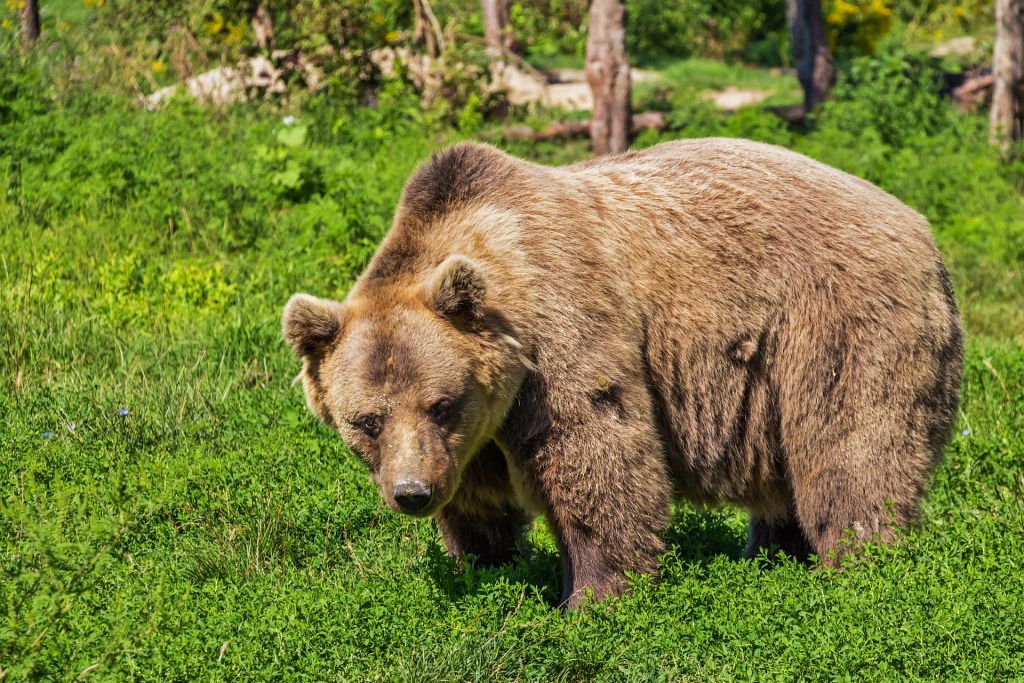
The higuma, or brown bear, is a large wild animal found in Hokkaido. Brown bears live in many parts of the world, but in Japan they are associated with the northern island of Hokkaido.
A male can reportedly exceed 3 meters, or nearly 10 feet, in length, though size varies greatly depending on the individual and its physical condition. Many people picture a peaceful scene of a bear standing in a river catching salmon, but brown bears are omnivores with a strong carnivorous side. They eat salmon, but they may also prey on animals.
Despite their huge bodies, they are physically powerful and surprisingly fast. They can run at more than 50 kilometers per hour, or over 30 miles per hour, and they have sharp claws and fangs. In a direct encounter, a human has almost no chance bare-handed.
The Sankebetsu Incident
In the winter of 1915, during Japan’s Taisho era, a brown bear attacked a settlement of pioneers in Sankebetsu, Hokkaido.
On the morning of December 9, tragedy struck the Ota family home. The men had gone out for heavy work, leaving only six-year-old Mikio and Mayu in the house.
The bear that attacked them was said to be an anamotazu, a bear that had failed to find a den for hibernation. Brown bears normally hibernate, but when a large bear cannot secure a den, it may continue wandering in winter. Such bears are considered especially dangerous, aggressive, and strongly fixated on food.
The huge bear attacked Mikio and Mayu. Mikio was reportedly found dead inside the house, bleeding from the head. Mayu had disappeared, leaving behind signs that she had resisted. A red trail of blood marked the snow, and later, part of Mayu’s body was found buried outside.
Mayu’s remains were brought back, and a funeral was held. But the bear returned to the house, broke in, and tried to reclaim the body from the coffin.
The horror did not end there. The bear also attacked the home of the Meikei family in the same village. At the time, women, children, and a pregnant woman named Take had taken shelter there.
According to accounts of the incident, when Take was attacked, she cried out, ‘Don’t tear open my belly,’ and ‘Kill me by eating my throat.’ The bear, however, began eating her from the upper body.
Take’s unborn child was reportedly pulled from her body. When help arrived, the child was still moving, but died soon afterward.
In this account, the bear killed a total of eight people in Sankebetsu. Afterward, it was shot and killed by a matagi, a traditional bear hunter.
The Bear’s Terrifying Habits
Looking back at the Sankebetsu incident, two behaviors are often discussed: a bear’s obsession with food, and the belief that a bear may repeatedly target the same sex after first eating a human victim of that sex.
After the first attack, the bear had hidden Mayu’s body in the snow as food. When the search party found it and brought it back to the house, the bear may have interpreted that as humans stealing its food. That is why it is believed to have returned to the Ota home to take the body back.
To humans, it is completely understandable that Mayu’s family and neighbors wanted to recover her remains, hold a wake, and bury her. But to a bear with a powerful attachment to food, the act may have triggered another attack.
The other often-mentioned claim is more unsettling. The first person eaten was Mayu, a woman. Later, at the Meikei home, the bear also attacked and ate Take, another woman. Men were reportedly attacked, but not eaten in the same way.
Because of this, some accounts say that if a bear first eats a woman, it may continue to target women, and if it first eats a man, it may continue to target men. This should be understood cautiously as a claim repeated in stories and records of bear attacks, not as a simple rule anyone should rely on.
Other frightening behaviors are also associated with Hokkaido brown bears. They are said not to fear fire, and they may chase things that run away.
A Dark Lesson from Hokkaido
The brown bear that attacked the pioneer village of Sankebetsu was a dangerous anamotazu, a bear unable to hibernate. It took many lives before it was finally shot.
Brown bears still live in Hokkaido today. For travelers, the lesson is simple: never approach, feed, follow, or try to photograph a bear at close range. If you plan to hike or visit rural areas in Hokkaido, check local bear warnings, follow official guidance, carry appropriate safety gear where recommended, and turn back if conditions feel unsafe.
Japanese Language
時々 「市街地にヒグマがでた!」 とか 「ヒグマに人がおそわれた」 というニュースを耳にすることがあります。こんなハイテクでデジタルな世の中で「ヒグマって…」そう思っていませんか?。どんなに科学技術が進歩しても、ハイテクなシステムが開発されても…人間は素手でヒグマには叶いません。山に慣れた人はヒグマを見ると場合によっては下山も考えるそうです。それはヒグマにはある恐ろしい習性があるからなんです。人間を襲うヒグマの恐ろしい習性と、ヒグマの被害にあった開拓民のお話をご紹介します。
ヒグマは北海道に生息する大きな野生動物。。ヒグマは世界中に生息する大型のクマで、 日本では北海道に生息 しています。雄の場合、体調が3メートルを越すこともある大きな動物で、栄養状態などによって大きさにかなり個体差が生じます。ヒグマといえば、よく川に入って鮭をとって食べている…ほのぼのとした光景を想像する方も多いでしょう。ヒグマは雑食ですが、肉食よりの雑食!だから鮭も食べるし動物を捕食することもあります。大きな身体ですが、身体能力がとても高く足が早いのも特徴です。
走ると時速50キロ以上のスピード を出せますし、 鋭い牙と爪 を持っていて、人間が素手でかなうことはまずないといっていい危険な生き物です。参考資料 。NationalGeographic. “Brown Bear” 。「腹を破かないでくれ!」開拓民の村をヒグマが襲った…三毛別村のヒグマ事件。。大正4年の冬、北海道の三毛別という開拓民の村を ヒグマが襲い ました。12月9日の朝、三毛別村の太田家で事件が起こります。この日、力仕事のために男立場出払っており家にいたのは6才の幹男と妻のマユでした。
そこを冬眠する穴を見つけられずさまよっていた大きなヒグマが襲います。ヒグマも通常は冬眠するそうですが、身体が大きくては冬眠する穴を見つけられなかった 「穴持たず」 と呼ばれるヒグマが時にいるのです。そして穴持たずは 食べ物への執着心が強く凶暴で危険 …。そんな穴持たずの巨大ヒグマは、6才の幹男とマユを襲います。幹男は頭から血を流した状態で家の中で息耐えていたそうですが、 マユは抵抗した後だけを残して消えて しまいます。そして 雪には赤い血の後 が残り…その後、 雪の中からマユの遺体の一部が見つかる ことになります。
マユの遺体は持ち帰られて葬儀が執り行われるのですが、ヒグマは再度この家を襲い、棺の中のマユの遺体を取り返すために家に侵入してきました。悲劇はこれだけでは終わらず、同じ村の明景の家もヒグマに襲われます。ヒグマに襲われたとき明景家には子供や女性、妊婦が避難していました。このとき、ヒグマに襲われたタケは妊娠しており、ヒグマに襲われたときに 「腹を破らないでくれ」「のどを食って殺して」 と叫んだそう。ですが、ヒグマはタケを上半身から食べていきます。
ヒグマに襲われたタケのお腹の子は引きずり出されていたそうで…助けがきたときにはまだ動いていたのですが、その後、なくなってしまいます。こうしてヒグマは三毛別村で 計8名を殺害 するに至ったのです。このヒグマはこのあと、マタギによって射殺されることとなります。参考資料 。慟哭の谷 北海道三毛別・史上最悪のヒグマ襲撃事件 (文春文庫) 。「マユ。マユはどこだ!」8人の死者を出したヒグマによる惨劇「三毛別事件」の幕明け 。ヒグマの恐ろしい習性。
。三毛別村の事件から解ること…お気づきの方もいらっしゃるかもしれませんが、実はヒグマにはある習性があるんです。その習性は 「エサに対する執着」 そして 「同じ性別を選んで襲う」 というものです。最初に襲われてしまった女性のマユの遺体を、ヒグマは自分の食糧として雪の中に隠していました。そしてそれを捜索に来た人間が見つけて持ち帰った…その時、ヒグマは 「自分の食糧を盗られた」 と思ったことでしょう。そして、その自分の食糧を取り返すために再度、眉の自宅の大田家を襲ったのです。
マユの家族や村人が、亡骸を持ち帰って通夜をし埋葬しようとしたことは、同じ人間としては理解できる感情ですが、食べ物への執着心が強いヒグマにとっては許せない事だったのでしょう。そして、ヒグマのもうひとつの習性…ちょっと考えてみてください。最初に食べられたのはマユそして、明景家で襲われて食べられたのは女性のタケでした。つまり、このヒグマは女性ばかりを食べているんです。男性は襲われはするものの、食べられることはなかったそうで…このことからヒグマは、最初に女性を食べると女性ばかり、男性を食べると男性ばかり襲うとも言われています。
他にも、ヒグマは火を怖がらないとか、走って逃げるものを追いかける習性もあるそうです。参考資料 。木村盛武 『ヒグマ そこが知りたい』 共同文化社 。まとめ。大正時代の北海道の開拓民の村を襲ったヒグマ…穴持たずという危険なヒグマは計8名もの尊い命を奪い、そして、その後、ヒグマも射殺されました。今でも、ヒグマは北海道に生息しています。。ライター 。Miiko 福岡県在住フリーライター