Nagasaki Shoro Nagashi is a unique memorial event held each August 15, where families and communities send off the spirits of the deceased by guiding handmade spirit boats (shoro-bune) through the city’s streets to designated collection points. The rite is marked by the ringing of bells and the crackle of firecrackers, creating a soundscape that is both loud and deeply meaningful. For international visitors, Shoro Nagashi offers a rare chance to witness a living tradition that is both decentralized and highly personal, with each household participating in its own way.
What Do the Spirit Boats Represent?
The centerpiece of Shoro Nagashi is the spirit boat, or shoro-bune. These boats are crafted by families to honor recently deceased loved ones, serving as symbolic vessels to guide their spirits safely from the world of the living. The boats are often decorated with lanterns, flowers, and personal mementos, reflecting the individuality of each memorial. The act of sending off the boat is believed to help the spirits find peace, and the journey through the city is a final farewell from family and friends.
Unlike many festivals with centralized organizers, Shoro Nagashi is not run by a single authority. According to Nagasaki City’s official guidance, there is no main sponsor or organizing body. Each family or group acts on its own initiative, choosing how to construct and decorate their boat, and when to begin the procession. This decentralized nature is a defining feature of the event, emphasizing personal remembrance over public spectacle.
How the Rite Unfolds: Bells, Firecrackers, and the Public Soundscape
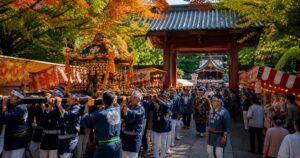
As the spirit boats are carried or wheeled through Nagasaki’s streets, participants ring handbells and set off firecrackers. The bells are intended to guide and comfort the spirits, while the firecrackers serve both to announce the procession and to ward off malevolent influences. The resulting soundscape is striking: the city fills with sharp pops, rolling booms, and the persistent jingle of bells. This auditory environment can seem festive or even chaotic to first-time observers, but for participants, it is an essential part of the memorial process.
Despite the lively sounds, the underlying purpose of Shoro Nagashi remains solemn. Each boat represents a specific loss, and the processions are acts of mourning and remembrance. The contrast between the event’s memorial meaning and its loud, public presentation is a hallmark of Nagasaki’s approach to honoring the dead. The city’s official guidance emphasizes that the event is not a parade or entertainment, but a personal and communal act of farewell.
Decentralized Tradition: No Central Parade, Many Routes
One of the most distinctive aspects of Nagasaki Shoro Nagashi is its decentralized structure. There is no single parade route or main gathering point. Instead, families and groups begin their processions from their homes or neighborhoods, heading directly to the nearest designated collection site, known as a nagashiba. The city provides maps showing the locations of these sites, which are marked by color codes indicating what types of offerings are accepted: blue for spirit boats only, red for both boats and straw-wrapped bundles, and green for bundles only.
This decentralized approach means that processions can be seen throughout the city, often at the same time. The absence of a central organizer allows each group to observe the rite in a way that feels most appropriate for their circumstances. The city and police cooperate to ensure safety and environmental protection, but do not dictate the details of the ritual itself. This structure preserves the intimate, family-focused nature of the event while allowing it to unfold on a citywide scale.
Documented Facts and Official Guidance
Nagasaki City’s official operational guidance provides clear instructions for participants and observers. The city does not have the authority to cancel or directly manage Shoro Nagashi, but it is responsible for environmental measures, including the collection and disposal of spirit boats after the event. For 2026, the main collection period for spirit boats is from 5:00 pm to 9:00 pm on August 15. Participants are asked not to linger or parade through the city center, but to proceed directly to the nearest collection site to ensure smooth traffic and safety.
Firecrackers and bells are permitted during the processions, but the use of certain fireworks, such as large or multi-shot types, is strictly prohibited due to fire and injury risks. All fireworks are banned within the collection sites themselves. The city also reminds participants and observers to take all trash home, as littering is a recurring problem. Road closures and traffic restrictions may be in effect along some routes, and those carrying large boats (over two meters) must obtain a permit from the local police.
Tradition Versus Regulation: What Remains Unchanged
While the city provides practical guidance and environmental oversight, the heart of Shoro Nagashi lies in its traditional, family-driven character. The event’s meaning and methods are shaped by local custom and personal choice rather than official rules. The city’s role is limited to safety, environmental protection, and logistical support. This balance allows the rite to remain authentic and meaningful for participants, even as it adapts to modern urban life.
Official sources do not provide detailed historical accounts or explanations of every symbolic element. Much of the tradition is preserved through community practice and oral transmission. Observers should be aware that the event’s emotional and spiritual significance is deeply felt by participants, even if the outward appearance is lively or unfamiliar.
How to Watch Respectfully and Safely
For visitors, witnessing Nagasaki Shoro Nagashi is a privilege that comes with responsibilities. The most important rule is to observe from a respectful distance and never interfere with the processions or participants. Do not attempt to join the processions, touch the boats, or block the routes. Photography is generally permitted in public spaces, but always be mindful of mourners’ privacy and avoid using flash or intrusive equipment.
Stay clear of firecrackers and do not bring your own fireworks. The use of any firework within the collection sites is strictly forbidden, and setting off fireworks in crowded areas is both dangerous and disrespectful. Follow any instructions from city staff or police, especially regarding road closures and crowd control. Take all trash with you and help maintain the cleanliness of the city’s streets.
If you wish to observe, consult the city’s official maps to find the nearest collection sites, and arrive early to secure a safe viewing spot. Do not trespass on private property or attempt to follow processions through residential areas. Remember that each boat represents a personal loss, and the event is first and foremost a memorial, not a tourist attraction.
Summary: A Living Memorial in Sound and Silence
Nagasaki Shoro Nagashi is a decentralized, family-centered rite that transforms the city’s streets into a vibrant memorial each August. Spirit boats, bells, and firecrackers create a powerful sensory experience, blending public sound with private remembrance. For visitors, the key to a meaningful experience is to observe with respect, follow official guidance, and appreciate the event as a living tradition that belongs to the people of Nagasaki.