
English Version
In winter, one word tends to come up again and again: viruses.
When we hear “virus,” we usually think of illness and infection—influenza, norovirus, coronavirus, and so on. There is another thing that often gets lumped together with viruses: bacteria. But viruses and bacteria are actually completely different.
And once you start seeing the difference, viruses begin to feel strangely unsettling.
Originally published November 2, 2019. Updated March 8, 2020.
What Is the Difference Between a Virus and Bacteria?
People often say the biggest difference is size. It is true that viruses are smaller than bacteria, but there is a much more decisive difference:
Can it carry out life processes on its own?
Bacteria have cells. They can reproduce on their own. Some can move by their own power. They take in nutrients and use them to function.
In other words, even though they are extremely tiny and invisible to the naked eye, bacteria can fairly be called living things. Some bacteria cause infectious diseases, but others are helpful, such as the good bacteria that work every day inside our intestines.
So bacteria and humans can coexist.
Viruses are different.
Viruses do not have cells. They cannot reproduce on their own. They do not take in nutrients. They cannot move by their own power.
If you vaguely thought viruses and bacteria were similar, this is where the image starts to fall apart. A thing with no cells, no independent reproduction, and no ability to move on its own is deeply strange.
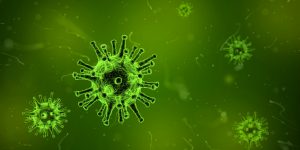
A virus is basically genetic information contained inside a protein shell called a capsid. It does not even have cells, which makes it hard to say whether it should truly be called “alive” at all.
If Viruses Have No Cells, How Do They Multiply?
Viruses have no cells and cannot reproduce by themselves. So why do influenza, norovirus, and other viral infections spread so widely?
Because viruses reproduce by entering the cells of animals or plants.
Once a virus gets inside a cell, it uses that cell to make more copies of itself. It multiplies over and over, almost like a copy machine.
In other words, when you have an infection like influenza, viruses are parasitizing your cells and forcing them to produce copies. Your body responds with rejection-like reactions, including fever.
Even when harmful bacteria enter the body, they generally act outside our cells. Viruses, however, go inside the cells themselves.
The level of parasitism is different.
Are Viruses Alive? They Almost Feel Alien
Viruses have no cells. So can we really call them living things?
Viruses are often discussed alongside microorganisms, but because they do not have cells, they are not microorganisms in the same sense. Whether they count as living things at all is a surprisingly murky question.
For example, if you leave a loaf of bread at room temperature, it will eventually spoil. That happens because bacteria multiply.
But viruses cannot multiply in that kind of environment. They need something living—animal or plant cells. Without parasitizing those cells, they cannot reproduce, and they cannot even properly move.
That makes viruses feel like something that does not fit neatly into the category of “life.”
Did Viruses Help Animals Evolve?
Viruses are full of mysteries, and some ideas about them sound almost occult.
One of these is sometimes called the “virus evolution theory.” The basic idea is that because viruses enter cells, they may also affect genes, and this could have contributed to the evolution of living things.
According to this view, when a virus is taken into a host, genetic material may move between them. This is not presented as a majority view, and it is not a broadly accepted scientific theory.
Still, the fact that such an eerie-sounding theory exists at all shows how strange and difficult to understand viruses can feel.
Reference noted in the original article: an academic discussion of the virus evolution theory and horizontal gene transfer by viruses in the Bulletin of Yamanashi Medical University, No. 3.
Viruses Feel a Little Like Something from Space
Then there is panspermia.
Panspermia is the idea that various forms of life may exist in space and may be constantly falling toward Earth from the cosmos.
In other words, under this theory, life on Earth may originally have come from space.
From that perspective, one could imagine that viruses, which sometimes appear suddenly and take many lives, might have fallen from space as well. This is a speculative idea, not established fact.
But it is an eerie thought: maybe, at this very moment, some unseen virus is drifting down from above. We would never notice it with our eyes. It would simply enter cells and begin its silent work.
Conclusion
“Virus” is a familiar word, and many of us take precautions against bacteria and viruses when trying to prevent infectious disease.
But viruses are not just smaller versions of bacteria. They may not even qualify neatly as living things. They have no cells, and unless they parasitize the cells of living creatures, they cannot multiply.
The more you think about viruses, the more they start to seem like something truly uncanny.
References in the original article included AMR, Medical Note, the Japanese Society of Microbial Ecology, and Excite News.
Japanese Language
冬になると良く耳にする言葉のひとつが 「ウイルス」 ですよね。ウイルスといえばインフルエンザやノロウイルス、コロナウイルスなどなど病気や感染症のイメージがつきまといますよね。ウイルスと似たものでよく一緒にされている「細菌」もいるんですが、実はウイルスと細菌って全く違うもの…。その違いが見えてくるとウイルスが実はすっごく不気味な物だという事が見えてくるんです。。公開日:2019年11月2日 更新日:2020年3月8日 。ウイルスと細菌の違いとは?
。。ウイルスと細菌の違いはよく大きさが違うことが取り上げられます。確かに、細菌よりウイルスの方が小さいんですが、大きさ以外にも決定的な違いがあるんです。それが、 「単体で生命活動ができるか」 です。細菌は。細胞を持っている 自分で繁殖できる 自分の力で動ける 栄養を取り込んで活動する つまり、すごく小さくて見には見えないのですが、生き物といっていいでしょう。細菌には感染症を引き起こすものがある一方で、私たちの腸の中で日々頑張ってくれているビフィズス菌などの善玉菌もいます。
つまり、 細菌と人間は共存できる ということですね。。では、ウイルスはどうでしょうか。ウイルスは、 細胞を持っていない、自分だけで繁殖できない、栄養を取らない、自分の力で動けない んです。ウイルスと細菌ってなんとなく同じようなものだと思っていたら…もう、全然違うんです。そもそも細胞もなければ、自分で繁殖もしない、おまけに動くこともできないってウイルスって 「なんだよそれは」 という位、気味が悪いんです。ウイルスは細胞を持たず、タンパク質でできた核「カプシド」の中に遺伝子情報が入っているという訳の分からないもの…。
細胞を持っていないなんて、 そもそも「生物」と言っていいのかも微妙すぎる存在 なんです。細胞を持っていないウイルスはどうやって増えるの?。。ウイルスは細胞を持っていない…そして、自分だけでは繁殖することもできないんですが、ではなぜインフルエンザやノロウイルスがあんなに流行るんでしょうか。ウイルスは自分だけで繁殖できないというだけで、 動物や植物の細胞に入り込んで繁殖 しているんです。細胞に入り込んたウイルスは、まるでコピーをするようにどんどん繁殖して増えていきます。
。。つまり、インフルエンザなどの感染症にかかっているとき、私たちの細胞にウイルスが寄生して、どんどんコピーを作っているということ…。身体それに対する拒絶反応で熱を出しているんです。細菌は仮に私たちの身体に害があるものだったとしても”細胞の外”で活動しています。ですがウイルスは細胞の中にまで入り込んでいるということ… 寄生のレベルが違う んですね。ウイルスは生物なの?なんだか宇宙人っぽい!。。細胞を持っていないウイルスですが、それって「生物」といっていいんでしょうか。
ウイルスは微生物に分類されることも多いのですが、実際は細胞を持っていないので微生物ではないそうです。そもそも、生物かも微妙…。。例えば、食パンを常温で放置しておくと腐敗が進みますよね。。。あれは、細菌が増殖しているからなんです。でも、ウイルスはその環境では繁殖できないんです。あくまでも生きているモノ…動物や植物の細胞がないとダメ!その細胞に寄生していないと繁殖もできないし、動くことすらままならないのがウイルスです。これって、生物というカテゴリーに収まらいシロモノなんです。
。ウイルスで動物は進化を遂げた??。。「ウイルス進化説」ってなに?謎だらけで「なんか不気味」なウイルスですが、 ウイルスがいるからこそ「進化」が遂げられたという説 まであるんです。ウイルス進化説では、ウイルスが細胞の中に侵入することで遺伝子にも影響を与え、その結果として生物が進化するという考え方です。ウイルスがホストに取り込まれることで、遺伝子の移動があるという説で、決して多数説ではありません。。科学的に認められている説ではありませんが、こんなオカルトちっくな節がとび足すくらい、 ウイルスって不気味でよく解らない ものなんです。
参考資料 中原英臣、佐川峻、富家孝「ウイルス進化説について―ウイルスによる遺伝子の水平移動―」『山梨医科大学紀要第』第3号 。ウイルスってちょっと宇宙人っぽい!。。「パンスペルミア説」 ウイルスがどんどん不気味なものに思えてきたところで、ウイルスは宇宙から来たかもしれないという説もあります。「パンスペルミア説」という説では、宇宙には実はいろんな形の生命体が存在していて、その生命体は宇宙から地球に向けて「 毎日降り注いでいる 」というもの。
。つまり、この説では、 地球の生命体も元々は宇宙からに来た という考え方です。突如として流行してたくさんの人の命を奪うウイルスは、実は宇宙から降ってきたんじゃないか…というわけです。もしかしたら、ウイルスがいまこの瞬間、降ってきているかもしれません。でも、そのウイルスは私たちの目にとまることなく、細胞の中に侵入していくのです。まとめ。。ウイルスって良く聞く言葉ですし、感染症の対策として細菌やウイルスの対策をしているという方も多いことでしょう。
同じような物と捉えられているウイルスですが、実は生物かどうかも微妙。細胞も持っておらず、生き物の細胞に寄生しないと増えることもできない”へんなもの”なんです。ウイルスって、かなり不気味だと思いませんか?。参考資料。AMR 。メディカルノート 。日本微生物生態学会 。exciteニュース