English Version
When you hear the words “natural disaster,” what comes to mind?
Earthquakes, typhoons, torrential rain, tornadoes—these are all familiar threats in Japan. But in a volcanic country, there is one disaster we should never forget: an eruption.
The eruptions of Mount Ontake and Mount Unzen both claimed many lives. Still, it is easy to think, “As long as I don’t live near a volcano or go close to one, I should be safe.”
In normal circumstances, that is largely true. Staying away from active volcanoes lowers your risk. Travelers in Japan should always check official volcanic alerts and local guidance before visiting volcanic areas.
But there is one unsettling possibility that goes beyond ordinary volcanoes: an eruption in a place that is not even considered a volcano.
Magma From Deep Inside the Earth
Have you ever heard of a “superplume”?
It sounds almost like a digital-age buzzword, but it refers to a terrifying natural phenomenon—something that could be described as the maximum level of eruption. A superplume is also sometimes called “supertectonics.”
In simple terms, a superplume is thought to occur when tectonic plates sink deep into the mantle, and the resulting movement forces magma upward until it bursts out onto the surface.
A normal volcanic eruption usually comes from magma or steam rising out of a magma chamber beneath a volcano. A superplume, however, is on another scale. It involves magma rising from deep within the Earth itself.
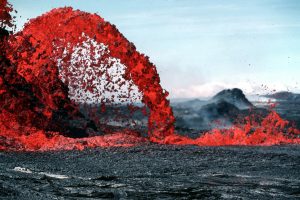
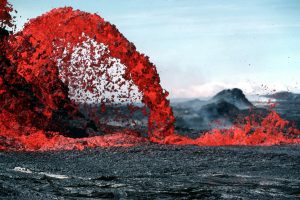
That means magma could erupt from places that are not volcanoes at all. In the worst-case image, the ground could split open in multiple places, with lava suddenly pouring out across the surface.
The Siberian Traps and a Mass Extinction
One eruption often associated with the idea of a superplume is the Siberian Traps.
This event is said to have happened around 250 million years ago, during the age of the supercontinent, when all of Earth’s continents were joined together. According to this theory, the eruption zone was enormous—said to have stretched about 1,000 kilometers.
The ground cracked open, and an unimaginable amount of lava is believed to have surged out.
This event has been linked to a massive extinction in which around 90% of life on Earth died out. The small number of surviving plants and animals then continued to evolve over time.
Of course, no superplume has occurred since humans appeared.
One theory says superplumes happen when there is a supercontinent, meaning all the continents are joined together. There are traces on Earth that are interpreted as evidence of past superplume-scale activity, but no human being has ever observed one directly. Naturally, there is no modern observational data.
So the most honest answer is: we do not know whether one will happen again or not.
The 2015 Ogasawara Deep Earthquake Scare
Do you remember the huge earthquake that struck west of the Ogasawara Islands in May 2015?
It was a magnitude 8.1 earthquake. Although the seismic intensity felt on the surface was not extremely high in many areas, the quake shook all across Japan. What made it especially unusual was its depth: the epicenter was recorded about 680 kilometers underground.
Most earthquakes, depending on their mechanism, occur at depths of around 10 to 30 kilometers. Even deeper ones are often around 70 to 80 kilometers. So a depth of 680 kilometers was extraordinary.
Deep earthquakes are observed from time to time, but because this one was so large, some people online and some who were interested in earth science began asking, “Could this be a superplume?”
There were even comments along the lines of, “If this is a superplume, we’re in serious trouble,” and “It’s possible.”
Before a superplume, it is said that mantle convection and the sinking of plates toward the mantle may occur. For that reason, a large earthquake with a very deep focus could be interpreted by some people as a possible warning sign.
In the end, that earthquake was not a sign of a superplume. But if it had been, most of us might not be alive today.
Magnitude, Intensity, and Why the Depth Mattered
People in Japan are used to earthquakes, so they often think of an earthquake’s scale in terms of seismic intensity rather than magnitude.
Seismic intensity measures how strongly the shaking affected the ground and people at a particular location. Magnitude, on the other hand, represents the size of the earthquake itself.
For example, both the Great Hanshin-Awaji Earthquake and the Great East Japan Earthquake reached a seismic intensity of 7, but their magnitudes were very different. In other words, the actual size of the earthquakes was not the same.
The Ogasawara earthquake had a magnitude of 8.1. That is a very large earthquake.
And with a depth of 680 kilometers—among the deepest ever recorded—it was an unusually serious event, even if it did not cause the kind of surface destruction people might expect from such a large magnitude.
Could a Superplume Happen?
A superplume is described as powerful enough to wipe out most life on Earth. But do we know what warning signs would appear? Do we even know whether it can happen on the modern Earth?
Not really.
There might be earthquakes or smaller eruptions beforehand. Or the ground might split open with no clear warning at all, releasing magma suddenly.
We do not know whether it will happen. But there is one thing that can be said: if a superplume occurred on a true global scale, humanity would likely face extinction.
For ordinary volcanic eruptions, avoiding active volcanic areas is a sensible safety measure. But with something on the scale of a superplume, location itself may no longer matter.
Final Thoughts
A superplume is one of the most terrifying eruption scenarios imaginable. Traces associated with superplume-scale events, such as the Siberian Traps, remain on Earth today.
It is an eruption far beyond everyday human experience. If such an event were to happen again, most living things on the planet could lose their lives.
Japanese Language
自然災害 と聞くとどんなものを連想しますか?。地震や台風、豪雨や竜巻にならんで火山国に住む私たちが忘れてはいけない災害のひとつが 「噴火」 です。御嶽山の噴火や雲仙の噴火ではたくさんの人がなくなりました。でも…噴火は火山の近くに行ったり住んだりしなければ大丈夫!と思ってしまいますよね。確かに火山の近くに行かなければ噴火の被害に遭う可能性は低くなります。。でもね…実は火山ではない場所で噴火が起こる可能性は0じゃないんです。公開日:2019年10月31日 更新日:2020年2月28日 。
地球の内側から溶岩が噴き出す!スーパープルームの規模が桁違いすぎる。。スーパープルーム って聞いたことありますか?実はこれ、 噴火のレベルマックス といっても言い現象のことなんです。スーパープルームは別名をスーパーテクトニクスといいます。なんだかデジタルな名前ですがデジタルなものではなくて恐ろしい自然現象のこと…スーパープルームとは、 地中深くのマントルに向かってプレートが沈み込んだ反動でマグマがおされて地上に噴き出てくる というものです。
。火山の噴火が地下のマグマだまりから様々な要因でマグマや蒸気が噴き出すのに対してスーパープルームはマントル…地球の内部から直接マグマが噴き出てくるというもの…もちろんスーパープルームも噴火ひとつではあるものの、 火山の噴火とはレベルが違う んです。地球の内部の上昇流でマグマが噴き出すわけですから、火山ではないところからもマグマが吹き出します。つまり地表のあちらこちらで突如としてマグマが噴き出すことになります。。スーパープルームで地上の9割の生命体が死滅したこともある。
。恐ろしいレベルの噴火、スーパープルームですが シベリアトラップ と呼ばれる噴火がこれに当たるとされています。このシベリアトラップは2億5千年万前のこと…超大陸という地球上のすべての大陸がひとつにくっついていた超大陸があった時代に起こったそうです。噴火口のサイズは1000キロ!地面には亀裂が入り、そこから恐ろしい量の溶岩がどんどん地上に噴き出したんだそう。。この噴火で地上の9割の生命体が死滅し、生き残ったわずかな動植物がそこからまた進化を始めていきました。
もちろん、人類が誕生した後にこのスーパープルームは起こっていません。。ある節によるとスーパープルームは「超大陸」つまり、地球上のすべての大陸がひとつになっているときに起こるとは言われていますが、今の地球にスーパープルームの痕跡はあるものの、スーパープルームを観測した人はいませんし、当然データもありません。つまり、実際のところ 「起こるか起こらないか解らない」 というのが正しい答えです。小笠原近海の深発地震のときに「スーパープルームか?」と騒ぎになっていた。
。2015年5月に小笠原諸島西方沖でマグニチュード(M)8.1の巨大地震が起こった ことを覚えていますか?。震度は小さかったものの、日本中が揺れたこの大きな地震は震源の深さが680キロとかなり深いところで観測された深発地震でした。通常の地震は地震のメカニズムにもよりますが、10キロから30キロくらい…深いものでも70から80キロ程度ですから、この地震の震源の深さが 「異常」 でした。。深発地震はときどき観測されるものですが、この時の地震は規模が大きかったこともあって、一部のネットユーザーや知識がある人たちの間では「 スーパープルームか?
」との声があったんです。ネットにあったある書き込みでは 「もしこれがスーパープルームだったら、ヤバい」「可能性はある」 というものもあったほどです。スーパープルームの前にはマントルの対流やマントルへ向かってプレートが落ちる現象があるとされていますから、震源が深く規模が大きな地震は、その前兆の可能性があったんです。このときの地震はスーパープルームの前兆ではなかったわけですが、もし スーパープルーム だったら私たちのほとんどが今頃、生きていなかったかもしれません。
。地震に慣れてしまっている日本人はどうしてもマグニチュードより震度で地震の規模をとらえがち…ですが、震度は地震の揺れがどのくらい地上に影響したかというひとつの目安みたいなものです。それに対してマグニチュードは地震そのものの規模を示しています。例えば、 阪神大震災も震度は7、あの東日本大震災も震度は7 でしたが、マグニチュードは大きく異なります。つまり、地震の大きさは全く違っていたということです。。小笠原西方沖の地震のマグニチュードは8.1…これは、かなりの巨大地震 だったんです。
しかも680キロという深さは世界最深…じつはあの地震ってすごくヤバい地震だったんです。スーパープルームは起こるのか?前兆はほかにもあるの?。。地球の9割の生命体を死滅させるほどの偉力がある スーパープルーム ですが、前兆があるのか…そもそも今の地球でそれが起こるのかは解らないんです。地震や小規模噴火があるかもしれないし、まったく前兆なしにいきなり地面が割れてマグマが噴き出してくるかもしれない…。おこるかどうかも解らないわけですが、ひとつだけ解ること… それはスーパープルームがひとたび起これば人類は滅亡してしまう可能性が高い と言うことです。
噴火は火山に行かなければ大丈夫!というのは間違いではありませんが、スーパープルームレベルの噴火になるともう、どこにいるかが問題ではなくなってしまいます。まとめ。。地球上で最もヤバいレベルの噴火スーパープルーム…シベリアトラップと呼ばれる スーパープルームの痕跡も地球 には残されています。私たちの常識の範疇を超えた巨大噴火…もし、この噴火が起こったら地球上の生命体のほとんどが命を落としてしまいます