English Version
When you trace the strange objects called OOPArts, the myths of the world, and the scars left behind in ancient epics, one recurring message seems to appear again and again: something like a global disaster, or perhaps a great war, may have taken place in the distant past.
One of the places most often connected to that idea is the Indus Valley Civilization, one of the four great ancient civilizations of the world. Spreading around the Indus River, it remains one of the least deciphered of those civilizations, with many mysteries still unresolved.
Sites connected to the Indus Valley Civilization are scattered across an enormous area: roughly 1,600 kilometers east to west and 1,400 kilometers north to south. Ancient ruins dot the region, but much about them remains unclear.
The Indus Valley Civilization is generally dated to around 2500 BCE to 1800 BCE. If compared with Japan’s ancient timeline, this reaches back into what would be considered the mythological age. For example, according to the Nihon Shoki, the first emperor of Japan, Emperor Jimmu, is said to have ascended the throne in 660 BCE. The Indus Valley period is far older than that.
In the previous part of this series, we looked at ancient Indian epics and sacred texts. When those are compared with the dates above, the age of these traditions becomes even more striking.
Many versions of the ancient nuclear war theory claim that a mysterious “super-civilization” existed before the four great civilizations and possessed technology far beyond what we usually imagine for the ancient world. But when we think about the span of history, a civilization with roughly two thousand years of development might, in theory, reach frightening levels of technology. After all, our modern civilization has followed a similarly rapid path in only a short period of human history.
Mohenjo-daro, the great city of the Indus
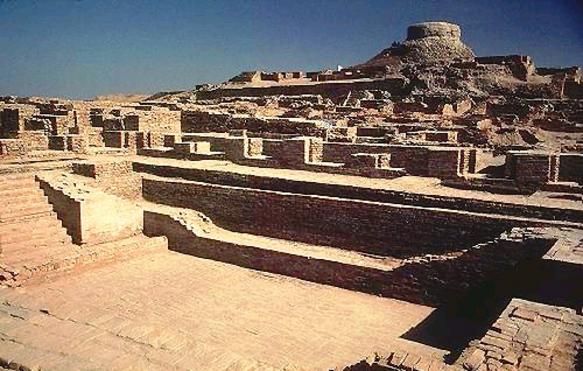
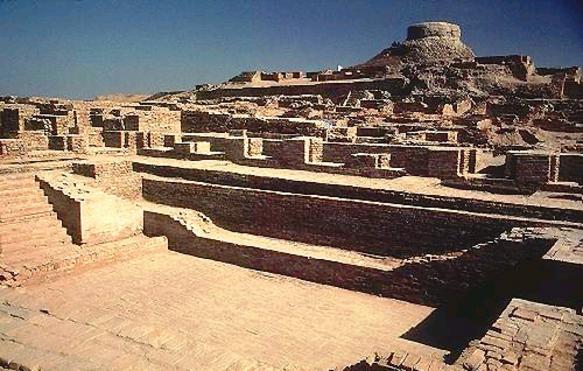
Among the known ruins of the Indus Valley Civilization, the largest and most famous is the ancient city called Mohenjo-daro.
This vast urban ruin is registered as a UNESCO World Heritage Site. Because the Indus script has not yet been deciphered, however, the true nature of the civilization that built it is still being studied.
Another major Indus site, Harappa, is said to have been discovered in 1853, though it was not immediately recognized as an archaeological ruin. Later, in 1921, part of the city was discovered, and serious research began.
Before its discovery as an archaeological site, Mohenjo-daro was known locally by a name often translated as “Mound of the Dead.” Its original name remains unknown, locked away with the undeciphered Indus script.
Even from what has been confirmed so far, Mohenjo-daro shows traces of a highly organized city. Residential districts were laid out in an orderly way. Drainage systems and traces of flush-style toilets have been found. At the center of the city stood the famous Great Bath.
There are also signs of planned roads, a two-part urban structure made up of a lower city and a citadel, and standardized bricks that appear to have been used in construction. Based on these remains, some researchers estimate that as many as 40,000 people may have lived there.
For travelers, Mohenjo-daro is a real archaeological site in Pakistan. If you visit, follow official routes, respect restricted areas, and avoid entering ruins or off-limits locations without permission.
The mystery beneath the city
Mohenjo-daro is often described as a city spread across an area about 1.6 kilometers square. But one of its mysteries is the possibility that the ruins visible today may be only a small part of what once existed.
The city is said to consist of seven layers, but these are only the portions that have reached the surface or have been investigated. It may be easier to imagine it as a “stacked city,” where newer layers were built gradually over older ones, almost like a stepped structure rising from below.
In other words, the 1.6-kilometer-square area visible today may not represent the full extent of the ancient city. Since the lower layers may spread outward even farther, future research could reveal that Mohenjo-daro was larger than currently believed.
And like many ancient ruins, the reason for its decline and disappearance is still not fully understood.
The “glass city” and the trinitite rumor
Mohenjo-daro appears often in discussions of the ancient nuclear war theory for several reasons.
The first is its name: “Mound of the Dead.” The second is a local tradition that mentions a place about five kilometers from the ruins called something like the “city turned to glass.”
On its own, the phrase may not sound especially frightening. But according to local accounts cited by writers on the subject, this “glass city” has been feared as a forbidden place.
The name “Mound of the Dead,” the idea of a place locals avoid, and the repeated theme of death have all helped give Mohenjo-daro its eerie reputation.
The most important physical clue cited by supporters of the theory is a mineral-like substance described as “trinitite” or trinitite-like material allegedly found in the surrounding region.
Trinitite gets its name from the Trinity test, the first nuclear test in human history, conducted on July 16, 1945, in New Mexico. The test used an implosion-type plutonium bomb. The bomb dropped on Nagasaki, known as “Fat Man,” was of the same general type.
Trinitite is an artificial glassy material formed when desert sand is heated to extreme temperatures in an instant, melts, and then solidifies. After the Trinity test, similar glassy materials were also produced at other nuclear test sites, so trinitite became strongly associated with nuclear explosions.
The British writer David W. Davenport, a proponent of the ancient nuclear war theory, referred to the “glass city” in a co-authored work published in 1979.
However, there is an important inconsistency. Davenport described the “glass city” as an area about 800 meters wide within Mohenjo-daro, while local testimony cited elsewhere places it around five kilometers away. In other words, even within the theory, the location does not match neatly.
The exact site of this “glass city” has not been identified. Still, supporters of the theory argue that trinitite-like glassy material has been found near Mohenjo-daro. If such material truly came from the period of the Indus Valley Civilization, around 2500 to 1800 BCE, it would be historically extraordinary.
To summarize the logic of the theory: the first recognized nuclear test in human history was the Trinity test in July 1945, and trinitite is understood as an artificial glass formed by nuclear heat. Since its main component is silicon, it appears as a thin, pale glassy substance.
If something comparable were found at an ancient site, then according to proponents, it would raise the question: was Mohenjo-daro destroyed by an ancient nuclear war?
That is the main reason Mohenjo-daro is so often brought up in this fringe theory. But my own view of the so-called “super-civilization” is a little different from the standard version.
Were the “super-civilization” people ancient Aryans?
The common version of the ancient nuclear war theory says that before the four great civilizations, there was another civilization equal to or more advanced than our own, and that it was destroyed in a nuclear war.
But if we compare the epics used as evidence with the commonly accepted period when the Indus Valley Civilization faded from history, some details begin to line up in an intriguing way.
From here, I will offer my own occult-style interpretation of the ancient nuclear war theory.
Dating the “super-civilization” through myth
When we look at old descriptions preserved in myth and in the ancient Indian epics, the secret of the ancient nuclear war theory seems to point toward the Indus Valley Civilization.
According to traditions connected with the Rig Veda, which includes references interpreted by some as weapon descriptions, ancient Aryans and ancient Indians are thought to have come into contact around the 18th century BCE.
There are also differences in how the fire god Agni is treated across the epics. In the Ramayana, Agni is a high-ranking god second only to Indra, while in the later Mahabharata, he appears less prominently.
Even with those differences, many sacred texts and epics contain descriptions that supporters interpret as “destructive weapons.”
The key point is that the height and decline of the Indus Valley Civilization, roughly 2500 to 1800 BCE, overlaps with the period when ancient Aryans are thought to have entered or contacted ancient India.
So if myth and epic are compared with conventional ancient history, the period when a “destructive weapon” might have been used would be around 1800 BCE, when the Indus Valley Civilization disappeared from history.
And behind that possibility, in this theory, stand the ancient Aryans.
Agni, Ashwatthama, and the weapon of fire
As discussed in the previous article, the fire god Agni changes significantly in ancient Indian literature.
In the epics, the warrior Ashwatthama uses a weapon described as a “weapon of the fire god.” Some readers have pointed out that the description resembles a nuclear weapon. In the story, Ashwatthama is positioned as an enemy.
If we organize the elements of the theory, it becomes:
Agni = the fire god = Ashwatthama’s weapon = an enemy as seen by ancient Indians.
From there, one possible hypothesis is that this “enemy” may have been the ancient Aryans, who are believed to have contacted ancient India around 1800 BCE.
At this point, the idea moves beyond hypothesis and into speculation. But the imagined scenario is this:
The ancient Aryans were a people with extremely advanced technology. Around 1800 BCE, they reached ancient India. For some reason, a major conflict broke out between the ancient Indians and the ancient Aryans. In that war, the ancient Aryans used a “weapon of the fire god,” interpreted by the theory as a nuclear weapon.
The tragedy was preserved orally and eventually became the epics and sacred texts. The ruins known as Mohenjo-daro and Harappa, the unanswered question of why they declined, and the mysterious glassy materials described as trinitite-like objects became the physical and legendary traces left behind.
That is my conclusion regarding the ancient nuclear war theory.
Could an even older civilization have existed?
I personally suspect that if an ancient nuclear war happened in this framework, it would have occurred around 1800 BCE. But when we look at the similarities between myths around the world, I do not think it is impossible that some form of “super-civilization” existed even earlier.
After all, if we look at the broad history of our own modern civilization, technological leaps can appear suddenly. Lost technologies from the past, some of which modern people still struggle to reproduce, suggest that earlier civilizations may have possessed skills we do not fully understand.
As for Mohenjo-daro, it is said that flooding and environmental conditions have limited investigation, and only part of the entire site has been studied in detail. Future research may reveal more.
Until then, Mohenjo-daro remains both an archaeological treasure and one of the most haunting places connected to the ancient nuclear war legend.
Japanese Language
数あるオーパーツや世界の神話の記述、叙事詩に残された痕跡を辿っていくと。「世界規模での災害、もしくは戦争などの争いがあった」という共通した古代のメッセージにたどり着きます。そんな古代からのメッセージを代表する地域が世界四大文明の1つ。インダス河の周辺に拡がっていたとされる「インダス文明」です。このインダス文明は四大文明のなかでも、最も解読されていない文明として今もなお数多くの謎が残っています。インダス文明に関する遺跡はインダス川流域に東西は約1600キロ、南北には1400キロという広大な地域の中に点在しており、この地域では古代遺跡が点在している一方で、未だに解明されていないことが非常に多いとされています。
インダス文明が示している時代は、およそ紀元前2500年頃から紀元前1800年頃と言われており、なんと日本に置き換えた場合には神話時代に相当する計算です。初代神武天皇の即位との比較 日本書紀における日本の初代天皇とされた神武天皇の即位年代は西暦にもとづくと紀元前660年と言われています。前回の特集で紹介した古代インドの叙事詩や聖典と照らし合わせると、以下に古い時代であるかが確認出来ます。少し余談にはなりますが、古代核戦争説の多くは「超文明」と呼ばれる謎の文明であり、四大文明以前の技術と言われることも多いですが、様々な時代を考察していくと紀元前20世紀。
つまりは、西暦で言う2000年間ほどの時間があれば、核兵器開発、実用化までを過去の人間が辿っていても不思議ではない気がしてきます。何故なら、今現代に生きている我々の文明は同じような歴史を辿って来ているからです。少し話を戻します。古代インドの痕跡として、いくつかの遺跡がある中、現在発見されているインダス文明の遺跡で最も最大規模とされているのが「モヘンジョ・ダロ」と呼ばれる街の遺跡です。インダス文明最大のモヘンジョ・ダロが示す文明の痕跡。。
画像引用元: 。ユネスコの世界遺産としても登録されている、この古代の大都市遺跡は「インダス文字」が未解明であることから、未だにその実態については研究が進められています。同じインダス文明の遺跡として知られる「ハラッパー遺跡」が発見されたのが1853年とされていますが、発見当初は遺跡だという認識がされず、その後1921年に都市の一部が発見され、本格的に調査が開始されています。このモヘンジョ・ダロと呼ばれる古代都市は発見以前は現地の人から「死の丘」という意味で呼ばれており、本来の名前はインダス文字と共に謎のままです。
しかし、現在分かっている痕跡だけでも、住居区画が整然と整理されており、下水道などの排水システムも完備した水洗式トイレの跡があり、さらに街の中央には大沐浴場が備えられていたということです。この他にも、道路が整備されていた形跡や、市街地と城塞という2つの構造、建築に使われていたと思われる煉瓦が一定のサイズであることなどから最大で4万人ほどの人口が生活していたのではないかと推測されています。モヘンジョ・ダロ遺跡の謎。モヘンジョ・ダロ遺跡の謎は1.6キロメートル四方に拡がった都市であると言われている一方で、層が重なった都市の造りそのものを推測すると 「地面の下にはさらに広大な街が拡がっているかもしれない」 と言われていることです。
現在分かっているものでは、モヘンジョ・ダロは7層からなる都市遺跡だと言われていますが、あくまでもこれらは地表に出ている部分に過ぎないとのことです。「積み重なった都市」という言い方が分かりやすいかも知れませんが、ピラミッドのように下層部分から徐々に層が増えていったという説が濃厚なんです。つまり、現在地表で発見されている1.6キロ四方と推定されている部分は、この都市の全容であるかと言われれば確実にそうであるとは言い切れないのです。しかも下層になるほど都市は拡がっていく可能性が高いことから、全容解明に至ればもっと大きな都市である可能性も捨てきれません。
そして、このモヘンジョ・ダロ遺跡に関しても「滅亡した理由」そのものが分かっていないのです。モヘンジョ・ダロに核の痕跡「トリニタイト」がある謎。さて、このモヘンジョ・ダロ遺跡が古代核戦争説で取り上げられるのにはいくつか理由があります。まず呼び名となっている「モヘンジョ・ダロ」が「死の丘」といった意味で現地の人々からは使われていること。そして、この場所をモヘンジョ・ダロと呼んでいる人たちはこのモヘンジョ・ダロ遺跡から約5キロほど離れた場所を「ガラスになった街」と呼んでいるそうです。
「ガラスになった街」という言葉を単体で見れば何も感じないかもしれませんが、地元の住民によるとこの「ガラスになった街」は”禁断の地”として恐れられています。モヘンジョ・ダロという名が意味する「死の丘」という表現や、地元の人が近づかない場所には何かしらの理由があるのではないでしょうか?。さらに、これら地元民達が恐れる理由を照らし合わせると、「死」というテーマが常に付きまとっていることに気が付きます。そして、さらに重要な物的証拠はこの地域に残されている「トリニタイト」と言われる鉱物です。
。画像引用元: 。このトリニタイトと言われる鉱物は、1945年7月16日に行われた”人類史上初の核実験”である「トリニティ実験」による影響で生成が確認されたことに名前の由来があります。トリニティ実験とは?トリニティ実験は爆縮型のプルトニウム型原子爆弾の実験であり、当時のアメリカ・ニューメキシコ州で行われています。長崎県に投下された通称「ファットマン」は、この時の実験と同型であったと言われています。この物質は人口鉱石に分類されており、砂漠の砂が一瞬にして高温に熱されたことによって溶けて固まったことによって生成されます。
このトリニティ実験以降にも同様のに核実験などによって同じ性質の鉱石が出来ていることから、核実験によって生成される人口鉱石=「トリニタイト」という認識が一般的になっています。古代核戦争の研究・提唱者であるイギリス人のデヴィッド・W・ダヴェンポート氏は1979年に共同著作の中でも「ガラスの街」について言及しています。。※ただし、ダヴェンポートはこの「ガラスの街」をモヘンジョ・ダロ遺跡の一角にある800メートルの広さに渡る場所だとしており、地元の人間との証言との位置情報が食い違っている部分なども存在します※。
結論から言えば、「ガラスの街、またはガラスになった街」とされる場所は特定されていないものの、トリニタイトと見られる鉱石状の物質がモヘンジョ・ダロ遺跡周辺から発見されていることには間違いがないようです。つまり、紀元前2500年前~紀元前1800年頃に存在した文明の遺跡から、トリニタイトが発見されるということは歴史の流れとして異常とも言える訳です。少し話を整理します。「人類史上最初の核実験」とされているのが、1945年7月のトリニティ実験とされており、トリニタイトという人口鉱石は”核実験”によって生成されるものです。
そしてトリニタイトの主成分はケイ素であり薄く淡い色のガラスになります。では、歴史上ではトリニタイトが人口的に生成されたのも1945年ではなければ説明が付きません。このことから、モヘンジョ・ダロが滅んだ原因は「古代核戦争だったのではないか?」というのが、古代核戦争説でモヘンジョ・ダロが取り上げられる主な要因です。しかし、僕自身の考えでは「超文明」と呼ばれるものの正体は 一般的な古代核戦争説 とは少し違います。古代核戦争説:「超文明」の正体は古代アーリア人!
?。。世間一般で語られている「古代核戦争説」は四大文明より”以前”に現代と同じ、もしくは現代以上の文明があり、それらの文明が核戦争によって一度滅びている・・・。というものです。しかし、古代核戦争説における論拠になっている叙事詩や、一般的に言われているモヘンジョ・ダロを含むインダス文明が消えた時期などを照らし合わせると、色々と辻褄の合う部分が見えてきます。そこで、ここからは独自の推論を交えて「古代核戦争説」についてオカルトマトが考える正体についてまとめていこうと思います。
神話や叙事詩から考える「超文明」の年代。神話に残された過去の記述や古代インドの叙事詩に残っている記述を考えると、古代核戦争の秘密はインダス文明にあるように考えられます。兵器の記述が残された聖典「リグ・ヴェーダ」によれば紀元前18世紀頃に古代アーリア人と古代インド人は接触している。これらの成立した年代の違いによって火の神と呼ばれている「アグニ」の扱いが叙事詩の中で違っている(ラーマーヤナではインドラに次ぐ高位の神だが、成立の遅いマハーバーラタではあまり出番がない) こういった違いがあるにも関わらず多くの聖典、叙事詩に「破壊兵器」の存在が確認出来る。
これらを整理する上で一番のポイントはインダス文明が栄えたと言われていた時期(およそ紀元前2500年から紀元前1800年)と、古代アーリア人の接触時期が重なっていることです。つまり、神話や叙事詩を一般的な古代史と照らし合わせると記述に残っている「破壊兵器(核)」が使用された可能性が高いのは、 インダス文明が歴史から消えたと言われている紀元前1800年前後 ではなかったのでしょうか?。そして、その裏側に潜んでいるのは「古代アーリア人」という人種です。
古代アーリア人が超文明を持っていた可能性。前回の記事でも紹介しましたが、「アグニ」という火の神は古代インドの記述において扱いが大きく変化しています。さらに叙事詩で語られている アシュヴァッターマンは「火の神の武器」と呼ばれる兵器を使っています。。この「火の神の武器」の描写は核兵器に非常に酷似しており、アシュヴァッターマンの立ち位置は物語において「敵」ということになっています。かなり情報量が増えてきましたが整理していくと・・・。「アグニ」=「火の神」=「アシュヴァッターマン」=「古代インド人から見た敵」であり、仮説を立てるとこの正体は「紀元前1800年頃に古代インド人に接触したとされる古代アーリア人」ではないか?
ということです。ここからは更に仮説を通り超えて空想にもなりますが、。古代アーリア人は非常に高度な文明を持った種族であり、紀元前1800年頃に古代インドへと到達。その後、何らかの原因によって古代インド人と古代アーリア人の間で大きな争いが発生し、この戦争において古代アーリア人は「火の神の兵器(核)」を使用。その時の惨劇を口伝するために作られたのが「叙事詩や聖典」であり「モヘンジョ・ダロやハラッパーと呼ばれる遺跡」と「謎の遺物であるトリニタイト」といった滅亡した理由や存在する理由の分からないオーパーツと呼ばれる物体である。
というのが、オカルトマトの考える「古代核戦争説」の結論です。もっと古代にも超文明があった可能性は充分にある。。古代核戦争説については紀元前1800年頃の出来事だと推測していますが、神話の共通性を見るといわゆる「超文明」という存在が実在していたとしても何ら不思議ではないと考えています。何故なら、今現代の文明が築かれてきた大まかな歴史を見ると技術の進化は突如として現れるものだからです。現代人が再現出来ないと言われている過去の失われた技術は、たしかにかつて文明が存在していたことを示唆しているからです。
モヘンジョ・ダロに関しても、水害の影響によって全体の2割ほどしか調査が進んでいないということもありますので、今後の調査や続報などにも注目していきたいと思います