English Version
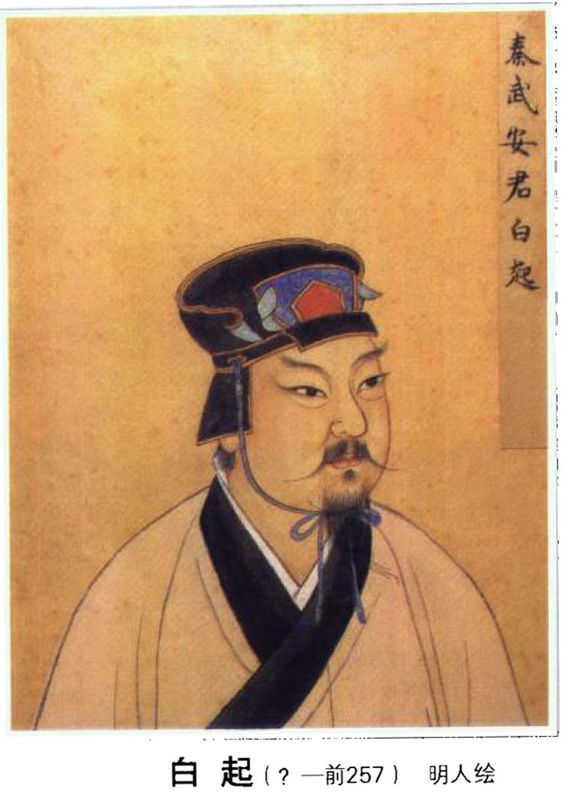
Among the many figures connected to the Hata clan, Hata no Irogu is one of the names said to have left an influence that reached far beyond his own lifetime.
In earlier parts of this series, we looked at shrines and temples that tradition links to the Hata clan. But the clan is not only remembered for building sacred places. In some accounts, they are also connected to the spread of religious belief itself.
At the center of one such tradition is Hata no Irogu. His story appears in surviving fragments of the Yamashiro no Kuni Fudoki, a regional record said to have been compiled in the early Nara period under Empress Genmei.
Unfortunately, the original Yamashiro no Kuni Fudoki no longer survives in full. What remains are fragments quoted in later texts. Even so, those fragments preserve an unusual legend about Hata no Irogu and the beginnings of Inari worship.
Hata no Irogu and the Beginning of Inari Worship
According to the surviving fragments of the Yamashiro no Kuni Fudoki, Hata no Irogu was a wealthy man.
The Hata clan was known in various periods for its wealth, technical skill, and influence, and Irogu seems to have fit that image. He is said to have stored great quantities of rice and other grain, living as a powerful landholder.
One day, however, he became arrogant because of his wealth. The story says he placed a rice cake on top of a pile of rice and used it as a target for archery.
When his arrow struck the rice cake, it transformed into a white bird and flew away toward the mountains. Where the bird landed, rice began to grow.
It is a strange and symbolic tale, but the key part comes next. Hata no Irogu is said to have built a shrine at the place where the bird landed and the rice grew. Because rice had grown there, the shrine was named Inari.
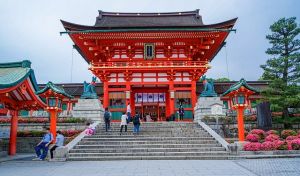
This is one traditional account of the origin of Fushimi Inari Taisha in Kyoto. It is also treated as one of the origin stories behind the familiar Inari faith, often associated today with the countless Inari shrines found across Japan.
Fushimi Inari Taisha is a real and very popular shrine in Kyoto. Visitors should stay on public paths, respect worshippers, avoid restricted areas, and take care on the mountain trails, especially at night or in bad weather.
Later Accounts of Hata no Irogu and the Shrine
The shrine records of Inari Taisha also contain accounts of what happened after the white bird legend.
In summary, the mountain peaks where the bird landed later came to be called the Three Peaks. Hata no Irogu, acting under an imperial command, enshrined three deities on the mountains.
These deities are identified as Ukanomitama no Kami, Satahiko no Kami, and Omiyanome no Kami.
Ukanomitama no Kami, widely known as a deity of grain and food, remains the central deity of Inari worship today, especially at Fushimi Inari Taisha in Kyoto.
The story also says that Hata no Irogu, having become proud because of his status as a wealthy man, reflected on his mistake. He pulled up a tree from the shrine grounds and planted it at his own home, leaving words to the effect of: if this tree blooms, fortune will come; if it withers, there will be no fortune.
This is one broad version of the origin of Inari Taisha, and it is among the traditions recorded in the shrine’s own history.
In terms of period, the account is said to belong to around the year 800, when Emperor Junna is named in the tradition.
Once again, the point that deserves attention is the imperial command. Shrine histories are texts that record the background and legitimacy of a shrine, and even small shrines may preserve important traditions through them.
The fact that Hata no Irogu, a member of the immigrant Hata clan, appears in the shrine history of Fushimi Inari can be seen as a significant achievement attributed to him. At the very least, it gives us one way to consider how close the Hata clan may have been to the Japanese imperial court.
What Happened to Inari Taisha Afterward
According to the tradition above, Inari Taisha prospered as the head shrine of Inari worship across Japan. In reality, however, the shrine’s history included many disruptions before it reached its present form.
One of the first major disasters to affect the shrine came during the Onin War, the conflict often seen as the beginning of Japan’s Sengoku, or Warring States, period.
During that chaotic time, the shrine buildings were destroyed by fire. Later, donations were gathered and the shrine was rebuilt.
Records also say that shortly before the year 1500, the construction of the main sanctuary marked a transition from the worship of three deities to the present system centered on the Five Great Inari Deities of Fushimi Inari Taisha.
Near the end of the Sengoku period, the shrine also received protection from figures such as Toyotomi Hideyoshi. The famous two-story gate at Fushimi Inari, still seen by visitors today, was built during this period and is now designated an Important Cultural Property.
Other Shrines Said to Be Connected to the Hata Clan
Many shrines across Japan are said, by record or tradition, to have some connection to the Hata clan. These stories are often used to suggest the clan’s wealth, construction skill, and religious influence.
Some of the better-known examples include the following.
Ise Jingu in Mie Prefecture One theory says the Hata clan’s wealth and technical abilities were involved in the development of Ise Jingu around the seventh century.
Kawara Shrine in Fukuoka Prefecture There is a theory that the Hata clan first landed in Kyushu when they came to Japan. Kawara Shrine is said to have been founded in the age of Emperor Sujin, and some traditions connect it to that Kyushu arrival theory.
Usa Hachimangu in Fukuoka Prefecture Usa Hachimangu is the head shrine of Hachiman worship. One theory links the name Hachiman or Yahata with Hata, suggesting a possible connection to the Hata clan.
Kamigamo Shrine and Shimogamo Shrine in Kyoto Prefecture The Kamo shrines of Kyoto are generally associated with the Kamo clan. However, because some theories suggest a relationship between the Hata clan and the Kamo clan, the connection between the Hata clan and the Kamo shrines is also discussed.
Osake Shrine in Hyogo Prefecture This shrine is said to enshrine Hata no Kawakatsu, a figure traditionally described as a close associate of Prince Shotoku. His grave is said to be on Ikishima, on the opposite shore.
Other shrines throughout Japan are also said to have connections to the Hata clan. Whether taken as formal records, local traditions, or popular theories, these stories show how strongly the clan came to be associated with building, sacred space, and religious authority.
The Hata Clan’s Influence and Religious Legacy
The arrival and activity of the Hata clan did not simply contribute to cultural and technological development. Their influence is also said to have reached into the world of shrines, worship, and religious identity in Japan.
Through figures such as Hata no Irogu, traditions connected to the clan are said to have continued into the present in the form of Inari worship.
For that reason, the theory that the Hata clan left a major mark on Asuka and Heian-period culture, and even on the religious outlook of the Japanese people, remains a compelling one.
Japanese Language
古文書に記された秦伊侶具 (はたのいろぐ)。画像引用元: 。後世にまで影響を与えた、という意味では数多くの秦氏一族の中でも 秦伊侶具(はたのいろぐ) という人物は間違いなくその内の1人に数えてもよい功績を残しています。秦氏が残したとされるものに関して、神社仏閣の建立を以前に紹介しましたが単純に建立だけに関わっただけではなく、その信仰を広めたとされるものがあります。この一連の流れの中心事物であったのが「秦伊侶具」という人であり、その功績を記しているのが逸文などに残っている「 山城国風土記 」という奈良時代のはじめに元明天皇によって各地の風土記を編纂したものだと言われています。
残念ながら、「山城国風土記」そのものの原本に関しては残されておらず、それらの一部などが他書への引用などの逸文として残っているという状態だそうです。しかし、それらの逸文の中においても秦伊侶具という人物のエピソードが残されています。この秦伊侶具という人が残した逸話について、ここでは紹介していきたいと思います。。公開日:2019年11月7日 更新日:2020年3月15日 。秦伊侶具と稲荷信仰の起こり。。先に紹介した「山城国風土記」の逸文によれば、 稲荷信仰の礎になった逸話 が残されています。
秦氏の一族は、他の時代にあってもその財力や技術力が有名であったことは解説しましたが、この秦伊侶具という人物も他聞にもれず非常に裕福な暮らしをしていたそうです。いわゆる資産家であった彼は稲などの農作物や穀物を積み貯えていたと言われています。。そんな彼がある日自分の裕福な生活に驕り、積んだ稲の上のお餅を的にして弓を射ったそうです。。すると、弓が当たったそのお餅は白い鳥に変化して山の方へ飛んでいき、その鳥が降りたところには稲がなったという なんとも不思議なお話 です。
しかし、ここからが肝心なポイントで、秦伊呂具はこの鳥が降りて稲がなったところに社を立てて稲が成ったということで 「伊奈利(いなり)」 と社に名付けたということです。これが、京都伏見にある稲荷大社の最初の起こりであると言われており、現代でも我々の身近に数多く存在するいわゆる「 お稲荷様 」という稲荷信仰の起源だとされています。秦伊呂具のその後と稲荷大社の建立。。稲荷大社の社記にはその後の秦伊呂具についても記述されているものがあります。古文のままでは少しわかりにくい部分がありますが、記述されている概要としては以下のようなものです。
。秦伊呂具が的にして弓を射たお餅が白い鳥になり降りた山の峰を後に三ヶ峯と言い、時の天皇家から勅命を受けた秦伊呂具がそれぞれの山に3柱に神々を祀りました。。この神々はそれぞれ 「ウカノミタマノカミ 」「サタヒコノカミ 」「オオミヤノメノカミ 」 とされており、稲荷信仰における主祭神は穀物の神と言われる「宇迦之御魂神(ウカノミタマノカミ)」として現代でも京都の伏見稲荷大社を中心とした各地の稲荷信仰において祀られています。また、長者として有名だったことから驕りを覚えた秦伊呂具は、自身の過ちを反省し、社の木を抜いて自宅にも植え、「 この木が咲けば福を得られ、この木が枯れれば福はないだろう 」といった言葉を残しています。
これがおおまかな稲荷大社の起源だとする説があり、社記にも記述されている主な成り立ちです。。時代背景で言えば、西暦800年頃の話とされており、当時の天皇は淳和天皇であったそうです。。。繰り返しにはなりますが、やはり天皇からの勅命を受けたという点についても注目するべきでしょう。社記とはその神社の歴史を記した文章であり、小さな神社であっても由緒正しきものだとされています。渡来人であった秦氏の1人である秦伊呂具という人物が伏見稲荷の社記には記されているという点は、疑いのない功績だと見てもいいのではないでしょうか。
少なくとも 秦氏という一族が、天皇という日本の王に対してどのような距離にいたのかを測る目安 にはなるものであると思います。稲荷大社のその後。上記の説によれば、稲荷大社は全国の稲荷信仰の総本山として繁栄することになりますが、実際には様々な事件などが起こっており、現存している稲荷大社の姿になるまでには紆余曲折があったそうです。まず、稲荷大社が起こって最初に大きな事件に巻き込まれたのはいわゆる戦国時代の始まりにもなった「 応仁の乱 」でした。
。この混乱期の中、稲荷大社は殿舎を焼失してしまい、その後寄付を募って再建するに至りました。さらに西暦1500年になる直前に、本殿の造営によって3柱神から、現在の伏見稲荷大社の祭神である「 稲荷五社大明神 」を祀る体制に移行したとの記録があります。また、戦国時代の末期には豊臣秀吉などの庇護もあり、現在も残る伏見稲荷の観光名所「楼門」が造営され、現在は重要文化財に指定されています。秦氏が関わったとされる神社は他にも数多く存在する。。とかく神社の建立や起こりに関しては秦氏の一族が関わったとされるものは非常に多く点在しており、当時の秦氏の財力や技術力を今に伝えていると言えるでしょう。
その中でも有名な説が残っているものを紹介していきます。。三重県:伊勢神宮の建立 。7世紀頃に秦氏の財力や技術力が大きく関わったとされています。福岡県:香春神社 。秦氏の渡来歴の説には、はじめに九州に上陸したという説があります。崇神天皇時代に建立されたとされる神社ですが、この九州上陸説から建立に関わったとする説があります。福岡県:宇佐八幡宮の建立 。八幡神社の総本社である「八幡」を=「はた」=「秦(氏)」に関わりのあったものだとする説があります。
京都府:上加茂神社、下鴨神社 。京都の加茂神社(鴨神社)の建立には加茂氏が関わったものであるとされていますが、秦氏と加茂氏には関係があるという説があるということから、秦氏と加茂神社の関係についても議論されています。兵庫県:大避神社 。聖徳太子の側近として活躍したとされる秦河勝を祀っているとされる神社で対岸の生島には墓があります。この他にも秦氏が関わったとされる神社は全国各地に存在します。これらの記録や俗説を見ても、 いかに秦氏の一族が建築技術において優れていたかを証明している かが分かると思います。
秦氏が広げた影響力と宗教観。。秦氏の渡来は単純に文化や文明を進化させただけではなく、今の日本では当たり前のようにある神社などにもその影響を及ぼしています。加えて秦伊呂具のように信仰という形で現代にまで広がった出来事にも関わっていたということから、平安時代からの飛鳥文化、さらには日本人の宗教観にまでその存在感を表していると言っても過言ではないという説にも 信憑性がある と言えるのではないでしょうか?