English Version
In an earlier article on possible origins of the Hata clan, we briefly introduced one popular theory: that the immigrant Hata people may have come from the Qin state, or even descended from people of the Qin imperial era.
That article only gave a broad overview. This time, let’s look more closely at descriptions in the Shiji, later Japanese legends, and the mysteries surrounding Xu Fu, the famous seeker of immortality.
Xu Fu and the Qin Connection
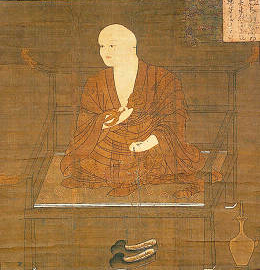
One of the names often brought up in discussions of the Hata clan’s roots is Xu Fu, the man said to have sailed east in search of the elixir of immortality. Because Xu Fu appears in the Shiji, he was probably a real fangshi, or occult practitioner, who lived during the age of Qin Shi Huang, the First Emperor of China.
What Were the Fangshi?
In ancient China, fangshi were specialists connected with the belief system often called the search for immortals. In simple terms, people believed that someone who mastered this path could become like an immortal or a divine being, possessing a lifespan and power beyond normal humans.
In reality, many fangshi are also said to have been frauds or con artists who used these beliefs to gain money and influence.
Xu Fu, who called himself a fangshi, was asked by Qin Shi Huang where the medicine of immortality could be found. Xu Fu answered that he knew the place.
According to the story, he told the emperor that the Three Divine Mountains, located somewhere to the east across the sea, were sacred and that the elixir of immortality could be obtained there. He then explained that offerings would be necessary. The Shiji describes him receiving people and treasure from Qin Shi Huang before sailing east.
There are two common versions of what happened to Xu Fu afterward, but in both, he never returned to the First Emperor.
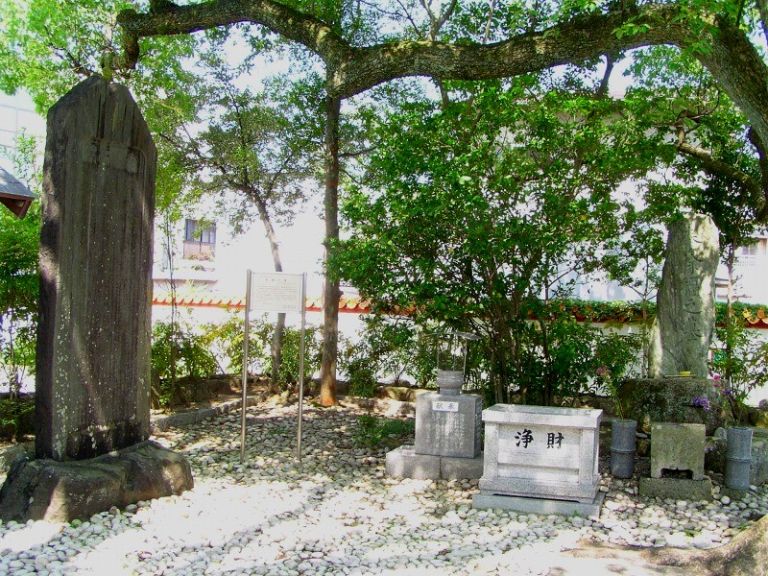
Japan also has several regional legends about Xu Fu. One of the strongest candidates is the old Kumano region, in what is now Kumano City, Mie Prefecture. There is even a shrine called Jofuku-no-Miya that enshrines Xu Fu.
For travelers, Jofuku-no-Miya is a real shrine site. If you visit, go respectfully, check local access information, and avoid entering restricted or unsafe areas.
Coins from the Qin period have reportedly been found in this region, which adds a strange sense of realism to the legend of Xu Fu’s arrival. One version says Xu Fu set sail with 3,000 boys and girls and a great amount of treasure.
However, this does not fit neatly with the dates found in Japanese historical works such as the Nihon Shoki, which are often cited in discussions of the Hata clan’s origins. Xu Fu may well have reached Japan, but there is still no firm proof that his descendants became the later Hata clan.
Were the Hata Descendants of the First Emperor?
Another theory says the name Hata, written with the same character as Qin, came from the state of Qin itself. Some writings from the Heian period and later also describe the Hata clan as descendants of Qin Shi Huang.
But when we look at what happened after the First Emperor’s death, it becomes uncertain whether his direct line survived at all.
Qin Shi Huang is known to have had many children. After his death, however, the eunuch Zhao Gao threw the succession into chaos, and the unified Qin empire collapsed after only about 15 years.
Hu Hai, the youngest son of the First Emperor, became the Second Emperor. At that time, he had 22 of his brothers and sisters killed. The Shiji, in the biography of Li Si, suggests that Qin Shi Huang had more than 20 children. Hu Hai likely ordered these executions to prevent disputes over succession.
Hu Hai himself was also under Zhao Gao’s control. Later, Ziying, said to have been a grandson of Qin Shi Huang, became the final ruler of Qin.
At this point, Xiang Yu and Liu Bang rose up from the east, rebelling against Qin rule. Ziying first killed Zhao Gao and surrendered to Liu Bang, which allowed him to survive for a short time. But later, Xiang Yu is said to have killed Ziying along with his clan.
Because of this, it is possible that the remaining male line of Qin Shi Huang was wiped out during Xiang Yu’s advance.
If there is any possibility for a surviving bloodline, it may have been through the First Emperor’s daughters, whose exact number is not clearly known.
The Problem of the Timeline
Several sources place the arrival of the Hata as immigrants to Japan around the year 400 CE. Qin Shi Huang, however, lived in the third century BCE.
By the time the Hata are said to have come to Japan, the Han dynasty founded by Liu Bang had already fallen, and China had passed through the age of the Three Kingdoms and beyond. It is difficult to imagine descendants of Qin Shi Huang leading thousands of people to Japan at that late stage.
In that sense, the theory that Xu Fu reached Japan may be somewhat more plausible than the idea of a large-scale migration by direct imperial descendants centuries later.
The existence of Jofuku-no-Miya does suggest a faint connection to Xu Fu traditions. But when we consider that the Hata clan is especially associated with the Kyoto area, the geography does not allow for a clear conclusion.
If Xu Fu’s Descendants Became the Hata, Proof May Be Impossible
If we imagine that Xu Fu’s descendants later became the Hata clan, we would naturally want written evidence. Unfortunately, Japan at the time of Xu Fu was still in the Jomon period.
Large burial mounds and more abundant archaeological evidence belong mainly to later periods, especially after the Yayoi period. For that reason, it may be unlikely that any decisive written source connecting Xu Fu to the Hata will ever be found.
There is another problem as well. Around the time of the Taika Reform, Japan experienced intense conflict between factions that supported Buddhism and those that opposed it. The period was extremely chaotic, with traditions even describing rival royal lines and competing centers of authority.
Many earlier records are believed to have been lost during these struggles. Because of that, proving the theory that the Hata were descendants of Xu Fu is probably close to impossible.
Still, the reported discovery of Qin-period coins in Japan makes it reasonable to consider the possibility that Xu Fu, or people connected to the Qin world, reached Japan in the centuries before the common era.
There are even stranger theories as well, including the claim that Xu Fu may have been Jewish. That idea remains highly speculative, but it shows how many layers of mystery still surround his legend.
For anyone interested in haunted history, ancient migrations, and the occult side of Japan’s origins, the Hata clan remains one of the most fascinating unsolved threads connecting Japan, China, shrines, and legend.
Japanese Language
秦氏の出自の候補について紹介した記事の中で。・ 渡来人秦氏のルーツ説の1つは秦国の王朝時代の人間や秦国の末裔だった 。ということについて簡単に述べてきました。以前の記事の詳細は以下のリンク先をご覧下さい。上記記事では、大まかな説をいくつか簡易的にピックアップしたものでした。そこで、今回は史記などに記述された内容や、日本に残る伝説などを含めて考察していこうと思います。渡来人秦氏と秦国の関係について。。画像引用元: 徐福 。秦氏のルーツの1つとして、よく挙げられる東方へ不老不死の薬を探しに行ったとされる徐福という人物は、史記にも記述されていることから、おそらく実在した方士だったのでしょう。
古代中国の方士とは?始皇帝の時代に存在していた「方士」という職業は、当時の中国にあった「神仙思想」と呼ばれる学問を生業としていた人物達の総称です。簡単に言うと、方士になりその道を極めた者は「人間を超える寿命と力」を持つ仙人や神に近い存在になれると信じられていた風習です。しかし、実態として多くの方士は金銭などを目当てにしたインチキや詐欺師であったとも言われています。さて、この方士を名乗っった徐福は始皇帝に対して不老不死の薬の在り処を聞かれ、その場所を知っていると答えた人物でした。
徐福は中国本土から東方へ向かった先にある 三神山という場所が当時は神聖視されていたため、この場所に行けば不老不死の薬を入手出来ると始皇帝に答えます。。そのために貢物が必要であることを説き、始皇帝から人、財を預かって東方へ船出をしたことが史記にある徐福の姿です。徐福のその後は2つの通説がありますが、いずれの説でも始皇帝の元には戻らなかったとされてます。そして、 日本にはいくつかの地域で徐福の伝説が残っているのも事実 です。日本でもっとも有力な場所は当時の熊野(現在の三重県熊野市)に辿り着いたとされているもので、徐福ノ宮という徐福を祀った神社まで存在しています。
また、この地域からは 秦の時代に使用されていた貨幣が出土していることから、徐福の到来に真実味を深めている のです。一説によると、徐福は3000人の童の男女と財宝を持って船出したとも言われていますが、日本に残る史書である日本書紀などにある秦氏のルーツとされる記述とは時代的にも辻褄が合いません。徐福が日本に来た可能性は充分にありますが、その後の秦氏に続くかどうかは確証が得られないのです。。秦氏一族は始皇帝の末裔だったのか?。秦氏の性である秦は秦の国から取ったものであるという説や、平安時代に残された書物などに残された記述によると、秦氏は始皇帝の末裔という説があります。
しかし、始皇帝の死後の動きを見ると、そもそも生き残りが存在したかどうかすら怪しいのです。確認されているだけでも多くの子がいた始皇帝ですが、始皇帝の死後、宦官の趙高によって帝位は乱され、秦の統一はわずか15年ほどで瓦解します。始皇帝の末子であった 胡亥は二世皇帝に即位しましたが、この時、血縁関係にあった兄妹合わせて22名を殺害 しています。史記の李斯列伝に語られている始皇帝の子は20人以上と言われていますが、末子であった胡亥が処断したのは、おそらく後継者問題に発展させないためです。
さらに、胡亥は趙高の操り人形でもあったため、 始皇帝の孫であったと言われる子嬰が秦国の最後の皇帝 になります。この時、台頭してきたのは東の楚の国から秦の支配へ反旗を翻した項羽と劉邦です。最初 子嬰は趙高を殺して、劉邦に降伏したことで生き延びますが、後に項羽によって一族もろとも殺された とされています。おそらくですが、男児として残った血筋の人間は全て項羽の侵攻によって滅ぼされていたのではないでしょうか?。秦氏のルーツとして可能性があるとすれば、 数が正確に分かっていなかった始皇帝の娘の血筋 です。
秦氏が日本に渡来人として渡ったとされるのは、いくつかの文献で共通している西暦400年頃ですが、始皇帝は紀元前の人物です。さらに、劉邦が興した漢王朝もその頃には衰えており、 始皇帝の末裔が何千人もの人間を連れて三国時代の前後に日本へ渡ったと考えるのは現実的に難しい でしょう。まだ、徐福の日本到来説の方が、可能性としては高いですかね。加えて、徐福ノ宮という神社があることは少し秦氏の関連を匂わせるポイントでもありますが、秦氏が力を持っていたと言われている京都周辺との地理関係を考えると、判断しきれない部分でもあります。
徐福の子孫が後の秦氏であれば真相を明かすことは難しい。徐福の子孫=秦氏だと考えるとすると、何か史料が欲しいところですが残念?ながら当時の日本はまだ縄文時代です(笑)。古墳などが大きくなったのも弥生時代以降であったことを考えると、徐福と秦氏の繋がりを根拠として挙げられる史料は今後も発見されることはほぼ無い可能性の方が高いでしょう。特に、大化の改新前後の日本は、仏教擁護派と排除派によって大きな争いが起こっており、2つの王朝に天皇が居たという非常にカオスな時代でした。
これらの騒乱の中で、それまで残っていた史料なども多く失われたとされていることから、秦氏=徐福の子孫説を明確にすることは不可能に近いですね。それでも、秦の時代の貨幣が出土している事実などを考えると、紀元前に渡来人として徐福が日本へたどり着いた可能性は充分にあるのではないでしょうか?。また、徐福の奇説としては徐福がユダヤ人であった説なども唱えられており、謎は深まるばかりです。渡来人秦氏をもっと知りたい方はこちら ・ 渡来人秦氏はどこから来て何を残したのか?
稲荷信仰の祖とルーツ 。・ 古文書に記された秦伊侶具