English Version
In Fengshen Yanyi, King Zhou is remembered as the final ruler of the Shang dynasty and one of the story’s great villains. The common image is familiar: a king bewitched by Daji, ruling as a cruel tyrant, ignoring his people, and ordering countless brutal executions.
But in recent years, that reputation has been questioned. Some historians and readers argue that the accounts of King Zhou’s corruption may have been exaggerated by the later Zhou dynasty to justify overthrowing the Shang. When a new dynasty takes power, it often needs a story that explains why the old one deserved to fall.
Because of this, whether King Zhou was truly a monstrous tyrant remains a matter of debate. Looking at the punishments attributed to him, the culture of the time, and later historical records can help us approach the figure of King Zhou with more caution.
Who Was King Zhou?
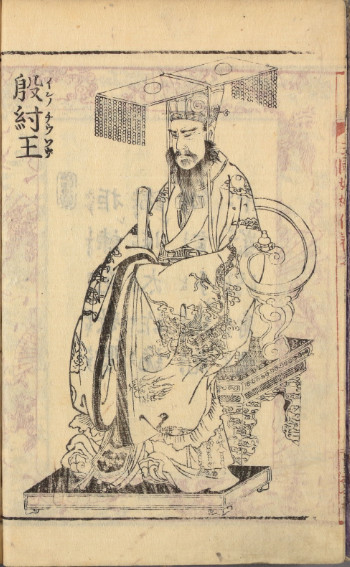
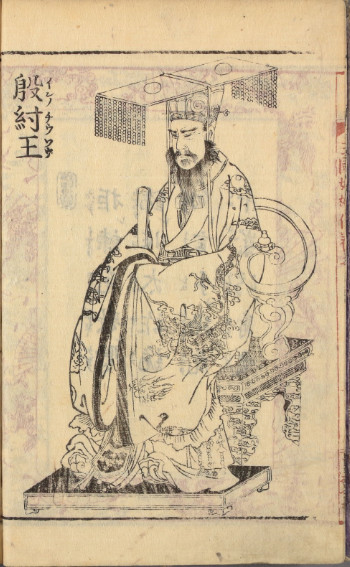
King Zhou was the 30th ruler of the Shang dynasty. He is commonly known as King Zhou, but he is also referred to as Di Xin.
Historical texts describe him as handsome, physically strong, skilled in both literary and military arts, and highly capable. At the same time, they also say he had a flaw: he tended to look down on his ministers and subordinates.
However, these descriptions were written by people of later eras. It is unclear how accurately they reflect the real situation during King Zhou’s lifetime.
What does seem to be true is that, during the late Shang period, executions and human sacrifices were used as warnings and displays of power toward other states. At the Yin Ruins, the archaeological site of the Shang capital, oracle bone inscriptions have been discovered. Some records from these inscriptions suggest that human sacrifice was stopped during the reign of Di Xin.
Also, no inscription about Daji, the woman traditionally blamed for corrupting King Zhou, has been found at the same site. For that reason, the idea that Daji caused his downfall remains doubtful from a historical point of view.
The Shang Was Not All of China
The Shang dynasty was not like the later Qin dynasty, which unified China. The Shang was the largest central power of its time, but many regional lords around it still held their own autonomy.
Around 1100 BCE, King Zhou was defeated by King Wu at the Battle of Muye and, according to traditional accounts, was executed. Depending on how one interprets the events, it is also possible to see this not simply as the fall of a wicked ruler, but as a successful rebellion by the forces connected to King Wen and King Wu.
In recent scholarship, one influential view is that the Shang-Zhou transition was not simply a case of the virtuous Zhou replacing a weakened Shang. Instead, the Zhou may have taken advantage of the Shang while its attention was focused too heavily on campaigns in the east. Oracle bone inscriptions excavated in Zhou territory reportedly show that the Zhou secretly sought cooperation with tribes located east of the Shang.
The power that destroyed the Shang came from the west. This was the faction of King Wen, King Wu, and the strategist Taigong Wang. Evidence like the oracle bone records suggests that, in order to overthrow the central power, the Zhou leadership was coordinating with surrounding groups.
Of course, if the Shang government had been perfect, perhaps no rebellion would have occurred. But in history, no government is perfect. The image of the Shang is often dominated by the idea of King Zhou as a tyrant, yet the dynasty lasted for about 600 years, longer than Japan’s Edo shogunate. It must have possessed significant authority and a developed civilization.
Still, the fact that it was eventually overthrown may suggest that King Zhou’s reported arrogance, especially his tendency to look down on others, damaged his ability to win the loyalty of those around him.
Was Confucius Descended from King Zhou’s Family?
According to one theory, after the Zhou dynasty was established, not all of King Zhou’s relatives were killed. His elder brother, Wei Zhongyan, was granted territory in Song, one of the states of the time.
There are different theories, but some say that Confucius was a descendant of Wei Zhongyan, King Zhou’s brother.
Confucius was the philosopher who founded Confucianism, a tradition that deeply influenced Japan as well as China and other parts of East Asia. He is often counted among the great sages of world history, alongside figures such as Christ.
If this lineage is true, it may slightly change the way we view King Zhou. He may not have been only the depraved tyrant of legend.
Because the oracle bone evidence is so ancient, it is difficult to uncover the full truth. Even so, future discoveries may continue to reshape the image of King Zhou, the Shang dynasty, and the dark legends that grew around them.
Japanese Language
封神演義では圧倒的な悪役として描かれる「殷王朝」において最後の王となった紂王ですが、実際の評価は現在見直されつつあります。一般的なイメージとしては、 「妲己に溺れて暴君として政治をした」「民を顧みない政治をしていた」「残虐な処刑を数多く行った」 というものが先行しがちです。しかし、史書に描かれている紂王の堕落などは、後世の周がその正当性をもたせる為に脚色したのではないか?という意見もあるのです。国が変革すると、新しい王朝はその正当性を主張する必要があります。
そういった意味でも 紂王という存在が本当に暴君であったかどうかは議論の分かれるところ です。ここでは、紂王が行ったとされる悪逆な行為や処刑など、当時の文化などをいくつか照らし合わせて出来る限り紂王について正確な考察をしてみようと思います。紂王はどんな人物であったのか。。画像引用元: 帝辛 。紂王は殷王朝の30代目の王であり、一般的には紂王という呼ばれ方をしていますが、帝辛という呼び方もあります。史書に残る紂王は、容姿端麗、文武両道であり、いずれにおいても優れた人物であったと言われていますが、欠点として臣下を見下す傾向にあったことも指摘されています。
しかし、これらの 史書に記述されている紂王の姿はあくまでも後世の人間が書いたものであり、当時の状況を正確に表わしているかどうかは不明 です。ただし、殷王朝そのものは約600年続いた歴史の中で後期の殷代においては処刑や人身御供などによって他の諸国への見せしめとしていた事は事実であったようです。中国には殷の首都が置かれていた場所に殷墟と呼ばれる遺構が発見されており、そこから発見された甲骨文には、 「帝辛の代で人身御供を辞めさせた」 という記録も出土しています。
また、同遺構から、紂王を堕落させたという妲己に関する記述が見つかっていないことから、妲己によって堕落したかというとそれも史実の側面としては疑問の残るところです。当時の殷は後の秦国とは違い、中国全土を統一していた訳ではありません。。あくまでも中央政権として一番大きかった国が殷であり、殷の周囲には各諸侯がそれぞれ自治権を持っていました。紂王はおよそ紀元前1100年前後に武王によって牧野の戦いで敗北し、処刑されますが、見方によっては 文王による反乱が成功しただけという可能性も充分にある のです。
というのも殷周革命は一概に衰えた殷に周が変わっただけの革命ではなかったという説もあるからです。殷周革命は周が衰えた殷に取って変わったというよりは、東方の経略に注意が向きすぎていた殷の隙を突いて滅ぼしたとする説が最近では有力視されている。周の地で出土した 甲骨文 の記述によると周が密かに殷の東方に位置する部族へ連携を申し込んだ記述が認められる。。引用元: 帝辛 殷周革命 。殷の国を滅ぼしたのは当時、殷の西側にあった勢力でした。これが文王、武王や軍師太公望の勢力であった訳ですが、上記のような証拠から中央政権を打倒するために少なくとも 文王や武王は周囲の勢力と連携していたこと も分かります。
もちろん、最大勢力であった殷が完璧な政権であれば反乱は起きなかったかもしれませんが、歴史上完璧な政権というものは存在していません。殷という存在を見ると、どうしても暴君紂王の印象が強いですが、実際には江戸幕府よりも長く続いた王朝ですから、それなりの権威と文明は持っていたと考えられます。ただし、最終的には反乱を起こされたという点では史書にあるように他者を見下しやすい性格なども災いして、周囲の人心掌握は出来ていなかったのかもしれませんね。孔子の先祖は紂王の系譜だった?
。一説によると、周の成立した後、紂王の一族は全てが殺害された訳ではなく、兄の 微仲衍(びちゅうえん) という人物は当時の国の1つであった宋という地に封じられます。諸説はあるようですが、この紂王の兄である 微仲衍の子孫が孔子になった とも言われています。孔子と言えば日本にも影響を与えた儒教の始祖である哲学者であり、キリストなどと並べられる四聖人の1人にも数えられる人物です。もしもこの系譜が真実であれば、 紂王は単なる暴君で放蕩者であったという評価も変わってくる のかもしれません。
甲骨文による証拠は時代が古すぎるために全てを明らかにすることは難しいと思われますが、今後も何か新しい発見などがあっても不思議ではありません