
English Version
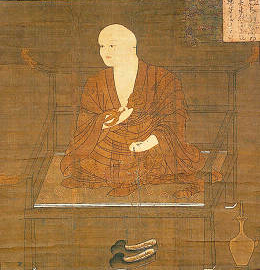
Prince Shotoku is probably one of the historical figures many people in Japan studied intensively during compulsory education. In recent years, however, new discoveries and changing interpretations have made the Prince Shotoku people learned about in the past look a little different. Some even argue that the legendary figure may not have existed in the way he was once presented.
At the same time, it would be strange for a completely fictional person to appear on Japanese banknotes, which usually feature major historical figures. Prince Shotoku remains a huge name in Japanese history, but also one surrounded by mystery. So who was he, and why was he chosen for money in the first place?
The Name “Prince Shotoku”
First, “Prince Shotoku” was not the name he used during his lifetime. It was a later name that helped spread his reputation to future generations. His formal name is generally given as Prince Umayado, also read as Umayado no Oji or Umayado no Miko.
He is said to have been born on February 7, 574. In simple terms, he was a major political figure of the Asuka period. He was born to Prince Tachibana no Toyohi and Princess Anahobe no Hashihito, in what is described as a marriage between half-siblings.
Many achievements have been associated with him, including the Twelve-Level Cap and Rank System, the Seventeen-Article Constitution, and the dispatch of envoys to China. The Seventeen-Article Constitution in particular contains ideas that can still feel relevant today, suggesting that he was remembered as an extraordinary talent far ahead of his time.
Among the most famous legends about Prince Shotoku is the story that he could listen to ten people speaking at the same time. This tale is still widely known across generations in Japan, and it helped give him an almost superhuman image.
However, another interpretation says that he actually listened to ten people one by one and gave each of them accurate advice. If that is the case, the story may have grown larger over time as rumors and admiration were added to it.
The Old 10,000-Yen Bill
The current 10,000-yen bill is famous for featuring Fukuzawa Yukichi, known for “An Encouragement of Learning.” From 2024, the design changes to Shibusawa Eiichi, one of Japan’s most important modern business leaders. In Japan, banknotes are typically reserved for people who made major contributions to the country.
Before Fukuzawa Yukichi, the 10,000-yen bill featured Prince Shotoku. That bill was first issued on December 1, 1958, and its issue was stopped on January 4, 1986.
The reason he was chosen is likely easy to understand: he was credited with achievements such as the Twelve-Level Cap and Rank System and the Seventeen-Article Constitution, and was seen as someone who greatly contributed to Japanese politics.
Today, however, historical interpretations have changed. If Japan were to choose Prince Shotoku for a new banknote now, it might lead to a heated debate.
Why Do Some Say He “Didn’t Exist”?
The main question is why some people say Prince Shotoku did not exist. Put simply, the reason is that Prince Umayado and the later image of Prince Shotoku do not always match.
If Prince Shotoku and Prince Umayado were exactly the same person in the way tradition presents them, historical documents would be expected to treat them that way. But the records do not always do so. It is also now said that Prince Umayado alone did not establish systems such as the Twelve-Level Cap and Rank System.
This is the major difference. The likely conclusion is not necessarily that there was no Prince Umayado, but that the figure later called Prince Shotoku may have been heavily exaggerated.
The Twelve-Level Cap and Rank System also had precedents in China by that time, and it is understood that the dispatch of envoys to China was not something Prince Shotoku began entirely on his own.
So why did the figure of Prince Shotoku emerge? One theory is that after Prince Umayado’s death, fierce struggles over imperial succession took place. Emperor Tenmu may have emphasized Prince Umayado as “Prince Shotoku” in order to strengthen his own legitimacy by connecting himself to a brilliant bloodline.
If that theory is correct, then Prince Shotoku, as a near-mythic figure, may have been shaped in part to support political authority.
The Disappearing Prince Shotoku
In school textbooks, the name Prince Umayado is already being used more often. In the future, “Prince Shotoku” may still appear in footnotes, but it may become less common as the main name.
Textbooks cannot knowingly present history in a misleading way, so this change is understandable. Still, for many people who grew up learning about Prince Shotoku, it can feel a little sad.
Even if Prince Umayado was not exactly the superhuman figure of legend, he is still understood to have been an extremely talented and important historical person. Over time, his story may be passed down more directly, without as much distortion from later legend.
Japanese Language
恐らく義務教育の中で集中的に学んだ人物での 1 人であろうと思われる聖徳太子ですが、近年では新たな発見があり過去に学んだ聖徳太子とは違いがあるそうです。また中には存在しなかったという声も上がっています。しかし架空の人物であるのに歴史的な偉人しか採用されない紙幣のデザインに採用されたのはおかしいです。ビッグネームでありながらまだまだ謎の多い聖徳太子。。本記事では何者だったのか・なぜデザインに適用されたかなどを紹介します。聖徳太子。まず聖徳太子という名前は後世へ広めるために付けられた名前で、実際は厩戸皇子(うまやどのおうじ・みこ)という名前が正式名称となります。
574 年 2 月 7 日に生まれ、簡単にまとめると飛鳥時代に政治面で活躍をした偉人ですね。橘豊日皇子と穴穂部間人皇女の間に生まれ異母の兄弟婚であったとされています。「冠位十二階」「憲法十七条」「遣唐使派遣」など実に多くの功績を残しており、憲法十七条に至っては今なお通用する考え方でありますので当時では考えられないほどの秀才であったことがわかります。また聖徳太子の伝説の中でも 「 10 人の話を同時に聞いた」 という逸話は老若男女問わず未だに語り継がれる伝説であり、人間離れした超人的な人物であったことがうかがえます。
しかし実際は 10 人の話を 1 人ずつ聞いて、的確なアドバイスを出し続けたという説がありますので噂におひれがついてしまったのかなと思います。旧一万円札。現在の一万円札のモデルは学問のすゝめで有名な「福澤諭吉」であり、 2024 年からは日本を代表する実業家であった「渋沢栄一」がモデルになるなど日本において多大なる貢献をしてきた偉人達が紙幣に適用されています。そして私たちが使用している福沢諭吉の前のモデルが聖徳太子であり、 1958 年 12 月 1 日に発行が開始され 1986 年 1 月 4 日に停止をされました。
モデルとなった理由は既にお気づきかもしれませんが、 冠位十二階や憲法十七条などの偉業を成し遂げたからであり日本の政治に多大なる貢献をしたから と言われています。しかし現在では歴史が変更されていますので、多くが解明された今紙幣を聖徳太子にするとなると熱い議論が交わされてしまうかもしれませんね。何故存在しない?。。では本題のなぜ存在しないのか?ということですが、簡単に説明しますと厩戸皇子と聖徳太子では似ても似つかない部分があるからです。聖徳太子と廄戸皇子が同一人物であるのならば文献にも同様の扱いがされていなければいけませんが、実際はそう書かれておらず廄戸皇子1人が冠位十二階などを定めたわけではないとされています。
。ここが一番の相違点であり、同一人物ではあるが誇張されて書かれていたという真実にたどり着く場所。また冠位十二階は当時既に中国で発明されており、遣唐使の派遣は聖徳太子が初めではないこともわかっています。。ではなぜ聖徳太子が生まれたかというと、厩戸皇子没後は激しい皇位継承憲法争いが起こり天武天皇が自らの優秀さを裏付けるために血筋である厩戸皇子を聖徳太子として公言したためと推測されました。上記が正しければ天武天皇が幅を利かせるために作り上げた人物でまかり通りますので、的を得ているかなと思います。
消えゆく聖徳太子。教科書ではすでに厩戸皇子という名前が使用されるようになっており、後々脚注では紹介されても大々的に聖徳太子と呼ばれることは少なくなると思われます。教科書は嘘を書いてはいけませんので当然の措置かと思いますが、残念に感じてしまう気持ちとあります。しかし聖徳太子ほどではなくとも厩戸皇子も非常に優秀な偉人であることがわかっていますので、後世には事実のねじ曲げがなくストレートに伝わっていくでしょう