English Version
Hyakki Yagyo, often translated as the “Night Parade of One Hundred Demons,” has appeared as a motif in countless manga, anime, and works of yokai art. Even people who do not know the exact meaning may recognize the name. Its history is long, but the phrase itself still feels surprisingly familiar today.
What is less widely known is that Hyakki Yagyo was once feared as a procession of beings that could bring death, and that many picture scrolls and written accounts of it have survived. The more you learn about these yokai, the stranger and more fascinating they become.
Were they yokai that invited death?
The name Hyakki Yagyo appears in many old texts and illustrated scrolls, including the Heian-period collection Konjaku Monogatari and the Muromachi-period Hyakki Yagyo Emaki, a picture scroll whose artist is unknown. Across different eras, it echoed through tales, records, and legends.
In the Heian period especially, there was a rumor that anyone who encountered Hyakki Yagyo could be driven to death. To avoid an accidental encounter, people were said to avoid going outside during the Hour of the Ox, the deep late-night period when the procession was believed to appear.
Some old sources, including the mid-Heian text Kuchizusami and the medieval Shugaisho, even list specific days when Hyakki Yagyo was believed to appear:
- January and February: Days of the Rat
- March and April: Days of the Horse
- May and June: Days of the Snake
- July and August: Days of the Dog
- September and October: Days of the Sheep
- November and December: Days of the Dragon
What is curious is that these are exact dates based on the zodiac cycle, not obvious signs like a full moon, a storm, or some other unusual natural event. Personally, it makes me wonder whether there were events on those days that people did not want widely known. That is only one interpretation, of course.
Escaping with spells and sutras
Several tales describe unlucky people who encountered Hyakki Yagyo. In many of them, the survivors did not simply run away. They chanted a spell, recited a Buddhist sutra, or took some other protective action.
One especially famous spell appears in Shugaisho:
“Katashihaya, ekasenikurini, tamerusake, teehi, ashiehi, wareshikonikeri.”
It was believed that reciting this phrase could prevent harm. The words are said to include meanings related to being drunk on sake, but it is not clear whether the idea was to pretend to be intoxicated and deceive the supernatural beings.
A procession of oni
Today, partly because of popular works such as Nurarihyon no Mago, many people imagine Hyakki Yagyo as a crowd made up of many different kinds of yokai. However, in Uji Shui Monogatari, an encounter with one hundred oni is described as “meeting Hyakki Yagyo.” In other words, it was not always imagined as a mixed parade of many yokai species.
The historical tale Okagami also preserves a story about Fujiwara no Morosuke, a court noble and poet of the Heian period. According to the tale, he encountered a procession of people who had died bearing grudges against the Fujiwara clan, including Soga no Iruka, Soga no Umako, Soga no Kurayamada Ishikawa no Maro, Prince Yamashiro no Oe, Prince Otsu, and Princess Yamanobe.
Morosuke was said to have escaped unharmed by reciting the Sonsho Butcho Dharani. Since some versions of Hyakki Yagyo include ghosts as well as yokai or oni, the form of the procession seems to change depending on the story. It may have helped keep the tales from becoming too predictable.
Yokai that appear in Hyakki Yagyo
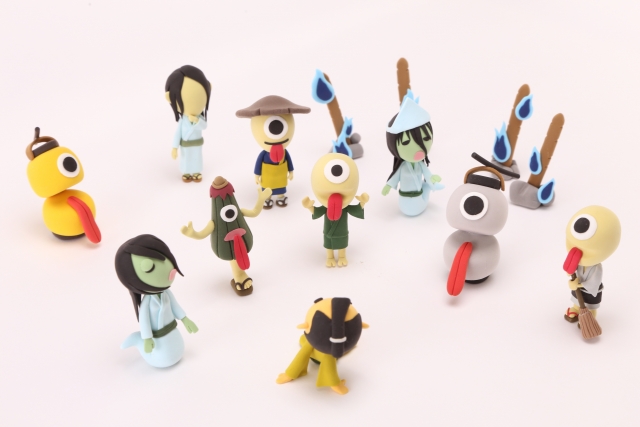
Because there are many different scrolls and texts connected to Hyakki Yagyo, there is no single fixed cast of yokai. Still, certain names appear often or are strongly associated with the tradition, including:
- Azuki-arai
- Akaname
- Kappa
- Tengu
- Nekomata
- Kamaitachi
- Nurarihyon
- Ushi-oni
There are many others, including obscure yokai that most people have never heard of. If privately owned picture scrolls are included, the number of variations may be too large to memorize.
As mentioned above, Hyakki Yagyo can also appear as a march of oni or even as a procession of vengeful dead. Rather than one fixed legend, it may be better to think of it as a supernatural tradition with many shifting forms.
Japanese Language
種多様な妖怪が描かれており、様々な漫画やアニメのモチーフにもされてきた 百鬼夜行 。(ひゃっきやこう・ひゃっきやぎょう) 。具体的な意味は知らずとも、百鬼夜行という名前はご存知の方が多く歴史は長いですが言葉だけでみると意外と身近な存在となっています。しかし百鬼夜行が「死を招く妖怪」たちとして恐れられていたことや、「多くの絵巻物」があることを知っている方は少ないのではと思い今回執筆に至りました。知れば知るほど面白い妖怪たち。本記事では 百鬼夜行 について紹介していきます。
死を招く妖怪たち?。百鬼夜行は実に多くの文献や絵巻物で名前が出てきており、平安時代に書かれた「今昔物語集:こんじゃくものがたり」や室町時代に描かれた作者不明である「百鬼夜行絵巻」など幅広い年代に説話などで名を響かせていました。とくに平安時代では「百鬼夜行に出会うと死に追いやられる」という噂が広がり、間違って遭遇してしまわないように出現するとされた丑三つ時には外出をしないように心がけていたようです。ちなみに 平安時代中期の「口遊」や中性の「拾芥抄」には百鬼夜行が出現する日程 が書かれており。
1 月・ 2 月:子(ね)日。3 月・ 4 月:午(うま)日。5 月・ 6 月:巳(み)。7 月・ 8 月:戌(いぬ)。9 月・ 10 月:未(ひつじ)。11 月・ 12 月:辰(たつ)。であるとされています。しかし満月の日や嵐の前など環境的に特別な事象がないのにも関わらず、正確な日を指定しているのはその日に起きる出来事をできるだけ大衆に知られたくなかったのではないかと感じますね。(個人の見解です)。呪文やお経で難を逃れた。百鬼夜行に運悪く出くわしてしまう説話がいくつかあるのですが、助かった人達は必ず呪文やお経を唱えるなど何らかの行動をとっており難を逃れていたそうです。
とくに有名な呪文に「拾芥抄」で書かれていた 「カタシハヤ、エカセニクリニ、タメルサケ、テエヒ、アシエヒ、ワレシコニケリ」 があり、唱えることによって被害が及ばないと考えられていたとのこと。上記の呪文には酒に酔ったなどの意味が含まれているそうですが、素面でないことを装ってごまかそうとしたのかどうかはハッキリしておりません。鬼が練り歩く百鬼夜行。。現代の百鬼夜行というと漫画作品である「ぬらりひょんの孫」などが有名になったため、百鬼夜行=様々な妖怪の群れという見解が一般的になりましたが、「宇治拾遺物語」では 100 の鬼たちに遭遇したことを「百鬼夜行にあふ事」として書かれておりますので必ずしも様々な妖怪というわけではないようです。
また大鏡には平安時代時代に活躍した公卿・歌人である藤原師輔が。・蘇我入鹿。・蘇我馬子。・蘇我倉山田石川麻呂。・山背大兄王。・大津皇子。・山辺皇女。などの藤原氏を恨んで死んでいった者たちの行列に遭遇し、尊勝仏頂陀羅尼を唱えたことにより事なきを得たという説話が残っています。百鬼夜行には幽霊も載っているケースがありますので、説話としてマンネリ化しないように味変をしているのかなと感じますね。登場妖怪。百鬼夜行に関する絵巻物や文献には多くの種類があるため、決まった妖怪がいるわけではありませんが多く共通する妖怪たちがいますので一部紹介します。
・小豆洗い。・あかなめ。・河童。・天狗。・猫又。・かまいたち。・ぬらりひょん。・牛鬼。上記以外にも全く聞いたことのない妖怪たちが多く存在しており、個人で所蔵している絵巻物などを含めますと覚えきれないほどの種類が存在していることでしょう。また先ほども紹介したように鬼の群れや恨みを持った者たちなどの百鬼夜行もありますので、様々な形があるのだなと理解していただけると幸いです