English Version
Occult fans often turn out to be movie lovers, too. And asking whether you have ever seen a movie may be almost pointless today. Films are everywhere: on smartphones, in theaters, on TV, and across countless streaming services. They are one of the defining forms of modern entertainment.
Many accounts trace the beginning of cinema to Thomas Edison and the Kinetoscope Parlor, often described as one of the world’s first movie-viewing venues. But the story is not that simple. Around the same era, a French inventor named Louis Le Prince had already developed a device capable of recording moving images. Later legal disputes over rights and patents also challenged the idea that Edison alone created motion-picture technology.
In recent years, some have argued that Louis Le Prince, not Edison, deserves the title “father of film.” His life, however, ended in one of the strangest disappearances in the history of invention.
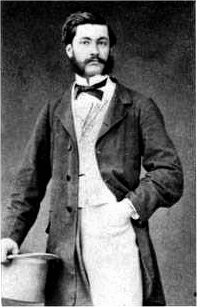
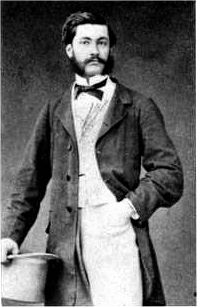
Louis Le Prince, the First Motion-Picture Pioneer
Louis Le Prince was born in France in 1841 and spent much of his working life in Britain and the United States. He is remembered not only as an inventor, but also as a scientist and engineer. In 1866, he found work in Leeds, England, where he later married. After that, he moved to New York and devoted himself to finding a way to photograph moving images.
At the time, photography itself was already established, but the idea of “motion pictures” did not yet exist in any practical sense. Le Prince was trying to use camera technology to capture photographs that moved.
Other major names in early film history, including the Lumière brothers in France and Thomas Edison in the United States, were also working on motion-picture technology during this period. But among these famous figures, Le Prince appears to have made a major breakthrough first. In 1888, he completed a single-lens camera and used it to film moving images in Leeds.
That footage is often described as the world’s first motion picture. In 1888, neither the Lumière brothers nor Edison had yet succeeded in the same way. Le Prince seemed poised for lasting fame.
But his achievement did not reach the wider world during his lifetime.
The Disappearance on the Train to Paris
In September 1890, Le Prince boarded a train from Dijon, France, bound for Paris. He was preparing to present his new motion-picture technology to the world. According to the story, he planned to secure patents not only in France but also eventually in the United States, and to hold public screenings of his invention.
But when the train arrived in Paris, Le Prince was gone. Not only had he disappeared, but his luggage had vanished as well.
His brother reportedly saw him board the train in Dijon. If that account is accurate, Le Prince disappeared somewhere between Dijon and Paris.
Why would a man who had invented what may have been the first motion-picture camera vanish at the very moment his years of work were about to pay off? There was no obvious reason for him to disappear voluntarily. Because of that, many theories have formed around the case.
Theory: Financial Trouble
One of the earliest explanations focused on money. Some accounts claimed that Le Prince was close to bankruptcy, suggesting that financial pressure may have driven him to disappear.
The details are unclear, and this theory has always had weaknesses. Le Prince was reportedly planning patent applications and demonstrations in America, which makes it difficult to believe he had no future prospects at all. If his invention was about to be recognized internationally, vanishing at that moment seems hard to explain.
Theory: Scandal and Suicide
Another theory claims that Le Prince’s family discovered he was homosexual, and that this, combined with financial trouble, led him to take his own life.
There is no solid evidence that Le Prince was homosexual, and even if such a rumor existed, it does not fully explain the timing of his disappearance. He was on the edge of presenting a landmark invention.
The suicide theory also raises practical questions. For it to fit the known story, Le Prince would have had to leave the train somewhere between Dijon and Paris with all of his luggage. Trains in the late 19th century were not secured in the way modern trains are, so this may not have been impossible. Still, if he had jumped or fallen from the train, one might expect a body or belongings to have been found later.
In fact, after Le Prince failed to appear, his family, French police, and Scotland Yard reportedly conducted extensive searches. No trace of him was found along the railway.
Theory: A Conspiracy
The most dramatic theories claim that someone abducted or killed Le Prince to prevent him from patenting motion-picture technology.
Some versions of this theory even mention Edison. Notably, one source for suspicion toward Edison was Le Prince’s own wife. Still, this remains speculation, not proven fact.
Other film historians have suggested a different possibility: that Le Prince may have been killed by his brother over financial issues and may never have boarded the train to Paris at all. Under this theory, he died after arriving in Dijon, and his body was hidden.
This version has attracted attention because the evidence for Le Prince’s final departure from Dijon seems to rest mainly on his brother’s testimony.
The Final Known Movements
Some records survive regarding Le Prince’s movements shortly before he vanished. Before his disappearance, he had traveled in the United States to promote the camera he had invented. His invention was reportedly well received, and he had begun to gain recognition as an inventor.
He was also planning to apply for a patent in Britain. Before returning there, he stopped in France to visit his brother and friends.
He stayed in Bourges until September 13, then traveled to Dijon. He is said to have left Dijon for Paris on September 16. But the only direct support for that final departure appears to have been the statement of his brother, who lived in Dijon. The usual account is that Le Prince then headed to Paris to meet a friend.
After that, he vanished from history.
What Happened After Le Prince Disappeared?
After Le Prince’s disappearance, his family became involved in legal battles over patents connected to Edison and motion-picture technology.
Le Prince had a wife and son, and in 1898 his son Adolphe was called as a witness in litigation involving Edison. At first, the case favored Edison, and in 1901 Edison won an initial victory.
Adolphe had assisted his father with experiments many times. He repeatedly argued that Le Prince had completed motion-picture technology before Edison.
Then, in 1902, Adolphe himself was found dead from a gunshot wound while out duck hunting.
That same year, the court reportedly reversed the earlier position and recognized that motion-picture technology was not Edison’s invention alone. But by the time that decision came, Adolphe was already dead.
Father and son had both met tragic ends: one through disappearance, the other through a suspicious death.
Where Did Louis Le Prince Go?
In 2003, researchers reportedly found a photograph in Paris police records from 1890 showing the body of a drowned man who resembled Louis Le Prince. However, it has never been definitively proven to be him.
Behind one of the world’s great entertainment inventions lies a shadowy story: Louis Le Prince, the missing pioneer of motion pictures, and his son Adolphe, who died during the later legal fight over the technology.
The birth of cinema may look glamorous from the outside, but the mystery of Le Prince suggests that even the greatest inventions can leave behind dark and unanswered questions.
Japanese Language
オカルト好きな人であれば意外と映画が好きだったりして…。。皆さんは映画を見たことがあるでしょうか?…っというのはほぼ愚問かも知れません。今やスマホからでも映画を見ることは出来ますし、映画館はもちろん、地上波やたくさんの場所で楽しむことが出来る、 娯楽の代表の1つ と言っても良いでしょう。「映画」というエンターテイメントの始まり は、かのエジソンが作った 世界初の映画館と呼ばれる「キネト・スコープパーラー」 だとする説が多いですが、実は同年代のフランス人であったルイ・ル・プランスという人物によって、”動く写真”の撮影機は完成されており、エジソンが1人で作ったものではないことも、後に権利を主張し合った裁判などで判決が出ています。
近年では、この 「ルイ・ル・プランスこそが映画の父である」 という説があるのですが、今回は彼にまつわる不思議なお話を紹介します。世界初の動画撮影者 ルイ・ル・プランス。。画像引用元: ルイ・ル・プランス 。1841年にフランスに生まれたル・プランスは、主にイギリスとアメリカで活動した人物でした。発明家はもちろんですが、科学者や技術者としても活動していたと言われており、1866年にイギリスのリーズで職を得て結婚。その後はニューヨークへ移ると、動く写真の撮影方法模索に没頭していたそうです。
すでにカメラの技術は確立されていたものの、「動画」という概念がなかった時代ですから、カメラを使って”動く写真を撮る”という研究をしていた訳ですね。同じく映画の父として名高いフランスのリュミエール兄弟や、偉大な発明家であるトーマス・エジソンも、この時期に動画撮影方法についての発明をしていた と言われています。しかし、そんな有名な人々の中において、 ル・プランスは1888年にいち早く単レンズ型カメラを完成させることに成功 。この1888年に完成された技術と機械を使ってル・プランスはイギリスのリーズで動画を撮影しました。
この動画こそが世界初の映画 だと言われています。この動画が撮影された、1888年には、リュミエール兄弟やエジソンも動画撮影には成功しておらず、ル・プランスの名声はほぼ確実なものとなる予定だったのです。しかし、当時、彼の功績は世に出ることはありませんでした。。ル・プランスの失踪と謎。。1890年の9月、フランスのディジョンという場所から、ル・プランスはパリ行きの列車に乗ります。映画という新しい技術と、これを世界的に発表するために母国フランスはもちろん、最終的にはアメリカでの特許取得や試写発表会まで計画していたそうです。
。しかしル・プランスの乗った列車がパリに着いたとき、ル・プランス本人はおろか、荷物なども全て消え去っていたのです。。ディジョンで列車に乗る所までは、ル・プランスの兄弟が見届けていたことから、彼はディジョン駅からパリの駅までの間に忽然と姿を消してしまったということになります。世界初の映画撮影技術を発明した彼が、どうして行方不明になったのか?。通常の考えでは、彼が消える理由はないですし、むしろこれからが彼の苦労が報われる筈だったからです。この謎多きル・プランス失踪の原因については複数の説が唱えられています。
。金銭的に追い込まれたという説。当時、最初に取り上げられた原因は「破産寸前」と言われていたル・プランスの金銭事情でした。詳細な理由までは不明ですが、一部の説ではル・プランスは金銭的に非常に追い込まれていたと言われています。しかし、これはアメリカでの特許取得まで計画していた背景を考えると妥当ではないでしょう。同性愛者・自殺説。上記の金銭的なトラブルに加えて、彼が同性愛者だったことが家族に発覚したという説も唱えられています。当時の同性愛者がどれほどのマイノリティーであったかは不明ですが、それを加味しても世紀の発明を考えると、腑に落ちない点の方が勝るでしょう。
そもそも、ル・プランスが同性愛者だったという証拠も一切ありません。また、自殺という説もありますが、状況から考えるとディジョン駅からパリまでの間に全ての荷物を持って列車から飛び降りる以外に方法はありません。当時の列車は現在よりもセキュリティは甘かったと思いますが、流石にこれが真実であれば後に家族などが捜索願いを出して遺体などが発見される確率の方が高いのではないでしょうか?。実際に姿を見せなかったル・プランスを案じて家族やフランス警察、スコットランドヤードが徹底的な捜索をおこなったものの、ル・プランスは線路周辺では発見されなかったそうです。
陰謀説。陰謀説にはいくつかありますが、全ての目的はル・プランスに映画撮影技術の特許取得をさせないために、何者かによって拉致された、もしくは殺害されたという説です。この陰謀説の中にはエジソンの名前を挙げる論者もいますが、この情報発信元はなんとル・プランスの妻でした。他にも後年の映画史研究家の説によれば、ル・プランス金銭問題で兄弟によって殺害されており、そもそもディジョン駅からパリに向かっていないというものもあります。つまり、ディジョンへ着いた後に死亡し、遺体は隠されたという説です。
個人的には、この説は比較的信ぴょう性も感じます。。失踪直前のル・プランスの足取りに関してはある程度の記録が残っています。ル・プランスは失踪の前にアメリカで自分の発明したカメラを宣伝する旅行をしており、その評判は上々、発明家としても名前が知れていました。。さらにイギリスでも同カメラの特許申請を予定しており、イギリスに戻る前に、兄弟と友人達に会うためにフランスに立ち寄ったそうです。フランスでは9月13日までブールジュに滞在、そこからディジョンに向かっています。
そして9月16日にディジョンからパリに発ったと言われていますが、 この情報を裏付けるものはル・プランスの兄弟の目撃証言のみ でした。兄弟はディジョンに住んでおり、パリには友人に会いに行った。というのがル・プランス失踪前に一連の行動だとされています。ル・プランス失踪後の動き。。ル・プランスが失踪した後、前述の通りル・プランスの家族エジソンと特許に関する法廷での争いを始めます。ル・プランスには妻と息子がいたため、 1898年にエジソンとの訴訟において息子のアドルフが証人 として法廷に呼ばれています。
このとき、 最初に裁判を有利に進めたのはエジソンであり、1901年には一度エジソンが勝訴 しました。息子のアドルフは父、ル・プランスの実験に何度も協力していたため 「エジソンよりも早く映画撮影技術を完成させた」 と繰り返し主張していたそうです。そして、1902年、 息子のアドルフも鴨撃ちに出掛けた際に銃殺遺体で発見される 事態になりました。同年、裁判所は当初の判決を覆し、エジソン単独で映画を完成させたという判決から、撮影技術がエジソン単独の発明ではないことを認める判決を出したとのこと。
しかし、この判決が出る前に息子のアドルフは亡くなってしまっていたため、親子続いて行方不明、怪死するという不幸な結末を迎えることになります。ル・プランスは一体どこへ消えたのか?。2003年になって、1890年当時のパリ警察の記録からル・プランスに似た溺死体の写真が発見されたとのことですが、本人かどうかは断定されていないそうです。映画という娯楽発明の裏で、消息不明になったル・プランス、そして裁判中に怪死した息子のアドルフ。世紀の発明には、様々な裏側があるのだと感じられる出来事ではないでしょうか?