English Version
You know the Mona Lisa. You know The Last Supper. But what exactly makes Leonardo da Vinci so extraordinary?
A lot of people feel that way. Painting can seem intimidating, as if you need a mountain of art history knowledge before you are allowed to enjoy it. But missing the appeal of a painting just because it feels “too difficult” is a real shame.
So if you have ever wondered, “What is so amazing about da Vinci?” here is a simple guide to the power of his paintings, through three of his most famous works.
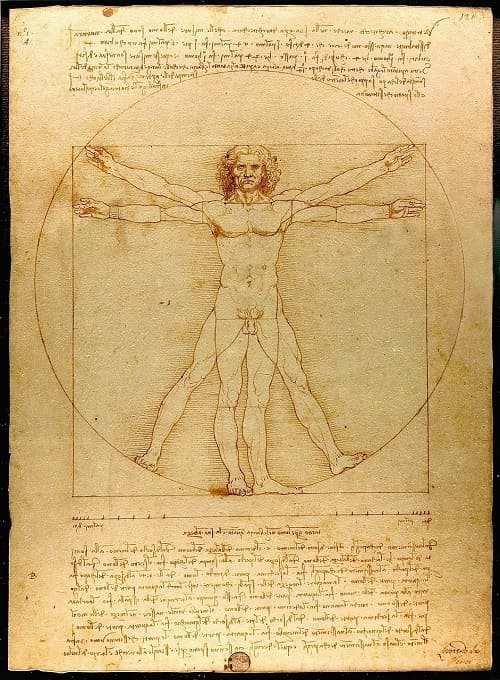
The Vitruvian Man: Da Vinci’s Obsession With the Human Body
Leonardo da Vinci was deeply interested in the structure of the human body.
You might think, “Why would a painter care so much about anatomy?” But if an artist tries to draw a person without understanding bones, muscles, skin, body parts, and balance, the result can easily look distorted or unnatural.
Da Vinci is said to have walked through town, spotted people who caught his attention, and followed them for hours, studying and sketching their expressions and bodies. It sounds like the line between genius and eccentricity was very thin—maybe even a little unsettling.
And the people who drew his eye were not always perfectly balanced or conventionally beautiful. According to stories about him, he was fascinated by people who were overweight, wrinkled, oddly shaped, or somehow full of strong individuality.
Da Vinci also studied anatomy in a way that went far beyond casual interest. He performed dissections himself and drew what he observed, developing a knowledge of the body that could rival doctors of his time.
There is a huge difference between studying anatomical diagrams and actually seeing, touching, and understanding the body directly. In da Vinci’s paintings, the realism comes from both close observation and anatomical experience. That is why a single painted figure can feel so alive, physical, and intense.
Leonardo da Vinci was an artist who tried to preserve a real, fleeting human movement forever inside a painting.
The Last Supper: A Painting Designed to Pull You In
One of da Vinci’s most famous works, The Last Supper, uses the viewer’s own perception to make the painted world feel almost like an experience.
The central figure of the painting is Jesus Christ. Even if you know nothing about the Bible, the scene, or Christianity, most viewers can still sense that the person in the middle is Christ.
That is not an accident.
The Last Supper is painted using one-point perspective, and the vanishing point is placed at Christ’s right temple. Because of that, the viewer’s eyes are naturally drawn toward his face.
The work was painted on the wall of a room that was once a dining hall, about two meters above the floor. When viewed from a certain position, the ceiling and walls inside the painting seem to connect with the actual ceiling and walls of the room.
The effect creates an illusion, as if the dining hall itself has become the setting of The Last Supper.
For Christians of the time, this must have created the powerful sensation of sharing a table with Jesus Christ. Da Vinci was not only a painter; he was also skilled at staging and spectacle, an entertainer who knew how to impress nobles.
In other words, da Vinci’s paintings are not simply things to look at. They can offer an experience that exists only through that specific work.
The Mona Lisa: The Search for Nature and Sfumato
Da Vinci is often called a “universal genius,” and he was interested in almost everything. Among his many obsessions, one of the most important was nature.
Why can birds fly? Why do leaves change color? How does water flow? Why is the moon bright at night?
Da Vinci paid close attention to small natural phenomena that most people see every day and rarely question. Through that lifelong pursuit of natural harmony and artistic expression, he developed the technique known as sfumato.
Sfumato is a painting technique that uses transparent layers of color to create depth, volume, and form. It is especially associated with extremely subtle transitions between colors, so delicate that the shift is almost impossible to identify.
For most of us, that definition may still sound abstract. The easiest way to understand it is to look at the Mona Lisa.
If you tried to copy the Mona Lisa, you might begin by drawing outlines with a pen. But the Mona Lisa does not really have those clear outlines.
The mouth, eyes, and bridge of the nose blend smoothly into the surrounding skin. Even the edge of the face melts into the darkness of the hair, making the boundary difficult to pin down.
That is closer to how real human beings appear. Our bodies do not actually have black outlines around them, even though people often draw figures that way.
Because the Mona Lisa lacks hard outlines, it becomes easier to forget that she is only a figure inside a painting. Her skin seems soft. You can almost imagine her body heat.
The painting is incredibly realistic, but it is not a photograph. It is the result of da Vinci pushing the unique possibilities of painting as far as he could. That pursuit created the extraordinary realism of the Mona Lisa.
The Simple Appeal of Da Vinci’s Paintings
The charm of Leonardo da Vinci’s paintings is surprisingly simple: they are filled with the power of human presence.
Of course, knowing about da Vinci’s life, Christianity, and painting techniques can make the works even more enjoyable. But you do not need that knowledge to feel something.
Strength, beauty, movement, weight, presence—da Vinci’s paintings reveal the mysterious appeal of human beings in a way that words cannot fully explain.
If you ever feel as though one of his paintings is pulling you in, then you may already be under da Vinci’s spell.
Look at different works, trust what you feel, and enjoy the experience as it comes.
Japanese Language
『モナ・リザ』は知ってる。。『最後の晩餐』も知ってる。。でも、何が凄いか分からない。。こういう方、少なくないと思います。絵画ってものすごくハードルが高くて、なんかいろいろ知ってないと楽しめない感じ…。しかし、「なんとなく」で絵画の魅力を知らないのは、非常にもったいない!。「ダ・ヴィンチって何が凄い?」と興味を持ってくれた貴方には、せめて ダ・ヴィンチの絵画の魅力だけでもお伝えしたい。。以下から、誰もが知るレオナルド・ダ・ヴィンチの主要作品を取り上げ、。
作品の魅力 ダ・ヴィンチの凄さ などをご紹介していきます。『ウィトルウィウス的人体図』から見る、人体を知り尽くしたダ・ヴィンチのリアルで迫力ある人間。。レオナルド・ダ・ヴィンチは、 人体の構造 に非常に興味を持っていました。「画家なのに、人体?」。と思うかもしれませんが、人間の骨格・筋肉・皮膚・パーツ・バランス等を知らずに人間を描こうとすると、間違いなくいびつな人間になってしまいます。ダ・ヴィンチは、街を散歩しながら目に留まった人物を1日中尾行し続け、その表情や身体をデッサンしていたそうです。
天才と変態は紙一重というか、完全にアブナイ人ですね(笑)。しかも、芸術家ダ・ヴィンチが尾行していた人物は、均整のとれた美しい人ではなく 太っていたり顔がしわくちゃだったり、どこかイビツで「個性」を感じさせる人 だったといいます。 出典: Wikipedia「Codex Trivulzianus」 医師より人体に精通していた、解剖学者ダ・ヴィンチ。
またダ・ヴィンチは、自ら人間を解剖しその様子をデッサンするなど、 解剖学の知識も医師顔負け でした。人体解剖図を見て勉強するのと、自分で人体を見て触れて感じるのとでは、人間の描き方はまったく変わってきます。ダ・ヴィンチの絵画には、 人間観察と解剖学の知識・経験に基づくリアリティ があり、たった1枚の絵に生々しい迫力が宿っています。。 出典: Wikipedia「レオナルド・ダ・ヴィンチ」 人間の一瞬のリアルな動きを絵画に永久に残そうとした画家が、レオナルド・ダ・ヴィンチなのです。
『最後の晩餐』に見る、ダ・ヴィンチの計算し尽くされた絵画の技法。人間の錯覚を駆使して、絵画の世界を「体験」させてくれる作品が、レオナルド・ダ・ヴィンチの代表作『 最後の晩餐 』です。。この絵画の主人公は、イエス・キリストですよね。さて皆さん、この13人のうち誰がイエス・キリストか分かりますか?。このシーンのことも、聖書のことも、ましてキリストのことさえ一切知らなくても、。「 真ん中の人物が、イエス・キリストだ 」。ということが誰にでも無意識に分かる、あるいはそうだと予測できてしまいますよね。
これは 最後の晩餐が「一点透視図法」によって描かれており、その消失点がイエス・キリストの右こめかみに位置しているため、 誰もが自然とキリストの顔に注目してしまうのです。。 出典: Wikipedia「遠近法」 。消失点は赤い線が交わる部分。 『最後の晩餐』がもたらす体験。また最後の晩餐は、当時食堂だった部屋の壁の床から2mほど高い部分に描かれています。
ある位置から最後の晩餐を見ると、絵の天井と食堂の天井・壁がピッタリとつながり、 あたかもその食堂が最後の晩餐の舞台であるかのような錯覚 を感じさせてくれるのです。。当時のキリスト教徒たちは、イエス・キリストと一緒の食卓を囲むという「体験」ができたことでしょう。レオナルド・ダ・ヴィンチは舞台演出にも長けており、貴族を楽しませるエンターテイナーでもありました。このように、ダ・ヴィンチの絵画は見るだけでおしまいではありません。その絵画でしか得られない「体験」 さえも提供してくれるのです。
『モナ・リザ』に見る、自然を追求し続けた結果生まれたオリジナルの技法。「万能の天才」と呼ばれるダ・ヴィンチは、それこそ万物あらゆる物事に興味を持っていました。その中でも特に関心を持ち続けたものが「 自然 」です。鳥はなぜ空を飛べるのか?葉はなぜ色が変わるのか?水はどのように流れるのか?月はなぜ夜でも明るいのか?こうした日常でみかける自然のささいな現象に、ダ・ヴィンチは特に関心を示し続けていました。自然としての調和がとれていることと、絵画ならではの表現技法を追求し続けた結果、レオナルド・ダ・ヴィンチが開発した技法が「 スフマート 」と呼ばれる描き方です。
スフマート(イタリア語:Sfumato)は、深み、ボリュームや形状の認識を造り出すため、色彩の透明な層を上塗りする絵画の技法。特に、色彩の移り変わりが認識できない程に僅かな色の混合を指す。引用: Wikipedia「スフマート」 。普通の人からしたら、「なんのこっちゃわからん」って話ですよね。このスフマートを用いた代表作が、かの有名な『 モナ・リザ 』です。。たとえばあなたがモナ・リザを模写しようとした時、まずペンを使って輪郭を描いていきますよね。
モナ・リザには、この 「輪郭」が無い んです。口元や目元・鼻筋などが皮膚と滑らかに溶け合い、顔の輪郭さえも髪の暗さに混じり境界が曖昧になっています。 出典: Wikipedia「スフマート」 当たり前ですが、人間の身体に境界は無く、輪郭もありませんよね。しかし人間を描こうとすると、なぜか皆輪郭を描いてしまいます。モナ・リザにはこの輪郭が無く、絵の中の人物ということを忘れさせてくれるのです。
肌の柔らかさや体温まで感じられそうですよね。限りなく写実的でありながら写真ではなく、絵画ならではの技法を追い求めた結果 『モナ・リザ』という究極的なリアリティを感じる絵画が創られた のです。。ダ・ヴィンチの絵画の魅力は、とってもシンプル。レオナルド・ダ・ヴィンチが描く絵画には、私たち 「人間」の魅力 が詰まっています。。ダ・ヴィンチの生い立ちとか、キリスト教の知識とか、絵画の技法といった小ネタを知るほど楽しめることは否定しませんが、そんな知識は一切無くても良いんです。
人間の力強さ 美しさ 躍動感 存在感 などなど、 言葉では説明できない「人間」の魅力 を、ダ・ヴィンチの絵画からは特に感じることができます。絵画に吸い込まれそうになったら、もうアナタはダ・ヴィンチの虜!。いろんな作品を鑑賞して、感じるものをありのままに楽しんでください