English Version
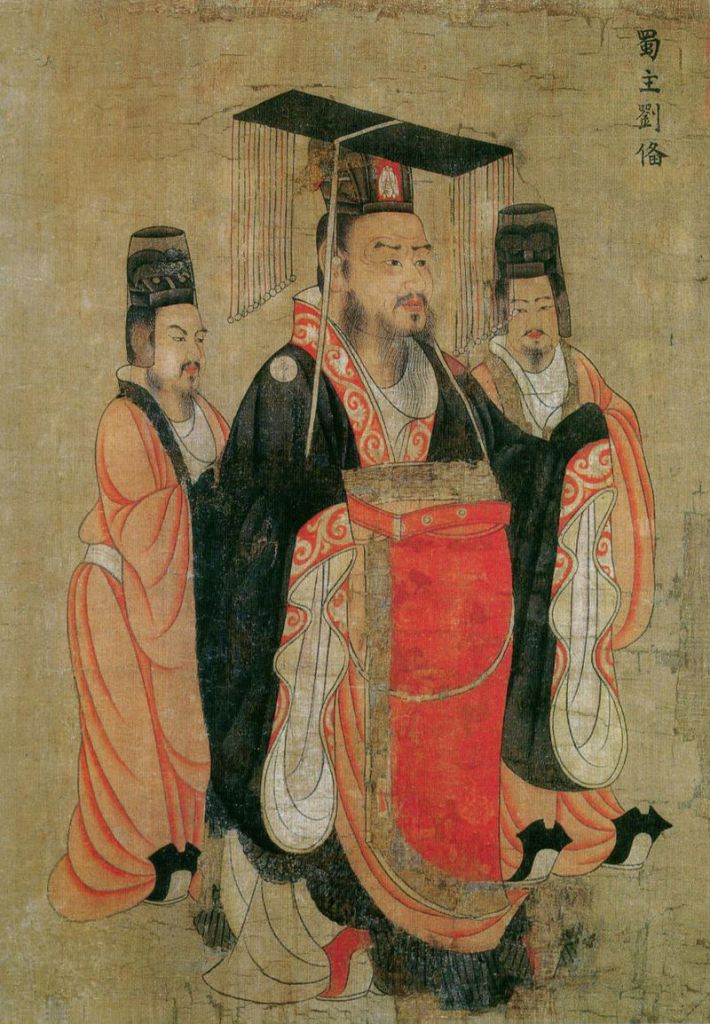
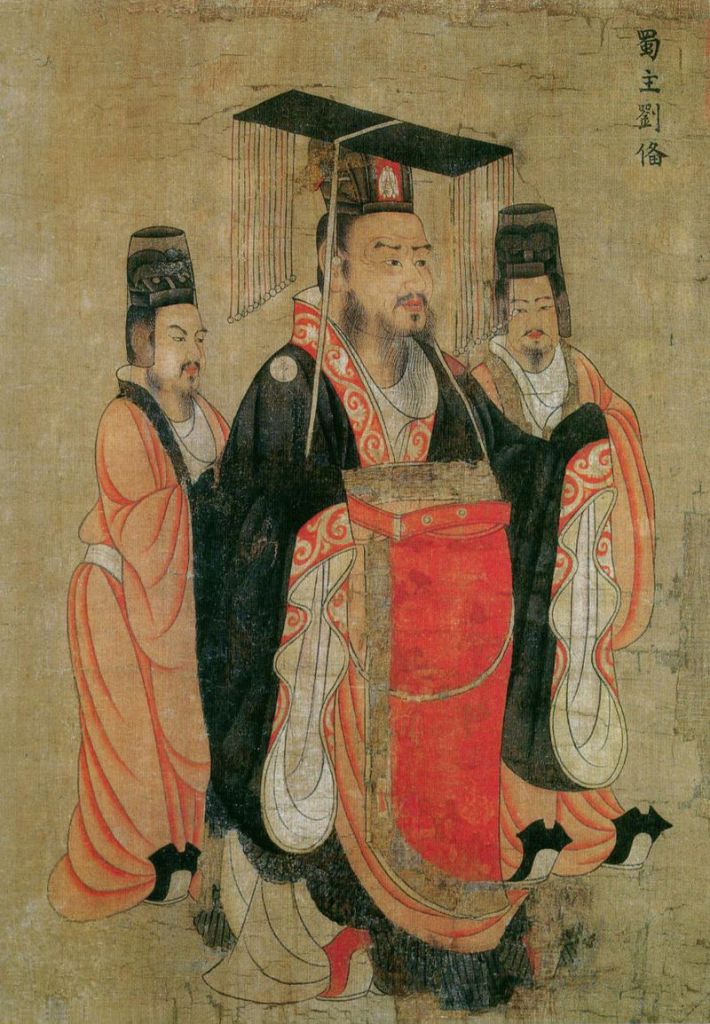
When people think of the heroes of the Three Kingdoms, many probably picture Liu Bei Xuande first: the emperor of Shu, a man of righteousness who rose up for the people.
In Romance of the Three Kingdoms, Liu Bei is often portrayed as the story’s moral center, almost a symbol of justice. Supported by the loyalty and admiration of later Shu generals, and eventually joined by Zhuge Liang Kongming, he rose to become one of the rulers in the famous three-way division of China among Wei, Wu, and Shu.
His background also adds to the drama. He was said to be descended from the Later Han imperial line, and his mission to restore the Han gave his life a powerful narrative. The image of a poor local notable selling woven mats before climbing all the way to the throne makes Liu Bei one of the most compelling figures in Three Kingdoms history.
But if we look at Liu Bei’s actions in the historical records, especially his youth and the period when he first raised a volunteer force, it becomes harder to describe him simply as a naturally gifted hero. This article takes a closer look at the less polished side of one of the Three Kingdoms’ most famous names.
Was Liu Bei the “big brother” of local troublemakers?
The common image of young Liu Bei is that of a man who endured hardship, then joined with Guan Yu and Zhang Fei during the Yellow Turban Rebellion to raise a volunteer army and win glory for the people.
That broad outline does appear in the historical Records of the Three Kingdoms. However, the “Biography of the Former Lord” also gives details about what Liu Bei was like at the time.
According to that account, Liu Bei began studying at around age 15 under Lu Zhi, a former administrator of Jiujiang Commandery and an elder from his home region. During this period, he met figures such as Gongsun Zan, who would later become one of the era’s notable warlords.
But Liu Bei was not especially fond of study or reading. Instead, he preferred hunting, music, and fashion. He also liked associating with men known as youxia or haoxia—wandering, rough-edged men of action who could be seen as something like local toughs or street rogues.
Guan Yu and Zhang Fei, his sworn brothers in later tradition, are also sometimes said to have come from this kind of background.
Even so, Liu Bei seems to have attracted people. He was said to be quiet, humble toward others, and careful not to show his emotions. Perhaps he had a talent for reading the room. Or perhaps, among the tough men of that era, this kind of restraint was exactly what made someone seem worthy of respect.
In any case, people gathered around him. When Liu Bei joined the fighting against the Yellow Turban rebels with men of this type, his force is said to have numbered only around 100 to 300 at first.
In that sense, the young Liu Bei may have looked less like a shining prince and more like the respected “older brother” of a large band of rough local men.
Liu Bei’s indecisive side
When we follow Liu Bei through historical accounts, an unexpected trait appears again and again: indecision.
In Romance of the Three Kingdoms, some of these moments are treated as signs of virtue. But as a politician, and as a leader in the brutal age of rival warlords, Liu Bei can also look painfully hesitant.
One example comes when he was staying with Tao Qian of Xu Province. Tao Qian, before his death, wanted Liu Bei to inherit Xu Province. Even though Liu Bei was strongly urged to accept, he refused again and again.
Only after repeated persuasion by Tao Qian’s former retainer Chen Deng and by Kong Rong of neighboring Beihai did Liu Bei finally agree to take on the responsibility.
One theory holds that although Liu Bei had strong personal appeal, he had also suffered several defeats in smaller battles during the Yellow Turban Rebellion. Put simply, Liu Bei himself may not have been very skilled at warfare.
This weakness in battle would later become a serious problem, and even Cao Pi, the son of Cao Cao, is said to have pointed it out.
A similar hesitation appears later, when Zhuge Liang proposed the strategy of taking the land of Shu. Liu Bei initially refused because Liu Zhang shared the same Liu family name. Only after much persuasion did he finally decide to invade Shu.
Yet perhaps the temperament of his youth as a man connected to youxia never fully disappeared.
When Zhang Fei, his old companion through hardship, was killed by his own subordinates, and Guan Yu—who had been stationed away from Shu in the east—was also killed, Liu Bei had already taken the title King of Hanzhong. He poured all his strength into a campaign of revenge against Wu.
But this, too, ended in disaster. As in his younger days, the result was a major failure, and the Shu army suffered a devastating defeat.
When we look at these failures, his slow judgment in critical moments, and the repeated criticism that he was poor at war, Liu Bei’s indecisive personality begins to feel like a convincing explanation.
Even so, Liu Bei did climb all the way to become emperor of Shu Han. Perhaps he was an unusual kind of ruler: not a flawless genius, but a man with an undeniable ability to attract others, survive through their support, and rise higher than anyone might have expected.
Japanese Language
あなたは三国志の英雄と言えば真っ先に誰を思い浮かべますか?。多くの人は、おそらく人民を思って義の心を持って立ち上がった蜀の皇帝 「劉備玄徳」 の名前を上げる人が多いかもしれません。三国志演義での主人公、 正義の象徴として描かれた劉備 は、後の蜀で活躍する将軍達からも魅力的な人徳と性格によって支えられ、ついには諸葛亮孔明までも従えて天下三分の計と呼ばれた、「魏」「呉」「蜀」による一国の皇帝にまで登りつめた人物です。また、後漢の末裔であるという血筋も、漢という当時の政権の復興のために奔走したというストーリー性や、ムシロを売って生活していた貧乏な豪族の身分から、皇帝まで登りつめたことは史実の三国志としてもドラマ性があり、劉備の魅力的な部分を強調しています。
しかし、歴史書として残された三国志での劉備の動きや、義勇軍を立ち上げた青年期の行動を見ると、単純に才能に溢れていたとは言いづらいのが現実です。今回はそんな三国志きっての英雄である劉備の素顔に迫ってみようと思います。劉備の問題児達の兄貴分だった?若き日の実像とは。。画像引用元: 劉備 。劉備の青年期のイメージと言えば、苦労人であったものの、黄巾の乱が起こったことによって天下万民のため、関羽や張飛などと義勇軍を結成し手柄を挙げた・・・・というものでしょうか。
たしかにこのような流れは歴史書の三国志にも残されているのですが、 三国志「先主伝」には当時の劉備の様子も合わせて紹介されています。。それによると、15歳の頃から元九江郡の太守であり、同郷の先輩にあたる盧植(ろしょく)の元で学問を始めます。この時に、後に英雄の1人となる公孫瓚などと知り合っています。しかし、 劉備は学問や読書はあまり好まず、狩猟や音楽、ファッションに興味を持っていました 。さらに「遊侠」や「豪侠」と呼ばれるいわゆる チンピラのような人物達と好んで交流を図っていた のです。
ちなみに、義兄弟の関羽や張飛も元々は「遊侠」であったとも言われています。ただし、そんな中にあっても人望を得たのは、誰に対しても口数は少なく、腰を低くし、感情を出さなかったという。いわば他人の顔色を伺えるような所があったのでしょう。もしくは、 当時の遊侠達の考えるいわゆる男として尊敬出来る性格はこういった姿勢であった のかもしれません。周囲に人が集まっていたのは確かですが、こういった遊侠達を集めて黄巾の乱に義勇軍として参加した劉備は、当初は100人から300人程度の規模であったと言われています。
規模の大きいチンピラ集団の兄貴分が青年期の劉備の姿だったのかも知れません。優柔不断だった劉備の性格。劉備の性格を史実で追うと、意外にも優柔不断な所が見え隠れしてきます。三国志演義ではこれらの出来事を一種の美徳として描かれていますが、 政治家として、また群雄割拠の時代にあった三国時代においてはどうしても優柔不断に見えてしまう のです。例えば、劉備が初めて大きな領地を引き受けることになった徐州の陶謙の元に見を寄せていた時には、陶謙の遺言によって徐州を引き継いでもらいたいと懇願されたにも関わらず、何度も断っています。
陶謙の旧臣であった陳登(ちんとう)という人物や、隣接していた北海国の孔融などが何度も何度も説得をした結果、ようやくその任を受けます。一説によれば、人望は大きかった劉備でしたが、実は黄巾の乱での小さな戦いでいくつかの敗北も経験しています。簡単にいえば、劉備自身は戦がかなり下手だったのです。。この劉備の戦下手に関しては後々の災いにもなる上に、曹操の息子であった曹丕からも指摘されています。また、後に諸葛亮孔明が蜀の地を取る計略を提案した時にも、劉璋が同じ劉性であることを理由にして最初は拒みますが、多くの説得を受けてようやく蜀への侵攻を決めています。
しかし、若い時の遊侠出身の気性なのでしょうか?。古くから苦楽を共にした張飛が部下に殺され、さらに一人蜀から離れて東の守備にいた関羽が殺されると、既に漢中王を名乗っていた劉備は全精力を挙げて呉への報復へ進軍するのです。ただし、これも 若い頃と変わらず大失敗に終わり、蜀軍は完膚無きまでの大敗 をしてしまいます。これらの失敗や大事な判断の遅さ、戦下手と呼ばれた理由は、劉備の優柔不断な性格にあったと考えると不思議と合点が合ってくるのです。。それでも、蜀漢の皇帝まで登りつめた劉備は、やはり人を惹き付ける何かを持ち、人に助けられて皇帝となった特異な人物であったのかもしれません