English Version
Many structures counted among the ancient wonders are often discussed in connection with the great powers of the classical world. But the Mausoleum at Halicarnassus, whose ruins remain in the city of Bodrum in southwestern Turkey, is said to have been built during the age of the Persian Empire.
The ancient Persian Empire, also known as the Achaemenid Empire, once spread across a vast territory. Before it was overthrown by Alexander the Great in 330 BCE, Persia held enormous power across the known world. Under Persian rule was the kingdom of Caria, and its ruler, King Mausolus, made Halicarnassus—today’s Bodrum—his capital.
A Tomb Built for a King
After King Mausolus died, the mausoleum was built under the direction of Queen Artemisia, who was both his wife and his sister. Its purpose was to enshrine Mausolus after death.
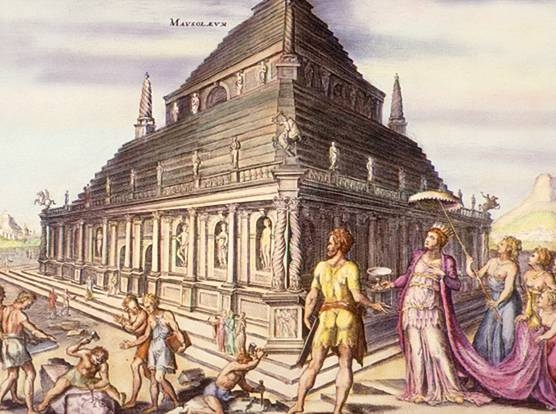
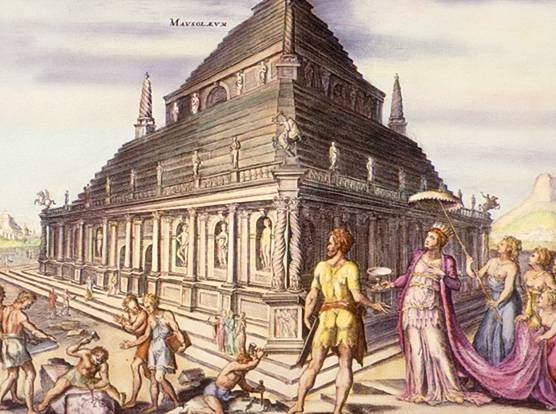
Modern research suggests that the Mausoleum at Halicarnassus may have been completed sometime between 353 and 350 BCE. Today, the site preserves only fragments: pieces of columns, rubble, and what are believed to be parts of the foundation. The full form of the monument can no longer be seen at the ruins.
At the time of its construction, however, it is said to have been enormous—about 45 meters, or roughly 148 feet, tall. Some accounts say leading Greek architects were involved in its design. The tomb was richly decorated, and the craftsmanship of ancient Greek builders and sculptors was highly admired.
Mausolus ruled under Persian authority, but he also brought neighboring regions under his influence. He is said to have been a central figure in the “Great Satraps’ Revolt,” a major rebellion against Persia. During his lifetime, Mausolus also spoke Greek, suggesting that he already had close contact with the Greek world.
Halicarnassus and the Queen’s Project
Halicarnassus appears to have been heavily fortified, making it a strong capital. Around the time the mausoleum was completed, Mausolus died for reasons that remain unclear. After his death, Queen Artemisia took control and led the project to completion.
The monument’s fame was passed down to later generations in part through Pliny the Elder. Even today, however, the exact timing and cause of the mausoleum’s collapse are not firmly known. Theories include earthquakes and war, but no single explanation has been confirmed.
One reason the history of the mausoleum remains so shadowy is that records say the structure was later burned and dismantled.
Crusaders, Stone, and Destruction
The Knights of Saint John, a Christian military order connected with the Crusades, had been active since around the 11th century. They are said to have entered the Mausoleum at Halicarnassus around the 15th century. One theory places this event in 1522.
According to these accounts, the knights burned marble from the mausoleum to make mortar and used materials from the ruins to strengthen the castle they were building in Bodrum. In the process, much of the ancient site was destroyed.
Because the mausoleum was also a tomb, it is believed that not only Mausolus but also Queen Artemisia—who is said to have died a few years after him—was laid to rest there. But when Crusaders entered the burial chamber, it was reportedly looted, leaving behind very few records or intact remains.
Excavations and the British Museum
Excavations were carried out in the 19th and 20th centuries. During work in 1857, sculptural figures were found north of the mausoleum. These are now in the British Museum. They are thought by some to represent King Mausolus and Queen Artemisia, though this has not been proven with certainty.
Reliefs discovered from the Mausoleum at Halicarnassus are also preserved at the British Museum.
The reason many of these artifacts are in Britain is that, from the 19th century onward, British researchers played a major role in investigating the site. The British Museum sent the archaeologist Charles Thomas Newton, who negotiated locally during the excavation. As a result, areas believed to include the burial chamber were uncovered.
Some artifacts believed to have been removed from the mausoleum by Crusaders in the 15th century, along with items found in later investigations, are now managed and stored by the British Museum.
Artemisia May Never Have Seen It Finished
According to Pliny the Elder, Queen Artemisia, who began the mausoleum to honor her husband Mausolus, died before the project was completed. After that, Greek craftsmen are said to have finished it because they believed doing so would bring honor to their own names.
Morally, that motivation may seem questionable. But the fact that the work continued even after its patron died suggests that, for the leading Greek sculptors of the time, the mausoleum must have been an unusually grand and prestigious project.
Even today, no surviving evidence can fully confirm the monument’s original appearance. Still, the Mausoleum at Halicarnassus—about 45 meters tall and covered in elaborate decoration—was remembered as a work whose sculpture was especially admired.
If you visit the ruins in Bodrum today, treat the site as an archaeological area: stay on marked paths, follow local rules, and do not climb on or remove any stones or fragments.
Japanese Language
世界の七不思議に数えられる建築物の多くは古代ローマ帝国の影響を受けていると言われていますが。現在の トルコ南西にあるボドロムという都市に残されているマウソロス霊廟はペルシャ帝国の時代に造られた と言われています。古代ペルシャ帝国はアケメネス朝とも呼ばれ広大な範囲に拡がっていました。紀元前330年にアレクサンドロス大王によって滅ぼされる以前は、 ペルシャ帝国が世界の覇権を握っていた の です。そんな広大なペルシャ帝国支配下にあったカリア国の王であるマウソロスが首都としていたのがハリカルナッソスであり、現在のボドロムでした。
この霊廟はマウソロス王が亡くなった後に、女王アルテミシアによって夫であり兄でもあったマウソロスを納めるために建造されたものです。マウソロス霊廟が造られた時代。。画像引用元: マウソロス霊廟 。近年の研究によって推定されているマウソロス霊廟の完成は紀元前353年~紀元前350年であったという説があります。現在残っているマウソロス霊廟遺跡には、いくつかの円柱の石材や瓦礫、基礎になったと考えられる部分しかなく、その姿を見ることは出来ませんが。
建設された当時は、なんと高さ 約45メートルにもなる巨大なものだった そうです。この巨大な霊廟の建設に関わったのはギリシャの一流の建築家達であったとも言われています。。霊廟には豪華な装飾が施されており、ここでも 古代ギリシャ人の建築技術が評価されていました 。マウソロス王はペルシャの支配下にありながら周辺の国も支配下におき、後にペルシャへの大反乱として呼ばれる「サトラップの大反乱」の中心人物であったともされています。マウソロスは存命中にギリシャ語を話したりもしていたことから、既にギリシャとの交流を持っていたのです。
要塞化したハリカルナッソスは強固な首都になっていたようですが、霊廟が完成した前後に原因は分かっていませんが、マウソロス王は亡くなり、その後の統治権を得た アルテミシア女王の主導によって完成された のです。この霊廟を後世に伝えたのは大プリニウスでした。しかし、現在でも倒壊してしまった時期はハッキリとしておらず「地震説」や「戦争説」などが考えられています。マウソロス霊廟が謎に包まれた理由。実は、このマウソロス霊廟は倒壊時期は分かっていないものの、 霊廟を燃やされた記録 が残っています。
11世紀ころから始まった宗教騎士団の1種である聖ヨハネ騎士団という集団がいました。いわゆるキリスト教による十字軍です。。この聖ヨハネ騎士団がマウソロス霊廟に足を踏み入れたのが、およそ15世紀頃、一説によれば1522年だとも言われていますが、 マウソロス霊廟に使われていた大理石を燃やしてモルタルなどにし、ボドロムに築いていた城を要塞にする材料に、多くの遺跡を破壊した とされています。マウソロス霊廟はお墓でもあったことから、マウソロスだけではなく、マウソロスの死後、数年で亡くなったと言われるアルテミシア女王も同じ霊廟に安置されていたんのです。
しかし、墓室に侵入した十字軍によって全てのものが略奪されてしまい、記録などもほとんど残っていない状態にされます。その後、19世紀や20世紀に入って発掘調査が行われたところ、1857年の発掘で、現在は大英博物館にある霊廟の北で見つかった彫造が発見されました。この彫造はマウソロス王とアルテミシア女王のものと推測されていますが、ハッキリとした確証には至っていないそうです。同じく 大英博物館にはマウソロス霊廟から見つかったレリーフ なども残されています。
大英博物館に遺物が置かれている理由。。画像引用元: マウソロス霊廟 。実は19世紀に入ってから、マウソロス霊廟の調査には主にイギリスが関わっていました。大英博物館から派遣されたのは考古学者のチャールズ・トーマス・ニュートンという人物であり、彼がこの遺跡発掘のために現地の住民などと交渉した結果、いわゆる墓室などが発見されることになったのです。また、15世紀当時の十字軍がこの霊廟から持ち去ったと思われる一部の遺物や、この後年の調査で発見されたものなども合わせて大英博物館が管理保管している状態にあります。
アルテミシア女王はマウソロス霊廟の完成を見ていない。大プリニウスの説によると、夫であったマウソロスを弔うために霊廟建造の主導を取った女王アルテミシアも、完成前に亡くなり、その後はギリシャ人達が自身の名誉になるという考えで完成させたとも言われています。道徳的には首を傾げるところですが、指揮を取っていた人物が亡くなってでも完成させようとしたとう事は、当時一流と呼ばれていたギリシャ人彫刻家達にとっても、相当にスケールの大きい仕事だと感じたのではないでしょうか?
。現在でも実際の姿はハッキリと裏付けられる史料はありませんが、高さ約45メートルと豪華な装飾の施されたマウソロス霊廟は彫刻が非常に評価されていたとも伝えられています。▼参考著書▼