English Version
Among the Seven Wonders of the Ancient World, the colossal Statue of Zeus at Olympia is often said to be one of the least documented. Zeus, the supreme god of Olympus in Greek mythology, is now one of the most widely recognized gods in the world. Greek myths themselves are full of drama, adventure, and larger-than-life characters, which is why they continue to appear in everything from comics and collectibles to modern games such as God of War and Puzzle & Dragons.
In ancient Olympia, however, Zeus was not a pop-culture figure. He was worshiped as the highest of the gods. The greatest expression of that devotion was said to be the massive Statue of Zeus, created in Olympia around 430 BCE.
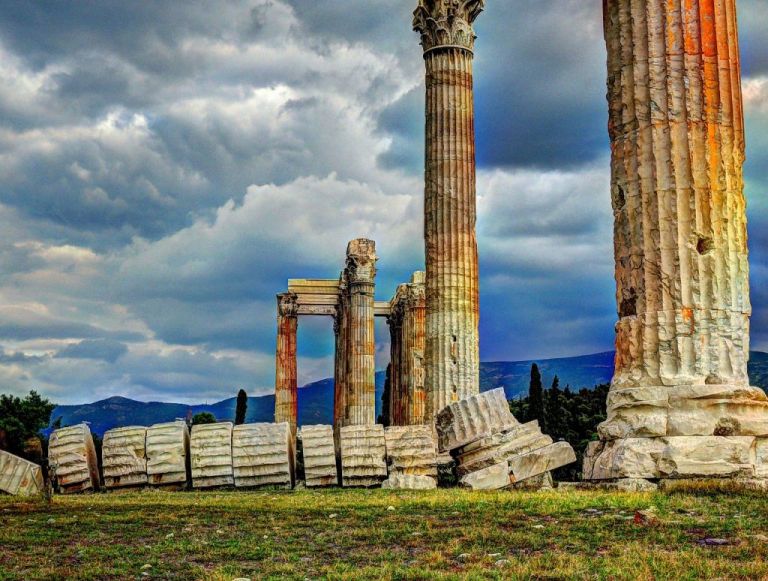
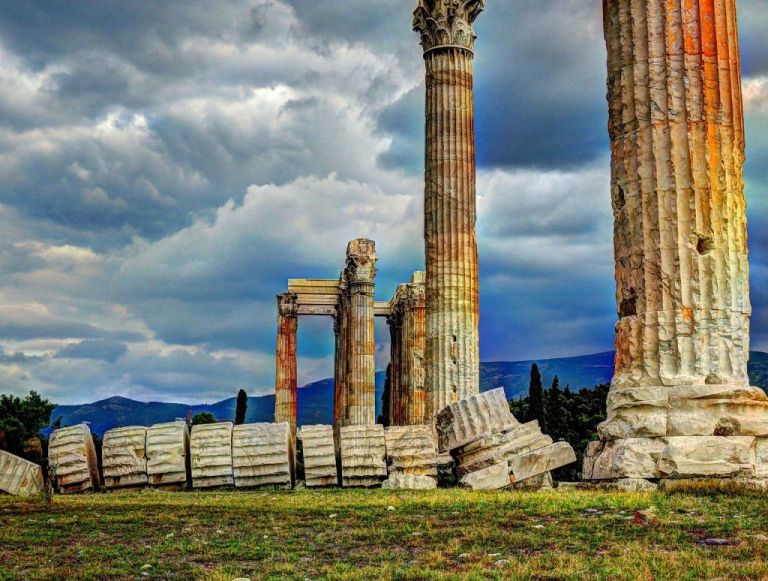
This enormous sacred image is traditionally attributed to the sculptor Phidias, who is also said to have created the famous Statue of Athena in the Parthenon. The ruins of Olympia can still be visited today, but travelers should stay within public areas, follow local rules, and treat the archaeological site as a protected cultural place.
Zeus, Olympia, and a Faith Interrupted
The worship of the Greek gods did not continue uninterrupted into the modern age. As the Roman Empire expanded across Europe around the beginning of the Common Era, Christianity eventually became dominant within the empire.
In 391 CE, the Roman Empire banned religions other than Christianity. Because ancient Greece was under Roman rule, public worship connected to Greek mythology and Olympia was also suppressed. As a result, many oral traditions connected to the Greek gods were no longer openly preserved.
The Statue of Zeus at Olympia, counted among the Seven Wonders, is said to have been created long before that religious shift, around 430 BCE, by Phidias, one of the greatest sculptors of the ancient Greek world.
Phidias had already earned an extraordinary reputation. He was associated with masterpieces such as the nearly 10-meter Statue of Athena Promachos on the Acropolis and the Statue of Athena in the Parthenon. These works were considered among the finest artistic achievements of their time.
According to tradition, a group known as the Council of the Sanctuary of Zeus approached Phidias for the project. Although he had reached the highest level of fame as a sculptor, he is also said to have been exiled from Athens because of political trouble. After receiving the council’s request, he went to Olympia.
The first Olympic Games are traditionally said to have been held in 776 BCE, and the games continued at Olympia for centuries. Many of the people who gathered there were Greek, and many gods were worshiped at the time. Among them, Zeus stood as the supreme divine symbol.
To honor this great god, Phidias was entrusted with creating a statue of Zeus inside a Doric temple.
A Colossal God of Ivory and Gold
The statue attributed to Phidias was said to be about 13 meters tall, placed on a marble base roughly 1 meter high, and decorated with ivory and gold. For the people who entered the temple, it must have been an overwhelming sight: a seated god so immense that he seemed to press against the limits of the building itself.
Phidias is believed to have completed the statue around 430 BCE. Later, around 200 BCE, records suggest that a man named Damophon repaired it. This means the statue may have remained visible to worshipers and visitors for roughly 250 years before the growing influence of Rome changed its fate.
Around 37 CE, the Roman emperor Caligula reportedly planned to move the Statue of Zeus to Rome, but the attempt failed. Later, as Christianity spread and older polytheistic worship was treated as pagan, the workshop of Phidias near the temple was reportedly converted into a Christian church. Olympia itself lost its former importance, and the ancient Olympic Games eventually came to an end.
Because of these changes, the statue is said to have been moved to Constantinople. Constantinople, the predecessor of modern Istanbul in Turkey, was the capital of the Eastern Roman Empire. Even today, Istanbul is home to the Ecumenical Patriarchate of Constantinople, an important center of the Orthodox Church.
The Statue of Zeus, once removed from Olympia, is said to have met its final end in 462 CE. About 70 years after its relocation, a fire in Constantinople reportedly destroyed it completely. From that point on, the great image of Zeus vanished from history.
Did the Statue of Zeus Really Exist?
The existence of the Statue of Zeus has been passed down through the accounts of ancient writers who claimed to know of its appearance and reputation. Geographer Strabo, poet Callimachus, and traveler Pausanias all praised or described the work.
One important detail is that the statue was apparently seated, not standing. Strabo, writing around the 1st century CE, is said to have described it in this way:
> The sculptor Phidias made the great statue of Zeus seated. Even so, its head seemed almost to touch the ceiling, so if Zeus were to stand up, it looked as though he would lift the roof off the temple.
Because of such accounts, the Statue of Zeus is generally believed to have been a real work of ancient art. However, since it was reportedly destroyed by fire, it has become a lost masterpiece — a phantom sculpture known only through writings, coins, and scattered historical traces.
Its complete original appearance remains uncertain. Like many wonders of the ancient world, the Statue of Zeus survives less as a physical object than as an image lingering in history: a god seated in a dark temple, immense enough that ancient visitors imagined he might tear the roof away if he ever rose to his feet.
Japanese Language
今回紹介したいのは 「世界の七不思議」の中でも、最も史料の乏しいとされている巨大なゼウス像 のお話です。ギリシャ神話に語られるオリンポスの最高神とされるゼウスは今では多くの人が知っている神様の1人です。ギリシャ神話はその物語自体が面白く、いわゆる冒険ストーリーなども多いことから様々なメディアの題材に取り上げられることも多いですよね。人気の題材にされた代表的なもので言えば、昭和世代であればビックリマンシールのキラキラではないでしょうか?(古い)。
近年のゲームなどでもゴッド・オブ・ウォーシリーズ、パズドラなど幅広く登場するゼウス神ですが、古代オリンピアでは当然ながら最高神として多くの人に信仰されてきました。そんな信仰の集大成とも言えるのが、紀元前430年頃にオリンピアで作られたと言われる巨大なゼウス像でした。この壮大な建築物は、現在でも遺跡が残る有名な パルテノン神殿のアテナ像を作ったとも言われている彫刻家フェイディアスの作品 であったとも言われています。古代オリンピアに存在した巨大ゼウス像。
。ギリシャ神話の信仰は実は歴史的な宗教の問題で一度途切れたことがあります。ちょうど、古代ローマ帝国が覇権を伸ばしていたキリストが生きていたとされる西暦が始まった頃からヨーロッパを支配下においていきました。その結果、 西暦391年にローマ帝国はキリスト教以外の信仰を禁止 します。ローマの支配下にあった 古代ギリシャでも自動的にギリシャ神話やオリンピアへの信仰が禁じられた為、ギリシャ神話の口伝などはあまり公にならなかった のです。世界の七不思議の数えられるオリンピアのゼウス像は、ローマ帝国の支配が及ばなかった紀元前430年前後に活躍した フェイディアス という一流の彫刻家によって制作されました。
フェイディアス が一流だとされた根拠はいくつかありました。アクロポリスの丘にあった10メートル近い 「アテナ・プロコマス像」 や、先にも紹介したパルテノン神殿の 「アテナ像」 など、 当時の美術品の最高傑作と呼ばれた作品を造った人だったからです。。この高名な彫刻家に声を掛かけたのはゼウス聖域評議会と呼ばれる団体であったと言われています。既に彫刻家としては最高峰の評価を受けていたフェイディアスは政治的な問題によって一度アテネから追放を受けていたとされています。
しかし、その後評議会の要請を受けてオリンピアへ向かいます。歴史上最初のオリンピックが行われたと言われているのが紀元前776年、そしてその後もオリンピアではオリンピックが続いていました。これらのオリンピックに集まる多くの人々はギリシャ人であり、当時は多くの神々が祀られており、その中でも ゼウスは最高神として象徴的な存在であった のです。この偉大な神を称えるために、ドリス式と呼ばれる神殿にゼウス像の制作をする仕事がフェイディアスに託されることになります。
この依頼を受けたフェイディアスが制作したとされる巨大なゼウス像は、1メートルの大理石の台座に象牙と金をあしらった高さ13メートルにもなる巨大な彫刻だったのです。ゼウス像の崩壊と焼失。。画像引用元: コンスタンティノープル 。フェイディアスがゼウス像を制作したとされてた時期はおよそ紀元前430頃でしたが、その後、紀元前200年頃にダモフォンという人物がゼウス像を修復したという記録が残っているそうです。ここまでおよそ250年ほどの間は多くの人に見られた巨大なゼウス像もローマ帝国の影響を受けてしまいます。
紀元37年頃、ローマの皇帝であったカリグラによってこのゼウス像をローマへと移動させようと計画しましたが、失敗に終わります。その後、キリスト教徒によって異教とされたことからゼウス像の神殿の近くにあったとされるフェイディアスの工房はキリスト教の教会になり、オリンピアが見放されたことでオリンピックも行われなくなりました。これらの要因からゼウス像はコンスタンティノープルへと移動されたと言います。コンスタンティノープルは現在のトルコ、イスタンブールの前身であり、古代東ローマ帝国の首都でした。
現在でもイスタンブールにはコンスタンティノープル総主教庁と呼ばれる正当教会の本部があります。さて、東ローマ帝国に移動させられてしまったオリンピアのゼウス像でしたが、移動から約70年ほど経った紀元462年、コンスタンティノープルでの火事が原因でオリンピアから運ばれたゼウス像は完全に歴史から焼失してしまいます。ゼウス像の実在性について。世界の七不思議に数えられるこのゼウス像の実在性は当時その姿を確認した古代人によって現在に伝わっています。例えば地理学者であったストラボンや、詩人のカリマコス、旅行家パウサニアスなどが、このゼウス像の出来栄えを評価しているのです。
。ちなみにこのゼウス像は実は座っている姿だったとも言われています。地理学者ストラボンがゼウス像について、。参考出典:考古学70の不思議 「彫刻家フェイディアスは座っている大ゼウス像をつくった。それでも頭は天井にとどきそうなほどなので、もしゼウス像が立ち上がったら神殿の屋根をはじき飛ばすのではないかと思われる。」。という言葉を紀元1世紀ころに残しているそうです。このことから、ゼウス像は実在していたものの、火事によって完全に焼失した幻の彫刻となってしまったと考えられます。
さらに、歴史の遺物から散見する僅かな姿しか確証が取れないため、完全な当時の姿は誰にも解明出来ないとも言われています