English Version
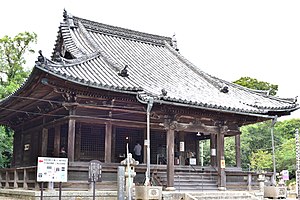
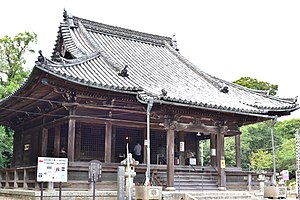
Noma Daibo is a temple in Noma, Mihama Town, Chita District, Aichi Prefecture. It is said to be the final place of Minamoto no Yoshitomo, father of Minamoto no Yoritomo, who founded the Kamakura shogunate, and his younger brother Minamoto no Yoshitsune. Yoshitomo’s grave stands within the temple grounds.
The grounds are also home to a pond known as the “Blood Pond,” where Yoshitomo’s severed head is said to have been washed. Because of this story, Noma Daibo has become a minor local haunted spot as well as a historic temple.
Visiting Noma Daibo
Noma Daibo is about a 15-minute walk from Noma Station on the Meitetsu Chita New Line. The distance is a little over 1 kilometer, but the route is mostly flat and passes through rural roads, so it is not especially difficult.
By car, it is about 15 minutes from the Mihama Interchange on the Chita Peninsula Road. On weekdays, the parking lot can be very quiet, while weekends may bring tour buses and more visitors.
The temple’s formal name is Tsururinzan Omidoji. Its principal object of worship is the Kaiun Enmei Jizo, a Jizo associated with good fortune and long life. According to temple tradition, Minamoto no Yoritomo prayed fervently to this Jizo before going on to establish the Kamakura shogunate. The statue is also said to have mysterious power and to grant wishes.
Noma Daibo also preserves many valuable Buddhist statues, including the prefecturally designated Important Cultural Property wooden seated Amida Nyorai, as well as wooden standing statues of Seishi Bosatsu and Kannon Bosatsu.
The Final Place of Minamoto no Yoshitomo
Minamoto no Yoshitomo was a warrior of the late Heian period, born in 1123. He is remembered as a major figure from the era of conflict between the Minamoto and Taira clans, and as the father of Yoritomo and Yoshitsune.
After Yoshitomo was defeated by the Taira clan in the Heiji Rebellion, he fled while being hunted as a defeated warrior. According to the story, he eventually reached Noma in Owari Province, now Noma in Mihama Town, Aichi Prefecture, barefoot and desperate.
He sought help from the Osada family, retainers he believed he could trust. However, the Osada father and son are said to have betrayed him in hopes of receiving a reward. They attacked Yoshitomo while he was bathing.
At that moment, Yoshitomo is said to have left behind the famous words: “If only I had even one short sword…”
After killing him, the Osada father and son are said to have washed his head in the pond now known as the Blood Pond. Later, according to one tradition, they were crucified by Minamoto no Yoritomo. However, there is also a theory that they died in battle, so the details are not certain.
The Blood Pond and Its Rumors
The Blood Pond sits toward the edge of the Noma Daibo grounds. At first glance, surrounded by trees, it may look less like a dramatic “blood pond” and more like a small, muddy pool of water.
Even so, several legends and urban rumors are attached to it. Because Yoshitomo’s head was supposedly washed there, one old tale says that when a major national crisis is approaching, the water of the pond turns red.
Whether the pond has ever truly turned red is difficult to confirm, and it is unclear how red the water would have to become for the legend to “count.” Still, the story has reportedly been passed down for a long time.
Locally, the pond is also known as a haunted spot. Rumors include claims that voices can be heard if you pass by at night, or that photographs taken there sometimes appear red. These are only local ghost stories, but they add to the strange atmosphere around the site.
If you visit, remember that Noma Daibo is an active temple and historic religious site. Stay within public areas, follow posted rules, and do not enter after hours or disturb the grounds.
More Than a Scary Place
Although the Blood Pond gives Noma Daibo a darker image, the temple is not only a haunted or tragic place. It is also known as a power spot.
Within the grounds is a path laid with stones connected to the 88 sacred sites of Shikoku. Walking this path is said to have the same meaning and spiritual benefit as making a pilgrimage to the full Shikoku 88-temple route.
For travelers interested in Japanese history, folklore, and eerie legends, Noma Daibo offers a rare mix: the grave of a famous samurai, a pond tied to a violent betrayal, Buddhist cultural treasures, and a quiet rural atmosphere on the Chita Peninsula.
Japanese Language
愛知県知多郡美浜町野間にある寺院の野間大坊。鎌倉幕府を開いた源頼朝、弟の源義経兄弟の父である、源義朝公の最後の地とされ、境内には義朝の墓があります。。また、境内には義朝の首を洗ったとされる血の池もあり、ちょっとした心霊スポットになっています。野間大坊。。画像引用元: 野間大坊 。名古屋鉄道知多新線野間駅から歩いて15分くらいの位置にある野間大坊。駅からは1kmちょっとありますが、平坦な農道をあるいて行くため、さほど苦にはならないかとおもいます。
車だと、知多半島道路美浜インターを降りて15分くらいになります。平日は駐車場にほとんど車がないくらい閑散としていますが、週末はツアーバスなどで賑わいます。寺院の正式名称は「鶴林山大御堂寺」と言います。本尊を「開運延命地蔵尊」とし、かの、源頼朝公がこちらの本尊を拝み倒したことにより鎌倉幕府を開いたとされいます。又、不思議な力があり、どんな願いも叶えてくれる力があるとされています。他にも、県指定重要文化財の「木造阿弥陀如来座像」や、「木造勢至菩薩立像」、「木造観音菩薩立像」など、貴重な仏像が多数あります。
又、源頼朝、義経兄弟の父親である源義朝公が家臣の裏切りに合い、亡くなられた地とされ、境内に義朝公のお墓があります。源義朝最後の地。。お墓の主である源義朝公はなぜこの地て家臣の裏切りに合い亡くなったのでしょうか。源義朝公は平安時代の武将で、1123年生まれ。いわゆる、源平時代の武将。鎌倉幕府を開いた源頼朝、弟の義経兄弟の父親です。平治の乱で平家に敗れ、その後、平家の落武者狩りに合い、裸足で落ち延びた先が尾張国野間(現愛知県美浜町野間)でした。
家臣の長田家を頼り落ち延びたまでは良かったのですが、ここで長田親子は恩賞目当てに義朝公を裏切り、義朝公の入浴中に襲撃しました。この時、義朝公は、有名な「我れに小太刀の一本なりともあれば」の言葉を残したとされています。長田親子は源義朝公を撃ち取ったあと、境内にある血の池で首を洗ったとされています。因みに、長田親子は、後に源頼朝によって磔にされたとされています。但し、こちらは戦で死んだとの説もあり、はっきりはしません。国の一大事には赤く染まる?
野間大坊境内にある血の池。。画像引用元: 野間大坊 。血の池は境内の外れにあり、一見、木々に囲まれているため、「水溜まりか?」と思ってしまいます。実際に行くと分かるのですが、血の池としていますが濁った水溜まりの方がしっくり来ます。しかし、この池、いくつかの都市伝説があります。。長田親子に襲われ、亡くなられた義朝公。長田親子はその首をこの血の池で洗ったとされています。その後、国家に一大事があるとこの池の水が赤く染まるとされています。実際に赤く染まるかは確認出来ないですし、どの程度をもって赤く染まったとするのかは分かりませんが、昔からの言い伝。
えとして残っているそうです。又、地元では知られた心霊スポットで、「夜通ると声が聞こえる」「写真を撮ると赤く写る」など様々なものがあります。怖い場所ではなくパワースポット野間大坊。いかがでしたでしょうが。どうしても、血の池を最後に持ってくると怖いイメージになってしまいがちですが。野間大坊は他にも本四国八十八箇所の石が敷き詰められた道があります。こちらを歩けば本四国八十八箇所をお参りしたことと同じ意味になり、同じご利益があるとされています。
ですので、怖いばかりではなく、とても儲けものなパワースポットでもあります。是非一度いらしてみてはいかがでしょう?。愛知県の最恐心霊スポットランキングは→ 【テレビでも紹介】愛知県のヤバい心霊スポットランキング!