English Version
There are 14 mountains on Earth that rise higher than 8,000 meters. All of them belong to the Himalayas or the Karakoram, and they are often called the “eight-thousanders.” Some are objects of reverence, while others are dream destinations for elite climbers and adventurers.
The highest is Mount Everest, the tallest mountain in the world at 8,848 meters. The second-highest is K2 at 8,611 meters. For comparison, passenger aircraft often cruise at around 8,000 to 12,000 meters, which gives a sense of just how extreme these peaks are.
And on Everest and other high mountains, there are climbers who set out for the summit and never came back.
Above 8,000 Meters: The Death Zone
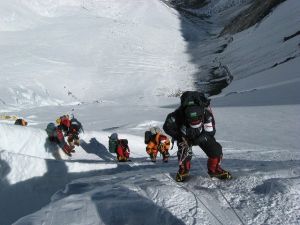
Climbing one of the 14 eight-thousanders is nothing like hiking a normal mountain. Depending on the route and expedition style, climbers spend weeks or months acclimatizing, setting up base camp and higher camps, and gradually adjusting their bodies to the thin air. This traditional expedition method requires enormous amounts of equipment, so climbers often rely on Sherpas, porters, and other local mountain professionals.
Even with that support, people still get lost, collapse, and die. That is part of what makes these mountains so terrifying.
The harshest area is known as the “Death Zone.” This generally refers to altitudes above 8,000 meters, where the human body cannot survive for long. Climbers are often told that once they enter the Death Zone, they need to leave as quickly as possible. In some areas, according to mountaineering accounts, the bodies of dead climbers and abandoned gear can still be seen along the route.
One often-repeated Everest story tells of a climber who became unable to move about 250 meters below the summit, still inside the Death Zone. At that altitude, even other climbers may have no strength or oxygen to help. According to the account, the climber’s final words were, “Don’t leave me,” before freezing to death.
Another grim story tells of a married climbing couple. The wife was reportedly conscious but unable to move because of frostbite in her feet. Realizing that rescue was not coming, the husband is said to have thrown himself from the mountain. The wife later froze to death.
In that story, the couple was supposedly still able to contact base camp. Their conversation and calls for help could be heard, but no one could reach them. That is the horror of the Death Zone: sometimes people know exactly where someone is dying, and still cannot save them.
Are Bodies Really Used as Route Markers on Everest?
Everest has a wide Death Zone, and even though some standard routes are sometimes described as less technically difficult than other eight-thousanders, it is still an extremely dangerous place. More than 200 bodies are said to remain unrecovered on the mountain.
One of the most famous examples is known as “Green Boots,” a body wearing green climbing boots that became a grim landmark on the route. Climbers used it as a point of reference, a reminder that the path to the summit is lined not only with snow and rock, but with the people who died trying to reach it.
Green Boots is not the only case. On high peaks like Everest, many bodies remain where they fell. Recovering them is extremely difficult, dangerous, and sometimes impossible. Some are also hidden under snow and ice.
In recent years, however, reports have said that global warming has exposed bodies that were once buried. Above 8,000 meters, the temperature is extremely low, and there are very few microorganisms, so bodies may not decompose in the way they would at lower elevations. They can remain, in effect, frozen in place.
For those with a strong stomach, searching online for terms like “Everest bodies” or “Death Zone bodies” will show how real and unsettling this part of mountaineering history is.
K2, Alison Hargreaves, and a Second Family Tragedy
K2 is the world’s second-highest mountain at 8,611 meters. It is lower than Everest, but far more technically difficult. Climbers often describe it as a mountain that demands your life, or one that does not forgive even the smallest mistake.
The fatality rate on K2 has been reported at around 26.5%. In other words, roughly one in four climbers may die attempting it, depending on how the statistic is counted. It is not a mountain for casual adventurers.
One climber who reached the summit of K2 was Alison Hargreaves, a British mountaineer. She was an extraordinary professional who had also climbed Everest without supplemental oxygen. But after summiting K2, the weather worsened during her descent. She never returned, and her body was not found.
When storms hit the summit area of K2, they can become violent blizzards. Some accounts suggest she may have been blown from the mountain.
Alison Hargreaves had a son, Tom Ballard, who also became a mountaineer. Years after losing his mother, he attempted an unclimbed route on Nanga Parbat, another eight-thousand-meter peak known for its difficulty. He died there during the climb. His body was reportedly identified from aerial photographs, but recovery was considered difficult.
In the end, mother and son both came to rest on two of the world’s 14 highest mountains.
After his mother’s death, Tom is said to have visited a trekking area where K2 could be seen and asked, “Is that mother?” What feelings led him to become a climber after that is impossible to know.
K2 is sometimes called the “Savage Mountain.” Nanga Parbat is known as the “Killer Mountain.” For this family, those names feel painfully literal.
The Horror of the Death Zone
Above 8,000 meters, oxygen levels are about one-third of what they are at sea level. Humans cannot live there for long. On Everest, the highest mountain in the world, bodies remain along the route, and some that were once hidden under snow may now be appearing as the mountain warms.
Everest is sometimes described as a mountain that ordinary people can attempt if they have enough money, fitness, preparation, and support. But “attempt” does not mean “safe.” These are extreme expeditions that require permits, professional guidance, high-altitude experience, and serious respect for local rules and conditions.
For travelers and horror fans, the Death Zone is a chilling reminder: some places on Earth are not haunted by legends, but by the very real dead who never came down.
Japanese Language
地球上には8000メートルを超える標高を誇る山々が14あります。そのすべてがヒマラヤ山脈もしやくカラコルム山脈に属する高峰で、14座と呼ばれ信仰の対象になったり、アルピニストや冒険家の憧れの地にもなっています。その中で、もっとも標高が高いのは世界最高峰のエベレストで標高は8,848 メートル、世界第二位の高峰K2は8,611 メートル…。旅客機の飛行高度が8,000~1万2,000メートル前後ですから、かなり高いことが解ります。そのエベレストを始めとする高峰には、 そのいただきを目指して力尽きた登山家の遺体が…。
。公開日:2019年10月22日 更新日:2020年2月18日 。8000メートルを超える標高のエリアはデスゾーンと呼ばれている。。14座への登山は、そこらへんの山に登るのとは当然わけが違います。山への登り方にもよりますが、高度順応(酸素の薄さに身体を慣らすこと)などをへて、ベースキャンプを始めとするいくつものキャンプを張って、何か月もかけてトライします(極地法という登り方です)。荷物も膨大で、とても登山隊だけでは運びきれないので、シェルパやポーターという現地にいる山のプロフェッショナルの力も借りてのぼるというそれはそれは大変なもの。
それでも遭難してしまう人、生きて帰れない人がいるのですから、恐ろしいものです。。そんな厳しい環境の中でも最も過酷で人が生命活動を維持できないと言われている場所が「 デスゾーン 」と呼ばれるエリアです。。デスゾーンとは、8000メートル以上の高度の場所の事で、この場所では人は生きていけないので「 できるだけ早く立ち去らないと危ない 」と言われています。実際に、デスゾーンと呼ばれている場所には息絶えた登山家の遺体や、装備品がゴロゴロ転がっている場所もあるとか。
ある登山家は、エベレストの山頂から250メートル程度下の位置、つまりデスゾーンで力付きで動けなくなってしまったそう。ですが、デスゾーンでは他の人を助ける余裕などだれにもありません。。この登山家は最後に「 私を置いていかないで 」と言葉を残して凍死してしまいました。また、ある登山家夫婦は妻が意識はハッキリしているものの足の凍傷で動けなくなってしまいました。ですが、助けがこないことを悟った夫はその場から飛び降りて…その後、妻は凍死したそうです。
この夫婦はベースキャンプと連絡が取れる状態だったそう。この夫婦の会話や救助を求める声は、ベースキャンプに届いていたのです。それでもどうしようもない…。デスゾーンとはそういう場所なのです。エベレストでは遺体がルートの目印になっている!しかも温暖化で…。。世界最高峰のエベレストは、当然デスゾーンのエリア広く一般的な登山ルートなら難易度は決して高くないと言われていても、やはり危険な場所です。実際に、200以上の遺体が回収されないままになっています。
8000メートル14座の死亡率の記事でもご紹介した「 グリーンブーツケープ 」は 緑色の登山靴を履いたままの登山家の遺体がそのままになっていて、正しいルートの目印に なっています。。そして、このグリーンブーツケープ以外にも、高峰には遺体がそのままになっている場所がたくさんあります。遺体の回収はほぼされないわけですが、中には雪に埋もれてしまっている見えない遺体も当然あります。ですが、最近、 地球温暖化の影響で今まで雪に埋もれていた遺体が出てきている というのです。
8000メートルを超える世界は、気温が低いだけでなく微生物がほとんどいないので遺体はほとんど腐敗しません。つまり、遺体がそのまま冷凍保存されているんです。心臓が強いという方は「エベレスト 遺体」とか「デスゾーン 遺体」で検索してみてください。。K2で遭難した女性登山家…その息子がナンガ・パルバットで遭難した。。エベレストに告ぐ高峰、k2ですがその標高は8611メートルとエベレストには及ばないものの、登山は非常に困難で高い登山技術と運がなければ登れない山です。
ある登山家はK2のことを「 命をかけなければ登れない 」「 わずかなミスも受け入れない 」といったそう。K2の死亡率は26.5%…そうとうなプロでなければトライすることすらできない山で、 4人に1人は命を落とすというのですから、とんでもない話 です。そんなK2に登頂した女性は、 アリソン・ハーグリーブスというイギリス人登山家 です。この女性はエベレストに無酸素登頂したというプロ中のプロだったわけですが、K2に登頂して下山する途中で天候が悪化してそのまま…遺体も見つかっていません。
K2の山頂は天候が荒れると相当な吹雪になるそうで、吹き飛ばされてしまったのではないか…と。。。実はアリソン・ハーグリーブスには息子がいたんですが、この息子も母と同じ登山家になりました。そして、この息子が先日、8000メートル級の山の中でも難易度が高いことで知られているナンガ・パルバットの未踏ルート(まだだれも登っていないルート)で登頂中に遭難して帰らぬ人となりました。航空写真で遺体は確認できたものの、回収は困難とのことで、親子2代で14座で眠りにつくことになりました。
。この息子は母をなくした後、K2を見上げられる場所をトレッキングで訪れで「Is that mother?(あれがママなの?)」といったそう。そこからどんな想いで登山家になったのでしょうか。ちなみに、母のアリソン・ハーグリーブスが亡くなったk2は「 非情の山 」そして、息子が亡くなったナンガ・パルバットは「 死の山 」という別名があります。「エベレストでは遺体が目印になっている?8000メートル以上のデスゾーン」のまとめ。8000メートルを超える標高のデスゾーン… 酸素は平地の1/3で人はこの場所で生きていくことはできません。
。「 世界で一番高い山 」のエベレストには、ルートの途中にたくさんの遺体がそのままになっていて、最近、温暖化の影響で今まで雪に埋もれていた遺体も出てきている…とか。エベレストはお金と体力があれば、一般人でもトライしやすいルートもあるそうですが…。あなたは行ってみたいですか?