English Version
Shikoku is famous for the Ohenro, the pilgrimage to the 88 sacred temples associated with Kobo Daishi, also known as Kukai. The route became enormously popular during the Edo period, and over time Shikoku came to be seen as an island of holy places. Some people even played on the sound of the name, imagining Shikoku as a kind of “land of death.”
With that dense spiritual image, it is no surprise that Shikoku has many places rumored to be haunted. This time, we are looking at Cape Ashizuri in Tosa-Shimizu, Kochi Prefecture.
Cape Ashizuri is one of Kochi’s best-known scenic spots, but it has also long had a frightening reputation. For many years it was known as a place where people died by jumping from the cliffs. The roots of that reputation, however, may go much further back than modern rumors. To understand why Cape Ashizuri became associated with death, we have to look at an old Buddhist practice called Fudaraku Tokai.
Cape Ashizuri, a Scenic Spot With a Dark Reputation
Cape Ashizuri sits at the tip of the Ashizuri Peninsula, the southernmost point of Shikoku. Because it juts out into the Pacific Ocean, it offers a powerful ocean view and is a popular tourist destination.
At the same time, like Tojinbo in Fukui Prefecture, it has been known as a place associated with deaths by jumping. Around Cape Ashizuri, visitors may see suicide-prevention signs, Jizo statues placed for the dead, and flowers left as offerings. These reminders suggest how heavy the place’s reputation has become.
As often happens with locations known for tragic deaths, Cape Ashizuri has also attracted ghost stories. Rumors include photos in which a man with a blood-covered face allegedly appears, sightings of a terrifying woman with disheveled hair, stories of a woman in white choking someone at a hotel after a visit to the cape, and the sensation of being pulled by the legs near the cliff edge.
Such stories are only rumors, but the image is easy to understand: people imagine the spirits of those who died there still lingering, trying to draw others toward the same fate.
If you visit Cape Ashizuri, treat it as a real coastal cliff, not just a haunted location. Stay behind barriers, follow local signs, avoid dangerous weather or nighttime cliffside exploring, and do not trespass.
The Ohenro Connection and the Seven Wonders of Cape Ashizuri
Cape Ashizuri is not considered eerie only because of its cliffs. It is also connected to the Shikoku pilgrimage.
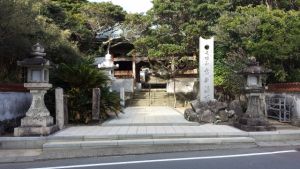
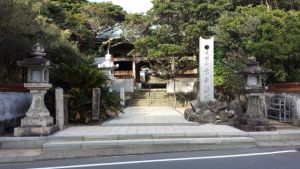
The 38th temple of the Shikoku 88 Temple Pilgrimage is Kongofukuji Temple, located at Cape Ashizuri. The temple is said to have been founded by Kobo Daishi.
Around the Ashizuri Peninsula, there are legends known as the Seven Wonders of Cape Ashizuri. Despite the name, these are not school-style ghost stories, and there are actually said to be 21 wonders in total. They include the Yurgi Stone, whose movement is said to reflect a person’s filial devotion; the Turtle Stone, shaped like a turtle; and a stone basin whose water rises and falls with the tide.
One of these wonders, located near the very tip of the cape, is called the Hole of Hell.
Local descriptions say this hole connects to a cave below the lighthouse. If a coin is dropped into it, a ringing sound can supposedly be heard for a while. People are said to offer coins there in the hope that ancestors who have fallen into hell may be pulled out, and also as a way to comfort and pray for ancestral spirits.
In other words, Cape Ashizuri has a place believed to connect with hell. In some Buddhist ideas, people who take their own lives cannot reach paradise and instead fall into hell. From that perspective, it is not hard to see why people might imagine the resentment of those who died at Cape Ashizuri causing ghostly phenomena.
But the reason Cape Ashizuri became known as a place of death is not simply that it has steep cliffs. Its deeper history reaches back to medieval religious practice.
The Origin of the Name and Fudaraku Tokai
Where does the unusual name Ashizuri come from?
One explanation appears in the Kamakura-period travel diary Towazugatari, written by Lady Nijo. The story concerns an abbot and a young monk at Kongofukuji Temple.
One day, a traveling monk came to them and asked for food. The abbot refused, saying they had only enough for themselves. But the young monk secretly gave the traveler his own meal. Deeply moved, the traveling monk invited the young monk to come to his home, then went out to sea. The young monk told the abbot that he was going to the world of Fudaraku and disappeared beyond the waves.
It is said that the two became manifestations of Kannon, the bodhisattva of compassion. The abbot, realizing he had been left behind, stamped his feet in grief and cried out. That act of stamping the feet is said to be connected to the name Ashizuri.
The key word here is Fudaraku. In Buddhist belief, Fudaraku is the dwelling place of Kannon. For many devotees, there were two sacred destinations to long for: the Western Paradise and the southern realm of Fudaraku.
To set out by boat for Fudaraku, believed to lie beyond the southern sea, was called Fudaraku Tokai.
A Sea Voyage Meant to End in Death
Fudaraku Tokai was considered a form of Buddhist ascetic practice. Like the practice of becoming a sokushinbutsu, or self-mummified Buddha, it was a form of self-sacrifice in which the practitioner gave up his life for religious purpose.
The monks who undertook it were not expected to reach a real country across the sea. They drifted until the boat sank. In practical terms, it was a kind of water burial, and it can also be understood as death by drowning.
Those who performed Fudaraku Tokai boarded a small roofed boat. They carried 30 days of food and oil for a lamp. Then the entrance was sealed from the outside with boards nailed shut so the monk could not leave the cabin.
Perhaps some people panicked at the last moment and tried to escape. Inside the sealed boat, the monk would continue chanting sutras by lamplight. There was no steering. The boat simply drifted until it sank, while the monk prayed to be reborn in Kannon’s pure land.
Because the boat was not steered, another vessel would reportedly tow it offshore before cutting it loose so it would not return to land. The monks in the escort boat would watch their companion, someone who had trained alongside them, drift away on the current.
Fudaraku Tokai was practiced from the Heian period into the Edo period. In its later stages, some places changed the practice into something closer to a sea burial, placing a monk who had already died onto the boat instead. Perhaps the original form had come to be seen as too cruel.
Why Cape Ashizuri Became One of Its Sacred Sites
The two major sacred sites of Fudaraku belief were Kumano in Wakayama Prefecture and Cape Ashizuri in Kochi Prefecture.
At the southern tip of Shikoku, the so-called island of death in the popular imagination, Cape Ashizuri was seen as an appropriate place to depart for the southern end of the world. People set out from there seeking Kannon’s pure land, only to vanish into the sea.
In that sense, Cape Ashizuri’s association with self-sacrifice and death is not a modern invention. It is connected to religious history reaching back to the Heian period.
This history also appears in Ashizuri Misaki, a novel by Torahiko Tamiya. The work was adapted into a film in 1954 and later made into television dramas twice. The story dealt with suicide, and it seems to have contributed to an increase in people dying by jumping at Cape Ashizuri, unrelated to Fudaraku Tokai itself.
Afterward, suicide-prevention signs were put up, including one that essentially says, “Wait. Think a little longer.”
If you or someone you know is struggling with thoughts of self-harm, please seek immediate help from local emergency services or a crisis hotline in your country.
A Haunted Place Shaped by History
Cape Ashizuri is a major tourist destination in Kochi, but its reputation as a place of tragic deaths has also made it a feared haunted spot. Behind that reputation lies the older history of Fudaraku Tokai: a Buddhist sea voyage framed as religious practice, but ending in death by water.
Many haunted places are connected to accidents, murders, or abandoned buildings. Others, like Cape Ashizuri, come from the deeper history, beliefs, and customs of a region.
For horror fans, that may be the most interesting part. Rather than only exploring or looking for scares, it can be worth asking what history and folklore lie beneath the fear.
Japanese Language
四国といえば、 「お遍路(おへんろ)」 が有名ですね。弘法大師(空海)によってひらかれた88の霊場 「四国八十八箇所」 を巡るのですが、これが江戸時代に大流行しました。このことから四国=霊場というイメージが強くなり、ついには 「四国は死国である」 と考えられるようにもなりました。。そんな霊的濃度の濃い四国ですから、恐ろしい心霊スポットも当然数多く存在します。今回は高知県土佐清水市の心霊スポット、 「足摺岬(あしずりみさき)」 についてお話します。
足摺岬は高知県を代表する観光地の1つでもありますが、同時に恐ろしい心霊スポットでもありました。というのも、昔から飛び降り自殺者が多い 「自殺の名所」 として有名だったからです。しかし足摺岬での自殺のルーツは、実は平安時代にまでさかのぼることができます。。今回は高知県の心霊スポット「足摺岬」について紹介し、またなぜ自殺の名所となってしまったのかを、 「補陀洛渡海(ふだらくとかい)」 というキーワードに注目し、 民俗学 の視点から読み解いていこうと思います。
高知県の心霊スポット:足摺岬は自殺の名所。。地図を見てもらうとわかりますが、「足摺岬」は 四国最南端の足摺半島の先端 に位置しています。太平洋に突き出たようなかたちになっているので、迫力のオーシャンビューを楽しめる景勝地であると同時に、福井県の 「東尋坊」 同様、飛び降り自殺者が絶えない 「自殺の名所」 となっています。足摺岬では実際に 自殺防止の看板 や、自殺者を供養するための 地蔵 、 献花 などを見ることができます。自殺の多さがうかがえますね。
自殺の名所は、えてして心霊スポットとして注目を集めます。写真を撮ったら、血まみれの顔をした男性の霊や、髪をふり乱した恐ろしい形相をした女性の霊が写り込んでいた 足摺岬の帰り、ホテルで白い服の女性に首をしめられた 崖先で足を引っ張られる感覚に襲われた ……などなど、怖い話がいくつも伝わっております。「足を引っ張られる」などは、 自殺者の霊 が呼びこんでいるようにも感じられます。足摺岬には自ら命を絶った地縛霊がとどまっているのかもしれません。
しかし自殺の名所という以外にも、ここが心霊スポットとされるゆえんがあります。それは最初にも書きましたように、 「お遍路」 です。高知県の心霊スポット:「足摺岬の七不思議」に伝わる「地獄の穴」。 足摺岬の金剛福寺 足摺岬には、 「足摺岬の七不思議」 という伝承が伝わっています。七不思議というと「学校の怪談」を彷彿とさせますが、べつに怖い話ではありません。
先に書きましたように、高知県を含む四国は お遍路 で有名です。お遍路とは、 弘法大師(空海)に縁のある 「四国八十八箇所」 の霊場(寺院)を巡り、参拝することです。そのなかの38番目にあたる霊場が足摺岬にある「金剛福寺」です。金剛福寺は弘法大師が開いたとされています。。「足摺岬の七不思議」はこの弘法大師に関連した 足摺半島一帯に残る不思議の総称 で、七不思議といいながら実際には21あります。石の動き方で親孝行の心をあらわす「ゆるぎ石」、亀の形をした「亀石」、潮の満ち引きでくぼみの水が増減する「汐の満干手水鉢」などなど……すべてを紹介することはかないませんが、足摺岬のまさに先端部分にあるのが、 「地獄の穴」 です。
足摺岬 地獄の穴 。この穴は、灯台下の洞窟(亀の洞)まで、通じている。と云う。この穴に硬貨を投げ入れると、チリーン・チリーンとしばらく音が聞こえて来る。この穴に硬貨を投入するのは、先祖が地獄に落ちている人があれば、引上げて貰う事を願い又、先祖の霊をなぐさめ供養になると云われている。。出典:足摺国際ホテル 足摺岬の七不思議 。
足摺岬には地獄に通じる穴があるとされたのですね。自ら命を絶った者は天国へと行けず、 地獄 に落ちるともいわれています。足摺岬で自殺し、地獄に落ちた者の怨嗟が、数々の心霊現象を起こしているのかもしれません。。ところで足摺岬が自殺の名所とされたのは、なにも切り立った崖だから……というだけではありません。実は平安時代の中世から、足摺岬は 自殺の聖地 だったのです。。民俗学で読み解く心霊スポット:足摺岬の由来は補陀落渡海にアリ。 足摺岬の崖下 そもそも、「足摺岬」というこの変わった地名の 由来 はなんなのでしょうか。
そのルーツは 鎌倉時代 にまでさかのぼることができます。後深草院二条の書いた紀行文 『とはずがたり』 に、その由来が載っています。足摺岬の 金剛福寺 にいた和尚と修行僧のお話です。2人のもとに 旅の僧 が来て、食べ物を求めました。和尚は自分たちのぶんしか食料はないと断りましたが、修行僧はこっそり自分のご飯を与えました。感激した旅の僧は、修行僧を 「私の家に来てください」 と誘って、海に出ていきました。修行僧は 「補陀洛(ふだらく)世界へ行ってきます」 と和尚に伝え、海の彼方へ消えていきました。
2人は観音様になったといいます。和尚は「私を捨てるのか」と、 足摺り をしながら、悲しみ泣き叫びました。旅の僧は 観音様の変化した姿 で、慈しみの心を持ちなさいよ、という話ですね。ただここで注目してほしいのは、「 補陀洛(ふだらく) 」というワードです。補陀洛とは観音菩薩が住まう場所で、仏教徒にとっては 「西の極楽浄土」 と 「南の補陀洛世界」 の2つが、目指すべき霊場でした。。。金剛福寺の修行僧のように、南の海の果てにある補陀落を目指して船出することを 「 補陀落渡海 (ふだらくとかい)」 といいます。
これは修行の一種にあたるのですが、地中に自ら生き埋めになる「即身仏(そくしんぶつ)」と同じで、命を捨てて行う修行「捨身行(しゃしんぎょう)」です。。彼らは決して海の果ての国にたどりつくことはありません。沈没するまで漂流を続けるという意味では実質 「水葬」 の一種であり、 入水自殺 だといえます。。補陀落渡海を行う僧たちは、 小さな屋形船 に乗り込み船出をするのですが、このとき 30日分の食料と灯火のための油 を積み込みます。そして外から、 館から出られないように入口に板を釘で打ちつけ密封します 。
土壇場で恐怖やパニックを起こし、船から出ようとする者がいたのでしょう。僧たちは、密封された船の中で、灯火を頼りにお経を唱え続けます。操舵もせず、ただひたすら、船が沈むまで……観音浄土に生まれ変わることを願い、死んでいったのです。。ちなみに操舵しないため、 岸に戻ってくることがないように 、伴走船が沖合まで綱で引っ張って、綱を離したそうです。伴走船に乗った僧たちは、ともに修行した仲間が海流に流され、漂流していく様子を見送りました。補陀落渡海は平安時代から江戸時代まで行われましたが、終盤期には、 既に死んだ僧を船に乗せる、いわば「水葬」の別形式に変化したところもありました 。
やはり残酷すぎたのでしょう。。この補陀落信仰の二大聖地が 和歌山県の熊野 と、 高知県の足摺岬 でした。死の国、四国の最南端。足摺岬は、日本から南の果てを目指すにもっともふさわしい場所と考えられました。人々は観音浄土を目指して、足摺岬から 補陀落渡海 を行い、海の藻屑と消えていったのです。まさに足摺岬は、 平安時代からの由緒正しい自殺の聖地 といえます。こうした足摺岬の歴史を踏まえて書かれた小説が、田宮虎彦の『足摺岬』です。1954年に映画化、その後も二度にわたりテレビドラマ化された人気作なのですが、自殺をテーマにした物語でした。
。この作品をきっかけに、(補陀落渡海と関係のない) 飛び降り自殺者 が急増したようです。「ちょっと待て、もう少し考えよ」と、自殺防止の看板が立てられました。。高知県の観光スポット「足摺岬」は、 自殺の名所 でもあるが故に、恐ろしい心霊スポットでもあります。しかしその裏には、 平安時代 からの仏教の修行……という名の 入水自殺「補陀洛渡海」 が大きく関わっていました。心霊スポットというと、事故物件や殺人事件の舞台などが多いのですが、なかには地域の歴史や、人々の古い文化・風習から生まれたものも多くあります。
心霊マニアの皆さんも、ただ探検したり怖がるだけでなく、ときにはその裏に隠された歴史や文化を紐解いてみると面白いかもしれません。民俗学 で読み解く心霊スポットの記事は、他にもいくつか書いていますので、興味のある方はこちらも。民俗学で読み解く心霊スポット 【島根県の心霊スポット】石見畳ケ浦と賽の河原【民俗学で読み解く】 。【青森県の心霊スポット】久渡寺【お遍路とオシラサマ信仰】 。人肉に子殺し!東北の飢饉の惨状「わらす河原」【地方の怖い風習】