English Version
Shimane Prefecture has long been seen as one of Japan’s most spiritually charged regions. In October, it is said that the countless deities of Japan gather in Izumo, and Izumo Taisha is famous as a shrine of matchmaking. At the same time, Japanese myth places the entrance to Yomi, the land of the dead, in Izumo. In folklore, Shimane is a borderland between this world and the next.
Because of that, Shimane has no shortage of places whispered about as haunted. This article looks at Iwami Tatamigaura in Hamada City, a nationally designated natural monument, and the cave known as Sai no Kawara. We will also consider why the area came to be viewed as a haunted place through the lens of folklore, especially beliefs connected to mizuko, the spirits of children who died very young, and the old practice of mabiki, or infanticide.
If you visit, remember that Iwami Tatamigaura is a real coastal sightseeing area and natural monument. Stay on permitted paths, watch the tide and slippery rocks, and do not touch or disturb statues, offerings, graves, or memorial objects.
Iwami Tatamigaura, a Scenic Coast with Dark Rumors
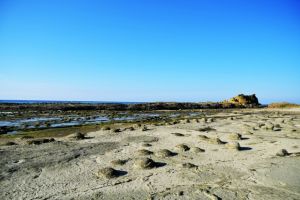
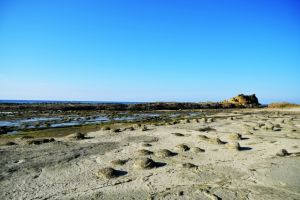
Iwami Tatamigaura in Hamada, Shimane, is famous for its striking rock formations shaped over a long period of natural history. Its broad, flat rocky shore is known as a senjojiki, a name often used in Japan for a wide rock surface that looks large enough to lay out a thousand tatami mats. Geologically, the area is highly valuable and has been designated a natural monument.
But among locals, Iwami Tatamigaura has also long been known as a haunted spot.
One reason is the current. According to local belief, the flow of the sea makes it easy for bodies from maritime accidents to wash ashore here. That alone would be grim enough, but people also say that the area has seen an unusual number of drownings, sea accidents, and suicides by entering the water. Around the coast, many small shrines, Jizo statues, and memorial objects stand close together, ranging from recent ones to very old ones whose origins are unclear.
Because Iwami Tatamigaura is a natural monument and one of Hamada’s major tourist sites, visitors often take photos there. As a result, there are also many stories of alleged spirit photographs taken in the area.
However, the place considered truly unsettling is not the wide rocky shore itself, but the cave called Sai no Kawara, which lies on the route leading to it.
Iwami Tatamigaura as it appears today is a relatively recent landscape, formed when the seabed was uplifted by the Hamada Earthquake of 1872. In that sense, it is a newer haunted site. Sai no Kawara, by contrast, carries a much older atmosphere. Some people believe the strange experiences at Iwami Tatamigaura, as well as the rumored number of accidents and suicides, may be connected to the lingering emotions associated with Sai no Kawara.
The Cave of Sai no Kawara
To reach the senjojiki shore at Iwami Tatamigaura, visitors pass through the Tatamigaura Tunnel and then through the cave known as Sai no Kawara before emerging on the seaside.
Many eerie experiences have been reported in and around this cave. Some tourists who came to see Iwami Tatamigaura have reportedly turned back because the cave felt too frightening to continue through.
Sai no Kawara is a sea cave, carved into the cliff by waves. Inside, seawater runs through cracks in the rock in a way that can resemble a river. Even the name is ominous.
In Japanese Buddhist folk belief, Sai no Kawara is the stony riverbank beside the Sanzu River, the river the dead must cross on the way to the afterlife. Children who die before their parents are said to pile stones there into small towers. Unless they complete the tower, they cannot cross over. But when the tower is nearly finished, demons appear and knock it down, forcing the child to start again. This belief reflects an old idea that dying before one’s parents was a grave form of unfilial behavior.
The being who saves these wandering child spirits is said to be Kannon, the bodhisattva of compassion. In the cave at Sai no Kawara, there are many stacked stone towers, stone Buddhist figures, and Jizo statues dedicated to the repose of children’s spirits. Deeper inside is a Kannon figure known as Ana Kannon, or the Hole Kannon.
Stories of paranormal experiences at Sai no Kawara often involve children. Common accounts include:
- Hearing the voice of a child who should not be there
- Seeing what looks like a child in a backlit photo taken inside the cave
- Hearing laughter while walking through the tunnel
- Seeing a vague white mist or cloudy shape
The reason so many stories involve children may be connected to the fact that the Kannon and Jizo figures here are associated with memorial prayers for mizuko, children who died at or soon after birth, as well as children lost before they could grow up.
Why Would Mizuko Spirits Gather Here?
Folklore studies examines everyday culture: legends, customs, language, tools, rituals, and ways of life. Kunio Yanagita’s The Legends of Tono is one of Japan’s most famous works in this field. Looking at Sai no Kawara through folklore raises a simple question: why would memorial statues for mizuko be placed deep inside a cave like this?
Normally, Jizo statues and memorials for deceased children are found at temples or nearby temple grounds. That makes sense, since they are objects of prayer and remembrance.
But Iwami Tatamigaura is known as a place where many things wash ashore because of the current. That would have included the bodies of people who died at sea. Before the 1872 earthquake raised the seabed and created the current form of Iwami Tatamigaura, it is possible that drifting objects and remains were carried into the cave of Sai no Kawara instead.
From this perspective, the cave may have received many bodies of mizuko. Since seawater also runs through the cave like a river, people may have come to see it as a real-world image of Sai no Kawara, the riverbank of the dead.
But why would the bodies of children, in particular, have drifted there? The answer may lie in older water-related funeral and disposal customs.
Mizuko, Mabiki, and a Dark Rural Custom
In older periods, many Japanese villages were extremely poor. Wealth and power were concentrated among aristocrats and warrior families, while stable lives were more available to townspeople than to rural farmers. Children who could not be raised were sometimes killed shortly after birth. Children with disabilities, twins, and girls were also especially vulnerable in some places. This was the practice known as mabiki, literally “thinning out,” a euphemism for infanticide.
Methods of abortion and contraception were limited, so unwanted births were likely more common than today. In mountain villages, children who were killed were sometimes cast into rivers; in seaside communities, into the sea. This is one reason the term mizuko, literally “water child,” became associated with infants who died before they could live.
Even today, the Japanese verb used casually for abortion can carry the sense of “letting flow” or “washing away.” The feeling may have been that such children should not be buried close to home.
Studies using population data and temple or shrine birth records suggest that mabiki was not limited to times of famine. In the early modern period, some researchers have argued that the number was very high, even compared with Europe of the same era. Explanations vary. Some point to the strong Christian sexual morality in Europe, contrasted with looser rural sexual customs in parts of Japan, including the well-known practice of yobai, or night visiting. Others point to the idea that a baby was not fully considered a social person until events such as the first shrine visit around one month after birth, or even until reaching the age of seven. This may have reflected high infant mortality, but it may also have helped reduce guilt around mabiki.
Japan’s long influence from Confucian thought may also have mattered, because it strengthened the idea that a child belonged to the parents.
Returning to Shimane, the folklore interpretation is that mizuko abandoned in rivers and the sea may have been carried by currents until they reached Sai no Kawara.
A children’s handball song recorded in Nita District, Shimane, preserves a chilling image. In summary, it says that if a child is a boy, he should be sent up to a temple and educated; but if the child is a girl, she should be wrapped in straw matting, tied with a cord, and quietly thrown into the stream in front of the house, where crows peck from above and loaches peck from below.
The fact that children once sang such a song suggests how deeply the memory of mabiki was embedded in local life. It is not hard to imagine that infanticide occurred in Shimane as well. In the early modern period, perhaps the bodies of mizuko from Shimane, or even from a wider part of the Chugoku region, drifted into the cave now called Sai no Kawara.
Across Japan, sea caves where drifting objects accumulate often become places of worship, ritual, or memorialization. The deity Ebisu is a famous example of a drifted god. Although Ebisu is best known today as a god of commerce and good fortune, one mythic origin connects him to Hiruko, the first child of Izanagi and Izanami, who was born malformed and set adrift on the sea.
In that sense, the cave at Sai no Kawara fits a wider pattern: things carried in by the sea become objects of fear, reverence, and prayer.
Perhaps the lingering sorrow of the mizuko said to have drifted there is what people imagine drawing in sea accidents and suicides. Iwami Tatamigaura is a place where many kinds of intense feeling seem to gather: children abandoned by their parents, people who died in accidents, and those who took their own lives.
Near the tunnel leading to Sai no Kawara, there is also a cemetery. Whether or not one believes in spirits, the area has long carried an atmosphere of death, mourning, and ritual.
Spirits May Not Prefer Empty Places
People instinctively fear dark, empty places with no sign of human presence. It is easy to imagine ghosts in such settings. But some say spirits are not drawn to deserted places as much as to places where many people come and go.
If a child spirit remains lonely after never receiving parental love, or if a spirit who died by suicide still wants someone to understand its pain, then a busy sightseeing spot might feel less strange as a gathering place. Iwami Tatamigaura is both a popular tourist destination and a long-rumored haunted site, which may be why stories of spirits continue to cling to it.
Shimane, as a mythic boundary between this world and the next, has many other places with eerie reputations. These include the abandoned site known as Kamome-so, which was said to have affected the late psychic Aiko Gibo, and even Izumo Taisha, famous for matchmaking but also interpreted by some occult writers as a place connected to the sealing of a powerful vengeful spirit associated with Okuninushi no Mikoto.
At Sai no Kawara, do not play pranks on the Jizo statues, Kannon figures, stone towers, or offerings. It is disrespectful, and local belief treats it as dangerous. If you want to pay respects, a quiet prayer is safest. Only leave flowers or offerings if local rules clearly allow it, and never leave trash behind.
People who have lost children still come here to pray. Like many haunted places in Japan, Iwami Tatamigaura is not only a horror destination. It is also a place of mourning.
The next time you visit a beautiful tourist spot, remember: behind the scenery, there may be older stories of grief, prayer, and restless memory. In Japan, the frightening things are often hidden inside everyday places.
Japanese Language
島根県は霊的濃度の非常に濃い土地です。10月には日本中の 「八百万の神々」 が島根県出雲市に集うといわれますし、 出雲大社 は縁結びで有名ですね。しかし同時に日本神話には、 黄泉の国 =あの世の入口は、出雲(島根県)にあると書かれています。島根は、あの世とこの世の境目の土地です。ですからそんな島根県には、恐ろしい 心霊スポット が数多く存在します。。今回はその中でも 天然記念物 にも指定されている 「石見畳ケ浦(いわみたたみがうら)」と「賽の河原(さいのかわら)」 について紹介し、なぜ心霊スポットになってしまったのかを、 「水子」 や 「間引き」 といった風習をキーワードに、 民俗学 の視点から読み解いていきます。
全国の水子の怨念が流れつく、本当に危険な場所です。地元の人には心霊スポットとして有名ですが、観光に訪れる人は知らないと思うので、注意してください。島根県の心霊スポット:海難事故や自殺が相次ぐ?「石見畳ケ浦」。。島根県浜田市の 石見畳ケ浦 は、自然が長い時間をかけて作りあげた岩の景観が有名な 景勝地 です。千畳敷が広がる海岸は地質学的に非常に価値のあるもので、天然記念物にも指定されています。。しかしこの石見畳ヶ浦、地元のあいだでは昔から 心霊スポット として有名でした。
というのも海流の関係で、海難事故に遭った 死体が流れつきやすい場所 だからです。それだけならよくあることなのですが、石見畳ヶ浦では昔から、異常なほどに 海難事故 や 入水自殺 者が多いといわれています。そのためこの辺りには、祠やお地蔵さんがたくさん立ち並んでいます。最近のものから、由来のわからない古いものまでびっしりと……。。 石見畳ヶ浦の千畳敷 天然記念物であり市内随一の観光地ですから、当然写真がよく撮られます。
そのため 心霊写真 が非常に多いのです。。ただ、石見畳ヶ浦で本当に危険なのは、この千畳敷に通じる洞窟 「賽の河原」 にあります。。石見畳ヶ浦はあくまで1872年の浜田地震によって誕生した 比較的新しい心霊スポット で、賽の河原のほうが長い歴史をもった心霊スポットです。石見畳ヶ浦の心霊現象、そして異常に多い海難事故や入水自殺は、 賽の河原の怨念 が招き寄せているのかもしれません。。全国の水子が流れつく?石見畳ヶ浦の洞窟「賽の河原」。 石見畳ヶ浦の洞窟「賽の河原」 石見畳ヶ浦の千畳敷に行くには、「畳ヶ浦隧道」というトンネルに入り、ここから 「賽の河原」 という洞窟を通って海岸側に出なくてはなりません。
しかしこの洞窟で、異常なほどに心霊現象や心霊体験が語られているのです。石見畳ヶ浦を見にきた観光客の中には、 途中の洞窟が怖くて引き返した 、という人がいるほどです。。賽の河原は海の波によって岸壁が削られたことに生まれた「海食洞」です。そのため洞窟中には、まるで 川 のように岩地を裂いて海水が流れているところがあります。まず、 賽の河原 という名前が不気味です。。賽の河原とは、死んだ人間がいくという 「三途の川」 の岸辺に積み上げられた石の塔のことです。
賽の河原の石塔 親より先に死んだ子ども は、賽の河原で 石の塔 を積み上げます。これを積み上げないと、いつまでもあの世に渡ることができません。塔が完成しそうになると、 鬼 が現れ、これを壊します。ですから子どもはずっと天国に行けないのです。これは昔、親より先に死ぬことは最大の親不孝であると考えられていたからです。
。そんな迷える子どもの霊を成仏させるのが、 観音菩薩 (かんのんぼさつ)だといいます。実際に賽の河原には、積み上げられた 石塔 や、子どもの霊を供養する 大量の石仏やお地蔵様 があり、奥では 「穴観音」 と呼ばれる菩薩が祀られています。。 石見畳ケ浦「賽の河原」の地蔵 画像引用元: フォートラベル 。
賽の河原での心霊体験には、以下のようなものがあります。いないはずの子供の声を聞いた 洞窟で撮影した写真に逆光の中に子供が写り込んだ トンネルを歩いている時に笑い声が聞こえた 白いモヤモヤとした物体を見た 子どもの話が多いですが、これはこの観音菩薩が、 水子 (生まれてすぐに亡くなった子ども)供養のために作られたものだからです。。民俗学で読み解く心霊スポット:なぜ石見畳ヶ浦に水子の霊が集まるのか。。ここからは なぜ石見畳ケ浦が心霊スポットになってしまったのか を、 民俗学 の視点から考察していきます。
民俗学とは、伝承や風俗、言葉、生活用具といった日常生活の文化をあつかう学問です。柳田国男の 『遠野物語』 は有名ですね。そもそも水子供養のお地蔵さんや観音菩薩が、なぜこんな洞窟の奥にあるのでしょうか?。水子供養のお地蔵さんは、基本的には お寺 やその近くにあります。亡くなった子どもを供養するのですから当然でしょう。最初の話を思い出してほしいのですが、石見畳ケ浦は 海流 の関係で様々な漂着物が流れつく場所でした。そこには当然、 海で亡くなった者の遺体 も含まれます。
しかし石見畳ケ浦は1872年の地震で、海底が隆起したことで生まれた地形です。ですからそれまでは漂着物は、洞窟「賽の河原」に流れついていたのでしょう。。おそらく、賽の河原には 水子の遺体 が多く流れついたのです。さらに洞窟内には海水が 川 のように流れています。そのためこの洞窟を、 賽の河原 と見立てるようになったのでしょう。。。ではなぜ遺体の中でも水子のものが多かったのか。それは水子が本来、水辺に流されたからです。。地方の怖い風習:水子のルーツは間引きや子殺しの風習にあった。
昔の日本の村は、どこも貧しいものでした。貴族と武家が利益を独占し、まともな暮らしができたのは町人くらいでした。育てられない子どもは、生まれてすぐに殺されました。他にも障害をもった子や、双子、女子も多く殺されました。子殺しや 間引き の風習 です。。堕胎や避妊の技術もつたないものでしたから、望まれない子どもも今よりずっと多かったのでしょう。間引かれた子どもは、山村では川、海辺では海に流されました。だから幼くして死んだ子を 「水子」 と呼ぶのです。
。今でも堕胎することを 「流す」 といいますね。やはり、身近な場所に埋めたくはなかったのでしょう。飢饉における子殺しの風習については 。詳しくまとめましたので。。人工統計学や寺社の出生記録などから、間引き=子殺しは飢饉などとは 無関係 に行われており、とくに近世は同時代のヨーロッパと比べても、 非常に 数が多かった ことがわかっています。。これは、キリスト教の貞操観念が強かったのに対して、 日本の農民が 性 に奔放な性質をもっていたから といわれています。
「夜這い」 は有名ですね。さらに日本では赤ん坊は、 生後1ヶ月の初宮参りや7歳を迎えて初めて「人間」になる 、という認識がありました。これは乳幼児の志望率が高かったためとされていますが、 間引きの罪悪感を減らすため だったのかもしれません。日本は儒教国家だったため、 「子は親の所有物」 という思想が根強かったのも理由としては大きいでしょう。話がズレてしまいましたが、島根の川や海に捨てられた水子たちが、海流によって賽の河原にたどりついたと考えられるのです。
。。実際に島根県の仁多郡には 「あれがもしもし男の子なら 寺へ上らしょ学問さしょに これがもしもしおなごの子なら こもに包んで小縄でしめて 前の小川へそろりと投げる 上から烏がつつくやら 下からどじょうがつつくやら」 という手毬歌(てまりうた)が残っています。これは、 生まれた子が男子なら寺にさし出して学問をさせるが、女子なら 小縄で絞めて 川に捨てる という意味です。水子はドジョウやカラスにつつかれたのでしょう。。こんな間引き歌を子どもたちが歌っていたのですから、島根でも間引き=子殺しが盛んに行われていたことが想像できます。
。近世においては島根、いやもしかしたら中国地方中の水子の遺体が、この賽の河原に流れついたのかもしれません。こういった漂着物が流れつく海食洞では、全国的に漂着物が信仰・祭祀・慰霊の対象になります。漂着神では、「恵比寿(エビス)」が有名ですね。。商業の神としての側面が強いエビスも、もとはイザナギとイザナミとのあいだに生まれた子でありながら、障害児であったために間引かれ、海に流された水子「水蛭子(ヒルコ)」です。。 エビス様 賽の河原に流れつき、ふきだまった水子たちの怨念が、海難事故や入水自殺に誘ったのかもしれません。
石見畳ケ浦は、親に捨てられた子どもたち、不幸な事故で命を落とした者、自ら命を絶った者、そういったさまざまな人たちの強い想いが渦巻く場所なのです。余談ですが、賽の河原に通じるトンネルの近くには 墓地 もあります。やはり昔から、霊的な濃度の高かった地なのでしょう。霊が本当に好むのは人気のない場所ではない。。人の気配のない暗い場所を、人は本能的に「怖い」と感じてしまいます。霊 もいそうに感じるものです。しかし霊が本当に好むのは、人気のない場所よりも「人が多くおとずれ、にぎわっている場所」ともいわれます。
。親からの愛情を受けられず、寂しさを抱えたままの子供の霊や、自殺によって強い想いを抱えたまま辛い気持ちを誰かにわかってほしいという霊など……さまざまな霊がこの島根県の石見畳ケ浦には存在しているのかもしれません。。観光スポット としても人気が高い反面、心霊スポットとしても昔から有名な石見畳ケ浦なら、強い想いを残す 霊が集まる ことにも不思議と納得してしまいます。。今回は島根県の天然記念物にも指定されている心霊スポットの石見畳ケ浦と賽の河原について紹介し、どうして心霊スポットになったのかを、民俗学の視点で考察してみました。
あの世とこの世の境界である島根県には、他にもさまざまな心霊スポットが存在します。80年代にメディアで活躍された今は亡き冝保愛子さんも祟りに遭ったという、最恐の心霊スポット 「かもめ荘」 や、縁結びのご利益で有名なあの 「出雲大社」 も実は日本最大の怨霊が封印されている危険な地 であり、心霊スポットの一つともいえるでしょう。どれもオカルトオンラインで紹介していますので、興味のある方は。賽の河原の地蔵や観音様にイタズラなどをするのは、本当に危険ですのでやめましょう。
ですが慰霊の気持ちをもって、お菓子や花をこの場所にお供えをすれば、霊たちも喜んでくれるかもしれませんね。。実際に、不幸にも子を失った者たちが、お供えにここまでやってくることも多いのです。あなたの身近にある観光地にも、実は寂しい想いを抱えた霊が集まっているのかもしれません。怖いものは、いつも日常に潜んでいるのです。宜保愛子も呪われた?「かもめ荘」とは【島根県の心霊スポット】 。人肉に子殺し!東北の飢饉の惨状「わらす河原」【地方の怖い風習】 。
【本当は怖い】出雲大社に怨霊が封印されている3つの理由【大国主命】 。