English Version
The ancient Shang Dynasty is often described as the oldest Chinese state whose existence has been confirmed in historical research. The Ming-dynasty novel Fengshen Yanyi takes events from the final years of the Shang and turns them into a dramatic, supernatural story.
China has other famous classics, such as Romance of the Three Kingdoms and Journey to the West, so Fengshen Yanyi is not always discussed as often. In Japan, however, many readers came to know it through Ryu Fujisaki’s manga version, serialized in Weekly Shonen Jump.
That said, Fengshen Yanyi has also been criticized for mistranslations, loose interpretation, and even misread Chinese characters in some versions. So what were the historical background and real people behind the legend actually like?
This time, let’s focus on Daji, the queen consort of the Shang king and one of China’s most notorious “evil women.” Was the historical Daji truly as wicked as legend says?
Daji, King Zhou, and the End of the Shang
The Shang Dynasty is generally said to have emerged around 1500–1600 BCE.
To compare it with the version familiar to many Japanese fans, Daji was favored by King Zhou, the last ruler of the Shang. As his consort, she gained an unusually privileged and free position for a woman of that era.
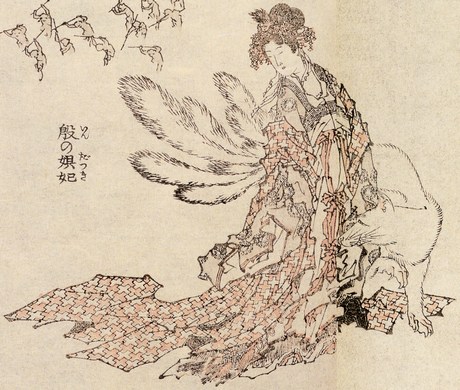
Ryu Fujisaki’s manga includes many supernatural immortals and demons, and in the legends surrounding Fengshen Yanyi, Daji is sometimes rumored to have been a kind of monster or spirit. In Japanese terms, she is often compared to fox spirits such as Tamamo-no-Mae. The famous artist Katsushika Hokusai even depicted Daji as a nine-tailed fox.
Historically, Daji’s existence as King Zhou’s deeply favored consort is mentioned in Chinese historical texts such as the Shiji (Records of the Grand Historian). In the manga, she uses a kind of seductive sorcery, but in historical terms, the key point is simpler: she was the woman King Zhou loved most.
King Zhou himself was the final ruler of the Shang. He was eventually overthrown by figures associated with the rise of Zhou, including King Wu and Jiang Ziya, also known in Japan as Taikobo.
The manga eventually moves into a much stranger, more cosmic direction, but let’s set that aside for now.
King Zhou has long had a terrible reputation. However, some interpretations of oracle-bone inscriptions suggest that he may have abolished certain cruel customs, including forms of human sacrifice that had previously been practiced. In other words, the historical picture is not entirely one-sided.
The Origin of “Wine Pool and Meat Forest”
Even so, historical writings also preserve the accusation that King Zhou would obey anything Daji said.
One of the most famous stories of their debauchery is the phrase “wine pool and meat forest,” which still survives as an expression today. According to the legend, King Zhou and Daji filled an artificial pond with wine, hung meat from the trees, and forced naked men and women of both common and noble birth to chase each other around while the royal couple drank and watched.
For Daji, this was supposedly entertainment.
Even by legend standards, the story has an unsettling, almost psychopathic cruelty. But her frightening reputation does not end with strange pleasures.
Daji and the Burning Punishment
According to the Shiji, Daji is also said to have proposed a punishment known as paoluo. In this torture, a person was either bound to a heated pillar or forced to walk across it. If they endured it, they were supposedly pardoned, but in practice it was essentially an execution.
King Zhou is said to have adopted the idea.
The manga version touches on this only briefly, but the Shiji claims that when victims failed under the punishment, King Zhou and Daji laughed at the sight.
Seen through modern eyes, it is hard not to describe that as monstrous. Of course, “psychopath” is a modern label, and ancient historical records were often shaped by politics and moral judgment. Still, the image preserved in the sources is extremely grim.
Other Chinese texts, including Biographies of Exemplary Women and the Book of Han, also record Daji as someone who enjoyed watching cruel acts. Many traditions argue that King Zhou listened to Daji’s sweet words, and that this helped bring about not only his own downfall but the collapse of the Shang Dynasty itself.
At the time, the Shang court was associated in later accounts with many brutal executions. These stories often explain that surrounding powers, including the forces of Kings Wen and Wu of Zhou, rose against Shang rule for this reason, eventually destroying the dynasty.
The End of Daji
According to accounts such as the Shiji, Daji’s life of luxury ended when King Zhou was defeated. One version says she was executed by King Wu. Another says King Zhou died by suicide first, and Daji was then beheaded by King Wu afterward.
In the latter tradition, she is said to have been described as “the woman who destroyed Zhou,” meaning King Zhou himself. If these records are accepted at face value, then the historical Daji may indeed have been remembered as a remarkably dangerous woman.
But there is one important problem.
So far, no oracle-bone inscription mentioning Daji has been found at the Shang archaeological sites. Because she appears in later historical writings such as the Shiji, it is possible that a woman resembling Daji really existed. At the same time, the version known from Fengshen Yanyi was clearly shaped and dramatized to serve the story.
For travelers and dark-history fans, Daji remains a fascinating figure because she sits right on the border between history, political propaganda, and monster legend. Whether she was a real queen, a demonized consort, or the seed of a fox-spirit myth, her shadow still lingers over the fall of the Shang.
Japanese Language
古代中国の殷王朝は中華の歴史の中で初めて成立が確認されたとする最古の国でした。この殷王朝末期に起こった歴史の出来事を面白く脚色したのが、明の時代に書かれた 「封神演義」 という小説です。中国には三大奇書、もしくは四大奇書として挙げられる「三国志演義」や「西遊記」といった有名な物語があるため、封神演義そのものはあまり取り上げられる事が少ないです。しかし、日本でも週刊少年ジャンプに連載されていた 藤崎竜の「封神演義」 によって面白い話だと認知されるようになっていきました。
ただし、この封神演義に関しては意訳の間違いや漢字の読み間違いなども指摘されていたり、原作となった翻訳版にも問題点があったことが指摘されています。では史実としての時代背景や登場人物はどんな存在だったのでしょうか?。まずは、 中国の悪女としもて名高い殷の王妃であった「妲己」 について取り上げてみたいと思います。史実の妲己もやはり悪女だったのか?。。画像引用元: 妲己 。殷の王朝が成立したとされているのは、およそ紀元前1500~1600年頃のことだったと言われています。
分かりやすくするために日本での火付け役となっている藤崎竜の封神演義と対比しますと。妲己が殷の最後の王であった 紂王に見初められ、当時の女性の中では妃という自由自在な生活が出来る身分へとつきました。。藤崎竜のマンガでは妖怪仙人が多く書かれていますが、封神演義の中で伝わる「妲己」もいわゆる妖怪、もののけの類であったのではないか?とも噂されています。日本の有名な妖怪で言えば玉藻の前などに始まる狐の妖怪です。かの 葛飾北斎は妲己を九尾の妖狐 として描いています。
さて、この妲己は 紂王に非常に寵愛されていたことは中国の「史記」などからも確認出来ます。。マンガでは妖術?テンプテーションを使うキャラでしたが、実際には 紂王から最も愛されていた妃であった訳ですね。。そして 紂王自身は殷王朝最後の王でした。これを倒したのが周の国を築いた武王や太公望などですね。。最終的にはマンガはちょっと異次元に飛んでいきますが、それは一旦置いておきましょう。元々、 紂王そのものも評判の悪いとされていた人物でしたが、実は殷が使っていた甲骨文という文字を解読した結果、 それまで悪習として行われてきた人身御供などの制度をやめさせたのは、紂王だとも判明しているそうです。
。一方で、 妲己の言うことは何でも聞いてしまっていた という悪評もやはり史書などでは伝わっています。そんな妲己の言いなりになった 紂王 の放蕩話の中で有名なものと言えば、現在でも残っている 「酒池肉林」 という言葉です。「酒池肉林」の語源となったのは、 紂王と妲己が行っていたとされる遊びの1つです。。人工池に酒を満たし、木々には肉を掛けて、平民や貴族の男女を裸にして追いかけ合いをさせ、それを眺めながらお酒を飲むというのが妲己にとっての楽しみだったのです。
。(既にサイコパス感がやばい) 。しかし、 妲己の怖さというのはこういう変わった趣味だけではなかった んですね。炮烙を見て笑ったとされる妲己。中国の「史記」によると、当時の刑罰の1つであった炮烙という人間を焼けた丸太にくくりつける、もしくはその上を歩かせて耐えれば免罪(事実上の処刑)という案を考えたのは妲己であり、 紂王はこれを採用して実行したようです。。この辺りの描写は先の漫画版ではサラッと書かれていますが、史記によればこの刑罰に失敗した人間を見て 紂王と妲己は笑い転げていたそうです。
どう見てもサイコパス。。他にも、「列女伝」という中国の女性像をまとめた史書や「漢書」などの中でも残虐な行為を見て楽しんでいたことが妲己の記録として残されています。封神演義で書かれたように、妲己の甘言を聞いたことが原因で 紂王、牽いては殷の国は滅んだという説も多いです。。当時の殷王朝では残虐な処刑が多く実行されており、これが原因となって武王と文王などの周辺諸国が立ち上がり、最終的に殷が滅ぼされたとする説が多く残されています。妲己の最後。そんな放蕩生活にあぐらをかいて楽しんでいた妲己ですが、史記などによると 紂王が討たれた際に、武王によって処刑された、もしくは紂王が自殺してしまい、その後に武王によって首を落とされたとされています。
。後者の説では「 紂を亡ぼす者はこの女なり 」と評された事も記述されているようですので、やはり 史実上での妲己も相当の悪女であったのではないか と予想されます。が、最後に問題点が1つ。実は、殷の遺跡となっている場所から妲己に関して記述のある甲骨文は今の所見つかっていなかったりします。ただし、史記などの史書で触れられていることから、封神演義でのストーリー性をもたせるために脚色はされているものの、 妲己に相当する人物は実在したのかもしれません