English Version
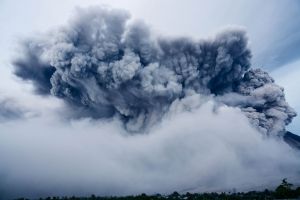
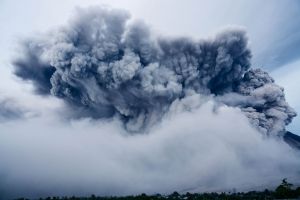
We have covered terrifying eruptions before, from superplumes to the possible catastrophic eruption of Yellowstone. Their scale is so far beyond the eruptions we usually see on the news that it can be hard to imagine without getting a chill.
Earth is covered with the scars of ancient mega-eruptions. Yellowstone, for example, is still an active volcanic system. Japan’s famous Aso Caldera, now a major sightseeing destination, is also the remains of an enormous eruption.
But one of the most extreme traces of volcanic activity on Earth lies hidden beneath the sea: the Ontong Java Plateau.
A Volcanic Scar on an Unbelievable Scale
The name “Ontong Java Plateau” may not be familiar to many travelers or horror fans. As the word “plateau” suggests, it is a raised region of the seafloor, and it lies submerged in the Pacific Ocean.
Oceanic plateaus are often connected to ancient undersea volcanic activity. The Ontong Java Plateau is considered one of the largest traces of volcanic eruption on the planet. It is a vast flood basalt formation, created when enormous amounts of lava cooled and hardened.
The plateau is said to cover roughly 2 million square kilometers, with some areas reaching around 30 kilometers thick. Scientists believe it formed about 120 to 125 million years ago and may be the remains of a mantle plume event.
A mantle plume is the same kind of phenomenon often described in Japanese occult and science media as a “superplume”: a massive upwelling of hot mantle material that can trigger volcanic activity on a scale far beyond ordinary eruptions.
The Ontong Java Plateau is thought to have formed during the same broad volcanic event as other Pacific plateaus such as the Manihiki Plateau and the Hikurangi Plateau. The amount of magma involved has been described as almost unimaginable—large enough, according to some summaries, to cover about 1% of Earth’s surface.
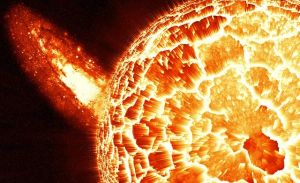
To put the scale into perspective: if a full-power eruption of Mount Fuji were ranked as “1,” the Ontong Java Plateau has been compared to something like “77,000,000.” At that point, the numbers almost stop feeling real.
By the same kind of comparison, a full-power eruption of Mount Aso is sometimes given as “600.” Even that is frighteningly huge by human standards, but the Ontong Java Plateau belongs to a completely different category.
For travelers in Japan, volcanoes such as Fuji and Aso are real places and popular destinations. Always follow official warnings, trail closures, and local guidance around active volcanic areas.
Half of It May Have Sunk Back Into the Mantle
The Ontong Java Plateau has not simply remained frozen in place. Because Earth’s plates are constantly moving, the plateau has also been affected by tectonic activity.
It is said that around half of the Ontong Java Plateau has already been drawn down into the mantle. Over immense spans of time, parts of it have been carried toward deep ocean trenches and swallowed by the planet’s interior.
This kind of plate movement is considered a normal part of Earth’s geology. But seen another way, it is unsettling: the ground beneath us is powered by forces strong enough to consume the remains of one of the largest eruptions in Earth’s history.
What If an Eruption Like That Happened Today?
The Ontong Java Plateau is a trace of one of the largest volcanic events known on Earth. So it is natural to wonder: what would happen if something on that scale occurred now?
Of course, this is hypothetical. There is no suggestion that an Ontong Java–level eruption is about to happen. But Earth has experienced events of this scale in the distant past, and no one can honestly say such a thing is absolutely impossible forever.
If an eruption of that level occurred, living things near the eruption site would almost certainly die almost instantly. In a superplume-style event, lava would not necessarily erupt from a neat, familiar volcano. It could burst out violently from land that had not looked volcanic at all.
If you were close enough to see that directly, survival would be unlikely.
If the eruption happened far away, immediate death might not be the issue. But the indirect effects could be just as terrifying. The Siberian Traps, another enormous volcanic province, are often linked to one of the worst mass extinction events in Earth’s history.
Why would a distant eruption be so deadly?
A giant eruption does not only release lava. It can throw vast amounts of volcanic ash and gases into the atmosphere. That can reduce sunlight, disrupt plant growth, and trigger food shortages.
In other words, an eruption can damage entire ecosystems and throw the food chain into chaos. Even creatures that escape the lava itself may die from the aftereffects.
For human civilization, the danger would not end with food shortages. There is also the question of global power balance. Depending on where such an eruption occurred, it could destabilize military, economic, and political systems. In a world already facing famine and infrastructure damage, conflict, looting, or war could become more likely.
If a mega-eruption on the scale of the Ontong Java event happened today, it would not be a distant disaster that people elsewhere could simply ignore. Its effects could spread across the entire planet.
The Sunken Remains of a Planetary Disaster
One of the greatest volcanic scars on Earth lies beneath the Pacific Ocean: the Ontong Java Plateau.
It is believed to be the remains of a mantle plume event, and around 50% of it is said to have sunk back into the mantle over time. Long before humanity existed, an eruption so enormous that magma may have covered around 1% of Earth’s surface actually took place on this planet.
The Ontong Java Plateau is not the kind of volcano we picture when we think of a smoking mountain. It is something far larger and stranger: a drowned scar from a disaster on a planetary scale, still lying deep under the Pacific as Earth slowly pulls it back into itself.
Japanese Language
オカルトオンラインでも取り上げてきた噴火… スーパーブルーム や イエローストーンの破局噴火 の規模が私たちがニュースで見聞きする噴火の規模とは桁違いで想像するとぞっとしてしまいます。。地球上には巨大噴火の痕跡がたくさん残されていて、イエローストーンなどは今でも活動を続けている火山です。観光地として有名な阿蘇カルデラなんかも巨大な噴火の痕跡ですが…地球上にはヤバい規模の噴火の痕跡が残されているんです。オントンジャワ海台がとにかくデカい!
噴火の規模が桁違いすぎる!。。画像:pixaboy。オントンジャワ海台…聞き慣れない言葉という方も多いことでしょう。海台というくらいですからオントンジャワ海台は海に沈んでいます。海台は海底火山の噴火の痕跡で、オントンジャワ海台は世界最大級の噴火の痕跡なんです。オントンジャワ海台の面積は、200万キロ立方メートル、厚さは30キロもある巨大な洪水玄武岩で、もともと溶岩だったものが固まってできています。オントンジャワ海台は、今から1億2,000万年前~1億2,500万年前程度前のマントルプルームの痕跡だと考えられています。
マントルプルームはオカルトオンラインでも紹介したことがある” スーパーブルーム “のこと。マントルの上昇でとんでもない規模の噴火が起きるという自然現象です。このマントルプルームの痕跡がオントンジャワ海台なのですが、その規模がとんでもないんです。オントンジャワ海台は、マニヒキ海台やヒクランギ海台などと同じ火山活動でできた海台だと考えられていて マグマの量は8000立方メートル…地球の1%をマグマが覆うほど のとんでもない規模の超大噴火でした。
ちなみに…富士山のフルパワー噴火を1とした場合、オントンジャワ海台の規模は77000000!!もう桁が違いすぎてよく解らなくなってしまいそうです。こうして比べると、富士山のフルパワーが可愛く思えてくるレベルです。同じ基準で数値化した場合の、阿蘇山のフルパワーが600ですから、私たちが考える噴火という範囲に収まらないほどのやばい噴火だったことが解ります。参考資料:buzz-plus 。オントンジャワ海台のほとんどがマントルに沈んでいる。。
画像:pixaboy。オントンジャワ海台は、地殻変動でマントルに沈み込んでいます。プレートは常に動いている…ことはご存知の方も多いでしょう。オントンジャ海台もその地殻変動の影響を受けていて、 半分にあたる50%がマントルに沈みこんでいる といわれています。少しずつ海溝に沈んでいて、今では主要な部分のほとんどがマントルに沈みこんで見えなくなってしまっているそうです。こういったプレートの動きは普通に見られるものだそうですが、言い換えれば、巨大噴火の痕跡を飲み込むほどのエネルギーが私たちの足元の地球にあるということになります。
参考資料: 地学雑誌 世界露頭百選(No. 4-5) 。巨大噴火がもし今起こったら…。オントンジャワ海台は地球上でも最大規模の噴火の痕跡…。ではもし…もしこの規模の噴火が起こったらどうなると思いますか?もちろん仮に…の話ですし、オントンジャワ海台のレベルの噴火が迫っているというわけではありません。ですが、ずっと前ではありますが、 地球でこの規模の噴火が起こっていたことも事実…これから先、絶対にないなんて誰にも言えません よね。まず、このレベルの噴火が起こると、溶岩が噴き出した場所の近くにいる生き物はすべてほぼ 即死 と考えて間違いないでしょう。
スーパープルームが起こると、火山ではない普通の場所から突然、恐ろしい勢いで溶岩が噴き出すはずです。ですから、仮にそれを目視できる場所にいたとすると、ほぼ生きてはいられないでしょう。では、もし遠くで噴火が発生したら…さすがに即死ということはなさそうです。ですが、 シベリアトラップでは地球上の生物のほとんどが死に絶えた とも言われています。それはなぜなのでしょうか…。巨大噴火では、溶岩だけでなく大量の火山灰が大気に排出されます。そうなると日照時間が減り植物の育成に大きな影響が出で食糧危機が起こるんです。
つまり、噴 火が生態系を壊し、食物連鎖に乱れが生じる というわけ…その間接的な影響で生物がダメージをうけるのです。ということは… 噴火の直接的な影響から免れられたとしても、間接的な影響で命を落とす可能性が非常に高い んです。そして、私たちに人間の世界では食糧危機以外にも問題があります。それは 世界のパワーバランスの問題 です。噴火がどこで起きるかによっては、世界の軍事的なパワーバランスが崩れて戦争や略奪が起こる可能性もあります。食糧危機が起こる上に軍事的なパワーバランスが崩れたら… 世界の経済やあらゆるシステムが大打撃を受け、今の私たちの平穏な生活を維持する言葉難しく なります。
つまり、もし…仮にこのレベルの巨大噴火が今、起こったら、対岸の火事のように他人事ではいられないということです。まとめ。世界最大の噴火の痕跡は、太平洋に沈むオントンジャワ海台です。オントンジャワ海台はマントルプルームの痕跡で、今ではその50%がマントルに沈みこんでいるといわれています。地球上の表面積の1%をマグマが飲み込んだ超巨大噴火は、私たち人類が誕生するずっと前に地球で実際に起こっていたんです。火山の噴火とはレベルが違うオントンジャワ海台は今も、太平洋の底で少しずつマントルに沈みこんでいっています。
参考資料 海洋研究開発機構 オントンジャワ海台における地球史上最大の火山活動の原因を解明(2012年)