English Version
When people think of Hoshin Engi, one of the first names that comes to mind is Taikobo: the brilliant strategist and famous main character. In Ryu Fujisaki’s manga Hoshin Engi, he is portrayed as the hero, and in the original novel version he appears as a Daoist of Mount Kunlun, a figure close to becoming an immortal, who becomes involved in the revolution between the Shang and Zhou.
One of Taikobo’s most famous scenes is the image of him fishing. According to the well-known anecdote, King Wen, the father of King Wu who would later found the Zhou dynasty, waited until Taikobo finished fishing. If you know Romance of the Three Kingdoms, it has a similar feeling to Liu Bei visiting Zhuge Liang three times to request his service.
But while Taikobo is treated as a central hero in the manga and novel, the historical figure behind him is actually surrounded by mystery. So what was the real Taikobo like?
The Historical Taikobo
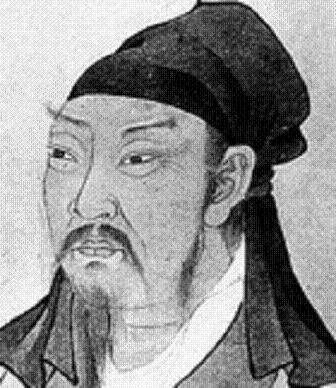
The strategist known as Taikobo is more formally called Taigong Wang Lu Shang. In the Records of the Grand Historian, his background is surprisingly unclear. His exact origins and birthplace are not firmly known.
One tradition says that before entering court service, he may have worked as a butcher or run a food-related business.
His relationship with the royal court also differs greatly from the Hoshin Engi version. According to one theory, he originally served King Zhou of Shang, also known as Di Xin, but eventually gave up on him and withdrew from public life.
After that, he is said to have wandered among various states, trying to persuade the regional lords surrounding Shang. At the time, however, his talents were apparently not recognized. In some accounts, he was not even taken seriously.
In the end, he is said to have found refuge with Xi Bo Chang, the man who would later become King Wen of Zhou. Because of this, the famous story of King Wen going to meet Taikobo while he was fishing, in search of a great military strategist, was likely a literary embellishment unique to later storytelling.
The Records of the Grand Historian includes three major anecdotes about how Taikobo came to serve King Wen, but their reliability is often viewed as questionable. As a side note, the manga version of Hoshin Engi broadly incorporates all of these anecdotes.
The common image of Taikobo is that of a genius military strategist and a central figure in the war between Shang and Zhou. However, there is also a theory that he may have been only one of several strategists in the Zhou army.
Why Was Taikobo Deified?
It is not clear how highly the real Taigong Wang Lu Shang was valued as a Zhou strategist.
However, after the Battle of Muye, the decisive conflict between Shang and Zhou, King Wu’s Zhou forces replaced the Shang. Taikobo’s achievements were recognized, and he was granted control of Qi, a state that would later become a great power by the time of Qin Shi Huang.
The Shang dynasty is said to have lasted roughly 600 years, with the transition to Zhou taking place around 1100 BCE. Much later, by around 250 BCE, during the Warring States period when Qin and other major powers struggled for dominance, Qi continued to flourish while tracing its first ruler back to Taigong Wang Lu Shang.
It is often said that Qi during the Warring States period played a major role in deifying Taikobo. Because of that, his reputation may have grown significantly in later generations.
The Mystery of Taikobo
In later times, Taigong Wang Lu Shang was deified as the founder of Qi and treated as the main character in Hoshin Engi. However, some historians have pointed out that these traditions do not always match the historical and archaeological materials.
For example, oracle bone inscriptions from the Shang period reportedly include the name Qi as a territory connected to Lu Shang. Yet sources from the Zhou period, including the age of King Wu, apparently do not record that name in the same way.
In the broad traditional narrative, Taigong Wang Lu Shang should have been serving King Wu, the future Zhou ruler, during the Shang period. So if he was already the lord of Qi during the Shang era, that creates an obvious contradiction.
It is also strange that his name does not clearly appear in later Zhou-period materials.
The story of Hoshin Engi was created much later, around the 14th to 17th centuries. Many historical figures have had their reputations reshaped by later fiction, and Taigong Wang Lu Shang may be one of the clearest examples.
Even so, Hoshin Engi remains a fascinating story. If you are interested in legends, ancient dynasties, and the strange space between history and myth, it is well worth reading.
Japanese Language
封神演義と言えば、天才軍師かつ主人公として名高い 「太公望」 が有名です。藤崎竜のマンガ「封神演義」では主人公として描かれたように、小説の封神演義においても 崑崙山の道士(いわば仙人の前の人物)として殷と周の革命に関わった人物 として登場します。また、太公望の有名なシーンと言えば釣りをしている場面です。後に周を起こす 武王の父である文王が、太公望が釣りを終えるまで待っていたという逸話 です。三国志演義で言えば、劉備が諸葛亮を迎えた三顧の礼に近いようなイメージですね。
そんなマンガや小説の封神演義では主人公として扱われている 太公望ですが、実は史実では非常に謎の多い人物 となっているんです。今回は 太公望の実像について考察 していこうと思います。史実における太公望の実像とは?。。画像引用元: 呂尚 。周の軍師として活躍した「太公望」は正式には 「太公望呂尚」 と呼ばれています。史記における太公望の実像は実に謎が多く、ハッキリとした出自や出生が判明していません。一説によると朝廷に仕える前には 屠殺人や飲食業を営んでいたとも伝わっています。
。さらに、朝廷との関係においても封神演義とは大きく違っており、元々は殷の紂王に仕えていたものの、 紂王を見限って下野したという説もあります。。この出来事があった後、諸国を放浪しながら殷を取り巻いていた周囲の諸侯に遊説して回ったようですが、この時にはまだその才覚を認められないどころか、相手にもされなかったようです。最終的に身を寄せたのが後の文王となる西伯昌だったと言われています。この事から、封神演義で描かれた有名な軍師を求めて釣りをしている太公望に会いに行った文王のエピソードはおそらく小説独自の脚色である可能性が高いのです。
周の文王の元へ身を寄せることになった逸話は大きく3つの逸話が「史記」に書かれていますが、信ぴょう性はイマイチとのこと。(ちなみにマンガ版の封神演義では大筋で全ての逸話を盛り込んでいます)。一般的に解釈されている 太公望のイメージは天才的な軍略家であったり、殷と周の戦いにおいての中心人物であった というものが強いですが、実は周軍の軍師の1人に過ぎなかったのではないか?という説もあるのです。太公望が神格化された理由とは?。実際の太公望呂尚が周の軍師としてどの程度評価されていたのかは定かではありません。
しかし、牧野の戦いと呼ばれた殷と周の決着を付ける戦争において武王が率いた周が殷に変わった時に、その功労を認められて後の、始皇帝時代には超大国となっていく「 斉 」に 封ぜられます。。殷王朝が約600年ほど続き、周に変わったのは約紀元前1100年頃だと言われていますが、それから更に時代が進み。紀元前250年頃より、秦と他の大国が群雄割拠を争う戦国時代まで 斉の国は太公望呂尚を初代の王 として繁栄していきます。。特に 太公望を神格化したのは、この戦国時代の 斉 であったと言われており、その影響で後世の評価が大きく上がったのではないか?
という説もあります。。太公望の謎とは?。。後世では 斉の国の始祖となった人物として神格化され、封神演義においても主人工として扱われる太公望呂尚ですが、これらの史実と考古学的な史料が合わないことも指摘されています。。例えば、まだ殷の時代にあった甲骨文には呂尚の領地として「 斉」の名前が見られるにも関わらず、周代(武王の時代)に入ってからの史料となる物には一切その名前が記されていないそうです。。大筋の流れで言えば、 殷の時代には太公望呂尚は後の周になる武王の元に居たはずですが、なぜか殷の時代に既に 斉の領主になっているというのは、明らかな矛盾 です。
。しかも、周の時代になってからの史料に名前がないことも不可思議な点だと言えるでしょう。封神演義の物語が作られたのは、これらの時代よりももっと後の進んだ14世紀から17世紀ころです。後世の創作として評価が左右される人物は多数存在しますが、 太公望呂尚はまさにその典型的なモデルであるとも言えるかもしれません。。とは言えど、封神演義という物語自体は面白いので、興味のある方はぜひ読んでみてください!