English Version
If you looked at the image above, did it remind you of anything from Japanese culture?
To be clear, this is not a foreign child doing Japan-themed cosplay. The boy is Jewish, praying according to religious practice. The small square box attached to his head is known in English as a phylactery, or tefillin, and it contains words from the Old Testament. Even today, some Jewish people wear tefillin during prayer.
What makes this especially striking is its resemblance to the small black headpiece called a tokin, traditionally worn by Japan’s yamabushi mountain ascetics. The number of people who wear it today is limited, but visually, the similarity is hard to ignore.
Yamabushi, Shinto, and Religious Specialists
Yamabushi are often described as spiritual practitioners who train in the mountains. They are commonly associated with temples and shrines, and are said to include monks, shrine priests, and other religious figures. In other words, people connected to Shinto and Japanese religious practice have historically taken on yamabushi-style training.
Previous discussions of the Japan-Jewish common ancestry theory often focus on similarities involving shrines, mikoshi portable shrines, and other ritual objects. This time, the focus shifts to the people involved in those rituals: Japanese priests and ascetics, and the ancient Israelite tribe of Levi.
Who Were the Levites?
The Levites are said to have been one of the ancient Twelve Tribes of Israel, descended from the line of Abraham. Their main role was connected to ritual and priestly duties.
There is one important detail: depending on how the Twelve Tribes are counted, the Levites are sometimes treated as an exception and not included in the usual count, precisely because they were a specialized priestly group.
The Levites are believed to have existed long before the time of Moses, who is traditionally associated with the Ark. What is especially interesting for this theory is that around 900 BCE, when the Kingdom of Israel in the north and the Kingdom of Judah in the south are said to have split, parts of the Levite lineage were present in both kingdoms.
As mentioned in discussions of ancient Israelite history, many of the tribes taken captive from the Northern Kingdom of Israel and carried away by Assyria later became known as the “Lost Ten Tribes,” whose ultimate fate remains uncertain.
On the other hand, some Levites who were taken to Babylon along with the two tribes of the Southern Kingdom of Judah are believed to have returned to Jerusalem, with their lineage continuing afterward.
Regardless of bloodline, the role of the Levites in Jewish tradition was priestly and ritual in nature. If we compare that to Japan, the closest equivalents would be people connected to ritual practice, such as Shinto priests at shrines or Buddhist monks at temples.
And the most striking point, according to supporters of the theory, is the similarity in ritual clothing.
Clothing, Prayer, and Mountain Training
For many Japanese people today, yamabushi are not something encountered in everyday life. Unless someone belongs to a religious tradition or has a specific interest in mountain asceticism, they may have little contact with them. As the name suggests, yamabushi traditionally train by walking harsh mountain paths and undergoing spiritual discipline.
By contrast, many Jewish people grow up within Judaism, and even children may wear specific religious items when praying. This difference reflects the modern contrast between Japanese and Jewish religious life in everyday society.
Even so, as a cultural resemblance within the Japan-Jewish common ancestry theory, the similarity is often considered noteworthy.
Yamabushi, Priests, and Jewish Ritual
There are more similarities than just the tefillin and the yamabushi tokin.
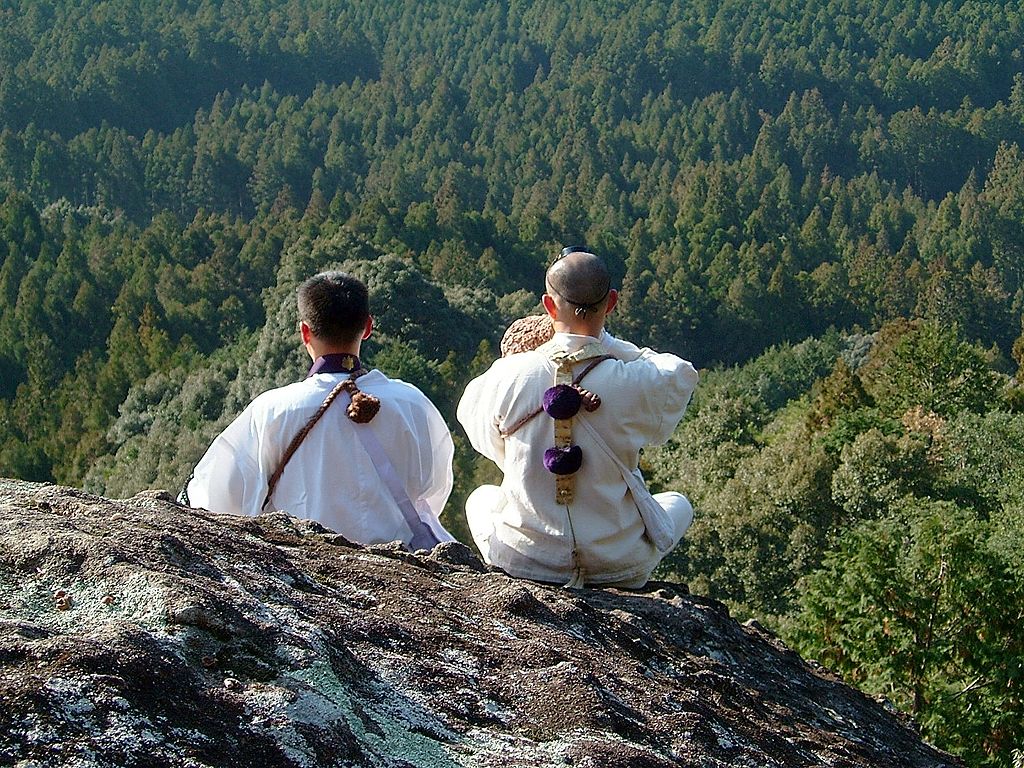
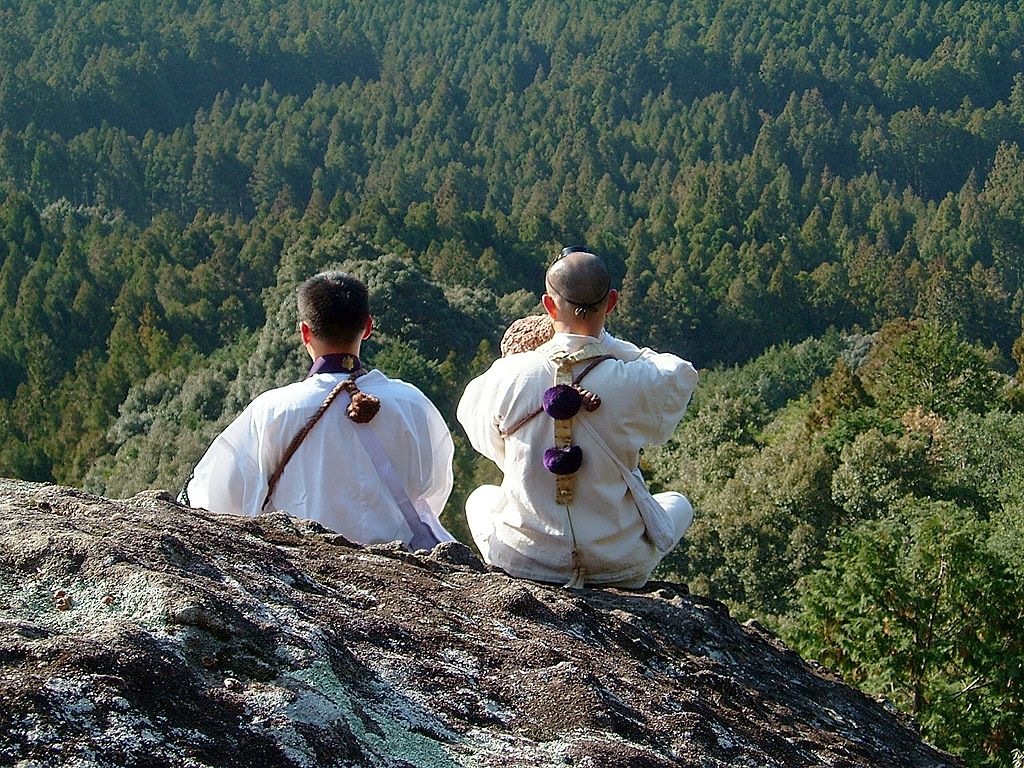
For example, yamabushi blow a conch shell during practice. In Jewish festivals and rituals, a wind instrument called a shofar, made from a ram’s horn, is used.
The ancient Hebrew Levites are also said to have worn white garments, with tassels called linen fringe at the sleeves. Supporters of the theory compare this to the white clothing worn by yamabushi and Shinto priests.
So why would Japanese religious practitioners such as Shinto priests and yamabushi resemble the Levites, who held priestly duties in ancient Jewish tradition?
Is it only coincidence?
Why Some People See a Connection
If the only similarity were the clothing of yamabushi and Shinto priests, it would be easy to dismiss it as coincidence. But believers in the Japan-Jewish common ancestry theory point to a wider set of parallels: shrine structures, mikoshi portable shrines, ritual clothing, and priestly roles.
From that perspective, they argue that it may be more reasonable to imagine an older shared custom that changed form over time, rather than a completely accidental resemblance.
Of course, these similarities do not prove a direct historical connection. They remain part of a debated and speculative theory, one that blends ancient history, folklore, religion, and mystery.
And according to supporters of the Japan-Jewish common ancestry theory, these are only a few of the strange parallels still waiting to be explored.
Travel note: If you visit sacred mountain areas connected to yamabushi traditions, such as the Kumano region, respect local rules, stay on marked routes, and do not enter restricted religious spaces without permission.
Japanese Language
上記画像を見て、なにかしら日本の文化を連想した人はいるだろうか?。この画像は決して日本マニアの海外の子どもコスプレを写しているのではない(念の為)。実は、この少年は教義に習って祈りを捧げているユダヤ人である。頭に付けた四角い箱は 「ヒラクリティー」と呼ばれる物であり、中には旧約聖書の言葉を収めている ものなのだ。ユダヤ人は現代でも祈りを捧げる際に、このヒラクリティーを衣装として付ける。このヒラクリティーは、今でこそ数は少なくなったが、日本の山伏が頭に付ける頭巾(ときん)と見た目が異様に似ているのである。
山伏は日本のいわゆる霊的な修行者であり、神社仏閣になどに所属する僧侶や神職 がなることが多い と言われている。。つまり、神道関係者が主に山伏の格好をして修行しているのである。これまでに神道に関わる神社、神輿などの共通点を紹介してきたが、今回はこれらに関わる当事者である 僧侶や神職の人々と、古代イスラエルの民族であるレビ族が担っていた役割についての共通点 を紹介していく。古代ユダヤ人のレビ族とは?。レビ族とは以前紹介した、アブラハムの家系から続く古代イスラエル12支族の中で主に「祭祀」を司っていた一族であったとされている。
12支族の数え方に例外があるのは、このレビ族は祭祀の専門職であったことから12支族に含めないというものである。レビ族はアークを作ったとされるモーセの時代よりも遥か昔から存在していたとされており、最も注目したい所は、紀元前900年前後、 北イスラエル王国と南ユダ王国分かれたとされる時に、「両方の国にそれぞれ一族の一部が分かれていた」 ということである。古代イスラエルの歴史を紹介した時にも触れたが、北イスラエル王国から捕虜となり、アッシリアに連れて行かれたほとんどの一族、すなわち失われた10支族は行方が分かっていない。
一方で、南ユダ王国の2支族と共にバビロンへ連れて行かれたレビ族の一部はエルサレムへ戻っており、その後も血脈が続いていると考えられる。。家系的な血筋はともかく、レビ族が担っていた役割はユダヤ人における「祭祀」である。これを日本に当てはめた場合は神社の神主やお寺の僧侶など、 同じく「祭祀」に関係している人達 である。そして極めつけは、この修業中の格好があまりにも共通していることである。。日本人にすれば、山伏という存在は何かしらの宗教に属していなければ、なろうともしないであろうし、触れる機会も少ない(山伏は名前の通り山の厳しい道を歩き、修業をするのが一般的である)。
一方、ユダヤ人はユダヤ教徒であることがほとんどの為、小さな子どもでも祈りを捧げる時には決まった格好になる。これは単純に現代の日本人とユダヤ人との大衆からした宗教観の違いであり、日ユ同祖論の共通点としては充分に取り上げる文化の類似点だと言っても良いだろう。山伏や神官とユダヤ教。。画像引用元: 熊野山中でほら貝を吹き修業中の山伏 。興味深いことに、山伏とユダヤ教徒の格好はヒラクリティー以外にも共通点が非常に多い。例えば、山伏はほら貝を吹き鳴らすが、ユダヤ人のお祭りには「ショーファー」 という羊の角で作った吹奏器が使われる。
。さらに古代ヘブライのレビ族は、当時から白い衣装を着ており、袖口にはリンネと呼ばれる房があり、山伏や神道の神官などが身にしている衣装にそっくりだったという。同じ「祭祀」を司る、神道の神官や修業中である山伏と、ユダヤ人の「祭祀」を司っていたレビ族の格好が似ているのは、どうしてなのだろうか?。これは単なる偶然の一致なのだろうか?。関係性を感じずにはいられない理由。もしも日本の文化である山伏や神道の神官の格好だけが、ユダヤ人の格好に似ているという話であればそれは偶然の一致だと考えるであろうが、これらを取り巻く文化、すなわち神社構造や神輿まで似ているとなれば話は別である。
元々は同じ習慣であったものが、少し形を変えて現代で共有していると考える方が、圧倒的に合理性を持つ。しかも、日ユ同祖論においての共通点はこれだけに留まるものではない