English Version
Japan is said to have around 80,000 Shinto shrines across the country. Even though many Japanese people describe themselves as nonreligious, shrines remain part of everyday life: New Year’s visits, prayers for children, local festivals, and seasonal rituals all bring people through shrine gates. It would be rare to find someone in Japan who has never visited a shrine at all.
One claim often raised in the Japan-Jewish common ancestry theory is that the structure of familiar Japanese shrines looks surprisingly similar to ancient Hebrew places of worship. This is not a mainstream historical theory, and the similarities are debated. Still, for travelers interested in folklore, occult culture, and strange historical rumors, the comparison has an eerie appeal.
Before the ancient Israelites settled in one place, their place of worship is said to have been a movable tabernacle. In this telling, it belonged to the period before the Twelve Tribes of Israel had fixed territories, including the age associated with Abraham’s journey toward Egypt and the Exodus, when Moses led the people toward Canaan, or Palestine.
At first glance, Japanese shrines and ancient Hebrew temples seem completely unrelated. But when supporters of the theory compare their layouts, they point to several parallels.
Shrine Layouts and the Ancient Hebrew Temple
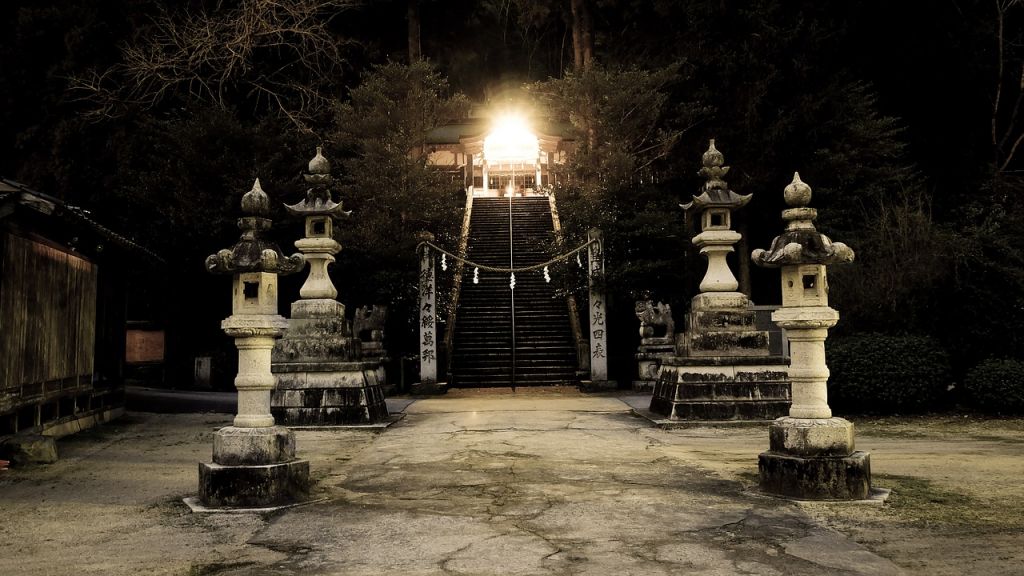
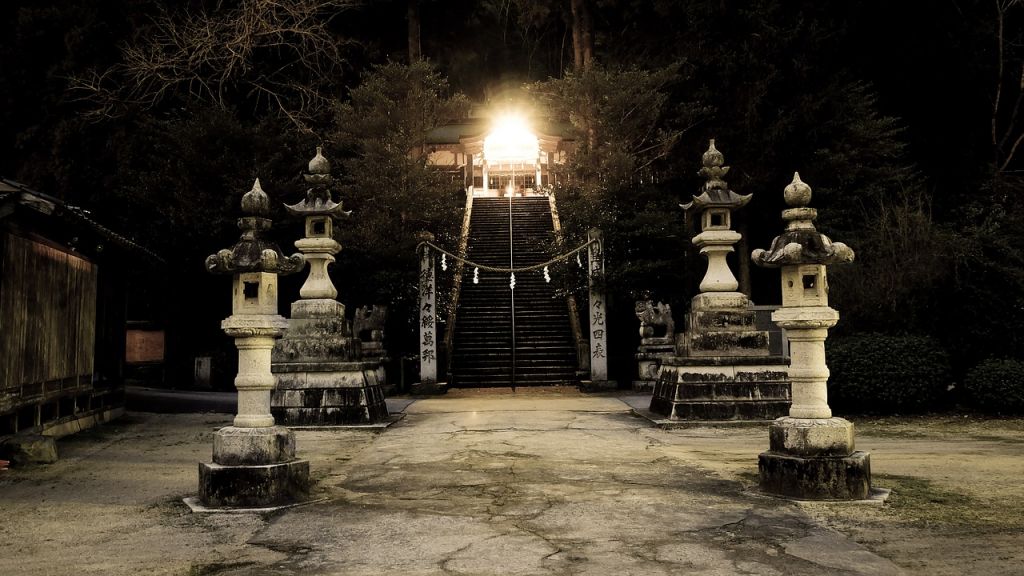
Most Japanese shrines can be roughly divided into several important areas. Near the entrance is the chozuya, or purification basin, where visitors rinse their hands before worship. After that, worshippers proceed to the haiden, the worship hall. Behind or beyond it is the honden, the main sanctuary where the deity is enshrined. Many shrines also have an offertory box where visitors place coins before praying.
According to this theory, ancient Hebrew worship sites had a comparable structure: a laver or basin for washing, a Holy Place, and the Holy of Holies. Some accounts also say that after the Israelites left Egypt, Moses and his people worshipped in a portable tabernacle, and that by the time of Solomon’s Temple, a form of offering box had also been installed.
Looked at only from this angle, the resemblance can feel almost unsettling. However, there are other explanations. One theory suggests that Japanese shrine architecture may have been influenced by Buddhist temples after Buddhism entered Japan. Buddhism originated in India and came to Japan from the Asian continent around the 5th or 6th century. Buddhism itself is said to have formed roughly 1,000 years before it reached Japan, around the 5th century BCE.
Supporters of the Japan-Jewish common ancestry theory note that this period is also connected, in legend and speculation, to the era after the so-called Lost Ten Tribes of Israel disappeared from historical records. Of course, Buddhism’s religious origin in India is not in doubt. Still, India had long been home to many mixed cultures, including ancient Aryan influences, so some writers argue that the idea cannot be dismissed as completely unrelated.
Komainu and Lion Statues
Another point often mentioned is the presence of komainu, the guardian figures found at many shrines. Their origins are debated, but few people see them as ordinary dogs. They look closer to shishi, or lion-like guardian beasts.
The theory compares them to the lion statues said to have stood on both sides of Solomon’s Temple. Komainu and lions: the connection is suggestive, at least symbolically. The same argument is sometimes extended to shishimai, the Japanese lion dance.
The writer admits not being especially knowledgeable about animals, but one thing is obvious: there are no native Japanese lions. So why do lion-like guardians appear so strongly in Japanese religious and festival culture? For believers in this theory, that question remains one of the more intriguing clues.
Shinto Rituals and Ancient Hebrew Worship
Japanese shrine rituals held inside the honden are usually private. The public may see festivals or ceremonies, but the innermost ritual acts are rarely open to ordinary visitors.
This is also compared with ancient Hebrew worship. The tabernacle was designed so that people outside could not see inside. In Solomon’s Temple and in the portable tabernacle, rituals and offerings to God were performed by specific religious officials. In modern terms, they were the equivalent of priests or shrine priests, and only those with proper roles were allowed to enter the sacred interior.
Shrines work in a similar way. Visitors can place coins in the offertory box and pray, but they usually do not take part in the hidden ritual side of shrine worship.
For supporters of the theory, these structural and ritual similarities between Japanese Shinto and ancient Hebrew religion are more than coincidence. For skeptics, they may simply be the result of common religious patterns: purification, sacred inner spaces, offerings, and restricted priestly rites.
Either way, the comparison adds a strange atmosphere to an ordinary shrine visit. If you travel to shrines in Japan, enjoy the mystery respectfully: stay in public areas, follow posted rules, avoid entering restricted spaces, and remember that these are active sacred sites, not abandoned ruins or horror attractions.
Japanese Language
現在でも日本全国には約8万という数の神社があり、日本人には無宗教な人が多いにも関わらず、お正月などには初詣で神社が賑わったり、子どもが出来た時に帯を買いに行ったり、はたまた地域によってはお祭りが神社の中で行われることもあり「一度も神社に行ったことがない」という人はほとんど居ないと言っても過言ではないのだろうか。そんな、 ほとんどの日本人が身近に感じる神社と古代ヘブライの神殿の構造が実は非常に似ていること が日ユ同祖論では挙げられる。以前、古代ヘブライの歴史を前編、後編として紹介したが、 古代ユダヤ人達の神殿は始めに移動式の幕屋 であった。
これはまだイスラエルの12支族が定住地を決める前 であり、アブラハムがエジプトへ向かっていたときや、預言者モーセがカナン(パレスチナ)を目指してエジプト脱出後までの間に作られていたとされる古代ヘブライ特有の神殿である。一見、全く関係性を感じない「日本の神社」と「古代ヘブライの神殿」の2つ 。しかし、これらの構造を知ると驚くほど共通点が多いのである。日本の神社と古代ヘブライ神殿の共通点。。神社には初詣にしか行かない、という人にはピンと来ないかもしれないが、ほとんどの神社の構造は大まかに3つに分かれている。
日本の神社の入り口付近には参拝の前に手桶などを使って手を清める「 手水舎 」が設置されている。ここで手を洗った後に向かうのが、敷地内にある各「 拝殿」になり、本堂は「本殿」と呼ばれる。加えて「お賽銭箱」があることは誰でも知っている事実である。。古代ヘブライの神殿にも、この3つの構造は共通しており「 洗盤(水で洗う場所)」「至聖所」「聖所」という構造が出来ていたそうだ。。諸説あるが、エジプトから脱出した後、移動をしていたモーセ達は移動式の幕屋式神殿で神を祈り、ソロモン神殿になってからは「お賽銭箱」も設置されていたという。
。この奇妙なまでの共通点だけを見ると逆に気味が悪いが、一説では仏教が伝来し、その寺院を真似ているという説もある。仏教はインドの起源に始まり、日本へは5世紀~6世紀頃に大陸から伝来した宗教である。仏教の成立は日本に伝わるおよそ1000年前だと言われているが、それでも紀元前5世紀頃だ。これは 古代イスラエル民族の消えた10支族が捕虜の身から解放されて何処かへいってしまった時期である。。宗教的な発祥はインドであることに疑いはないが、インドにも古代からアーリア人が入るなど多くの混在した文化が残っている。
一概に無関係とは言えないであろう。狛犬とライオンの像。神社に設置されている狛犬の起源にも諸説あるが、狛犬を単なる犬と見る人はおそらく少ない。実はソロモン神殿の両脇にはライオンの像が設置されていたという。狛犬とライオン。狛犬は犬というよりも獅子という方がしっくりくるだろう。ライオンとは獅子である。これは何を示しているのだろうか?。同じ意味では獅子舞なども言えるかもしれない。筆者はあまり動物のことには詳しくないが、日本原産のライオンなど聞いたことがない。
神道と古代ヘブライ教(原ユダヤ教)。日本の神社では、本殿の中で行われる祭事などは基本的に非公開かつ秘密である。いわゆる神社内の儀式的なものは一般的に公開されることがほとんどないのである。これも古代ヘブライ教と共通している所であり、幕屋(まくや)の性質は外から中を見えないようにしていたという役割もある。そして、ソロモン神殿や移動式の幕屋の中でも同じように 「神に捧げる式事(祭睚)」 を執り行っていたと言われている。現代で言えば、神社の神主さんにあたる人を中心とした関係者しか中には入れなかった。
神社も同じであり、お賽銭箱に寄付してお祈りをすることは出来るが、儀式的な部分に一般人が関われることはほとんどない。構造的な共通点に加えて、儀式的な部分でも共通点が多いのが日本の神道と古代ヘブライ教なのである