English Version
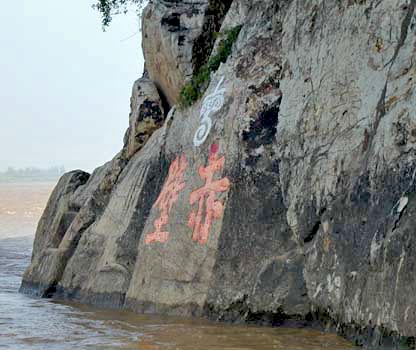
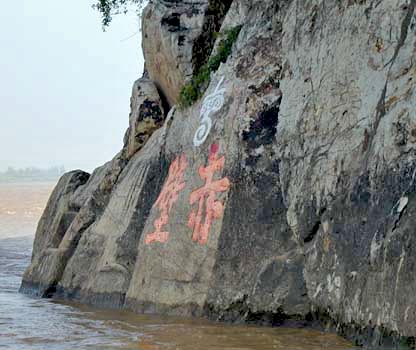
During the Three Kingdoms era, Wei, Wu, and Shu fought for supremacy in a chaotic age. The Battle of Red Cliffs, also known as the Battle of Chibi, was one of the rare battles where the future central figures of all three kingdoms appeared on the same stage.
After defeating Yuan Shao in the north, Cao Cao had already brought most of northern China under his control. His next target was Jingzhou, ruled by Liu Biao. Cao Cao marched south and set his sights on Liu Biao, but when Liu Biao died of illness, his son Liu Cong surrendered to Cao Cao.
At that time, Liu Bei had taken refuge in Jingzhou. Many of the people there looked to Liu Bei for protection, and when he fled with them, it led to the Battle of Changban.
Meanwhile, Lu Su came from Wu to investigate the situation in Jingzhou. Liu Bei joined forces with Liu Qi, another son of Liu Biao who had not surrendered to Cao Cao, and eventually moved toward an alliance with Wu. This set the stage for the fierce clash between the combined forces of Liu Bei and Sun Quan against Cao Cao.
If you visit historic sites connected to Red Cliffs or the Three Kingdoms period, stick to official public areas and follow local rules. Many places tied to ancient battles are layered with legend, reconstruction, and regional tradition.
How the Alliance Was Formed
Liu Bei and his followers are widely known for surviving the Battle of Changban and persuading Lu Su of Wu to form an alliance. However, the details of how that alliance came about differ somewhat depending on the Three Kingdoms source.
The most famous version goes like this: Zhuge Liang Kongming, who served Liu Bei, accompanied Lu Su to Wu. There, he provoked and persuaded Sun Quan and his retainers, many of whom favored surrender. This strengthened the faction that wanted to resist Cao Cao, centered on the grand commander Zhou Yu, and led to the formation of the Liu Bei–Sun Quan coalition.
This is one of the best-known episodes in Romance of the Three Kingdoms. It is said to be a combination of accounts found in the Book of Wu, in the Biography of Lu Su, and the Book of Shu, in the Biography of Zhuge Liang.
But when looking at the Battle of Red Cliffs as history, there are still details that do not sit neatly together. Those lingering mysteries are part of what makes this battle so fascinating.
Why Is Zhuge Liang Missing From Key Records?
In the records concerning Liu Bei, the future ruler of Shu, and in the records concerning Sun Quan of Wu, Zhuge Liang Kongming’s name does not appear in connection with the Battle of Red Cliffs.
Considering how important this battle later became in the history of the Three Kingdoms, the absence of Zhuge Liang’s name is one of the major puzzles when thinking about the historical Battle of Red Cliffs.
This feels especially strange in Liu Bei’s records. Liu Bei and Zhuge Liang were later described as having a bond like “fish and water.” So why does Zhuge Liang not appear there in the Red Cliffs account?
Liu Bei and Sun Quan: Allies Only on the Surface
This is also a famous theme in Romance of the Three Kingdoms, but some say the Battle of Red Cliffs was originally a scenario devised by Zhuge Liang so that Liu Bei, who was in a disadvantaged position, could gain control of Jingzhou.
In fact, after Cao Cao’s army was defeated at Red Cliffs, Liu Bei and Sun Quan’s side came into conflict over Jingzhou. In the end, it is often argued that the deep resentment surrounding Jingzhou was connected to the execution of Guan Yu.
The Real Heroes May Have Been Zhou Yu and Cheng Pu
Zhou Yu, who died young, remains a famous figure. But Wu also had another important general: Cheng Pu, a veteran who had served since the time of Sun Jian, Sun Quan’s father.
In the popular image, Zhou Yu makes plans, while Zhuge Liang predicts everything and becomes the true strategist behind the operation. On the day of the battle, Zhuge Liang’s ritual prayers cause a southeast wind to begin blowing, allowing the fire attack to succeed. Cao Cao’s huge fleet suffers massive damage, and Zhuge Liang then places generals along Cao Cao’s escape route to drive him into a corner.
However, these scenes are likely inventions of the Romance rather than reliable history. Looking at the historical accounts, it seems that the main fighting was carried out chiefly by the two Wu generals Zhou Yu and Cheng Pu.
The Fire Attack: The One Point Most Accounts Share
Across many versions of the Battle of Red Cliffs, one common point remains: the Liu Bei–Sun Quan allied forces used a fire attack to repel Cao Cao’s army.
But even this “fire attack” contains contradictions. The official Records of the Three Kingdoms and later historical writings do not fully agree, creating another layer of mystery.
One famous version says Cao Cao’s ships had been chained together through the “linked ships strategy,” so they burned rapidly once the fire attack began. But as history, this story is considered to have weak credibility.
In Part 2, we will look at several theories about the fire attack described in historical accounts of the Battle of Red Cliffs.
Japanese Language
三国志の時代には魏、呉、蜀の3つの国がそれぞれ覇権を争っていた乱世でしたが、 赤壁の戦いは後の三国の主役が揃った数少ない戦いの1つ でした。河北の袁紹を降した曹操はすでに中国の北部一帯をほとんど手中に治めており、次に狙っていたのが劉表の治めていた荊州(けいしゅう)です。荊州に南下してきた曹操は劉表に狙いをつけていましたが、劉表が病死したことによって息子の劉琮(りゅうそう)がそのまま曹操に降伏してしまいます。この時、荊州に身を寄せていたのが劉備であり、荊州の人民は劉備を頼る人が多く、これを連れて落ち延びたのが長坂の戦いでした。
呉からは魯粛(ろしゅく)が荊州の情勢を伺いに来ており、劉表の息子で曹操に降伏していなかった劉琦(りゅうき)と合流した劉備は呉と組んで曹操と対峙することになります。ここに劉備・孫権軍vs曹操軍の激戦が繰り広げられることになります。三勢力の思惑が交錯した「赤壁の戦い」。。画像引用元: 赤壁の戦い 。長坂の戦いを生き延びた劉備達は、呉の魯粛を説いて同盟を組んだことで知られていますが、実は同盟に至った経緯は三国志の書によって若干の差があります。
一般的に知られている同盟までの流れとしては。劉備の元にいた諸葛亮孔明が魯粛に伴って呉に向かい、降伏論が主体であった孫権や臣下達を挑発して説き伏せたことによって、大都督を担っていた周瑜を中心にした抗戦派を押し上げて劉備・孫権の連合軍を結成した・・・・というのが三国志演義でも有名なエピソードの1つです。この逸話は三国志の 呉書「魯粛伝」と蜀書の「諸葛亮伝」によって伝わっている話を組み合わせたものだとされています。。しかし、腑に落ちない謎が残されているのが「赤壁の戦い」を考える上での面白いポイントですので、そちらも合わせて紹介いたします。
諸葛亮孔明の名前が劉備伝、孫権伝には出てこない。後の蜀の主君である劉備の記録が残る三国志の先主伝や同じく呉の先主伝には、赤壁の戦いにおいて諸葛亮孔明という存在の名前は出てきません。三国志の歴史を考えると、非常に重要な戦いになったとも考えられるにも関わらず、諸葛亮孔明の名前が挙がっていないことは、史実の赤壁の戦いを考える上での謎の1つです。特に、水魚の交わりとも呼ばれた劉備の記録において諸葛亮の名前が登場しないことには違和感を覚えないでしょうか?
。表面上だけの同盟関係だった劉備と孫権。これは三国志演義でもよく知られているエピソードですが、赤壁の戦いは元々状況が不利だった劉備が荊州を手に入れるために諸葛亮によって考えられたシナリオであったとも言われています。事実、赤壁の戦いで曹操軍を破った後は、荊州を巡って劉備と孫権達は対立関係となり、最終的には、荊州の因縁によって関羽が誅殺されたとも考えられているからです。赤壁の戦いの功労者は周瑜と程普だった。若くして亡くなった周瑜の名前は知られていますが、実は呉には孫権の父である孫堅の代からの功労者であった程普という武将がいました。
一般的なイメージでは、周瑜が策を練ると、それらを全て先読みした諸葛亮が作戦の立案者であり、開戦当日には諸葛亮の祈祷によって東南の風が吹き始め火計が成功し、曹操軍の大船団は大打撃を受けた結果、退路に武将を置いた諸葛亮が曹操を追い詰めたように語られています。しかし、これらはあくまでも演義での創作である可能性が高く、史実を考えると主に戦ったのは周瑜、程普の2人の将軍であったことが伺えます。唯一多くに共通する火計による撃退。。赤壁の戦いにおいて、多くの共通する勝因は、劉備・孫権軍は火計を利用して曹操軍を撃退した、という点についてです。
しかし、この「火計」についても、正史の三国志やその後に残された史書では食い違うポイントがあり、謎が謎を呼ぶようなものになっているのです。よく知られているものでは、曹操の船団は「連環の計」によって繋ぎ合わせられていたため、あっという間に燃えてしまったという説ですが、これも史実では信ぴょう性の乏しい逸話なのです。後編では、史実に語られてる赤壁の戦いにおいて使われた火計について、いくつかの説を紹介していこうと思います