English Version
Among all the heroes of the Three Kingdoms, few are as beloved in China as Guan Yu Yunchang, Liu Bei’s sworn younger brother and the warrior remembered as a model of loyalty.
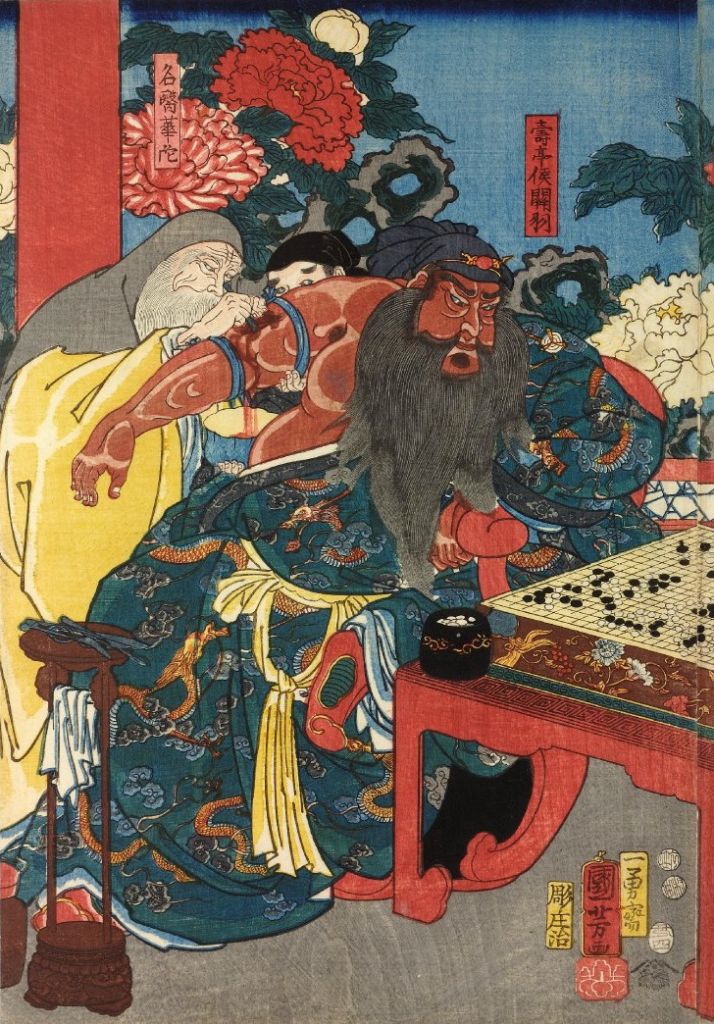
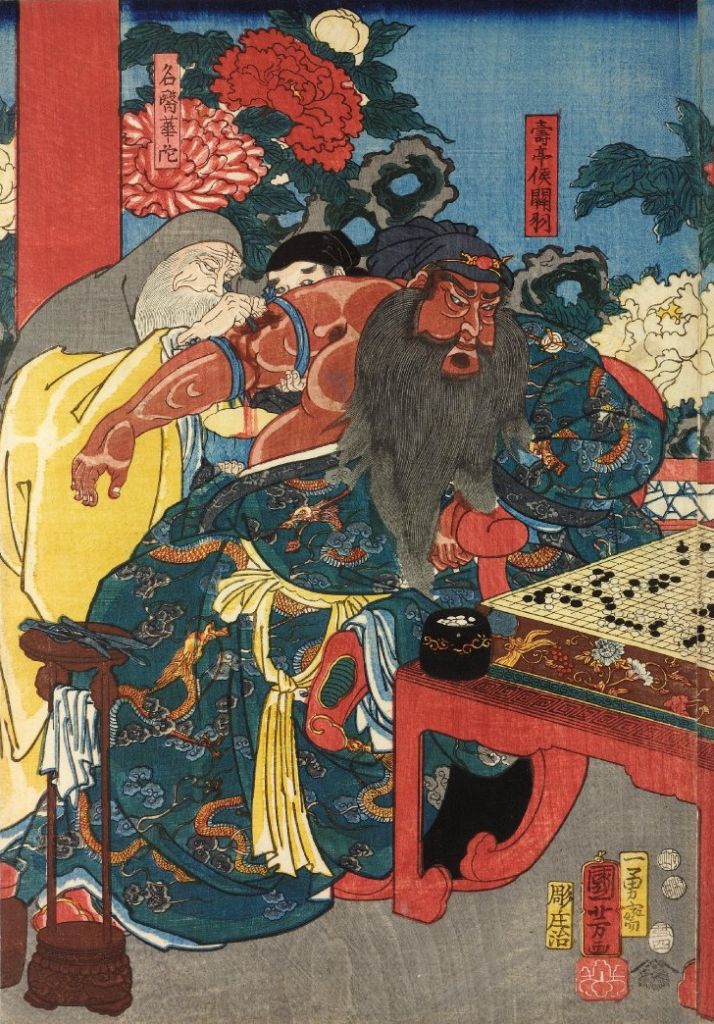
With his long beard and massive Green Dragon Crescent Blade, Guan Yu was said to be as powerful as 10,000 soldiers, standing beside Zhang Fei as one of Liu Bei’s greatest fighters. Even after his death, respect for him only grew. Today, he is worshiped in parts of China as a deity.
Guan Yu was admired across enemy lines even during the Three Kingdoms era. But why did he become such a legendary figure? Here is the story of Guan Yu’s life, his final days, and why even Cao Cao desperately wanted him as a retainer.
A rumored crime in his youth
Guan Yu is often remembered as one of the most righteous and honorable figures in the Three Kingdoms tradition. However, some accounts say that when he was young, he committed a killing in his hometown and fled to Zhuo County, where he would eventually meet Liu Bei and Zhang Fei.
In that era, especially among Liu Bei’s early followers, men like Guan Yu and Zhang Fei also had the air of wandering strongmen or chivalrous outlaws. One theory says Guan Yu may have operated a private school at the time, but he was also the kind of man who built his reputation on personal strength, courage, and masculine pride.
Zhang Fei was the younger-brother type, and then Liu Bei appeared as the reliable older-brother figure. Guan Yu and Zhang Fei were almost certainly superior to Liu Bei in martial skill, but Liu Bei’s character and human warmth seem to have won their respect.
Many people imagine Guan Yu as deeply loyal and proper, but he is also said to have been extremely self-confident. Considering his later achievements, that confidence was not empty. Even so, some say that the pride born from that confidence would eventually help bring about his death.
Why Cao Cao wanted Guan Yu
In 199, after Liu Bei betrayed Cao Cao and struck out on his own, Guan Yu was placed in charge of defending Xiapi. Cao Cao, of course, had no intention of ignoring Liu Bei’s betrayal. In 200, Cao Cao attacked Liu Bei’s forces.
Liu Bei had no real chance of victory under the circumstances and escaped to Yuan Shao. Guan Yu, however, surrendered to Cao Cao’s army.
Normally, in a situation like this, Guan Yu could easily have been killed. Instead, Cao Cao treated him with great respect and tried to win him over with gifts and favors.
This episode is also famous in Romance of the Three Kingdoms. It is said that during this period as a captive, Guan Yu received Red Hare, the legendary horse Cao Cao had obtained after defeating Lü Bu. Whether Red Hare was truly given to Guan Yu as a historical fact is uncertain.
Soon after, Yuan Shao and Cao Cao clashed in the massive struggle for control of northern China known as the Battle of Guandu. In a strange twist, Liu Bei was with Yuan Shao’s army, while Guan Yu was serving under Cao Cao.
Repaying a debt by killing Yan Liang
At the Battle of Guandu, Cao Cao’s side was considered to be at a disadvantage against Yuan Shao’s overwhelmingly powerful army.
One of Yuan Shao’s fierce generals, Yan Liang, was causing serious trouble for Cao Cao’s forces. Guan Yu, then serving as a guest general under Cao Cao, was ordered to face him and killed Yan Liang.
In Romance of the Three Kingdoms, Guan Yu’s feat is portrayed as the moment Cao Cao suddenly turns the tide. Historically, the victory seems to have depended more on Cao Cao’s overall strategy. Still, Guan Yu’s role became one of his most famous legends.
After this battle, Guan Yu learned where Liu Bei was. Using the killing of Yan Liang as repayment for Cao Cao’s kindness, he left Cao Cao and returned to his true lord. This became the famous story of Guan Yu’s thousand-li journey.
He escaped while escorting Liu Bei’s wives, passing through multiple barriers and checkpoints. Cao Cao’s men tried to pursue him, but Cao Cao is said to have stopped the chase.
Before leaving, Guan Yu sealed up all the gifts he had received and left them behind in the residence Cao Cao had given him. Cao Cao admired Guan Yu’s loyalty and ability so deeply that he wanted him as his own man, but in the end, he allowed Guan Yu to remain faithful to Liu Bei.
The last separation from Liu Bei
After the Battle of Changban and the Battle of Red Cliffs, Liu Bei entered the land of Shu. In recognition of Guan Yu’s achievements, he entrusted him with all military affairs in Jing Province.
Jing Province was a crucial front line: Wu lay to the east, Wei to the north. Even Zhuge Liang trusted Guan Yu enough to leave him responsible for this distant but vital defensive position.
But after this assignment, Liu Bei and Guan Yu would never meet face to face again.
Guan Yu, left in charge of Jing Province, was eventually driven into a corner by the strategies of Lü Meng and Lu Xun of Wu. Around eight years had passed since he and Liu Bei had parted.
Guan Yu was respected by Liu Bei and by many other commanders, but the confidence mentioned earlier may have worked against him. Lü Meng was ill at the time, and Lu Xun appeared as the newly appointed replacement. Because Lu Xun behaved with extreme humility, Guan Yu let down his guard. That mistake helped lead to his death.
Guan Yu after death
Guan Yu was executed by Wu. To redirect Liu Bei’s anger, Sun Quan sent Guan Yu’s head to Cao Cao.
When Cao Cao received the head, he is said to have treated it with great respect, mourned Guan Yu, and gave him a proper burial.
In later generations, after the history of the Three Kingdoms was written and retold, Guan Yu’s reputation as a man who lived and died by loyalty continued to rise. He came to be honored in Taoism as its 47th deity, and mausoleums and temples dedicated to him can still be found across China.
Today, Guan Yu is loved by many people as a god who grants various blessings. For travelers visiting sites connected to him, remember that many are active religious places: be respectful, follow posted rules, and do not enter restricted areas.
Japanese Language
三国志の本場中国でも一番の人気を誇るのが、劉備の義弟であり、忠義の人と呼ばれた 関羽雲長(かんううんちょう) です。長い髭に巨大な青龍偃月刀を振り回し、張飛と並んで1人で1万の兵士にも匹敵すると言われた武勇を持つ関羽は死後にも尊敬を集め続けて、現在の中国では神様の1人としても崇められています。関羽は三国志の時代においても国を超えて尊敬を集め続けたと言われていた人物でしたが、 何故これほどまでの人望を集めることになったのでしょうか?。今回は、あの曹操も自身の配下に欲しがった関羽の生涯とその最期についても紹介してきたいと思います。
実は若い頃に殺人を犯して逃亡した関羽。。画像引用元: 関羽 。三国志ではもっとも仁義に厚いイメージを持たれる関羽ですが、実は若い頃に故郷で殺人を犯したことをキッカケに、劉備や張飛と出会った涿州(たくしゅう)へ逃げてきたとも言われています。この時代、特に劉備の陣営に初期から付き従っていた関羽・張飛などは侠客(きょうかく)と呼ばれる側面を持っていました。関羽は当時、一説によると私塾を開いていたようですが、いわゆる「男」を売りにした1人でもあったのです。
弟分が張飛であり、先に付き合いがあったところに 劉備という「頼れる兄貴分」 が登場したわけですね。。もちろん、武術などの腕においては関羽や張飛の方が圧倒的に上であったのでしょうが、劉備の男気や人当たりが関羽や張飛も認めるものであったのでしょう。また、関羽というと義に厚く礼儀正しい人物をイメージされる人も多いかもしれませんが、 かなりの自信家であった ことも語られています。後年の活躍を考えると、その自信に見合った腕を持っていたことは確かですが、関羽が亡くなった原因になったのもまたこの自信から来る『おごり』であったとも言われているのです。
曹操がどうしても配下に欲しがった関羽 。。199年、劉備が曹操を裏切って独立すると、下邳の防衛を任されることになった関羽。当然、曹操は自分を裏切った劉備を見逃すはずがなく、翌年の200年に劉備達は曹操の襲撃を受けます。もちろん、当時の情勢で勝てるはずもなく、劉備は袁紹の元へ逃げ延びましたが、関羽は曹操軍に投降することになりました。当時の状況を考えると、通常であればこのときに命を奪われていてもおかしくなかった訳ですが、曹操は関羽を厚遇して自分の配下にしようと多くの貢物などを送ったようです。
。この辺りは三国志演義でも語られているエピソードですね。呂布を倒した後に曹操が所有していた名馬赤兎馬を贈られたのも、この捕虜の時代であったと言われていますが、史実として赤兎馬が贈られたかどうかは不明です。この後、袁紹軍と曹操軍は河北を争う一大決戦となった「官渡の戦い」になる訳ですが、袁紹軍には劉備が、曹操軍には関羽がいるという奇妙な状態で戦いが始まります。袁紹軍の顔良を斬って恩義を返す。。官渡の戦いは圧倒的な勢力を誇る袁紹に対して、曹操軍は不利だと言われていました。
袁紹軍の猛将であった顔良は曹操軍を悩ませる武将の1人でした。そこで、客将となっていた関羽が曹操から命令され、顔良を討ち取ったのです。三国志演義では、関羽の活躍から一気に曹操が攻勢に転じる様子が描かれますが、実際には曹操軍の作戦による勝利があったとのこと。しかし、この戦いで劉備の居場所を知った関羽は、顔良を討ったことを理由に曹操の元を離れます。これが有名な『関羽千里行』です。。多くの関所を突破する必要のある劉備の奥方を連れての脱出劇でしたが、曹操の配下がこれを追いかけようとしたものの、曹操は追撃を辞めさせたと言われています。
曹操の元を去った関羽は今までの贈り物など全てに封をして与えられていた屋敷に置いてきたそうです。曹操は関羽の主君に対する義の精神やその腕にとことん惚れ込み、自分の配下にしたがったものの、劉備への忠義心を貫くことを許したということになります。劉備との別れ。。この後、長坂の戦いや赤壁の戦いを経て、劉備が蜀の地に入るとそれまでの功績を評価された関羽は 荊州の軍を全て預かる立場になりました。。東は呉、北は魏の守りの要として、諸葛亮にも信頼された上で蜀から離れた前線を一身に引き受けます。
しかし、この采配後、劉備と関羽が直接顔を合わせることはありませんでした。。。荊州を任された関羽は、この後、呉の呂蒙、そして陸遜の策略によって追い詰められ、その生涯を終えてしまいます。この時、関羽と劉備が別れてから約8年間が過ぎていました。劉備はもちろんのこと、多くの武将に尊敬された関羽でしたが、前述した『自信が強すぎる』という性格が裏目に出てしまったのです。当時の呂蒙は病気であり、新任に代わったのが陸遜でしたが、陸遜の平身低頭な姿勢に油断をしたことで関羽は命を落としたのです。
死後、道教の神になった関羽。。画像引用元: 関羽 。関羽は呉によって処刑されましたが、劉備の怒りの矛先を変えるために、孫権は関羽の首を曹操に送りました。関羽の首を届けられた曹操は丁重な埋葬をし、喪に服して手厚く葬ったと言われています。三国志が史書として書かれた後世、忠義に生きた関羽の評価が上がったことによって道教での47人目の神になったという経緯があり、現在でも中国各地には関羽を祀る霊廟が残されています。現在では様々なご利益のある神様として沢山の人々に慕われています