English Version
We have covered space-related mysteries before, from Betelgeuse potentially going supernova to Proxima Centauri, a nearby star system with planets that may have environments somewhat similar to Earth. This time, though, the scale is much bigger—both in time and in size.
Let’s talk about galaxies colliding.
A galaxy is a vast collection of stars. At the center of many galaxies, including our own, scientists believe there is a black hole. These enormous systems often form disk-like spirals on a scale that is almost impossible to imagine. Our solar system belongs to the Milky Way Galaxy. And near the Milky Way is another huge galaxy: Andromeda.
And apparently, the Milky Way and Andromeda are going to collide.
What Is the Andromeda Galaxy?
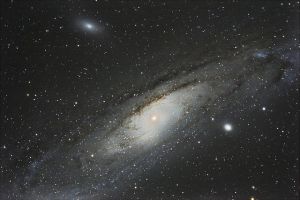
The Andromeda Galaxy is the nearest major spiral galaxy to the Milky Way, and it is larger than our galaxy. Under the right conditions, Andromeda can even be seen with the naked eye.
If you are somewhere with little to no light pollution, you may be able to spot it as a faint, hazy glow spread across the night sky. With binoculars made for stargazing, it is even possible to make out its spiral shape.
Andromeda contains around one trillion stars.
With that many stars, it is tempting to wonder whether Andromeda might also contain planets similar to Earth. Even though it is about 2.5 million light-years away, it is bright enough to be visible from our planet.
More precisely, Andromeda is estimated to be about 2.55 million light-years from the Milky Way, with a diameter of roughly 250,000 light-years. By comparison, the Milky Way is about 100,000 light-years across. The Milky Way is not a small galaxy—but Andromeda is much larger.
There are countless galaxies in the universe, but on a cosmic scale, Andromeda and the Milky Way are practically neighbors.
And those neighboring galaxies are moving toward each other at tremendous speed.
Will Andromeda and the Milky Way Really Crash?
Andromeda is known to be approaching the Milky Way at about 122 kilometers per second. The Milky Way is also moving toward Andromeda.
Based on current calculations, the two galaxies are expected to collide in about 4 billion years.
If someone could look up at the night sky billions of years from now, Andromeda’s vast disk would loom across the heavens, lighting up the sky on an unimaginable scale.
Then, the Milky Way and Andromeda would collide.
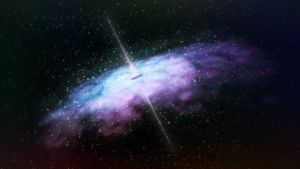
The merger is expected to take around 2 billion years. Some descriptions suggest that the two galaxies could eventually become a single massive object, possibly with quasar-like activity depending on conditions around the central black holes.
What Happens to Earth?
The first question is obvious: would Earth survive?
It sounds terrifying to imagine stars smashing into one another. But in both Andromeda and the Milky Way, the distances between stars are so enormous that direct collisions between stars are thought to be unlikely.
However, Earth’s true fate is not expected to be decided by the Andromeda collision.
Before that happens, the Sun itself will change.
As the Sun ages, it is predicted to grow brighter and hotter. Some estimates suggest that about 1.4 billion years from now, Earth may lose all of its surface water, making life as we know it impossible. As the Sun continues toward the end of its life, it will expand, and Earth could become a scorching hellscape where living things can no longer survive.
In other words, life on Earth will not be around to witness the eerie and magnificent sight of Andromeda filling the sky as it collides with the Milky Way.
Still, if the solar system somehow still exists at that time, it may be moved by the gravitational chaos of the galactic collision. It is not clear whether it would be pulled toward the center of the new merged galaxy or flung outward.
If the solar system were drawn closer to the galactic center, the influence of other stars could dramatically change its environment. The Milky Way is known to contain stars with extraordinary mass and energy. If the solar system were pulled near such objects, Earth’s environment could change so severely that life would be impossible.
It feels a little disappointing—and maybe a little relieving. After all, this is a story set 4 billion years in the future, so none of us will ever see it.
Still, the thought of Andromeda slowly approaching across the night sky is strangely tempting. It would be an awe-inspiring, almost apocalyptic view.
Reference: Business Insider
“Ah, I wanted to see it!”
“Too bad. That’s impossible.”
“Can’t we ask Andromeda to come a little sooner?”
“That is way too unreasonable.”
Are Galaxy Collisions Rare?
The universe contains many galaxies, and they come in all kinds of sizes and shapes. Because of that, galaxy collisions are not considered especially rare.
Sometimes, galaxies merge and grow into even larger galaxies.
There are also galaxies with unusual shapes. One example is M51, often called the Whirlpool Galaxy. It cannot be seen with the naked eye, but it has a distinctive form: a large galaxy connected to a smaller companion galaxy.
Space is full of strange and beautiful objects.
Summary
The Andromeda Galaxy, which can be seen with the naked eye under dark skies, is a much larger spiral galaxy than our Milky Way. It is about 2.5 million light-years away, but scientists know that Andromeda and the Milky Way are moving toward each other at incredible speed.
In about 4 billion years, the two galaxies are expected to collide.
It is not the kind of horror anyone on Earth will live to see—but as cosmic nightmares go, few are bigger.
Japanese Language
ベテルギウスの超新星爆発や地球に良く似た環境を持つ惑星が存在するプロキシマケンタウリなど、宇宙関連の記事をオカルトオンラインでご紹介してきましたが、今回は時間も規模もかなり大きな話… 銀河の衝突 についてお話ししたいと思います。銀河はたくさんの星が集まった集合体のことです。銀河の中心にはブラックホールがある と考えられていて、とてつもなく大きな円盤型の渦をまいています。私たちが住んでいる太陽系は天の川銀河に属しています。そして、天の川銀河のお隣にはアンドロメダ銀河という大きな銀河があります。
この天の川銀河とアンドロメダ銀河…実はね…衝突するらしいんです。。アンドロメダ銀河って?。。画像: Pixabay 。アンドロメダ銀河は天の川銀河から最も近い銀河で、 天の川銀河より大型の渦巻き銀河 です。実はアンドロメダ銀河は環境がよければ、 肉眼で観察できる銀河 でもあります。光害がない環境なら、肉眼でもぼんやりと夜空に光が広がっているのが解ります。天体観測用の双眼鏡を使えば、渦巻きの形を見ることもできる銀河 です。アンドロメダ銀河の恒星の数は1兆個!
恒星が1兆個ですから、アンドロメダ銀河にも地球に似た惑星があるかもしれません。250万光年離れていても肉眼で見える明るい天体です。アンドロメダ銀河の距離は約255万光年で、直径およそ25万光年です。天の川銀河は直径約10万光年ですから、アンドロメダ銀河が大きな銀河であることがわかります。ちなみに天の川銀河も決して小さい銀河ではありません。それ以上にアンドロメダ銀河が大きいんです。宇宙には銀河がたくさんあるんですが、 アンドロメダ銀河と天の川銀河は宇宙のレベルで考えればなかなかのご近所さん 。
お隣の銀河なんです。そして、 アンドロメダ銀河と天の川銀河はものすごい勢いで近づいている そうなんです。アンドロメダ銀河と天の川銀河がぶつかる?!。。画像: Pixabay 。。アンドロメダ銀河は私たちの天の川銀河に向かって 秒速122キロで近づいている ことがわかっています。そして、天の川銀河もアンドロメダ銀河に近づいているんです。そして、計算してみると今から 40億年後にはアンドロメダ銀河と天の川銀河は衝突する そうなんです。今から何十億年経過した夜空を見上げるとアンドロメダ銀河の円盤が空を大きく照らします。
そして、天の川銀河とアンドロメダ銀河は衝突!!約20億年かけてクエーサーというひとつの天体になると予想されています。地球は大丈夫なの?。このとき、地球がどうなるかが気になりますよね。天体と衝突しないか心配…。ですが、アンドロメダ銀河も 。。画像: Pixabay 。天の川銀河も星と星の間が離れているため、衝突するリスクは少ない そうです。ただ…地球の運命は天の川銀河とアンドロメダ銀河の衝突ではなく、その前に、太陽が寿命を迎えることで終わります。
太陽が膨張することで、今から14億年には地球からは水がすべてなくなって生命が存在しなくなると予想されています。つまり、太陽は寿命が近づくとどんどん膨らんでいきます。そして、 地球は灼熱地獄となり、地球上の生物は終わりを迎える…。地球上の生命体がアンドロメダ銀河と天の川銀河が衝突する夜空の光景を目の当たりにすることはありません。。ですが、もしまだ太陽系があったとしたら…太陽系はこの衝突で移動する可能性があるそうです。銀河の中心に引き寄せられるのか、それとも銀河からはじきだされてしまうのか…はっきりとは解りません。
ただもし、銀河の中心に引き寄せられたとしたら…他の恒星などの影響を受けて環境が劇的に変化する可能性はあります。天の川銀河には、 質量とエネルギーが桁違いのとんでもない恒星の存在も確認されています ので、もし、そんな恒星の近くに引き寄せられたとしたら…。地球環境は劇的な変化を遂げて生命は存在できなくなるでしょう。。残念なような…ちょっとほっとしたような気持ちになりますが、 もともと40億年後のお話ですから見ることは全然に無理!ただ、アンドロメダ銀河が迫ってくる壮大な夜空…見てみたい気もします。
参考資料: businessinsider 。えーーー見てみたかったーー。残念でした~それは、無理だね。アンドロメダ銀河にもうちょっと早く来てって言っといてよー。無茶苦茶すぎるって…。銀河の衝突は珍しいの?。宇宙にはたくさんの銀河があります。大きさも形もそれぞれですから、 銀河の衝突は珍しいことではありません。。銀河同士が合体してさらに大きな銀河に成長することも あります。ちょっと珍しい形の銀河もあります。M51「子持ち銀河」と呼ばれる天体です。
。残念ながら肉眼で観察はできませんが、子持ち銀河は大きな銀河と小さな銀河が繋がっているちょっと変わった銀河・・・いろんな天体が宇宙にはあるんですね…。まとめ。肉眼で観察できるアンドロメダ銀河は、私たちの天の川銀河よりずっと大きな渦巻き銀河です。地球との距離は約250万光年とかなり離れていますが、アンドロメダ銀河と天の川銀河はものすごい勢いで近づいていることがわかっています。そして、今から40億年後にはアンドロメダ銀河と天の川銀河が衝突すると考えられています