English Version
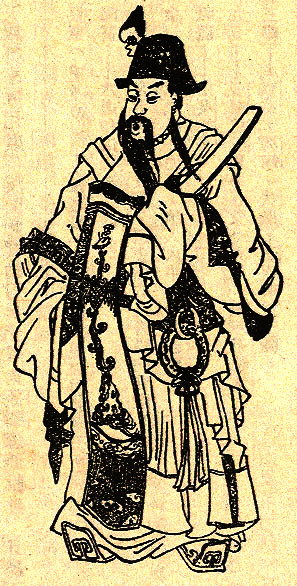
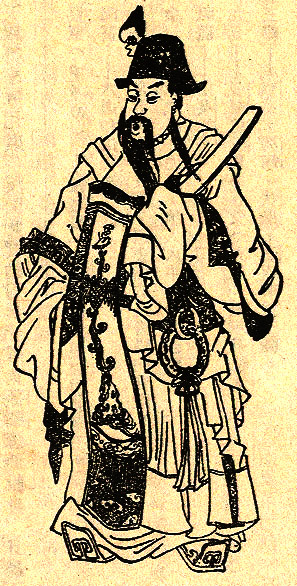
The term “jobber” almost feels made for him. Among the many heroes and warlords of the Three Kingdoms era, Yuan Shao stands out as one of the most frustratingly disappointing figures. Even Chen Shou, the historian who compiled the Records of the Three Kingdoms, strongly criticized his repeated failures. Considering the power Yuan Shao once held, it is hard not to see him as a dangerously poor leader.
In Romance of the Three Kingdoms, Yuan Shao plays an active role early on, but his conflict with Cao Cao ultimately leads to the destruction of not only himself, but his entire clan. This article focuses on the missteps of Yuan Shao: a man born into one of the most prestigious families of his age, yet brought down by a series of disastrous decisions.
The Yuan Clan: Four Generations, Three Dukes
The phrase “Four Generations, Three Dukes” refers to the Yuan clan’s extraordinary prestige. For four generations, members of the family held positions among the highest offices of the Han court. Yuan Shao was born into this elite lineage and entered government service around the age of 20.
In his youth, he was said to be modest despite his noble background. Early in his official career, he was also on friendly terms with Cao Cao, and records suggest that many people admired him.
Yuan Shao began to move onto the larger stage of Three Kingdoms history during the campaign against the Ten Attendants, the powerful eunuchs who dominated the imperial court.
At the time, the eunuchs were locked in conflict with the General-in-Chief He Jin, a relative of the emperor by marriage. He Jin gained power for a time, but when he moved against the Ten Attendants, he was assassinated instead. Afterward, Yuan Shao stormed the palace and slaughtered the eunuchs.
With the eunuchs removed from the court, the struggle among regional warlords intensified. Yuan Shao tried to take advantage of the situation, but when Dong Zhuo took control of the emperor and entered Luoyang, Yuan Shao temporarily fled.
A Failed Leader of the Anti-Dong Zhuo Coalition
As Dong Zhuo installed the emperor and ruled with brutality, Qiao Mao, the governor of Dong Commandery, reportedly sent out calls across the country for a coalition against him. In Romance of the Three Kingdoms and some popular tellings, this call is sometimes associated with Cao Cao.
Yuan Shao, with his noble birth and strong reputation, was elevated as the leader of the anti-Dong Zhuo coalition. He came to command many warlords who would later become famous in their own right.
Yet even though numerous regional lords gathered soldiers outside Luoyang, Yuan Shao failed to take aggressive action against Dong Zhuo’s army. Instead, figures such as Sun Jian and Cao Cao moved independently and fought on their own.
This indecisiveness cost Yuan Shao trust. Cao Cao and others criticized him, and the coalition eventually disbanded without achieving a major victory.
Conflict with Yuan Shu and Gongsun Zan
Yuan Shu was a relative of Yuan Shao from the same Yuan clan, but after the anti-Dong Zhuo coalition collapsed, the two came into conflict. Yuan Shao also became enemies with Gongsun Zan.
At this point, Cao Cao and others were still connected to Yuan Shao’s side. Yuan Shao used these relationships to oppose Yuan Shu and Gongsun Zan, supporting influential figures while also making use of forces such as the Qiang people and Lü Bu, who had fled the capital after assassinating Dong Zhuo. Meanwhile, Yuan Shao prepared for a long war against Gongsun Zan.
The campaigns against Yuan Shu during this period were carried out by figures such as Cao Cao and Liu Bei, and Yuan Shao supported them. He does not always appear at the front of these stories, but this was the period when he worked to consolidate his base.
During the same era, Liu Bei formed ties with Tao Qian and fought against Lü Bu, but Yuan Shao did not actively intervene in every conflict. Yuan Shao was fighting his own battles, though Cao Cao arguably faced more major enemies at the time, including Lü Bu, Liu Biao, and Yuan Shu.
Even after Cao Cao took custody of Emperor Xian and established his own position, Yuan Shao was still appointed General-in-Chief and succeeded in building a firm political status.
After Yuan Shao drove Gongsun Zan into a corner, he had few real rivals left in the Central Plains. To Cao Cao, who held the emperor, Yuan Shao stood as an overwhelming power.
Some accounts say Yuan Shao’s forces were roughly five to ten times larger than Cao Cao’s. Despite that huge advantage, Yuan Shao would lose the struggle for power.
The Battle of Guandu
One of the great turning points in Three Kingdoms history was the Battle of Guandu in 200 CE.
As Cao Cao’s rivalry with Yuan Shao deepened, Cao Cao controlled key central territories while holding the emperor: Yan Province, Yu Province, the Sili region, and Xu Province. This placed him in the center of China, squeezed between Wu to the south and Yuan Shao to the north.
Yuan Shao, however, was known as the power of Hebei. North of the Yellow River, he had built a solid base across Ji Province, Qing Province, Bing Province, and You Province. The two sides faced off, with Yuan Shao preparing to move south and seize the Central Plains.
In 199, Liu Bei came into conflict with Cao Cao and was attacked. This is the famous moment when Guan Yu surrendered to Cao Cao, while Liu Bei escaped and turned to Yuan Shao for protection.
The forces at Guandu are often described as roughly 100,000 for Yuan Shao and 20,000 to 40,000 for Cao Cao. Most warlords were believed to expect Yuan Shao’s victory. Instead, Yuan Shao lost everything in this battle and began the road to ruin.
Many studies have examined why Yuan Shao lost, but one commonly cited reason is that he wanted a quick decisive battle against Cao Cao. Yuan Shao is said to have looked down on Cao Cao and underestimated his strength.
Yuan Shao Failed to Judge His Advisers
Cao Cao’s greatest fear was being dragged into a long campaign against Yuan Shao and running out of supplies.
Tian Feng, one of Yuan Shao’s subordinates, initially argued for a lightning campaign. But after analyzing Cao Cao’s weakness, he pointed out Cao Cao’s supply problems and proposed a long war instead. Ju Shou, who had greatly contributed when Yuan Shao secured the Hebei region, also advised a prolonged border war, arguing that Cao Cao’s possession of the emperor created a difficult political situation.
Yuan Shao ignored these recommendations. He remained fixated on a short war, and Ju Shou eventually gave up on him.
On the other hand, Guo Tu and Shen Pei advised a quick decisive battle. They also proposed reducing the authority of Ju Shou, who had been one of Yuan Shao’s major contributors.
Because Yuan Shao underestimated Cao Cao, he accepted the advice of Guo Tu and Shen Pei. Tian Feng was even imprisoned.
Then Xu You, another adviser, abandoned Yuan Shao after his advice was ignored and defected to Cao Cao. Yuan Shao’s side had started with an overwhelming advantage, but his own poor judgment gradually worsened the situation.
When Cao Cao heard from Xu You that Tian Feng had been imprisoned, he is said to have remarked bitterly that Tian Feng was the very man who had saved his life.
Yuan Shao’s Supplies Were Burned
Ju Shou repeatedly warned that the grain stores at Wuchao needed to be protected by a separate force. He feared Cao Cao’s army would attack or plunder them.
Chunyu Qiong was in charge of the supplies at Wuchao, but Cao Cao’s forces caught him off guard. The stores were burned.
When Zhang He and Gao Lan of Yuan Shao’s army heard that Chunyu Qiong had lost the supplies, they surrendered to Cao Cao. Both Zhang He and Gao Lan later served Cao Cao well as capable generals, so their defection was a severe blow to Yuan Shao.
In warfare of that era, food supplies were essential. Yuan Shao’s failure to treat them as a top priority was clearly one of the major reasons his army collapsed.
Defeat, Betrayal, and the Fall of the Yuan Clan
With many retainers defecting and chaos spreading through his camp, Yuan Shao had no choice but to retreat to Hebei.
After Yuan Shao fled, Cao Cao did not immediately pursue him too far. However, Yuan Shao’s succession problem soon caused internal conflict. Yuan Shao died of illness in 202, and afterward Cao Cao advanced north. Yuan Shao’s sons and relatives were eventually destroyed, bringing an end to a clan that had once possessed overwhelming military power.
Yuan Shao was said to have governed the common people well, and many mourned his death. Although he failed to show real talent in military affairs, later figures of Wei such as Guo Jia and Xun You are said to have praised his benevolent rule.
Still, in an age of chaos, a single decision could lead to catastrophic defeat. Unlike leaders such as Liu Bei, Cao Cao, and Sun Quan, Yuan Shao did not widely listen to the advice of his subordinates. That may have been the greatest cause of his downfall.
Japanese Language
噛ませ犬とはまさにこのこと。今回紹介する三国志の登場人物は、個人的に数多くの英雄の中でも非常に残念すぎると感じる1人、袁紹です。その失態の数々は三国志を書き起こした陳寿にも大きく非難されているほどであり、当時の勢力を考えると暗愚な人物であったと言わざるを得ません。三国志演義の物語でも、序盤は活躍する武将ではありますが、曹操との争いによって自身も含めて一族郎党はことごとく滅ぼされることになってしまうのです。本記事では、名門の家に生まれながら、数々の失態を重ねた袁紹のエピソードを中心に紹介していきます。
四世三公(しせいさんこう)の名門 袁家とは?。。画像引用元: 袁紹 。四世三公(しせいさんこう)とは代々4世代に渡って当時の官職の最高位の人物を袁家が担ったことから呼ばれた名門を表す言葉の1つです。袁紹は名門袁家の中でも20歳からは官職につき、若い頃は名家に生まれながらも周囲には謙虚であったとも言われています。また、官職についた初期の頃には曹操とも親交があり、多くの人物に慕われていたという記述も残っているほどです。三国志の時代に大きく袁紹が動くのは宦官の十常侍討伐の頃でした。
この頃、朝廷で権力を大きく持っていた宦官達と大将軍何進(かしん)の間では対立が起こっており、帝の外戚にあたる何進が、一時期は勢力を強めています。しかし、十常侍を狙った何進は逆に誅殺されてしまい、その後、宮中に押し入って宦官達を皆殺しにしたのが袁紹でした。十常侍達を含む宦官を朝廷から廃したことによって諸侯の勢力争いが激化し、袁紹もこれに乗じようとしましたが、董卓が帝を保護して洛陽に入ったことをキッカケに一時的に逃亡を図ります。反董卓連合軍の盟主としての失態。
。董卓が帝を擁立して暴虐を尽くしていたことに対して 橋瑁(きょうぼう)という東群太守が全国に反董卓連合軍の檄文を飛ばし、これに呼応して袁紹達も集まることになります。。※三国志演義などでは曹操が檄文を飛ばしたとも言われています※ 。この時、名家出身であり人望のあった袁紹が反董卓連合軍の盟主に持ち上げられ、後に活躍する多くの武将達を率いることになりました。多くの諸侯が反董卓連合軍として洛陽の外に兵士を集結させたにも関わらず、袁紹は董卓軍を相手に積極的に戦うことが出来ず、孫堅や曹操などが独自に軍を動かして戦うことになってしまいます。
この時の行動によって信頼を失った袁紹は曹操などから批判される立場になり、大きな成果を上げることが出来ずに反董卓連合軍は解散してしまいました。袁術・公孫瓚との対立。袁術は袁紹と同じ袁家の親戚でしたが、反董卓連合軍解散後には対立することになり、加えて公孫瓚とも対立関係になります。逆に、曹操などはまだ袁紹の配下にいたため、これらの立場を利用して袁術・公孫瓚に対立すべく、羌族や董卓を暗殺して都から落ち延びてきた呂布などを利用しつつ有力者を支援する形で立ち回り、自身は公孫瓚との長い戦いに備えていました。
袁術討伐はこの時期の曹操や劉備によって行われたものであり、これらを支援しています。あまり表には出てきませんが、この時期は地盤固めに走っていたのが袁紹という人物でした。この間に劉備が陶謙と親交を結んだり、呂布と争っているけど、そこには積極的に介入していなかったんだね。袁紹は袁紹で戦ってはいたんだけど、どちらかと言うと曹操の方がこの頃は敵が多かったね。呂布や劉表、袁術なんかの大きな存在を相手にしてたからね。曹操が献帝を擁して自立した後にも、実は袁紹は大将軍に任命されており、確固たる地位を築くことに成功しています。
公孫瓚を追い詰めた袁紹はもはや中原にほとんど敵はおらず、帝を抱えた曹操にとっては強大な勢力として立ちはだかっていたのです。袁紹と曹操の兵力差は約5倍から10倍だったとも言われており、圧倒的に袁紹の方が上だったにも関わらず、袁紹は曹操との権力争いに敗北してしまうことになります。曹操との雌雄を決した「官渡の戦い」。。三国時代の歴史において、勢力図の大きな転換期になったと言われているのが、西暦200年におこった官渡の戦い(かんとのたたかい)と呼ばれる決戦でした。
次第に袁紹と対立を深めた曹操は、帝を抱えた状態において兗州 ・ 豫州 ・ 司隸 ・ 徐州を手中に収めると、南は呉、北は袁紹に挟まれる中国の中心地域を勢力下におくことになります。しかし、河北の袁紹と呼ばれたように、黄河から北にかけての 冀州・ 青州 ・ 并州 ・ 幽州は袁紹が完全なる地盤を築いており、南征することによって中原を抑えようと睨み合うようになるのです。199年には、劉備が曹操と対立関係になり、曹操に攻められます。有名な逸話である関羽が曹操に降伏したのはこのタイミングであり、劉備は逃げ延びて袁紹を頼ることになりました。
この戦いの兵力は一般的に袁紹軍が約10万、曹操軍は2万~4万ほどの数だったと言われています。ほとんどの諸侯が袁紹が勝つと考えていた戦いでしたが、結果的には袁紹はこの戦いで全てを失い、滅亡の道をたどることになるのです。袁紹敗北の理由は、数多くの研究がおこなわれていますが、代表的なもので言えば、曹操との早期決戦を望んだことが主たる敗因になったとされています。袁紹は完全に曹操を見下しており、その力を侮っていたとも言われています。配下の進言を判断出来なかった袁紹のミス。
曹操が南征してくる袁紹に対して、一番危険視していたことは長期戦に持ち込まれて兵糧不足になることでした。状況を分析した袁紹の配下であった田豊は、当初は電撃戦を主張したものの、曹操の弱点であった兵糧不足を指摘し、長期戦を提案しています。また、袁紹が河北一帯を支配した時に大きく貢献した 沮授(そじゅ)は曹操が帝を擁立していることを理由に、国境周辺での長期戦を提案していました。。これらの進言に袁紹は耳を貸さず、あくまでも短期決戦にこだわったことから、沮授には見放されることになります。
一方で 郭図と審配という軍師は短期決戦を献策し、功臣であった沮授の権力を落とす提案をおこないます。。曹操を侮っていた袁紹は後者の2人の短期決戦を採用し、田豊にいたっては投獄してしまうことになったのです。さらに、幕僚であった許攸(きょゆう)は進言を聞き入れなかった袁紹を見限り、曹操陣営に裏切ることに。当初、圧倒的に有利だった袁紹の陣営は袁紹自身の判断ミスにより、形勢を不利にしていきます。許攸から田豊の投獄を聞いた曹操は、田豊こそ自分の命の恩人であると皮肉を漏らしたとも言われています。
兵糧を逆に燃やされた袁紹軍。沮授は再三、烏巣にある兵糧に対して別働隊を配置させて守るべきであるという主張をし、曹操軍による略奪を警戒する進言をしていました。烏巣で兵糧を取り仕切っていた淳于瓊(じゅんうけい)はスキを突かれ曹操軍に襲われてしまい、兵糧を全て燃やされる結果に。淳于瓊による兵糧を失った報せを聞いた袁紹軍の張郃(ちょうこう)と高覧(こうらん)は曹操に降伏することになります。張郃や高覧は、曹操に仕えた後も活躍した有能な将軍であったため、一気に袁紹の勢力は衰えることになったのです。
当時の食料問題は、軍事行動における要であり、これを袁紹が重要視しなかったことが降伏の大きな原因になったことは明らかです。多くの裏切りから敗北した袁紹。。多くの臣下の裏切りなどが重なり、混乱に陥った袁紹はやむを得ず河北に敗走することになります。袁紹が敗走した後は曹操も深追いをすることはなかったものの、袁紹の跡継ぎ問題によって内乱が起こりました。その後、袁紹は202年に病気によってこの世を去ると、北へ侵攻した曹操によって袁紹の息子達一族も滅ぼされることになり、圧倒的な軍事力を誇った袁紹の一族は滅亡してしまいます。
袁紹は民衆に対しては善良な政治をしていたため、多くの民が悲しんだと言われており、軍事面ではその才覚を発揮出来なかったものの、後に魏の郭嘉(かくか)や荀攸(じゅんゆう)などからもその仁政を讃えられる人物であったそうです。しかし、乱世においては1つの決断が大きな敗北をもたらすものとなり、劉備や曹操、孫権のように部下に進言に広く耳を貸さなかったことが袁紹没落の最大の原因だと言えるでしょう